Only after a successful reservation does the journey truly begin
For Mogao Grottoes reservations, many international visitors’ primary concern is whether their ticketing is complete. However, a smooth cultural visit also requires coordinating identity information, arrival locations, luggage, and on-site communication. Clear preparation allows you to focus on the art upon arrival; if you’ve only saved a screenshot of your booking, other details often require last-minute discussion on-site. This article follows the actual visit process to help you turn your confirmed reservation into a practical plan for the day of your visit.
The “Mogao Grottoes Ticket-Booking Guide” on Xiaohongshu highlights the anxiety of last-minute travelers regarding reservations, while the “Dunhuang Mogao Grottoes Checkpoint Guide” focuses on the transition between the Digital Center and the grotto area. These observations indicate that many issues arise after ticket purchase. The current basic rules are based on the Dunhuang Academy’s 2026 announcement; the ticket purchase portal, ticket types, and on-site arrangements are subject to change. Please check the latest official announcement before departure and proceed according to the identification documents you actually hold.
Ensure that identity information matches the booking and each traveling companion
The official announcement explicitly mandates real-name reservations and ticket verification; the ticket, ID, and visitor must match. It also provides corresponding reservation channels for visitors holding foreign passports. During the preparation phase, you should first confirm who the actual visitors are, which valid ID each person will use, and how the booking information corresponds to their IDs. This is especially important for families traveling together—organize the details for each person individually to avoid a situation where one member completes the ticket purchase, but the information for others remains only in chat records, forcing everyone to scramble to find their IDs at the entrance.
Before departure, you may create a travel itinerary for your personal use and that of necessary service personnel, specifying the visit date, confirmed time slot, and type of valid identification; each person should carry their original passport securely. Do not post identification details in public comment sections, and avoid widely sharing them when asking general questions about the tour. Keeping general itinerary information separate from personal details allows travel companions to share plans while maintaining the privacy of identification information.
If you encounter issues with ID entry or payment during the booking process, contact the official channels for assistance first; do not interpret “obtaining a ticket” as requiring you to hand over all your personal information to strangers. The Institute’s announcement also explicitly reminds visitors to safeguard their personal information. Travel advisors can assist with understanding the process and coordinating itineraries, but specific ticketing procedures must follow official guidelines. Clarify this relationship before departure so travelers know which steps have been completed and which they still need to confirm themselves.
Where to Go: The Digital Exhibition Center and the Cave Area are separate locations
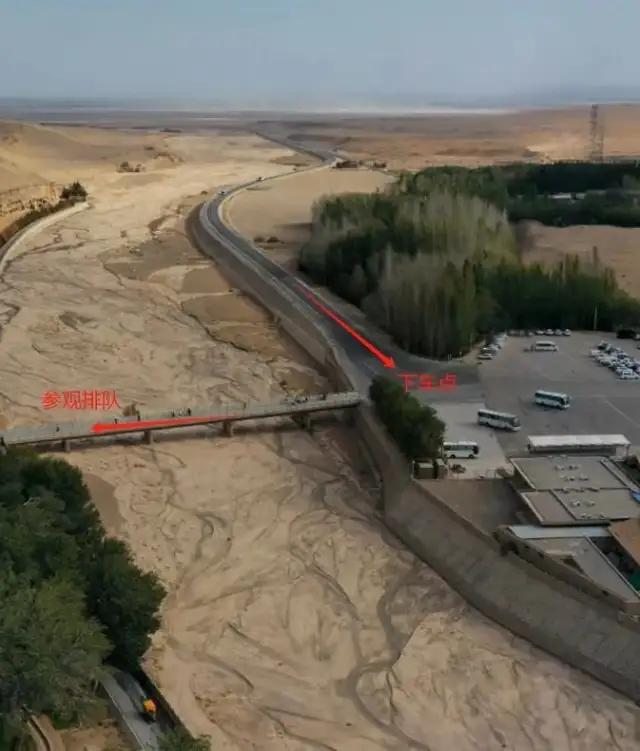
The road stretches between the desert and the forest, with bridges and parking areas marked on the original map. Image:Exploring the Silk Road · Original Post.
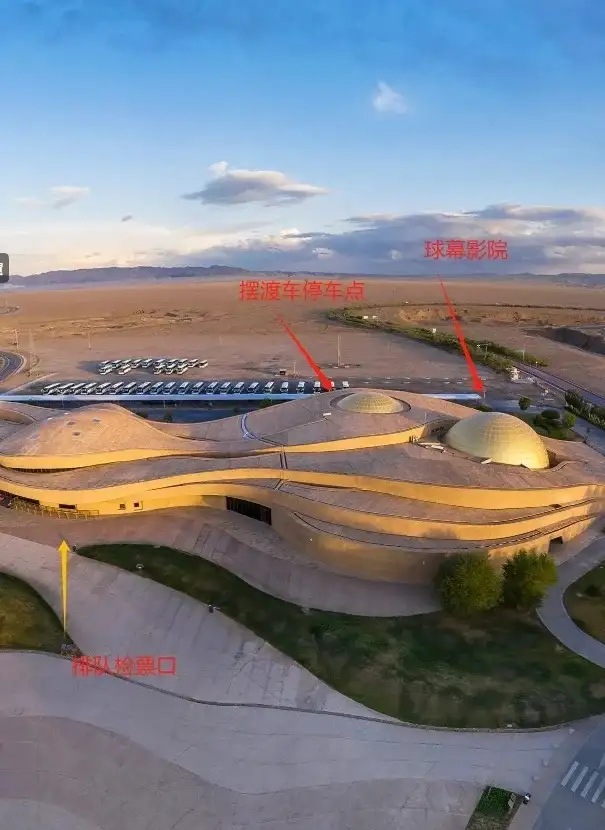
The Digital Exhibition Center is the first stop on the tour; there are no ticket offices or visitor parking lots in the core cave area—this is a very practical piece of information from the official announcement. When explaining your destination to the driver, use the full name “Mogao Grottoes Digital Exhibition Center” rather than simply “Mogao Grottoes.” Although both are associated with the same heritage site, they serve different functions for visitors. You can also mark these locations separately on your map so that your travel companions know where to meet, complete check-in procedures, and proceed to subsequent sites.
, it is recommended to save the Chinese name of the location and confirmed itinerary details on your phone for drivers or staff to review. The English name helps you understand the destination, while the Chinese name facilitates communication with locals; keeping both on hand is more efficient than repeatedly explaining the details verbally. If your group has arranged for transportation, confirm in advance where to wait, who is responsible for communication, and where you will be dropped off upon return. This ensures a clear connection between your cultural reservation and your actual transportation arrangements.
Arrival times should be scheduled according to official requirements and your booking details; transportation from your hotel to the Digital Center should be confirmed based on actual conditions on the day of your visit. While some online posts share travel times from specific hotels—which can help you estimate your journey—they cannot determine the departure time for another traveler. Listing departure, transportation, and post-arrival procedures separately is more specific than simply writing “arrive before the reservation time” and makes it easier to identify whether luggage handling or meals need to be arranged.
Where to store luggage determines whether it’s practical to leave the city directly on the same day
Official announcements restrict large items such as suitcases from entering the cave complex. Therefore, if you plan to check out of your hotel or take a train or flight on the day of your visit, you should first include your luggage arrangements in your itinerary. You can confirm storage and retrieval arrangements with your hotel or service provider before planning how to proceed with your onward transportation after the visit. Luggage is not merely a personal item; it determines which locations you’ll pass through that day and affects whether it’s practical to proceed directly to the station after the tour.
You can organize your daily carry-on bag according to your actual needs: assign specific spots for valid identification, essential communication devices, and personal items, ensuring important documents are easily accessible. For families traveling together, it’s best to designate who is responsible for which items to avoid having everything concentrated in one person’s bag—otherwise, if you’re temporarily separated, other members won’t have access to anything. This organization isn’t complicated, but it ensures smoother entry verification, transitions between venues, and rest periods, while reducing delays caused by repeatedly searching for items on-site.
If you are bringing children or family members who require assistance, you can explain the visit process in simple terms before departure: first go to the Digital Center, then move to the cave area as organized, and follow on-site instructions when entering the caves. When everyone knows what to expect, the wait feels less abstract. Family members can also discuss rest breaks and personal needs in advance, scheduling them at appropriate times rather than putting off these care needs until after the cultural tour is over.
Guided Tours and Languages: Confirm Before Entering the Caves
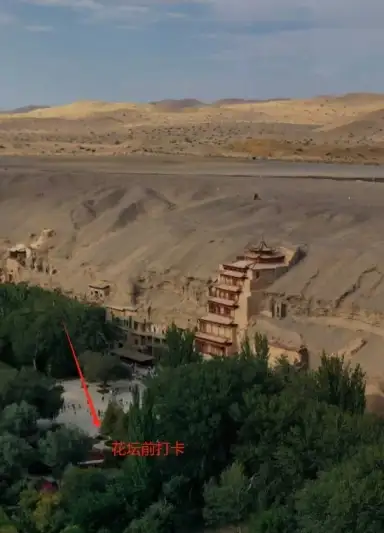
A multi-story red pavilion stands between the cliff face and green trees, with red route markers visible in the scene. Photo:Exploring the Silk Road · Original Post.
For first-time visitors to Dunhuang art, language requirements will directly impact the experience. Before your trip, contact the official inquiry service to confirm the actual guided tour arrangements, specifying the required language and the number of people in your party; if your group has separate interpretive services, clarify how they will coordinate with on-site organizers. Don’t wait until you’re inside the venue to realize that everyone needs an on-the-spot interpreter. When specific needs are addressed early on, visitors will find it easier to follow the images and details highlighted during the tour.
You might also start by selecting a concise cultural theme to give your companions a shared point of discussion. For example, how the proportions of figures organize the composition, how the narrative unfolds continuously, or how sculptures and murals complement each other in space. Even with varying levels of language comprehension, everyone can still engage with the art through form and placement. Gradually introducing necessary background information is more effective for sustaining interest than cramming a long list of terms into the pre-trip briefing; it also allows children and those new to Buddhist art to participate in the discussion.
Official regulations prohibit photography and videography inside the caves; therefore, it is best to use your eyes to commit a few select details to memory. You may put your phone away before entering to devote your full attention to the viewing experience; after the tour, jot down a few sentences to record the details that left the strongest impression. Digital images and official cultural resources can aid in follow-up study, while the site offers a real-life setting, spatial context, and guided commentary; these two methods of memory can complement each other.
At the end of the tour, ensure the entire visit process is properly documented
After leaving the cave area, you must complete your return journey according to the actual organizational arrangements before proceeding to your hotel, dining venue, or transportation out of the city. If the meeting location and contact information have been clarified before departure, this transition will be much smoother. After the tour, everyone should first organize their tickets and personal belongings before discussing the next steps. This is especially important for families planning to continue a long-distance trip; finalizing the return route in advance will allow for a more relaxed experience when reviewing the artistic highlights later.
This SiteMogao Caves Destination GuideA section on cultural preparation is available,Dunhuang Destination GuideThis helps coordinate the tour itinerary. When visiting with a foreign passport, a clear plan should include the actual visitors, the correct first stop, luggage arrangements, and language requirements. By tying these elements together, the reservation becomes more than just a formality—it transforms into a cultural journey you can fully immerse yourself in.
Source and Editorial Notes
This article is an original travel analysis compiled by the Dongxing Travel Editorial Department based on the listed materials; it is not a firsthand account by the author. The full text of the original post has not been reproduced; accompanying images are used within the scope of authorization and are credited to the author and the source of the original post. They do not serve as proof of actual travel experiences or services provided by Dongxing Travel.
Manman Yimanman liliy · Mogao Grottoes Ticket-Booking Guide!! Don’t give up! Keep refreshing! · Travel Notes; Verified/Organized on: October 3, 2026.
Exploring the Silk Road · Dunhuang Mogao Caves “Checkpoint Guide”—You’ll Miss Out Big Time If You Don’t Know This · Travel Notes; Verified/Organized on: October 3, 2026.
Dunhuang Academy · 2026 Mogao Caves Tourist Access Announcement · Official source; Verification/Compilation Date: October 3, 2026.
Dunhuang Academy · Mogao Grottoes Tour Guide · Official source; Verification/Compilation Date: October 3, 2026.