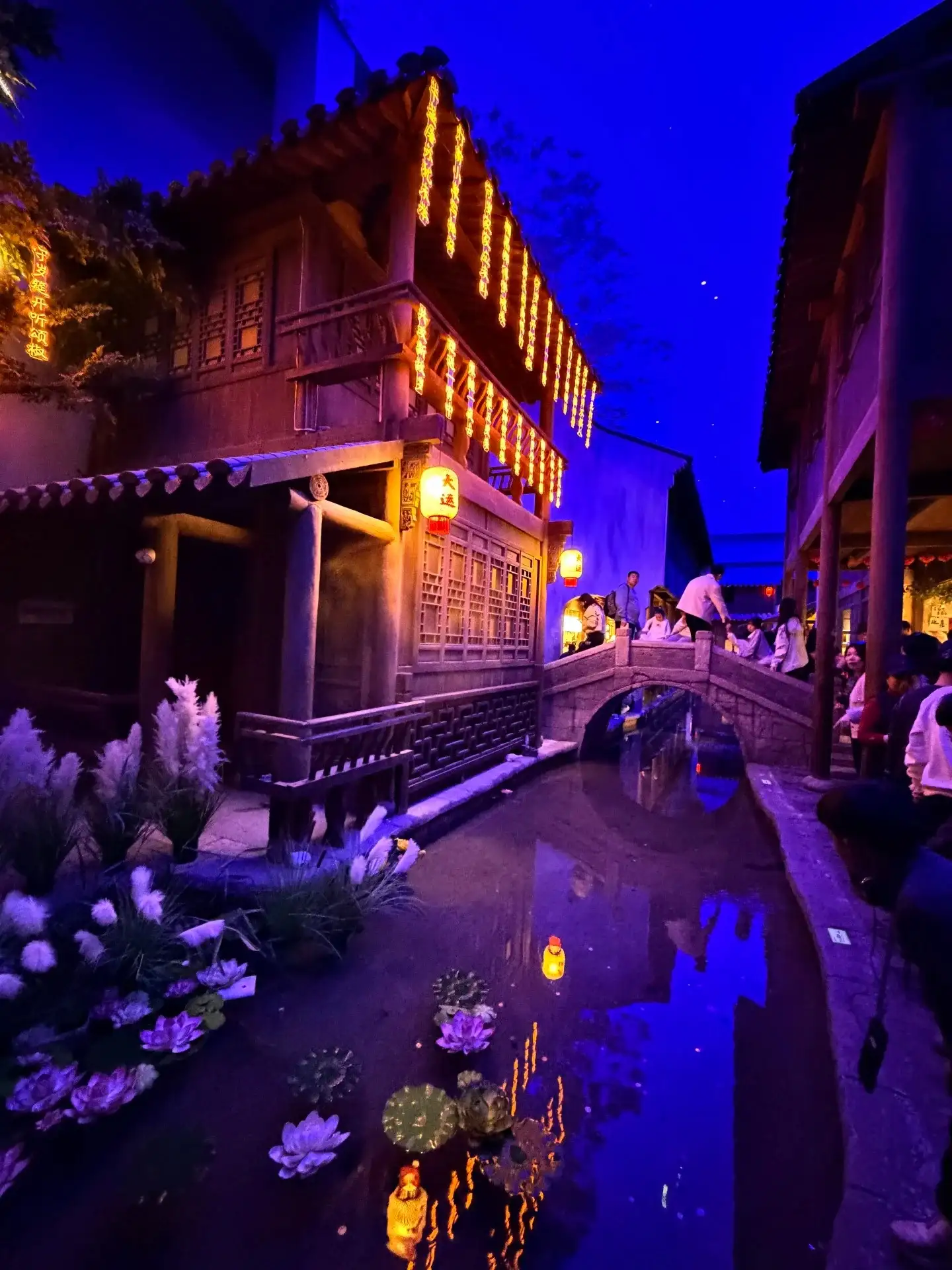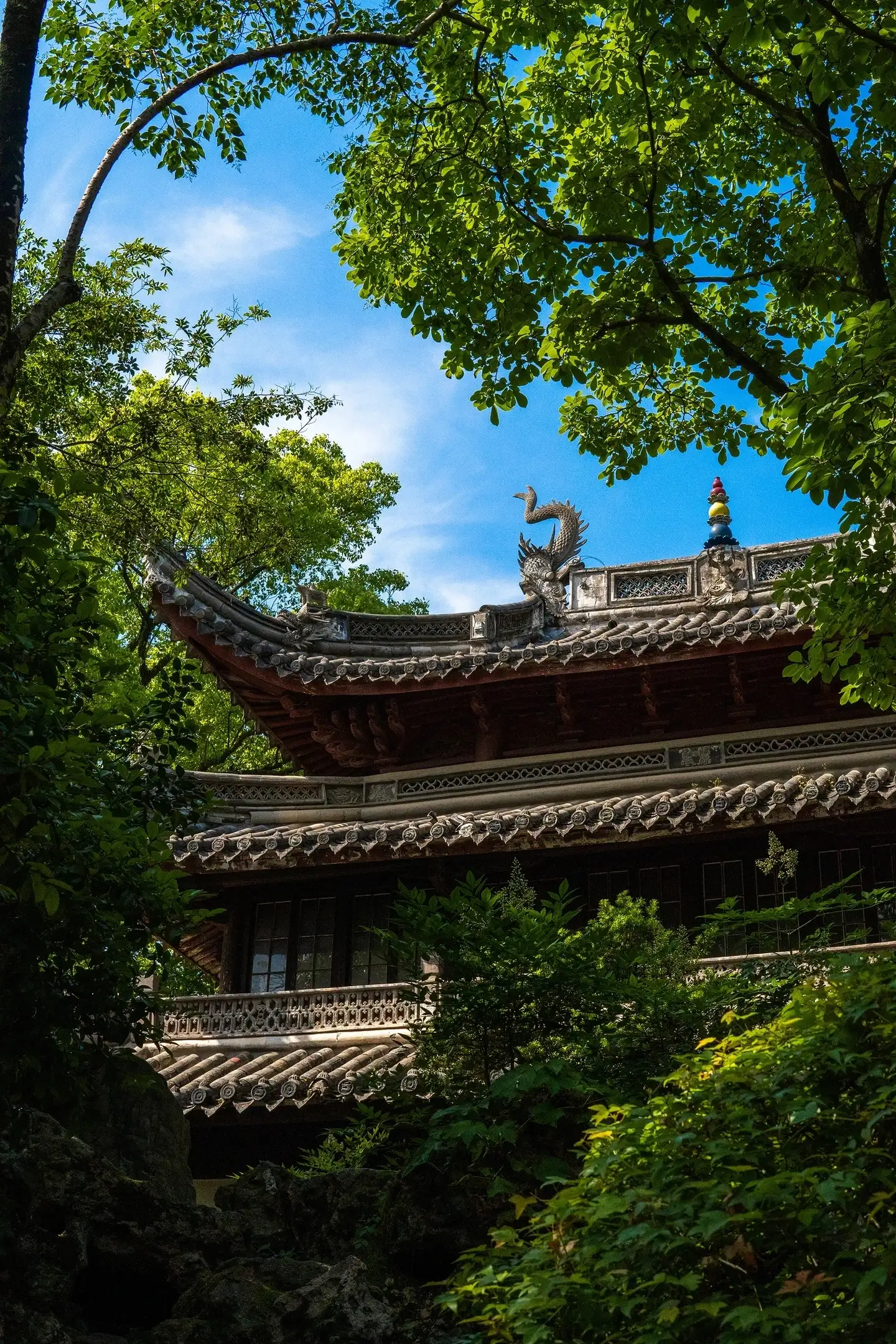
at Tianyi Pavilion, travelers can pause to consider one question: How has a collection of books been preserved for hundreds of years? In the water alleys of Shaoxing, the same focus shifts to how bridges, waterways, and riverside residences function together. There’s no need to rank Ningbo and Shaoxing to determine which is more worth visiting. When you only have two days on vacation, it’s often easier to decide by first identifying the curiosity you want to satisfy than by looking at a list of attractions. This article focuses on cultural stops in the cities; the coast, suburbs, and the entire Jiangnan Grand Loop are covered in separate plans.
If you prefer cultural tours with a clear narrative thread, you might want to visit Ningbo first.
The Palace Museum’s entry on Tianyi PavilionIt is noted that Tianyi Pavilion was the private library of Fan Qin of the Ming Dynasty, located in Ningbo; there is a pond in front of the building, flanked by fire-resistant gable walls on both sides. These verifiable facts are sufficient to provide a central theme for the visit: the relationships between book collections and fire prevention, family and public culture, and architecture and the preservation of knowledge. By knowing what you want to see first and then moving through the areas actually open to the public, you can easily avoid treating all the courtyards as identical backdrops of white walls and black tiles.
This central theme is also useful for travelers unfamiliar with Chinese calligraphy. There’s no need to identify every book title right away; instead, you can pose questions based on materials and spatial layout: Why are books preserved in one place? How do the pond and the building relate to each other? How does the courtyard invite visitors to linger? Specific answers can be found in the exhibition labels and guided tours. If you encounter historical terms you don’t understand, jot down one or two words that interest you most and look them up later. The reward of a cultural visit can be a coherent narrative—it doesn’t have to be memorizing every date and figure.
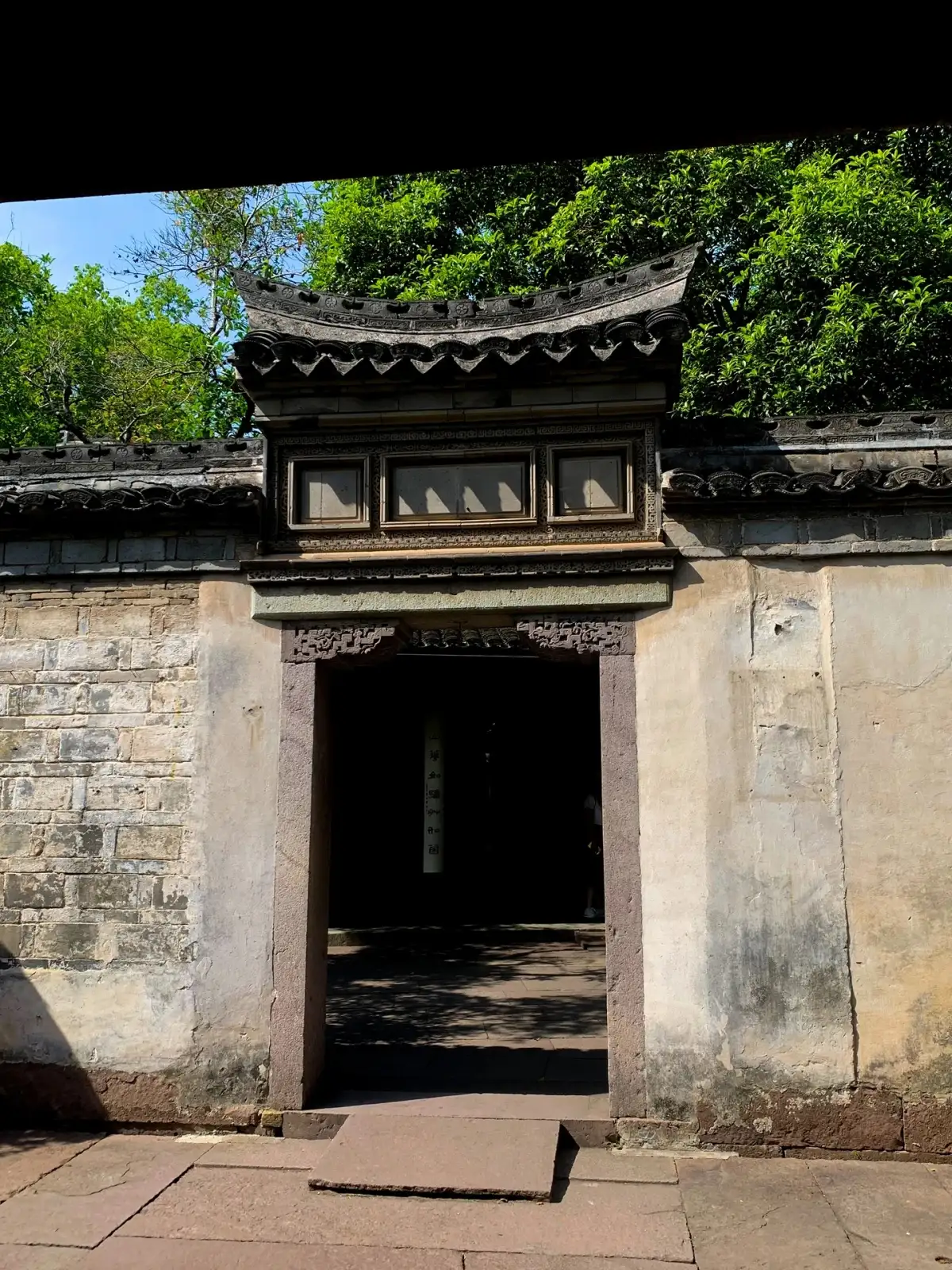
The carved archway in the wall of Tianyi Pavilion. Photo:Yilin Loves Travel · Original Post.
小红书作者怡林爱旅行的Tianyi Pavilion NotesTreat the library, the stele forest, and the courtyards as separate viewing subjects. This article adopts this level of observation; it does not include the original post’s information on admission tickets, opening hours, or estimated travel times, nor does it replicate that fixed sequence. Readers can use “one exhibition theme plus a section on courtyard observations” as a planning unit; specific entrance details, temporary exhibitions, and closure schedules should be checked in the venue’s official information before departure.
Does a two-day stay in Ningbo mean you can only visit Tianyi Pavilion? Not necessarily, but this guide recommends devoting ample attention to the core theme first. After the initial visit, find a place to sit down and reflect on what you’ve seen before deciding whether to add other cultural sites. For first-time visitors, navigating the city, finding lodging, and dining can be equally exhausting. Spending the remaining time in a neighboring neighborhood allows you to experience the contemporary city beyond the library; if you already have a specific second destination in mind, rearrange your hotel and transportation plans based on its location.
If you want to “read” the city through its streets, Shaoxing is a better fit for this theme.
Shaoxing’s Bazi Bridge can serve as a starting point for exploring this water city. The Shaoxing Municipal Federation of Social Sciences’Introduction to the Bazi Bridge Historical and Cultural Districtplace stone bridges, rivers, alleys, and riverside homes within the same cultural landscape. Based on this, this article selects the connection between land and water as its theme of observation, avoiding rankings such as “oldest” or “only,” which can easily lead to disputes over scope. Observing the entrances and exits of a bridge from a public space often provides a better understanding of local transportation networks than simply photographing the bridge’s arches.
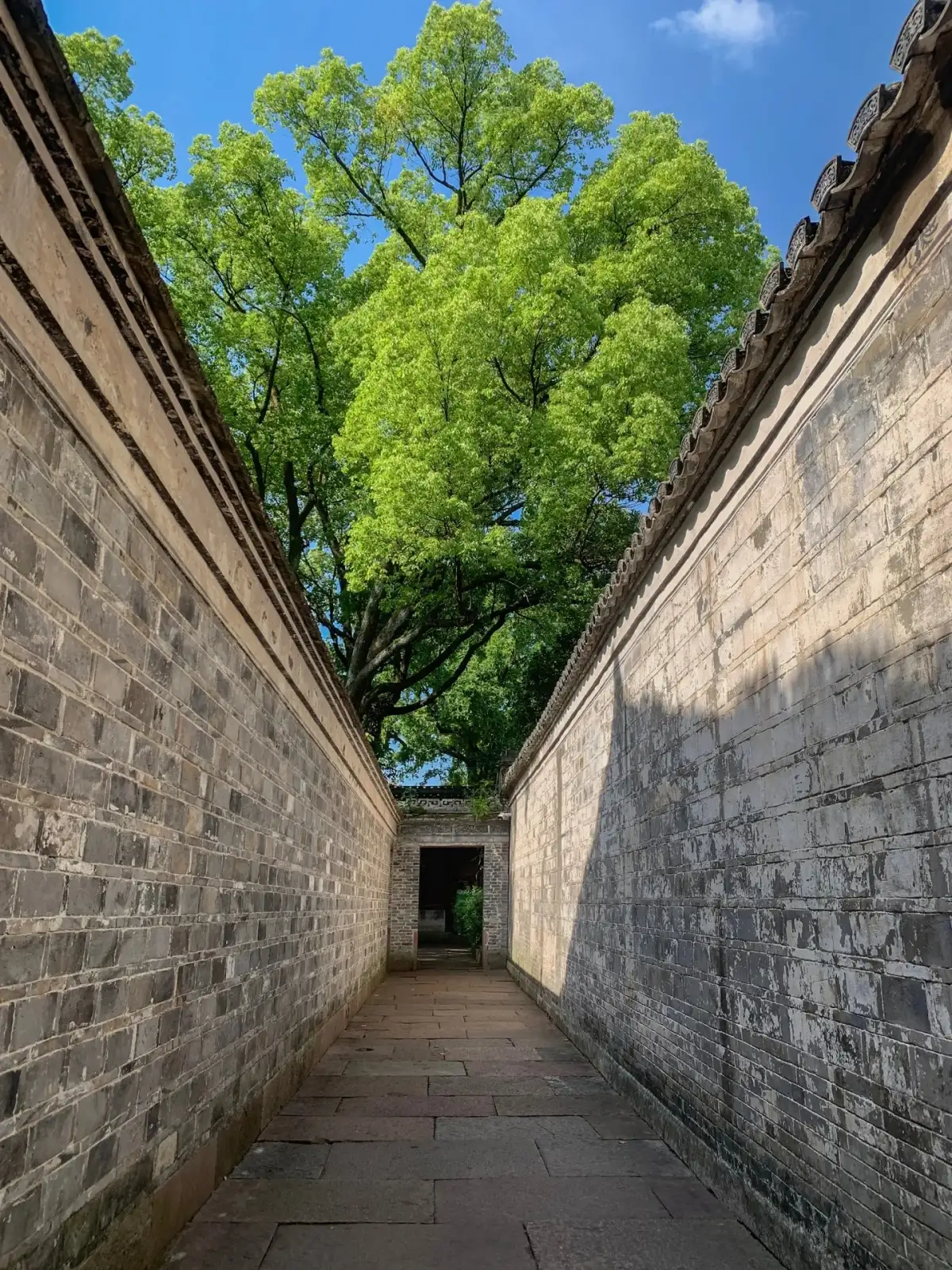
The stone-paved alleyway between the two gray brick walls of Tianyi Pavilion. Photo:Yilin Loves Travel · Original Post.
小红书作者Sky的Notes on the Eight-Character BridgePay special attention to residents along the waterfront and details of daily life. The original post’s assessment of crowds and commercialization reflects the author’s impressions during that specific visit and does not guarantee conditions will be the same on another day. This article adapts these observations into practical methods for travelers: note which direction residential doors face, where walking paths meet the water’s edge, and how people and goods move from the street to the shore. Leave a clear path when you see people going about their daily routines, and always ask for permission before taking portraits.
There’s no mandatory checklist for this kind of walk. You can stroll from one bridge to the next public intersection, stopping whenever you encounter interesting windows, doors, or waterways; and turning back when you see private residences, closed courtyard gates, or off-limits areas. Places that look empty in photos may actually be commuting routes for residents in reality. A travel plan should include detours that allow for turning back, so you can easily adjust your route when the streets are crowded, the weather turns bad, or your companions want to rest—without having to trespass on private property just to complete a reference map.
If you don’t understand Chinese literature, wouldn’t a visit to Shaoxing lose half its charm? Start by reading the space, then fill in the figures. The slope of the bridges, the distance between rooftops and riverbanks, and the alternation of narrow alleys and wider street intersections—all of these can be observed directly. If you wish to incorporate literary themes, choose a figure or a familiar work to familiarize yourself with before your trip, then use the exhibition labels on-site to verify the locations’ connections. Don’t attribute every old residence in the city to the most famous writer, nor infer a building’s historical period based on a new sign.
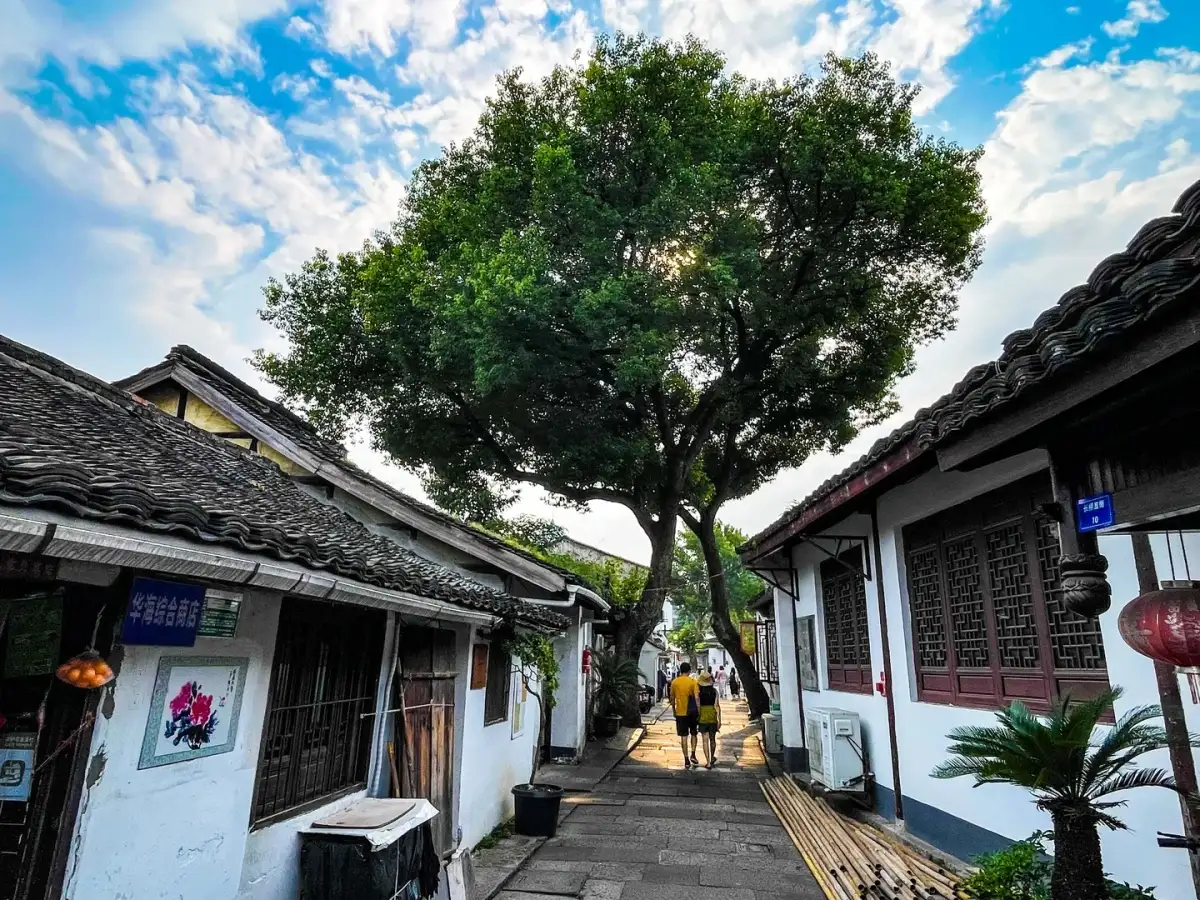
The cobblestone streets, white-walled houses, and large trees of the Baziqu Bridge neighborhood in Shaoxing. Photo:Sky · Original Post.
Can both cities be covered in two days?
check whether it’s technically feasible to travel between cities by verifying actual transportation schedules; as for whether the itinerary is suitable in terms of content, that depends on how much time you’re willing to spend on travel. Two days in two cities means at least one round of moving luggage, finding transportation, and re-checking into a new hotel. If you arrive late on the first day and have to rush to catch a train out of Jiangnan the next day, those two days may only offer a few full blocks of time for sightseeing. First, write down your arrival and departure times, then circle the periods when you can truly focus on sightseeing—only then does the comparison make sense.
For your first cultural trip to Jiangnan, you can choose either Ningbo or Shaoxing as your sole place to stay. The Ningbo itinerary centers on a key cultural site and its surrounding neighborhoods, while the Shaoxing itinerary focuses on a section of water alleys and a related exhibition theme. The above is an organizational framework proposed by the editor; it does not represent a pre-sold tour package or a confirmed reservation. If you truly wish to combine both cities, prioritize the content you most want to see on this trip as your top priority, and for the other city, plan only one specific location—and be prepared to cancel the second city’s portion if delays occur.
decide which one to choose on a rainy day. Both cities require specific judgment—Ningbo shouldn’t be described as an all-day indoor destination, nor should Shaoxing be portrayed as inaccessible in the rain. A cultural exploration of Tianyi Pavilion involves moving between courtyards and different buildings; in Shaoxing, the water alleys can be alternated with indoor exhibits that are actually open to the public. The itinerary also differs depending on whether it’s a steady drizzle or a thunderstorm. When checking the forecast, pay attention to warnings about strong winds and lightning; cancel any unsuitable outdoor activities, then select indoor attractions based on the venues’ announcements.
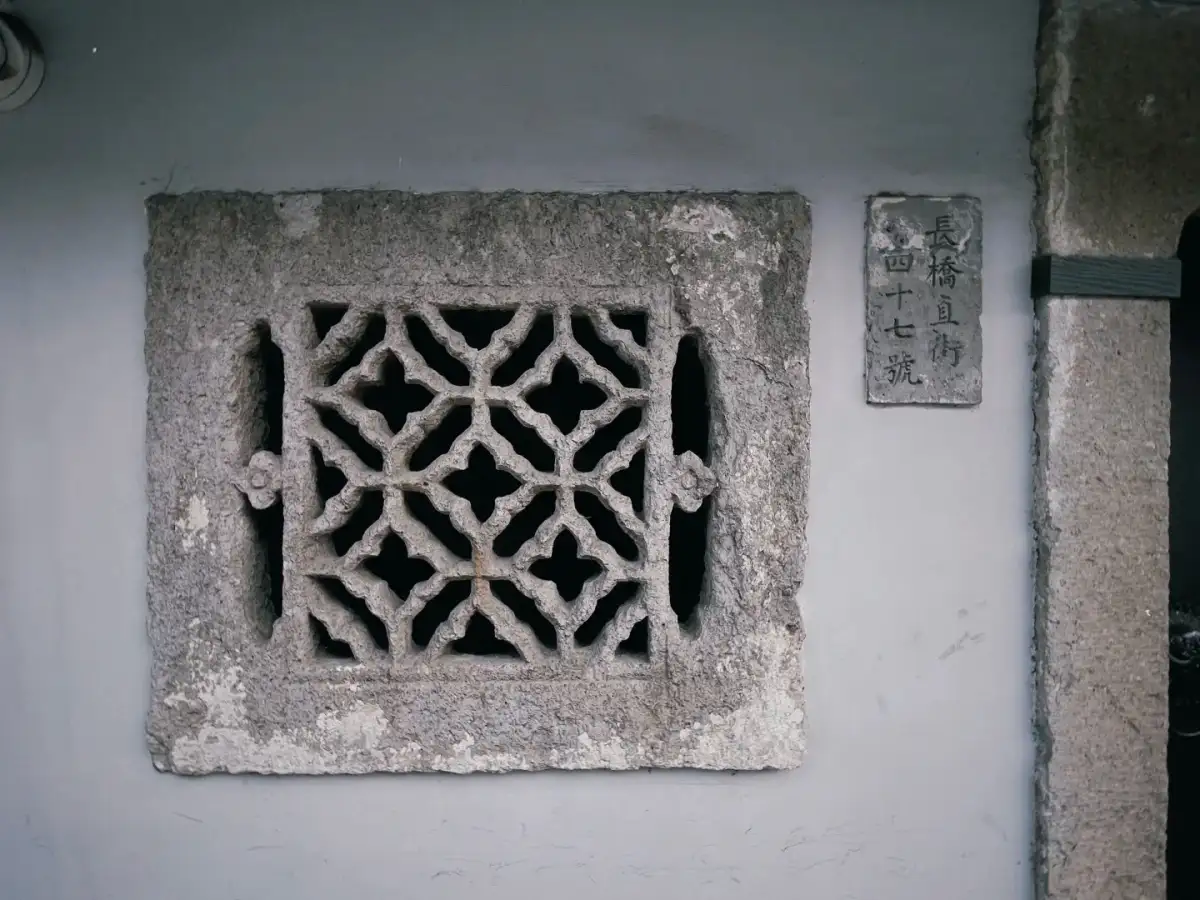
Openwork stone windows in the white walls of Shaoxing’s Old Street. Photo:Sky · Original Post.
decide whether it’s convenient to explore the water alleys with luggage in tow—the key factors are storage options and ground conditions. First, check with your accommodation or a professional storage service to see if you can store your luggage; try to keep luggage-hauling separate from cultural walking tours. Cobblestone roads, sloping bridges, and narrow passages can alter the walking experience, particularly for slower-moving companions. When choosing accommodations, ask the hotel to provide information on the actual route from your drop-off point to the front desk; “downtown” does not automatically mean vehicles can drive right up to the door, nor does it guarantee a step-free route throughout.
Ultimately, this decision can be boiled down to one specific statement: If you want to explore the preservation of knowledge through a cultural site, start with Ningbo; if you want to explore everyday urban life through water and land transportation hubs, start with Shaoxing. Next, check this siteIntroduction to Ningbo DestinationswithIntroduction to Shaoxingarrange your accommodations, transportation, and check the actual opening hours one by one. On your second morning in the city, you can revisit the details that piqued your interest the most the day before; this is a valuable part of a two-day itinerary worth setting aside.
Sources and Editorial Notes
This article is an original travel analysis compiled by the Dongxing Travel editorial department based on the listed materials; it is not a firsthand account by the author. The full text of the original post has not been reproduced; accompanying images are used within the scope of authorization and are credited to the author and the source of the original post. They do not serve as proof of actual travel experiences or services provided by Dongxing Travel.
Yilin Loves Travel · Ningbo Travel | Tianyi Pavilion Travel Guide: Immerse Yourself in the Aesthetics of Ancient Architecture · Travel Notes; Verified/Organized on: October 3, 2026.
Sky · Don’t crowd Cangqiao Zhijie! Bazizi Bridge is the true essence of Jiangnan · Travel Notes; Verified/Organized on: October 3, 2026.
The Palace Museum · Tianyi Pavilion · Official sources; Verified/compiled on: October 3, 2026.
Shaoxing Municipal Federation of Social Sciences · The Bazi Bridge Historic and Cultural District, Echoing the Charm of the Song Dynasty · Official sources; Verified/compiled on: October 3, 2026.