The Front Mountain and Back Mountain of Mount Qingcheng, along with Dujiangyan, are often featured on the same travel poster. The names are familiar, and the photos are all brimming with greenery, but what truly determines whether you’ll have a pleasant day is what you want to see in the mountains and how much time you’re willing to set aside for the descent and return to Chengdu. This itinerary guide is ideal for foreign families visiting from Chengdu for the first time, travelers interested in religious architecture, and anyone looking to escape the city for a day. It’s more practical to choose one type of experience first and then plan your transportation accordingly than to simply check off all three destinations.
小红书作者喵余的完整笔记串联前山、老君阁与都江堰,并提到下山陡段和回程买票的问题;糖糖的旅行日记则把后山拆成多种环线,尤其喜欢五龙沟的流水与栈道。这两种个人安排恰好揭示了青城的两个侧面:一边是建筑、信仰与山林交织,一边是沿溪行走的自然节奏。本文采用它们提出的路线问题,不沿用其中的票价、班次或里程。
Treat “Mount Qingcheng” as a specific destination
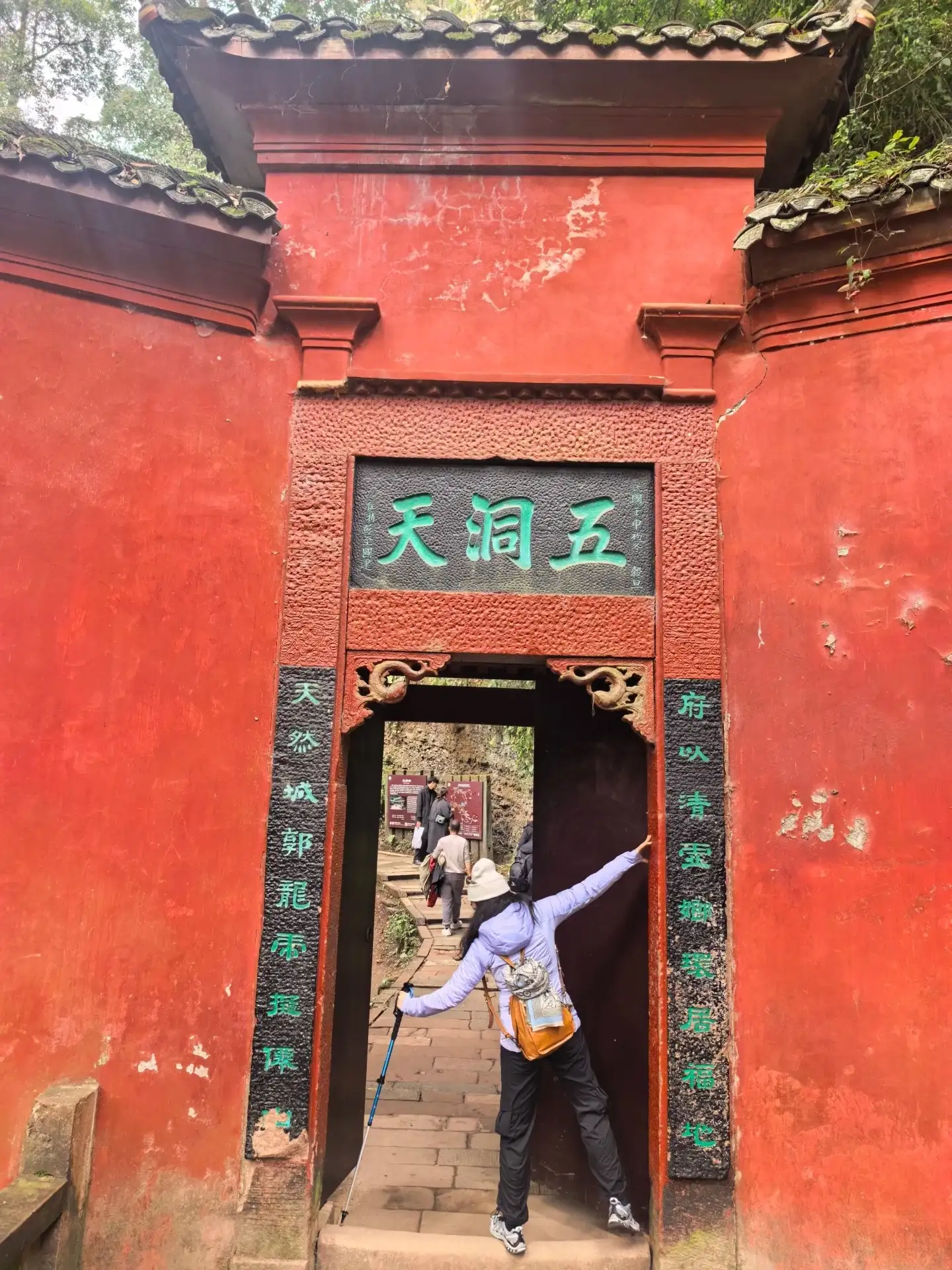
The detailed plan for the Front and Back Mountain areas, released by Sichuan Province’s Forestry and Grassland Department, treats the ancient architecture, winding paths, and mountain forests of the Front Mountain as a landscape sequence, mentioning landmarks such as Jianfu Palace, Natural Painting, Tianshi Cave, and Shangqing Palace. This illustrates that the charm of the Front Mountain is not limited to its highest point. The paths between the temples, the courtyards enclosed by trees, and the twists and turns of the gates and staircases all transform the architecture from isolated urban exhibition halls into a continuous sequence of spaces emerging amidst the mountains.
For visitors unfamiliar with Chinese Taoism, exploring the Front Mountain can begin with three simple questions: Why are the buildings situated on this slope? How do the courtyards use trees and the mountains to define their boundaries? And how does walking alter the angle from which one views the rooftops? Reading the on-site explanations about the Taoist temple first, then observing the door lintels and courtyards, is a more effective way to form an impression than trying to memorize the names of all the deities at once. Religious architecture may also serve as a venue for actual worship activities; visitors can pause quietly and treat the ritual instructions as part of their understanding of the space.
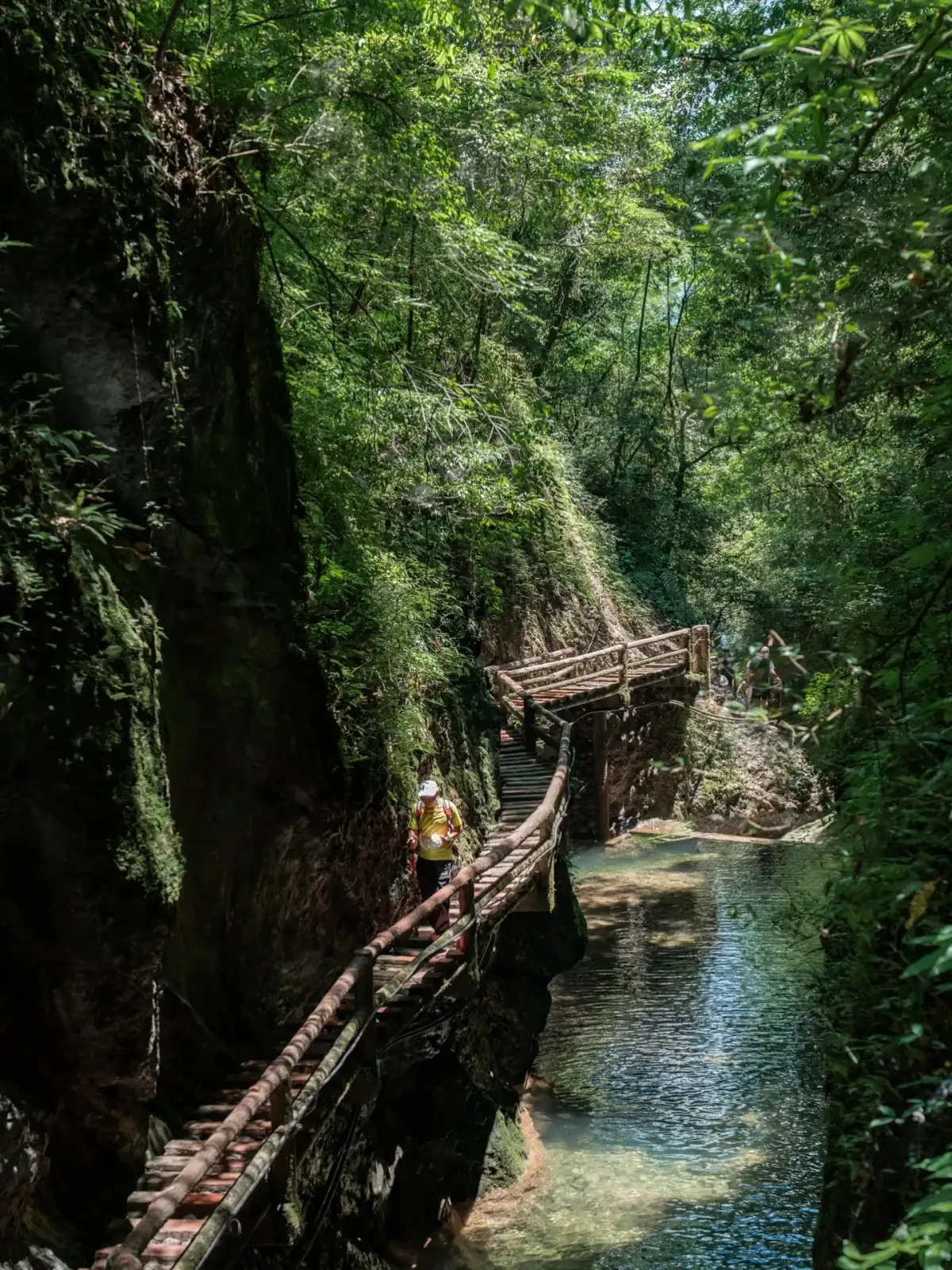
Streams and trails among the forests of Qingcheng’s Back Mountain. Photo:Tangtang’s Travel Diary · Original Post.
The appeal of the Back Mountain lies more in its valleys and trails. Tangtang’s notes include names like Wulong Gorge, Youyicun, and Feiquan Gorge along the loop trail, reflecting a personal preference for the route; the term “easy” should not be interpreted as a physical fitness standard applicable to all visitors. Those who enjoy the sound of flowing water may want to limit their exploration to the sections of the valley open that day, leaving room to turn back if needed; those who prefer temples and Taoist shrines would be better off focusing on the Front Mountain. There’s no need to rank the two areas by asking “which is more worthwhile.”
Focus on the temples, architecture, and Daoist culture: Start with the Front Mountain, choose a building where you’d like to linger as your focal point, and then decide whether to continue climbing higher.
If your focus is on streams, tree-lined paths, and hiking: Choose the Back Mountain, and before setting out, note the entrance, your planned turnaround point, and the route for returning the way you came on the same itinerary.
Focus on water conservancy projects: Dedicate an entire day to the Dujiangyan Irrigation System, allowing time to understand the relationship between water diversion, flood control, and water supply; Mount Qingcheng can be saved for another day.
If your companions have different interests: Choose a single scenic area that accommodates two different paces. Those willing to explore further can extend their journey along specific sections, while those who wish to rest can wait at designated resting spots—without having to switch to another mountain on the spur of the moment.
Before setting out, make sure to have a truly functional travel pass.
Walking from a Chengdu hotel to the scenic area involves at least several stages: intra-city travel, intercity or highway travel, shuttle service upon arrival, and the walk to the entrance. The station name is not the same as the mountain gate’s name, and arriving by train does not mark the start of the mountain hike. In Miao Yu’s notes, these stages are listed separately, reminding us to incorporate the entire transportation chain into our itinerary. Specific train schedules are subject to the official railway ticketing platform, while shuttle services and cable car operations are subject to the scenic area’s daily announcements. The time estimates in my personal notes serve to illustrate why it’s important to leave some buffer time.
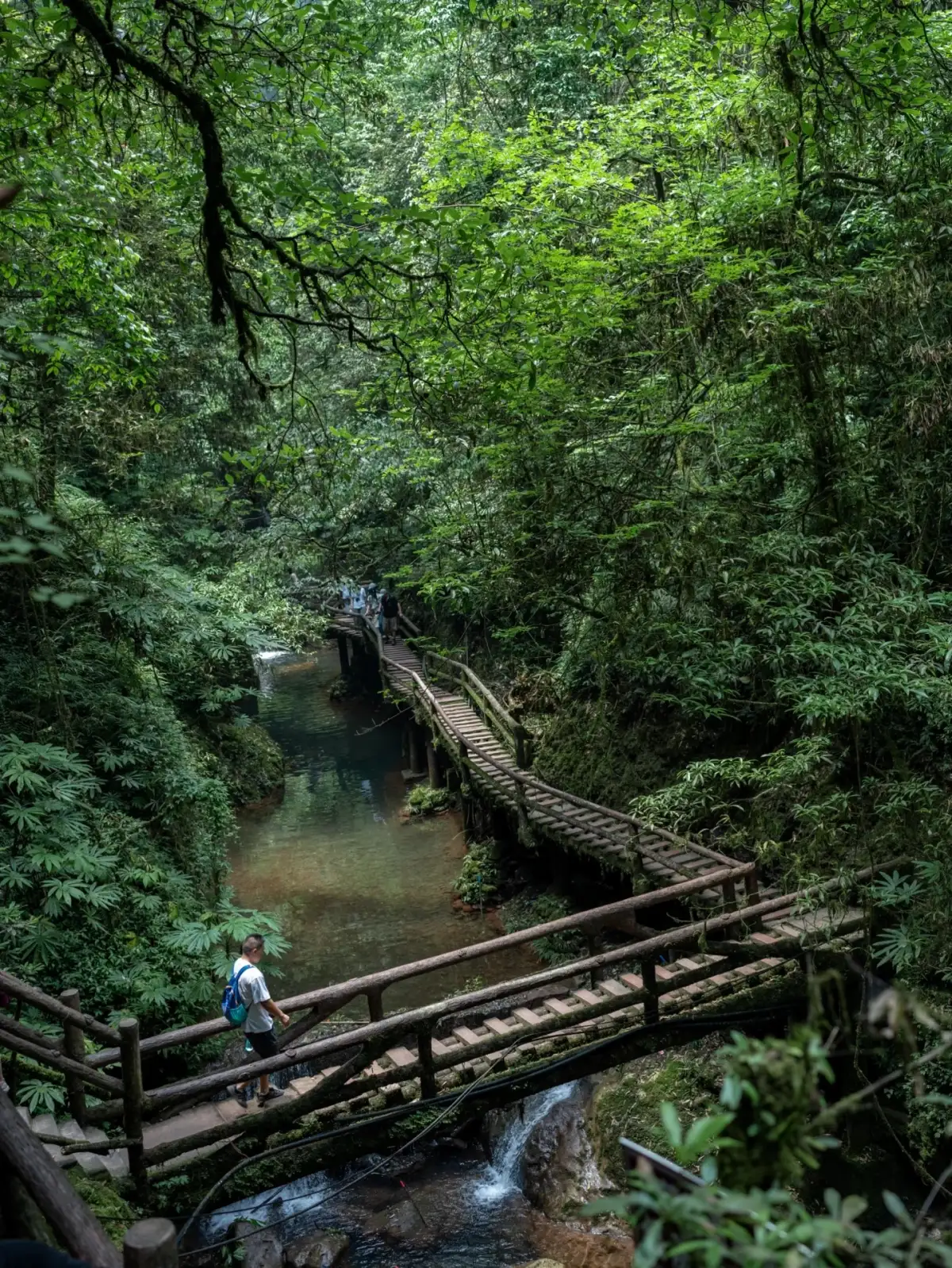
A wooden-railed walking path alongside a stream on Qingcheng’s Back Mountain. Photo:Tangtang’s Travel Diary · Original Post.
It is recommended that international visitors keep both Chinese and English versions of their names on their travel cards. Mobile maps should show “Qingchengshan Station” as well as the actual entrance to either the Front Mountain or Back Mountain; hotel addresses, meeting points, and return destinations should also be written in copy-and-paste-ready Chinese. If family members use separate phones, having each save the same map means they won’t have to guess place names by transliterating them from English when looking for directions on the fly.
Keep your ID and ticket together: Bring the original document corresponding to the one used for booking; confirm the registration and ticket-scanning procedures for foreign passports with official ticketing channels.
On your transit card, clearly list the starting and ending points: one line each for the hotel, the station, the scenic area entrance, and the return to the hotel. Leave space next to each for transfer and waiting times—don’t just write down the boarding times.
Save the map: In addition to the temples or valleys you wish to visit, mark locations where you can end your tour; save your route before leaving areas with good cell phone reception.
Plan your return trip based on your actual remaining time: factor in the descent, meals, arrival at the station, and ticket inspection to avoid rushing to the shuttle bus stop immediately after leaving the scenic area.
Footwear and luggage should also be tailored to your chosen route. Choosing the Front Mountain does not mean there will be no stairs along the way, nor does choosing the Back Mountain guarantee a flat path all the way along the stream. Keep drinking water, rain gear, lightweight warm layers, and essential medications within easy reach in your backpack, and leave larger luggage at a confirmed storage location or your hotel. Photography enthusiasts may want to select a lens suitable for both architecture and the natural surroundings in advance to minimize the need to change equipment on narrow paths. Those traveling with children should schedule meal breaks and rest stops into their itinerary rather than waiting until the children become restless before looking for a place to rest.
A Day on the Front Mountain: Taking Time to Pause at the Temples and Monasteries
A more leisurely approach to exploring the Front Mountain involves first experiencing the interplay between the forest and the architecture near the entrance, then selecting a temple or palace in the middle section along the day’s open route, and deciding in the afternoon—depending on how you feel—whether to continue ascending or return. The landscape names listed in the detailed plan can aid in understanding the spaces, but the plan does not guarantee that all sites will be open on any given day; the on-site map determines the actual walking route. With this approach, there is no need to reach the highest point to feel that the day has been fully spent.
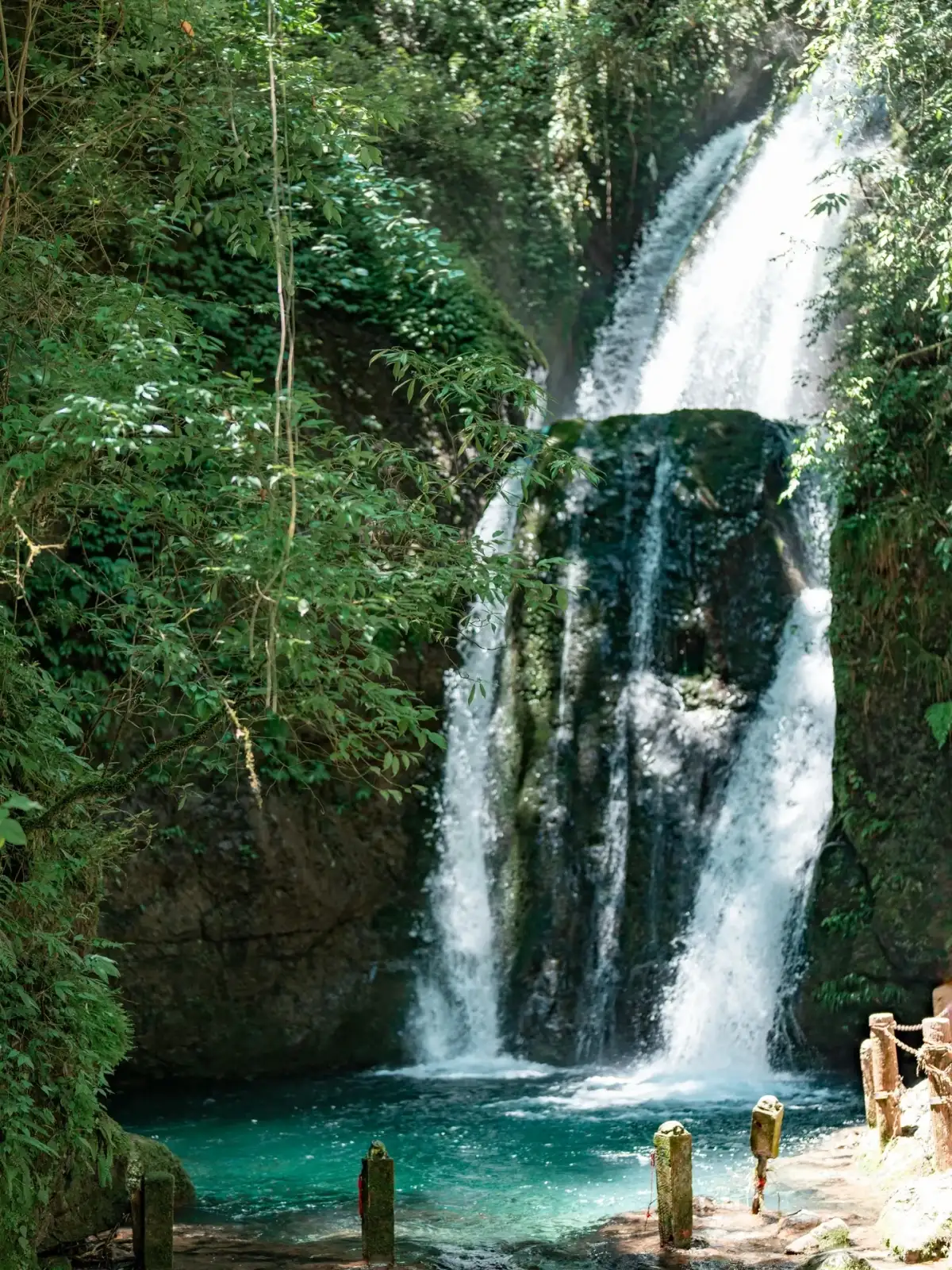
Waterfalls and pools amidst the forests of Qingcheng’s Back Mountain. Photo:Tangtang’s Travel Diary · Original Post.
Those interested in learning about Daoist culture may focus on reading the architectural descriptions for Tianshi Cave or Shangqing Palace. Before visiting, inquire about the language of the guided tours and whether reservations are required; for companions who do not understand Chinese, ask a guide to prepare a brief list of accurate definitions for key terms. Information cards need only explain the basic relationships between the palace-temple complex, the mountain gate, the halls, and the courtyards, allowing visitors to correlate the explanations with the architecture before them. Lengthy historical accounts are best read before the visit; on-site, the focus should be on scale, light, and tranquility.
When taking photos, capturing a single building in three distinct layers typically conveys more information than constantly searching for a panoramic shot: first, observe its position amid the trees; second, focus on the gates and roof; and finally, examine the details that are permitted to be photographed. Overcast and sunny days create different lighting effects in the same courtyard, and tree shadows may obscure parts of the roof. Rather than trying to replicate social media angles at every location, it’s better to compose your shots based on the natural light on-site and avoid blocking passageways in areas designated for religious activities.
A Day on the Back Mountain: First, Decide How to Get Back
The key to the Back Mountain route isn’t how complete the loop sounds, but whether your companions are willing to complete the second half. The combinations listed by Tangtang include walking, cable cars, and different valleys. For first-time visitors, the most practical approach is to first use the official guide to confirm the areas accessible that day, then pair “how far up to go” with “where to return from.” Crossing valleys, taking the cable car, or walking along the water’s edge should all be factored into the itinerary separately; do not assume that all lines on the map represent the same level of difficulty.
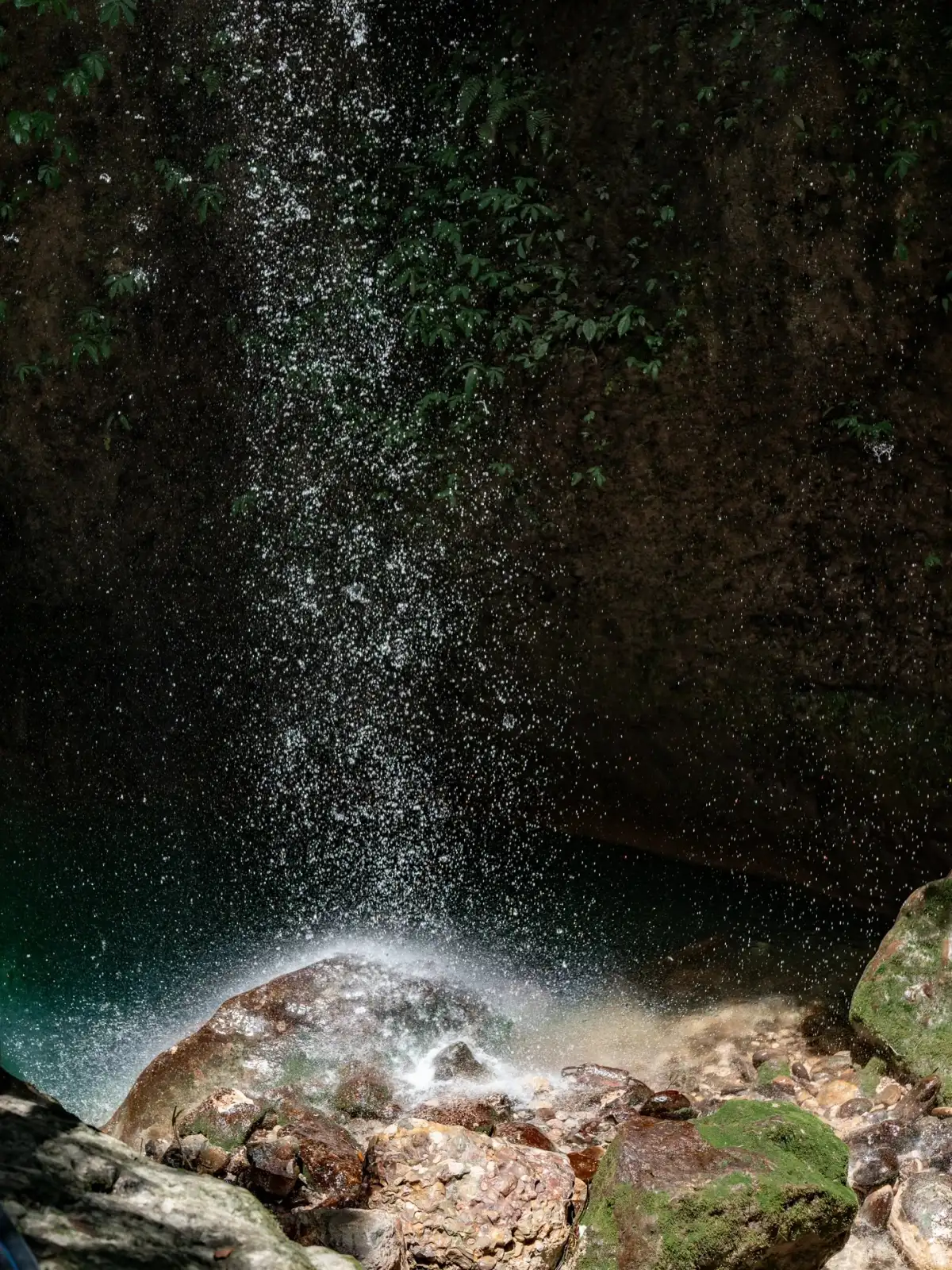
A trickling stream beneath the cliffs of Qingcheng’s Back Mountain. Photo:Tangtang’s Travel Diary · Original Post.
Photographing along the stream and a brisk hike can also create a conflict in pace. The former tends to involve stopping at small waterfalls, bends in the path, and tree roots, while the latter requires continuous walking. If a group is pursuing both goals, they can agree on the number of stops and meeting points before embarking on a long stretch of the trail. Families with children may choose a short section where the return route is clearly understood as the main focus of the day, allowing ample time to observe the water, rocks, and leaves.
In the event of rain, trail adjustments, or changes in the condition of fellow travelers, shortening the route is simply one way to complete a mountain hike. The combination of walking and cable cars also depends on operational conditions; the mere existence of these facilities does not guarantee they will be available at any given time. If plans change upon arrival, prioritize securing a clear exit and return route before considering adding side trips. In this way, freedom in the mountains comes from thorough preparation, not from venturing farther and farther.
Should I include Dujiangyan in the same day’s itinerary?
If the temples and valleys of Qingcheng are what you most want to see on this trip, we recommend setting aside a full day just for them. Dujiangyan is a water management system that remains relevant today; to truly understand the river and the engineering, you need to pause and connect the various components. Arriving in a hurry in the afternoon and taking just a quick photo on the bridge often robs this site of its most valuable insights.
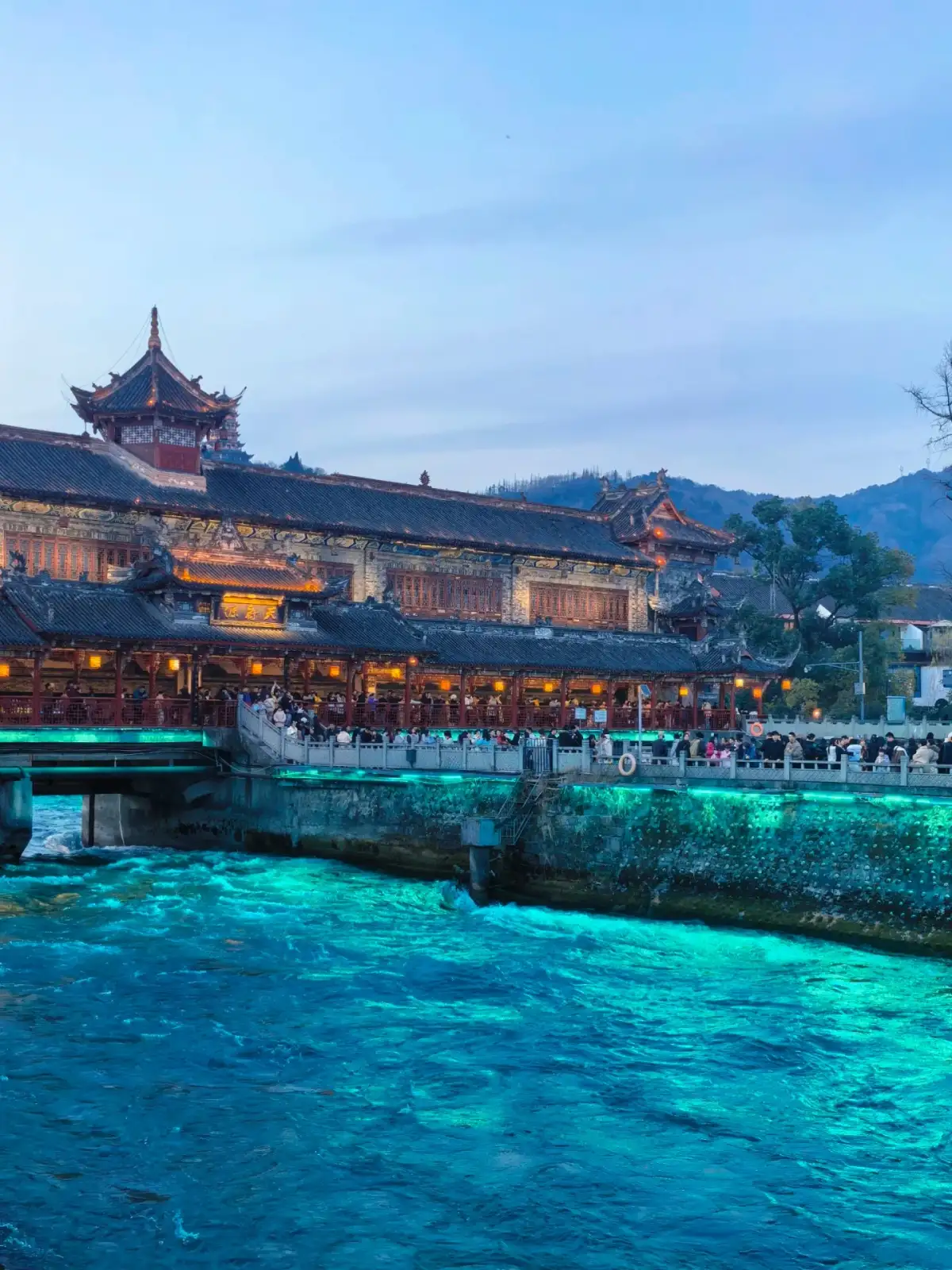
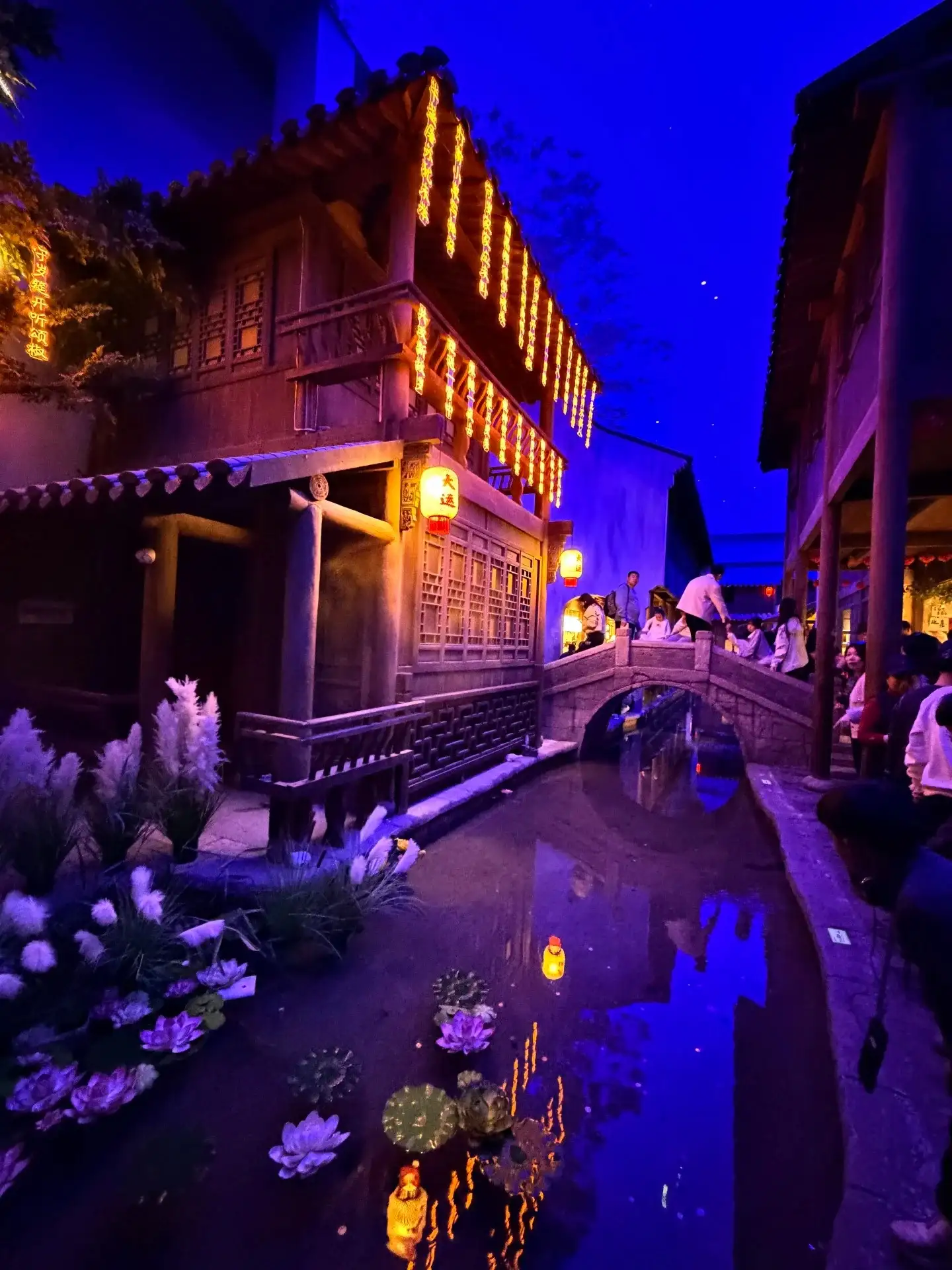
Night view of the South Bridge in Dujiangyan and the water surface. Photo:Miao Yu · Original Post.
If you truly have only one day, you can adopt the “one main attraction plus a short segment” approach: select a specific section of Qingcheng’s Front Mountain for your tour, and choose the core area of Dujiangyan that is officially open and has clearly marked entrances and exits, accepting that you’ll have to forgo the hike up the Front Mountain or the loop trail on the Back Mountain. A longer same-day combination like the one described by Miao Yu is suitable for those willing to endure continuous movement and walking; Family visitors do not need to follow the same pace. A separate card should be created for Dujiangyan’s entry and exit points, sightseeing transportation, and return arrangements; these details cannot simply be carried over from the Qingcheng Mountain transportation card.
A common question is: Since Mount Qingcheng and Dujiangyan are listed under the same World Heritage designation, must they be visited together? The answer is no. UNESCO highlights their interconnected historical and cultural value but does not dictate a single-day itinerary for visitors. Separating the two sites actually makes it easier to clearly understand the religious culture of the mountains and the irrigation engineering of the plains, allowing each day to have its own rhythm.
Finally, you can test your itinerary against a specific wish: Do you hope your child will linger by the stream to watch the water flow, or do you hope your family will appreciate the temples and monasteries in the mountains, or do you want to understand the water-diverting mechanism at Dujiangyan? Share this wish with a travel consultant, along with your travel companions’ walking habits, types of identification, accommodation details, and available dates, and the itinerary will have a solid foundation. What’s most worth remembering about Qingcheng isn’t how many place names you come across in a day, but being able to clearly explain why you loved that particular mountain trail when you leave.
Source and Editorial Notes
This article is an original travel analysis compiled by the Dongxing Travel editorial team based on the listed materials; it is not a firsthand account by the author. The full text of the original post has not been reproduced; accompanying images are used within the scope of authorization and are credited to the author and source of the original post. They do not serve as proof of actual travel experiences or services provided to Dongxing Travel clients.
Miao Yu · Chengdu → Mount Qingcheng (Front Mountain) → Dujiangyan: A One-Day Tour Guide · Travel Notes; Verified/Compiled on: October 3, 2026.
Tongtong’s Travel Diary · My Annual Hike Up the Back Mountain of Mount Qingcheng—A Step-by-Step Guide You’ll Want to Save! · Travel Notes; Verified/Compiled on: October 3, 2026.
Sichuan Provincial Bureau of Forestry and Grasslands · Detailed Plan for the Mount Qingcheng–Dujiangyan Scenic Area · Official source; Verified/Compiled on: October 3, 2026.
UNESCO World Heritage Centre · Mount Qingcheng and the Dujiangyan Irrigation System · Official source; Verified/Compiled on: October 3, 2026.