Qingdao’s seaside can easily take center stage for a day: the roads stretch along the coast, and you can see the water just by sitting down. The Beer Museum on Dengzhou Road poses a different question: Beyond its scenery, what else defines a city’s production and daily life? If your travel companions don’t drink, or if children only recognize the words on the bottles, can the museum still offer content worth exploring? The answer depends on what you want to see, not how much you can drink.
This venue is better suited for a themed indoor tour rather than a mere “check-in” that must be crammed into every Qingdao itinerary. Industrial history enthusiasts can explore the architecture and equipment; design aficionados can observe how packaging reflects the city’s identity; and families with children can discuss the process by which food transforms from raw materials into finished products. If the whole family is most looking forward to playing in the sand, enjoying the ocean view, and free time, setting aside a full half-day for the coast is equally a reasonable choice.
First, let’s break down the three interests.
小红书作者“Aprillj”记录的参观重点包括品牌历史、原料、旧设备、玻璃后方的生产空间与包装展示。“灏_”则注意到老厂房与机器的视觉效果。两篇个人笔记呈现了同一地点的不同吸引力:一种顺着生产过程看,另一种看建筑的气氛。本文据此讨论选择,不把他们的饮酒体验当成每位游客的标准答案。
The museum’s official program description lists Hall A (Historical Development) and Hall B (Brewing Process) as part of the tour. When planning your itinerary, you can divide your interests into three categories: architecture and history, production and materials, and tasting and interactive experiences. The first two categories can be explored independently; the third depends on age, physical condition, personal preference, and the tickets purchased. Visitors who do not drink alcohol can also plan a complete tour centered on the first two categories without feeling pressured to participate in the tasting.
This breakdown also has a practical benefit: the add-on experiences listed on the ticket page won’t dictate your day’s pace. Just because an activity has a flashy name doesn’t mean it’s essential for understanding the old factory complex. By first identifying the questions you most want answered and then comparing what each program includes, you can ensure your budget and time truly serve your interests. History buffs might prefer guided tours, while photography enthusiasts might prefer unhurried observation.
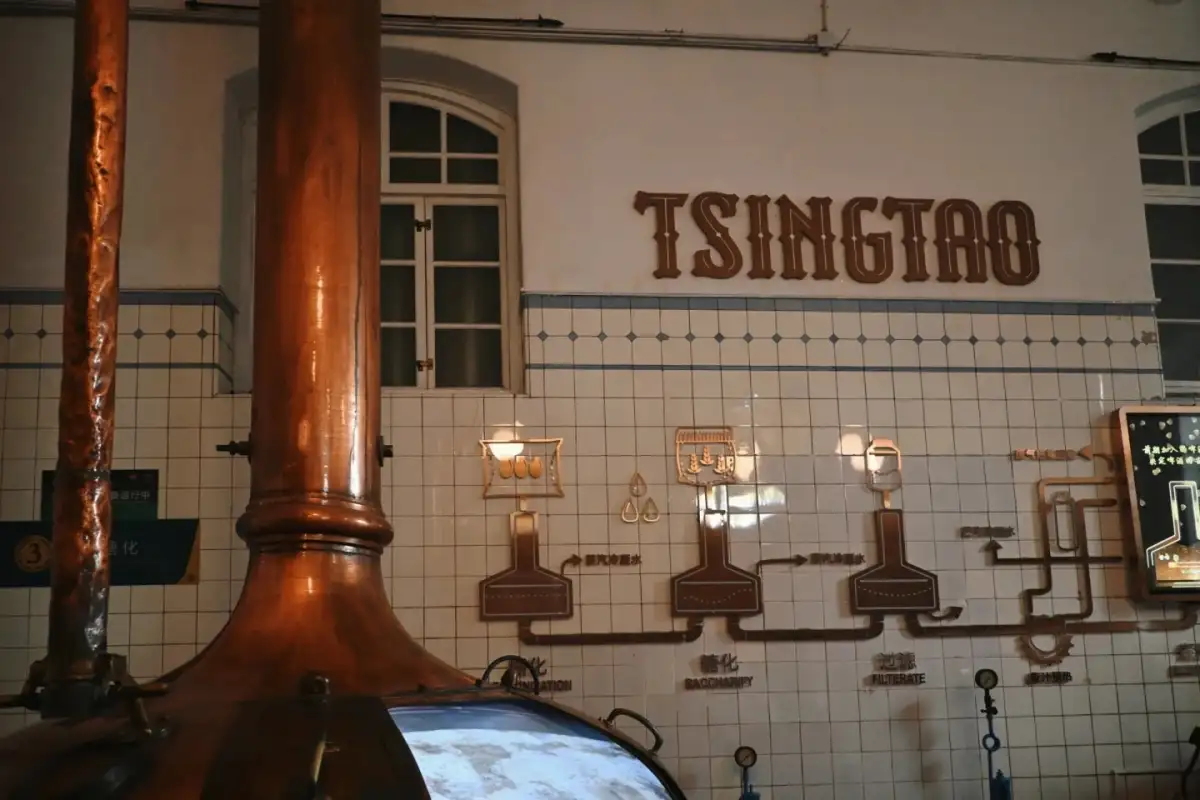
Copper brewing equipment inside the Tsingtao Beer Museum. Photo:Aprillj · Original Post.
What to Look for in Industrial Architecture
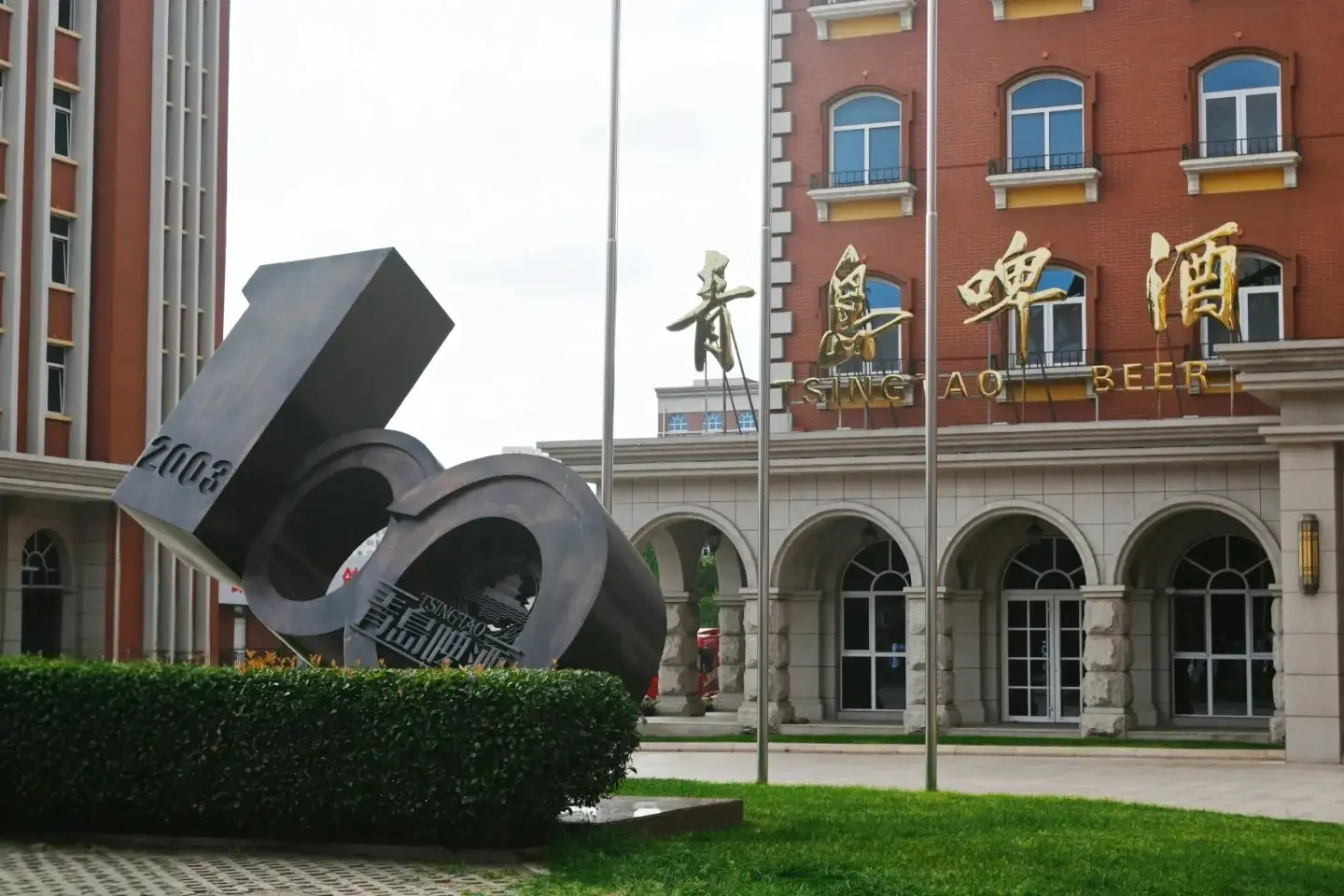
The official description highlights early German-style industrial architecture as the exhibition setting and mentions equipment such as vintage electric motors, mashing kettles, and boiling kettles. Before entering the factory grounds, take a moment to observe how the architecture differs from ordinary residential buildings: the dimensions of doors and windows, the spatial spans, and the placement of equipment all reflect the needs of goods handling, worker operations, and production organization. When these details are connected, the red-brick walls take on a significance that goes beyond serving merely as a backdrop for photographs.
Start with a simple question: How is such a container installed, and how is it maintained? Understanding the relationship between large-scale equipment and the interior space is more intuitive than simply memorizing machine names. Look up at the whole structure, then examine how it connects to the ground, and finally read the information plaques—this observation process naturally follows a sequence from the spatial context to the individual objects. This is a method for interpreting industrial heritage; it does not require specialized knowledge of every piece of equipment.
The materials are also worth examining. Brick walls, metal equipment, and glass display surfaces each offer distinct play of light and textural experiences. While photographs tend to unify them under a nostalgic filter, being there allows you to observe their different functions. For visitors interested in architecture, it’s a good idea to capture a panoramic shot of the factory building and then take a close-up of a piece of equipment—allowing the photos to convey the scale of the production space and the objects, respectively—rather than making every shot feature the same red-brick backdrop.
trace the journey from raw materials to the production process
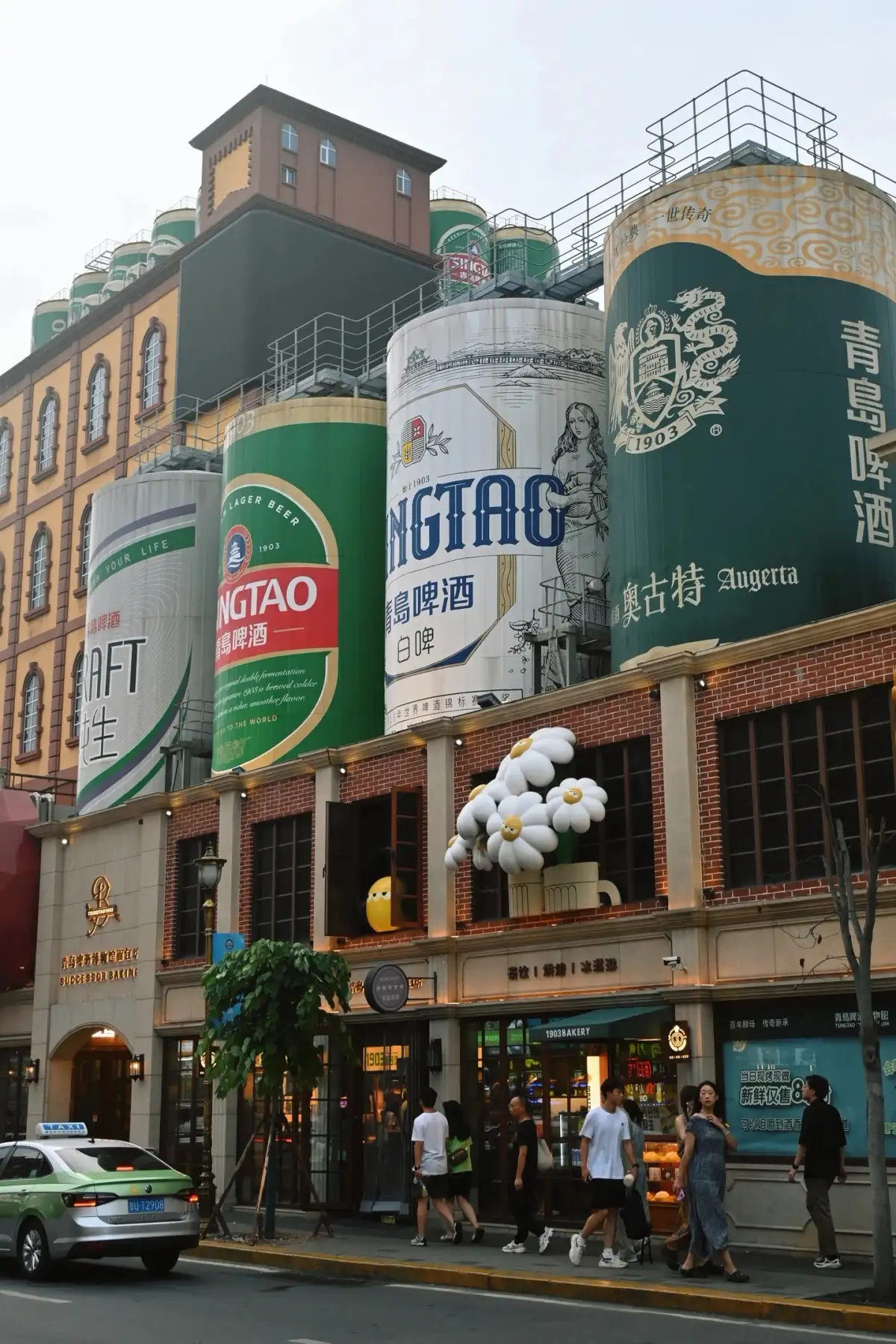
Qingdao Beer Museum’s street-side factory building. Photo:Aprillj · Original Post.
In the original post, “Aprillj” noted the displays of raw materials such as wheat, yeast, and hops. During the tour, it’s worth asking what role each of these ingredients plays and why the process requires multiple steps. The value of the exhibition lies in tracing the production chain behind everyday products. Ingredients don’t simply turn into finished products the moment they’re placed in a tank; it’s the connections between containers, the operational steps, and quality control that make up the real story.
For children, try asking the questions this way: “Where did the bottles in the supermarket come from before? What was inside them before they were packaged?” Why are the production areas and visitor areas separated by glass? These questions don’t rely on experience with alcohol and can steer the focus toward food production and factory operations. Let children guess first, then read the exhibit panels—this fosters a greater sense of participation than constantly urging them to memorize dates; parents may also discover that things they take for granted aren’t actually as familiar as they thought.
view the production display areas from a distance, focusing on observing how people and machines work together—there’s no need to wait for every production line to be in operation. Operational conditions may vary from day to day, and the industrial heritage tour itself offers historical equipment and exhibits to explore. It’s wiser to treat the desire to see ongoing production as a supplementary expectation rather than staking the entire trip on a single moment; this also frees your travel companions from the burden of waiting.
Three half-day itineraries—choose one as your main focus
For a combination prioritizing architecture and industrial culture, you can make the museum the centerpiece of your half-day, setting aside time before and after the tour for walking around the neighborhood and resting. The factory buildings offer space and a history of production, while the streets allow the architecture to be reimagined within its urban context. In this case, the seaside is better suited as a separate, independent activity, avoiding the distraction of constantly worrying about transportation to the coast while you’re still exploring the indoor exhibits.
For families with children, it’s best to narrow the exhibition focus to three key areas: ingredients, machinery, and packaging. At each stop, let the child choose one question, and parents can help find the answer; the rest of the content can be skimmed over. After leaving the museum, choose a relaxing spot for a meal or an outdoor break to give your mind and body a change of pace. This arrangement doesn’t aim to cover every interactive exhibit; the focus is on the child being able to share the story of how a product is made with their family.
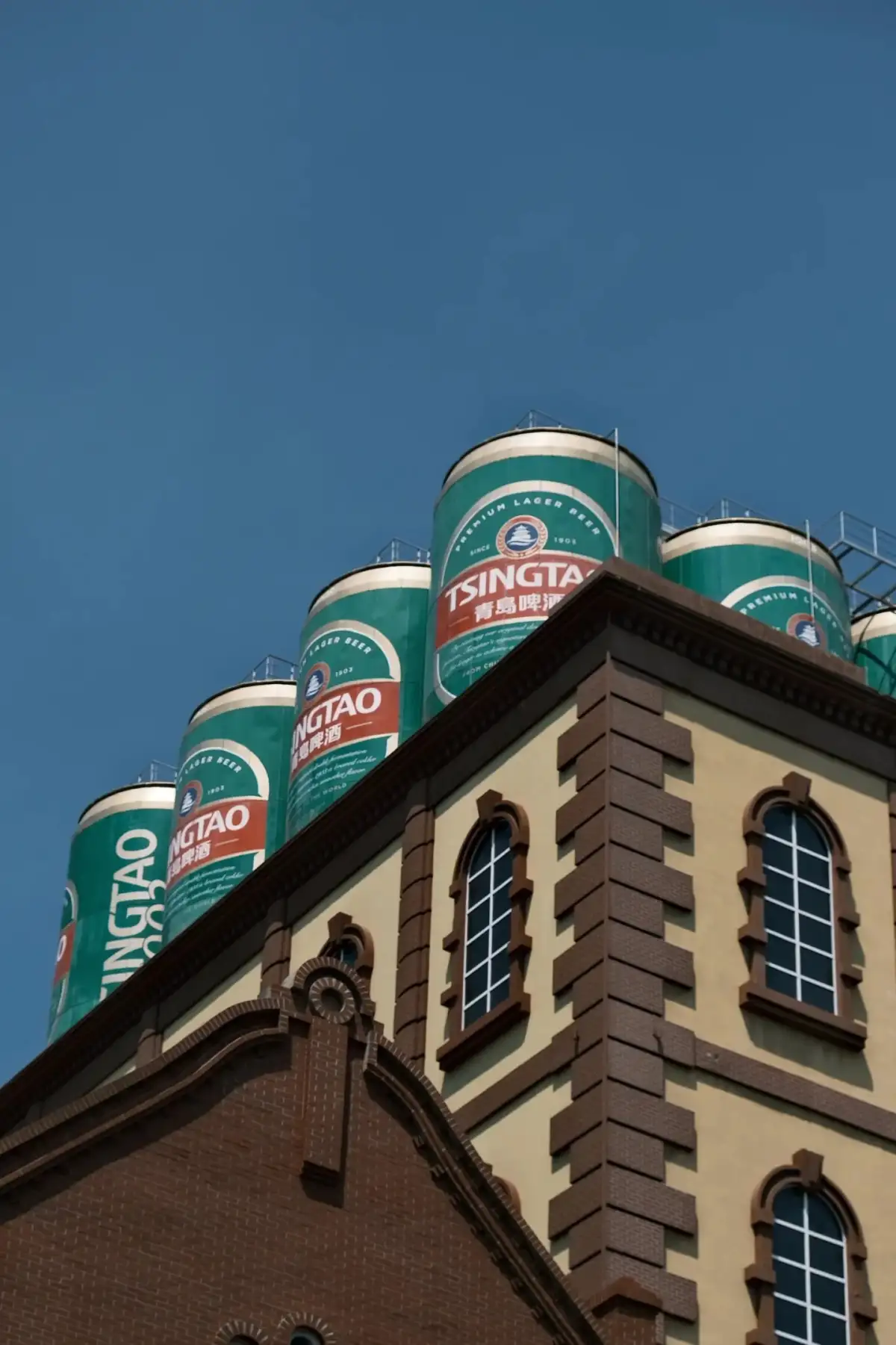
Roof decorations and factory buildings at the Tsingtao Beer Museum. Photo:Hao_ · Original Post.
For a seaside-focused itinerary, decide whether to visit the museum only after considering the weather, physical condition, and personal interests. If everyone is already fully immersed in enjoying the beach, you can choose another day; if an indoor cultural experience happens to be a shared interest, then allocate sufficient time for the museum. Indoor activities aren’t just a stopgap to fill in when the weather is bad; they also require transportation, admission, and attention to appreciate, and squeezing them in at the last minute can make for a hectic day.
There is no inherent hierarchy among the three combinations. The real difference lies in what you hope to remember when you leave: the scale of the production machinery, the moment your child understands the raw materials, or the extended time spent enjoying the sea breeze and the water’s surface. Choose one of these as your main focus, and the other interests can serve as bonus experiences. This way, your travel companions are less likely to feel like they’ve missed out on the trip because someone else had an extra drink or you took one fewer photo.
How can families where some members do not drink still enjoy the visit together?
Travel companions may have completely different preferences regarding alcohol. Making the tasting an optional activity and clarifying in advance how participants and those waiting will meet up can reduce on-site awkwardness. Those waiting do not need to sacrifice their own interests by acting as “escorts”; they can explore packaging, read about industrial history, or rest in designated areas. Fairness on a trip often comes from everyone having a part of the experience that is clearly their own.
Children do not need to focus on the flavors in adult glasses. Have them compare the fonts, colors, and graphics on the packaging and observe why brands need consistent visual identities—this offers another design perspective. How the same product is recognized in different packaging forms an interesting connection to the historical changes depicted in the museum. These observations are editorial suggestions and can be based on the materials actually on display that day; no specific packaging item is assumed to be permanently present.
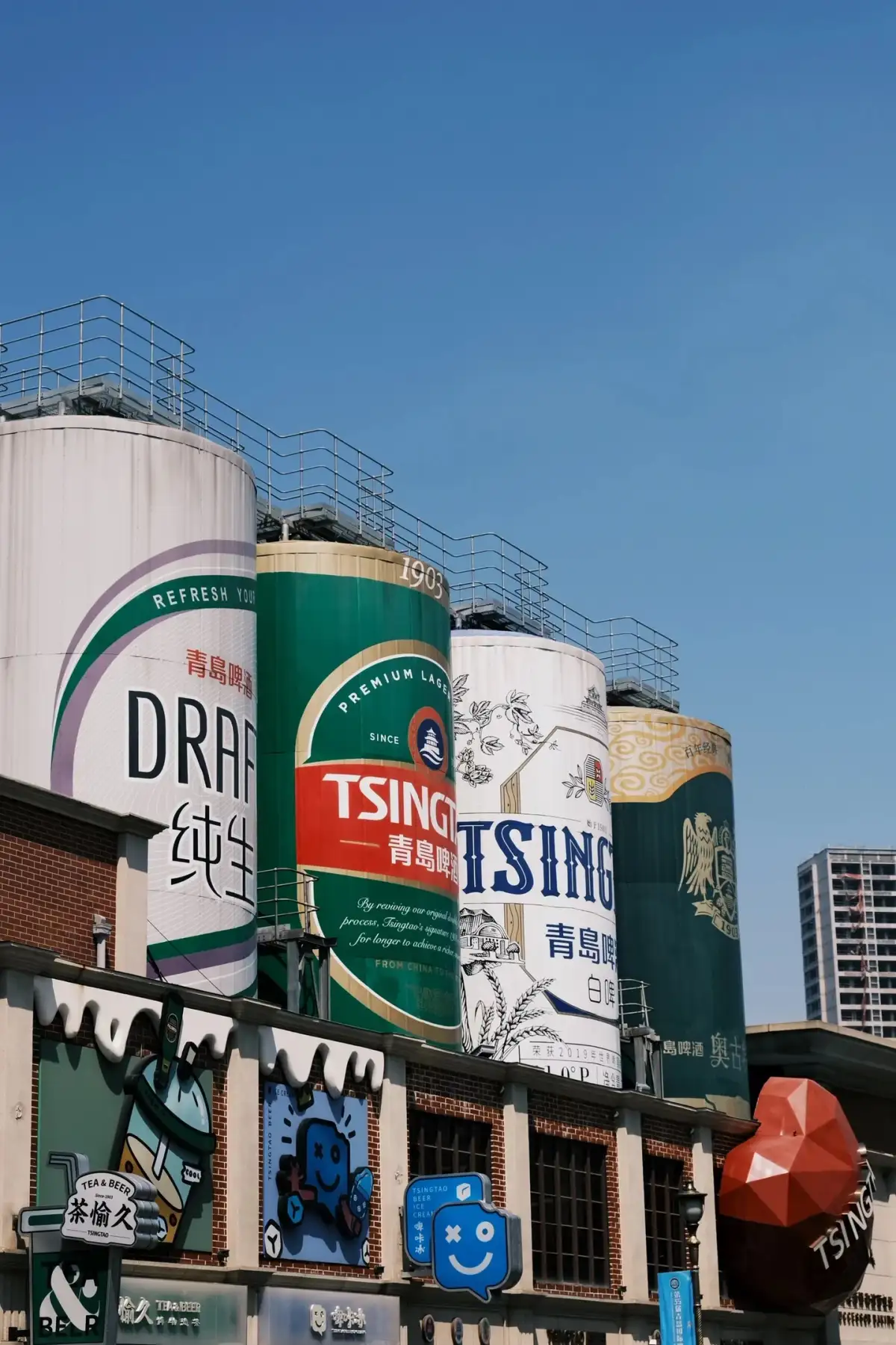
Barrel-shaped decorations outside the Tsingtao Beer Museum. Photo:Hao_ · Original Post.
When planning for older family members, prioritize standing and rest periods rather than simply asking if they can drink alcohol. Indoor tours can also lead to fatigue from walking and reading. Before entering a section with a high density of exhibits, determine where the next rest stop will be and break the tour into smaller segments. If family members split up to explore, agreeing on specific indoor and outdoor meeting spots and communication methods is more practical than simply saying, “Wait for me at the entrance after you’re done.”
Two practical issues that international visitors need to address
First, understand the language of the exhibition. For visitors with limited Chinese reading ability, it is recommended to prepare a short glossary before departure: raw materials, fermentation, saccharification, packaging, production line, and industrial heritage. This is not a full translation of the audio guide but simply helps connect the artifacts to the processes. If you require a foreign-language audio guide, check with official channels to confirm the available languages and make arrangements; a Chinese audio guide with sporadic translations does not automatically provide an equivalent experience.
Second is the correspondence between identity and the program. When selecting a date and tour program, passport holders should confirm what types of identification documents are accepted by the chosen booking channel and how to present proof of admission at the entrance. Keep a record of the names of all traveling companions, the date, and the program for easy reference during on-site communication. The local procedures and personal ticketing experiences described in the original post can serve as a reminder; however, actual implementation should still be based on the documents you hold and the official instructions for that particular visit.
If you have a private car, tour guide, or shuttle arranged, be sure to provide them with the museum’s exact name and location, and specify separately where you plan to go after leaving the museum. A city tour of Qingdao does not mean simply following a single route along the coast; a single trip across several city blocks can occupy your attention for an entire day. Allowing separate, dedicated time for cultural visits and coastal stops provides more flexibility for a personalized trip than treating both as brief stopovers.
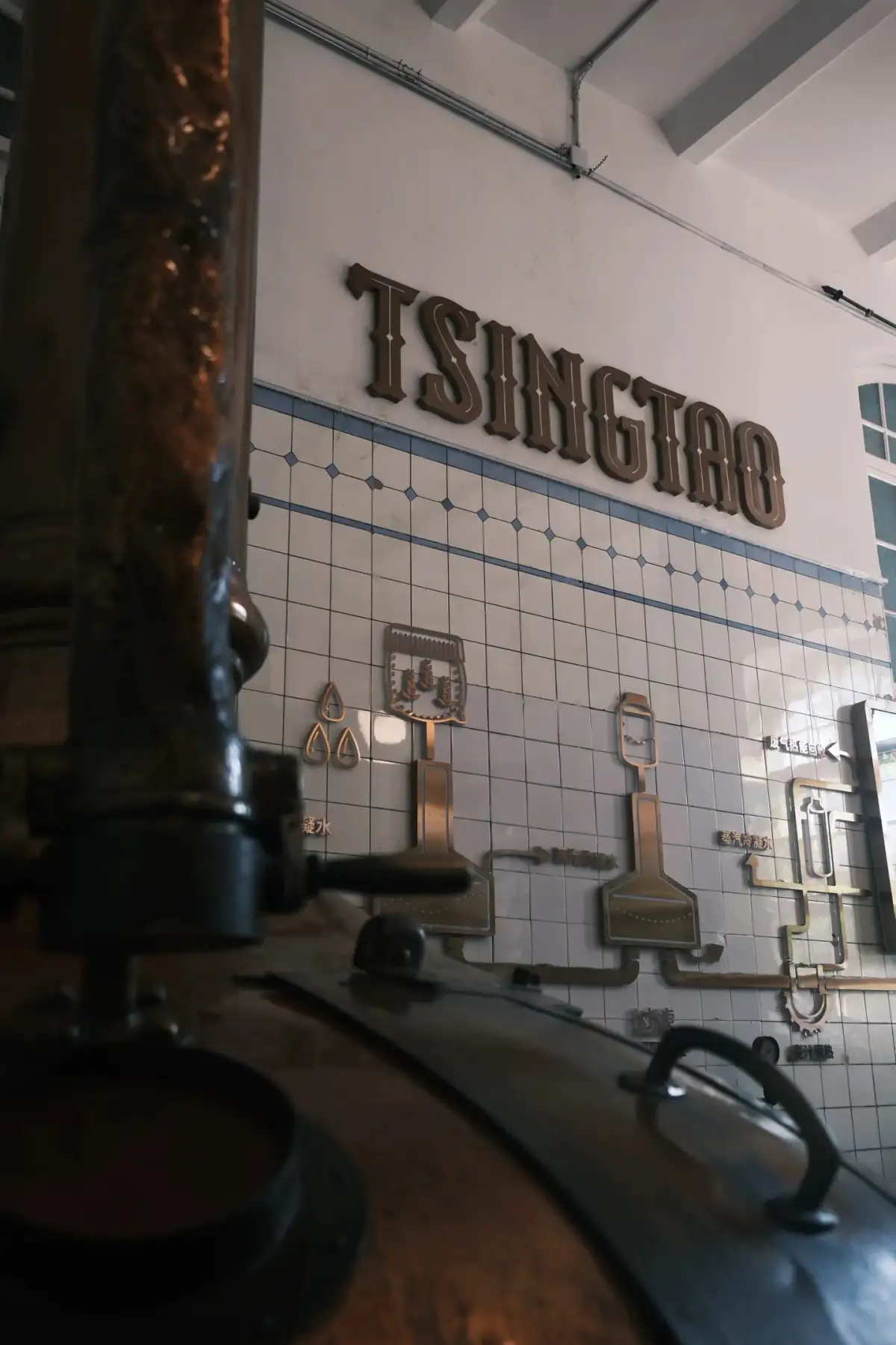
Traditional brewing equipment inside the Tsingtao Beer Museum. Photo:Hao_ · Original Post.
Packaging and the City: One Last Glance Before Leaving
Since beer is easily recognizable as a product overseas, this museum serves as a gateway for international visitors to understand Qingdao. It shifts the focus from the city’s scenery to its labor, technology, and commerce. After viewing the equipment and then examining the packaging, the graphics and names become linked to the actual production spaces; the brand is no longer just a label on the dining table, but an integral part of urban life.
However, the story of a single brewery is just one thread in the city’s tapestry. Qingdao also offers neighborhoods, the coastline, and everyday life—all worth exploring in different ways. You can start from this siteIntroduction to Qingdao as a DestinationContinue comparing urban culture with seaside aspirations, then incorporate the one you truly want to explore in depth into your itinerary discussion. The museum provides a central theme, while the destination page helps contextualize it within the broader city.
There’s no need to write “I saw all the exhibition halls” in your post-visit notes. Choosing one technical issue, one packaging detail, and one discovery made by a family member will better capture the essence of this visit. If what you ultimately remember is the enormous size of an old pot, or your child’s first understanding of how supermarket products are made, then even without taking a single sip of beer, you’ve still had a meaningful trip.
Source and Editorial Notes
This article is an original travel interpretation compiled by the Dongxing Travel editorial team based on the listed materials; it is not a firsthand account by the author. The full text of the original post has not been reproduced; accompanying images are used within the scope of authorization and are credited to the author and source of the original post. This content does not serve as proof of actual travel experiences or services provided to Dongxing Travel clients.
Hao_ · 📍Qingdao | The Beer Museum Holds the Romance of a Light Buzz 🍻 · Travel Notes; Verified/Compiled on: October 3, 2026.
Aprillj · 🍺Qingdao Beer Museum · Travel Notes; Verified/Compiled on: October 3, 2026.
Qingdao Beer Museum · Museum Overview · Official Information; Verified/Compiled on: October 3, 2026.
Qingdao Beer Museum · Admission and Tour Options · Official Information; Verified/Compiled on: October 3, 2026.