At the Shaolin Temple, people with different interests can easily approach it with different mental maps
Children might first think of martial arts moves; architecture enthusiasts will want to explore the temple’s spatial layout; and history buffs will hope to study the Pagoda Forest. Even when saying “let’s go to the Shaolin Temple,” the main focus in the minds of several fellow travelers may not necessarily be the same. Without clarifying expectations in advance, a common disagreement often arises on site: some feel they can leave once the performance ends, others have just begun exploring the buildings, and still others hope to venture further up the mountain. What a half-day itinerary truly needs to address is how to accommodate these differing expectations.
Both the Xiaohongshu posts “Half-Day Shaolin Temple Tour Guide: No Backtracking” and “Driving from Luoyang to Shaolin Temple: An Ultra-Detailed Guide” combine the temple, Pagoda Forest, performances, and mountain trails into a single itinerary. This article treats these elements as clues to what visitors find most interesting, while omitting the original posts’ fixed time estimates, ticket prices, and unverified legends. Cultural background references are drawn from UNESCO’s Dengfeng World Heritage site materials; the nature of the Pagoda Forest is based on official information from Zhengzhou; and specific operational arrangements should be checked on the day of your visit by reviewing the scenic area’s real-time information before departure.
The Permanent Monks’ Quarters: First, View the Monastery as Architecture and Functional Space Understanding a monastery begins with examining the relationships between its entrance, courtyards, and halls.
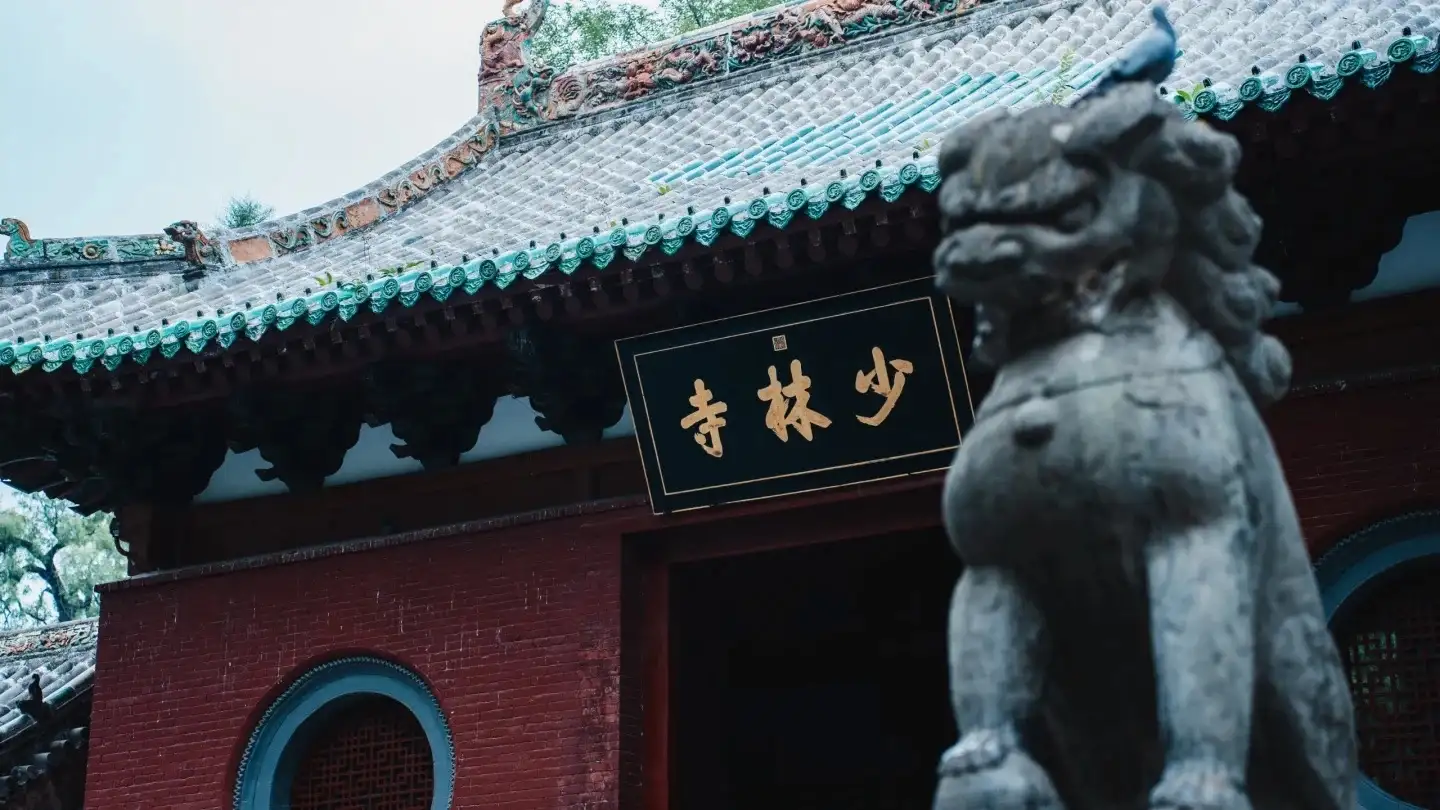
One can begin to interpret a monastery by examining the relationships between its entrance, courtyards, and halls. The gate alters one’s line of sight; the courtyards invite a moment of pause; and the front and side facades of the buildings offer different viewing angles. This sequence can help those familiar with the Shaolin Temple through martial arts imagery discover that there is also a spatial logic here that can be perceived through the body. The focus of your visit need not be solely on finding a famous artifact; it can also be on observing how people adjust their pace and volume in different spaces.
Those who appreciate timber structures and roofs can choose an open vantage point suitable for observation to compare the buildings’ silhouettes, the shadows beneath the eaves, and the size of the courtyards. Even without specialized knowledge, you can begin to discern differences: which areas draw the eye, which feel more open, and whether the view is the same up close as it is from a distance. For details on component names, dates, and restoration work, consult the on-site explanations later. Starting with visual observation gives context to the technical information, preventing you from losing interest amid a string of technical terms.
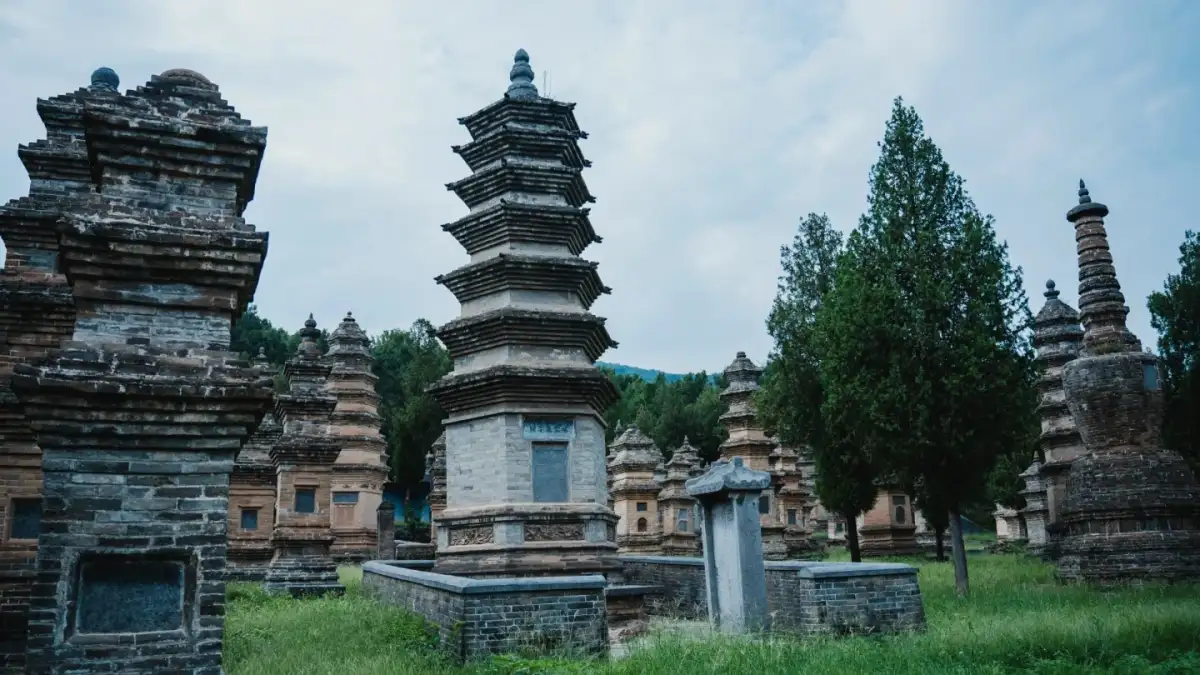
Brick pagodas of various styles in the Shaolin Temple Pagoda Forest. Photo:Student Xiao Yang 📷 · Original Post.
Monastery spaces also have a religious context. Travelers should pay attention to on-site guidelines regarding photography and movement, and reserve space for worshippers. When visiting with children, explain in advance that this is not solely an entertainment attraction; quiet observation is also part of the experience. Demonstrating respect through specific actions—such as where to stand, how to pass through, and when to put away your camera—is more effective than simply saying “be civil” at the entrance.
Tower Forest: Interpreting the Stupa Tombs as Monuments and Architectural Structures
The official Zhengzhou introduction clarifies the nature of the Pagoda Forest as a complex of funerary pagodas and highlights the historical and cultural value of its architectural forms and carvings. This context alters the way we view the site: visitors are encountering a commemorative space, not merely a collection of decorative objects for posing in front of. Begin by understanding the relationships between the pagodas from a broader perspective, then observe the shape and surface details of a specific one from the normal walking path.
If your travel companions enjoy making comparisons, select two pagodas with distinctly different outlines or proportions and discuss how they organize the line of sight. For specific identities and dates, rely on on-site explanations rather than making direct inferences about status based on height or appearance. First identify the visible forms, then learn about the figures mentioned in the inscriptions; this sequence helps make the subjects of commemoration more concrete. Architecture is no longer merely a backdrop for photographs; observation shifts from a general impression of “many pagodas” to a focus on describable details.
Children might ask why there are so many pagodas here. You can start by explaining, in brief and accurate terms, the relationship between burial pagodas and commemoration, then have them observe the differences in the pagodas’ structures. There’s no need to invent mysterious stories just to make it more interesting. Commemorative spaces can certainly be explained clearly and calmly. If anyone in your group feels uncomfortable visiting a cemetery, you can shorten the stay and allow others to explore the temple’s architecture to their heart’s content; there’s no need to expect everyone to share the same feelings.
Martial Arts Performances: Save the dynamic experience for a full viewing
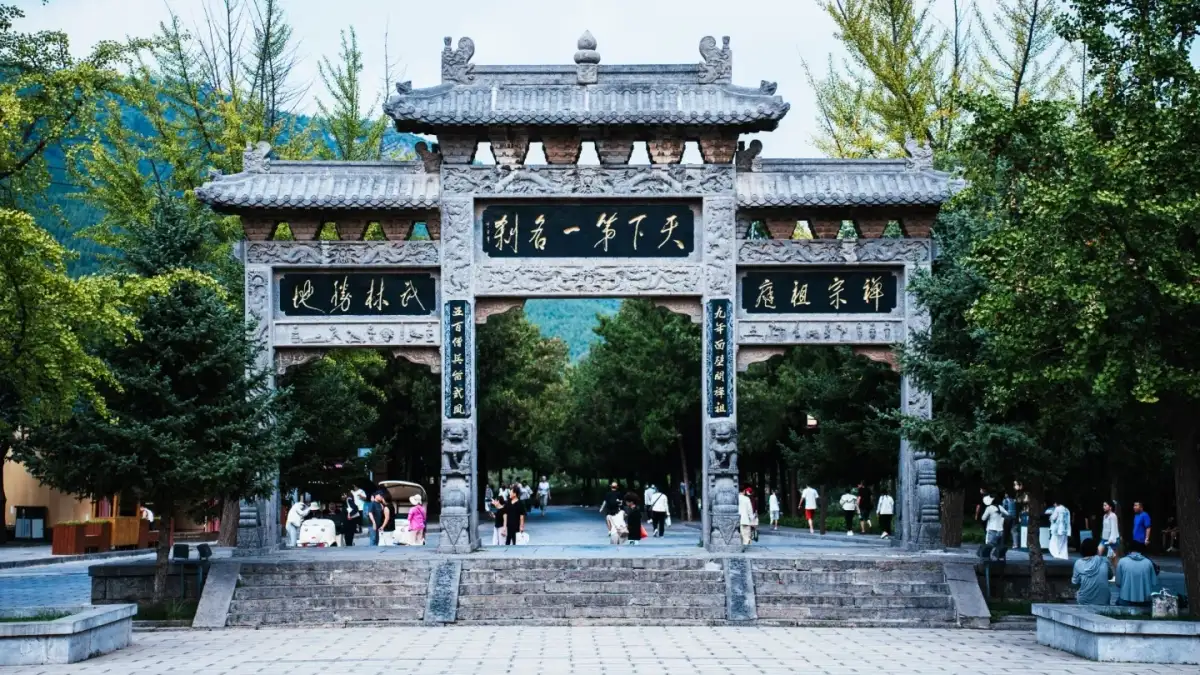
The “Number One Monastery Under Heaven” archway at the Shaolin Temple scenic area, with tourists in the distance. Photo:Student Xiao Yang 📷 · Original Post.
Performances offer a different kind of focus: movement, rhythm, and physical coordination take center stage. If the day’s itinerary includes a performance, treat it as a complete show rather than mere background noise while you move through the site. Children who enjoy movement can also discuss after the performance which sequence of changes was most distinct and which type of coordination required the greatest synergy. These questions focus their interest on what they actually saw, without the need to immediately explain the names of all the moves.
Performances, personal training, and the temple’s history are not all viewed in exactly the same way. Understanding them separately allows each element to take its proper place. The spectacular movements in the performance can spark interest; afterward, visitors can return to the architecture and historical records, rather than relying solely on the stage production to convey the entire historical narrative. Parents can also note their children’s questions and follow up later through reliable courses or resources, turning a single visit into the starting point for further exploration.
If someone in the group has little interest in the performances, discuss whether they’re still willing to watch them together and, afterward, which part of the itinerary they’d like to focus on. Family plans don’t necessarily have to divide time equally; what matters most is that everyone has a segment of the experience they’re genuinely interested in. By acknowledging everyone’s differing preferences upfront, it becomes easier to communicate when making last-minute changes to the itinerary, and you’ll avoid misinterpreting someone’s silence as tacit agreement to the entire plan.
Sanhuangzhai: First, consider it as a mountain destination; then decide whether to include it in the itinerary
Both original posts mention Sanhuangzhai; this clue suggests that trips to the Shaolin Temple are often combined with mountain activities. The editor suggests listing the mountain-related content as a separate option and asking whether it aligns with the day’s theme. Having already toured the temple, the Pagoda Forest, and the performances does not necessarily mean there is enough energy or time left to complete another route. The mere mention of a location in a guide for the same scenic area cannot replace an understanding of the walking conditions and transportation connections.
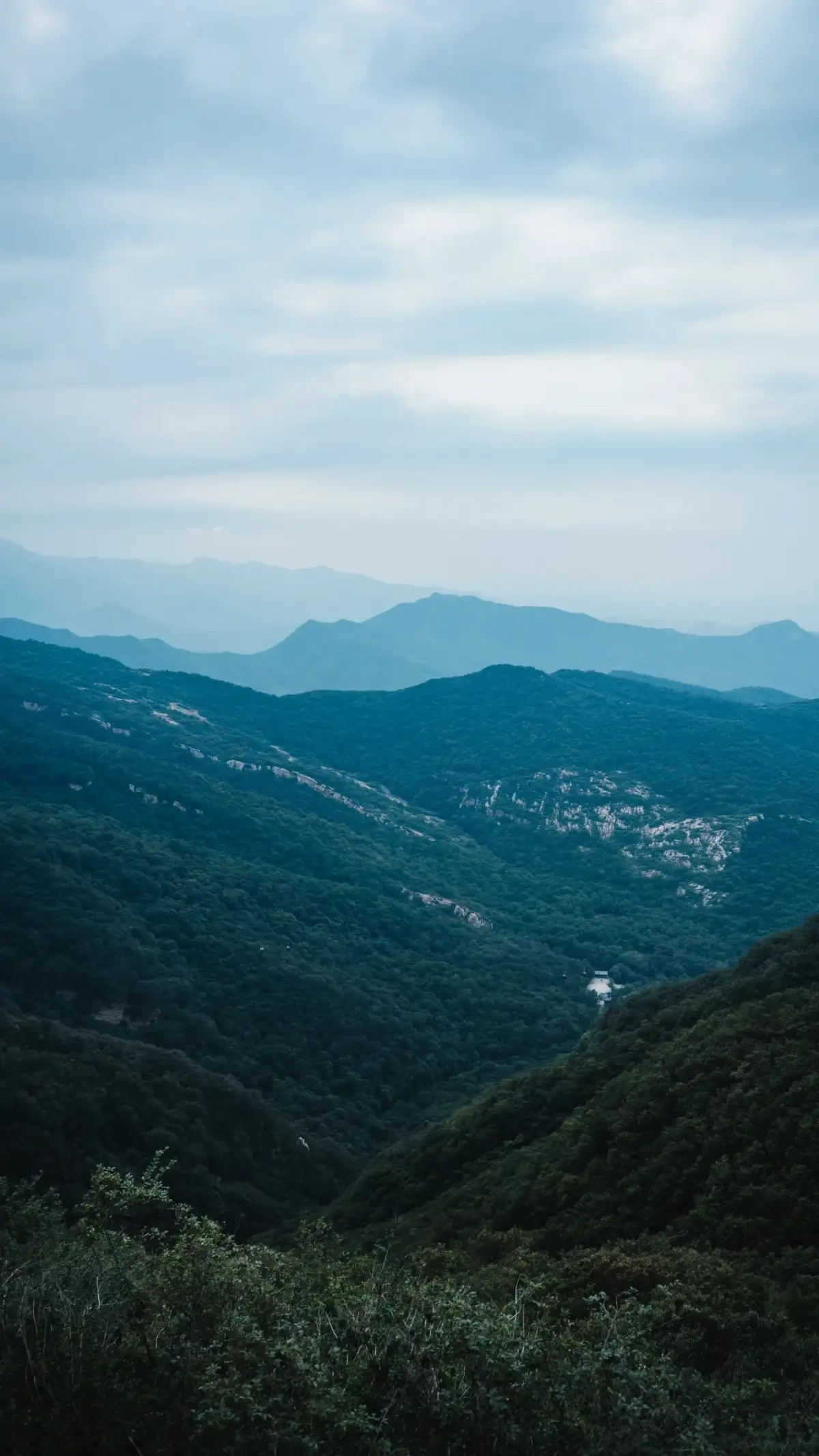
The green valleys of Mount Song and the layered ridges in the distance. Photo:Student Xiao Yang 📷 · Original Post.
If the primary goal is a family cultural visit, it’s often better to leave some leeway in the schedule rather than cramming in more mountain activities. This allows children to revisit a building they like, gives photographers a chance to capture more environmental shots, or lets elders sit down and discuss the details they’ve just seen. For those who enjoy hiking, the approach can be reversed: make the mountain hike the core of the day and make clear choices about which cultural elements to include. The key is to focus on a central objective rather than trying to string together every notable site in sight.
By the end of the half-day, take away three different questions
Before leaving, try to answer the following questions individually: Which space in the monastery made you slow your pace? What detail in the pagoda complex made the commemoration feel tangible? Which movement in the performance made you want to learn more about martial arts? These three questions respond to different experiences and provide space for companions with diverse interests to express themselves. Even if you don’t end up covering everything you originally planned, as long as your observation has a focal point of its own, this journey can still be fulfilling.
Dengfeng also offers a point of comparison with the heritage sites in Luoyang. The monasteries and stupa tombs draw attention to architecture, function, and commemoration. This siteDestination Guide to the Longmen GrottoesThis can serve as a reference for another stop focusing on the interplay between carvings and cliff faces. The specific itinerary will be confirmed by a consultant based on transportation logistics and the pace of your travel companions. When scheduling these two sites together, the value lies in the variation of what you see, rather than simply increasing the number of attractions visited in a single day.
Sources and Editorial Notes
This article is an original travel interpretation compiled by the Dongxing Travel editorial team based on the cited materials; it is not a firsthand account by the author. The full text of the original post has not been reproduced; accompanying images are used within the scope of authorization and are credited to the author and the source of the original post. They do not serve as proof of actual visits or services provided to Dongxing Travel clients.
Foodie 🐟 · Shaolin Temple Half-Day Tour Guide: No Backtracking · Travel Notes; Verified/Organized on: October 3, 2026.
Xiao Yang 📷 · 🚗 Driving from Luoyang to the Shaolin Temple: An Ultra-Detailed Guide Is Here! · Travel Notes; Verified/Organized on: October 3, 2026.
UNESCO World Heritage Centre · Historic Monuments of Dengfeng in the Center of Heaven and Earth · Official sources; Verified/compiled on: October 3, 2026.
Zhengzhou Municipal People’s Government · Shaolin Temple Pagoda Forest · Official sources; Verified/compiled on: October 3, 2026.