When planning a visit to the Summer Palace for elders, the most common mistake is treating everything on the map as a mandatory task. Photos of the garden show lakes, mountains, bridges, and long corridors—all appearing to form a single scene; but once you’re actually there, approaching each of these sights requires physical effort. A family-friendly itinerary should first identify who can walk continuously, who needs to sit down, and who wishes to climb to higher vantage points, and then determine which spots are best viewed from a distance. Comfortably experiencing one highlight is more meaningful than completing a long route without first assessing everyone’s capabilities.
小红书作者小毛的完整笔记记录了雨后晴天的颐和园,也提到假期里的人流。这类记录可以提示两个变量:天气会改变观看条件,人流会改变步速。它并不证明同一天适合每位长辈,更不能保证下一次也有相同的晴空。本文不采用原帖的情绪判断作为体力结论,而是从这些变量出发,把路线选择转为家庭可以提前讨论的事情。
The first sheet lists physical capabilities; the second sheet lists the attractions
First, ask your traveling companions what kind of walking they are generally comfortable with, rather than asking elders to make a last-minute commitment to persevere on the day of departure. Walking continuously on flat ground, going up and down stairs, and standing to listen to a tour guide’s commentary all place different physical demands on the body. Some people can walk long distances but dislike climbing stairs, while others find standing for extended periods more taxing. Only by documenting these differences as specific details can you determine whether to follow the lakeshore path, climb to higher vantage points, or shorten your stay at each building. If personal health limitations are involved, the individual should make the decision based on their actual circumstances; this article is not a substitute for medical advice.
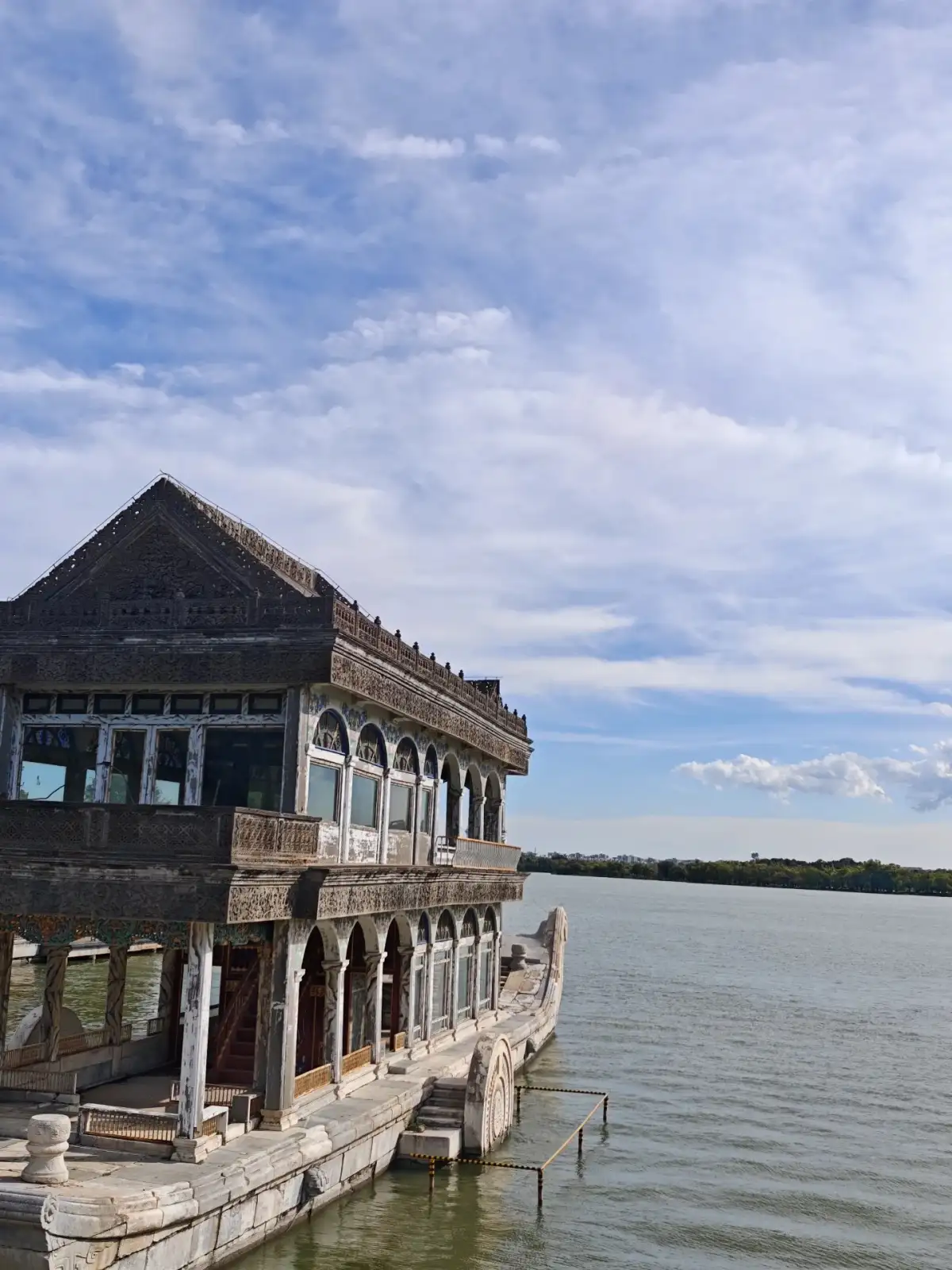
The Stone Boat at the Summer Palace and the surface of Kunming Lake. Photo:Xiao Mao · Original Post.
The UNESCO World Heritage inscription notes that the Summer Palace uses mountains and water as its framework, organizing the garden architecture into a cohesive whole. Based on this, travel editors can propose three viewing perspectives: one focusing on the relationship between the lake surface and distant structures; one emphasizing the mountain-side architecture; and one highlighting the courtyards and connecting spaces. All three approaches allow visitors to appreciate the garden, but it is not necessary for a single person to explore every corner in depth. The garden’s holistic nature is a framework for understanding; it should not be misinterpreted to mean that visitors must visit every single location to be considered to have seen the entire site.
If an elderly person is better suited to gentle walking, prioritize identifying lakeside and architectural viewing points accessible via standard open routes, while allowing for a return route. This guide does not guarantee a completely step-free experience, nor does it list a so-called “absolutely wheelchair-accessible” route. Connections that appear short on a map may involve elevation changes, and entrances and service facilities are subject to change. When accessible conditions are truly required, you should confirm with the park before your visit which entrances, pathways, and facilities are available that day, and incorporate their specific responses into your actual itinerary.
Climbing to higher elevations should be a decision made on an individual basis
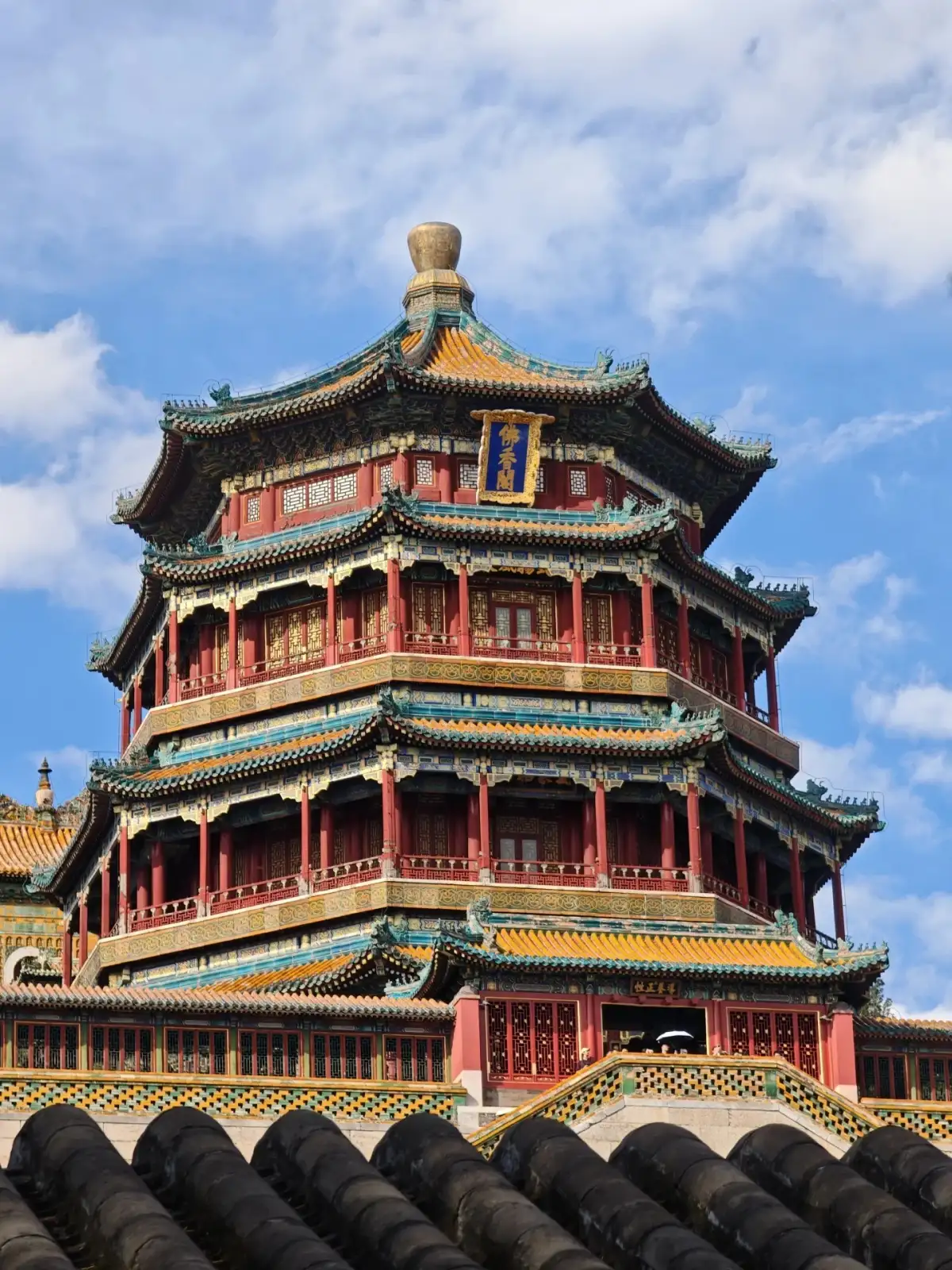
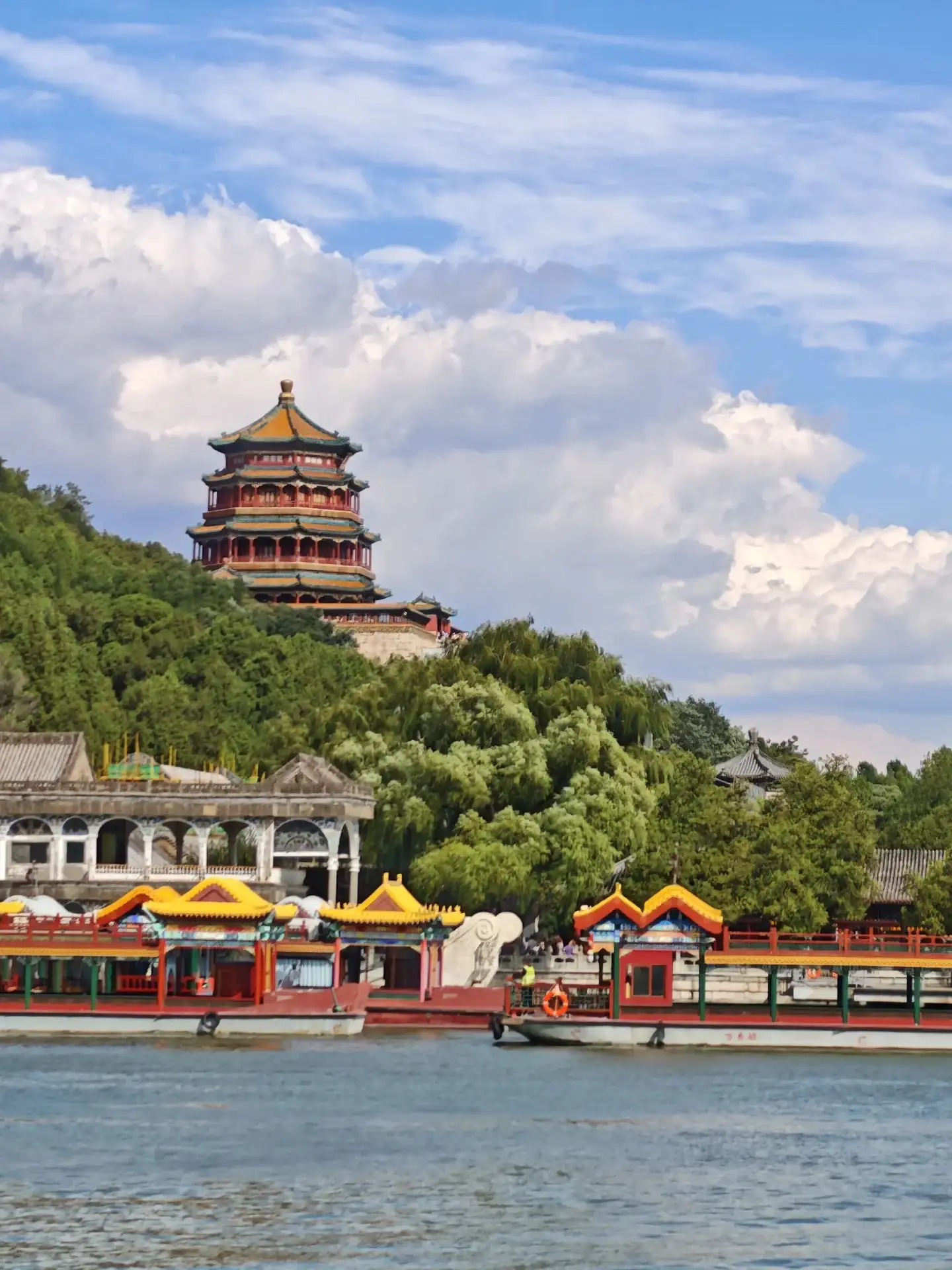
The multi-story structure and yellow glazed eaves of the Buddha Incense Pavilion in the Summer Palace. Photo:Xiao Mao · Original Post.
Those who enjoy climbing can choose corresponding activities, but families still need to know how to get back down once they reach the top. The most common misunderstanding is to assess only the enthusiasm for the ascent, while overlooking the descent and the subsequent journey. Even if someone is willing to continue at the time, fatigue may not set in until the return trip. It makes more sense to schedule the hike for a time when you still have energy, and then reassess whether to continue sightseeing afterward, rather than committing to hiking the entire loop immediately after finishing the climb. The order suggested here is a recommendation from the editor; on-site, you must still follow the routes that are open to the public.
If family members have different interests, you can arrange to split up briefly, but be sure to specify the meeting point clearly enough. A vague description like “by the lake” or “at the entrance” could refer to multiple locations. Choose landmarks that can be clearly identified on the official map, confirm that everyone can reach them, and agree on a plan of action in case you lose contact. Splitting up does not mean leaving behind those who move more slowly to wait, nor should taking a screenshot of your location be used as a substitute for explaining your whereabouts to others. If necessary, choosing a shorter itinerary that the entire group can follow together is a safer option than trying to ensure everyone fulfills their individual wishes.
Beyond ascending to higher vantage points, viewing the scenery from a distance also offers valuable insights. Visitors can identify the relationship between the mountains and the lake from their normal walking paths and observe how the architecture is arranged along the terrain—without claiming that a distant view can replace all interior tours. For older visitors who tire easily, the focus of the tour explanation can shift from a list of building names to a few easily understandable relationships: where the mountains are, where the water is, and which spaces connect the two. This approach reduces the cognitive load and allows fellow travelers to actively participate in the viewing experience, rather than merely listening to others recount what they’ve photographed.
Rest stops are planned points along the route, not unexpected setbacks
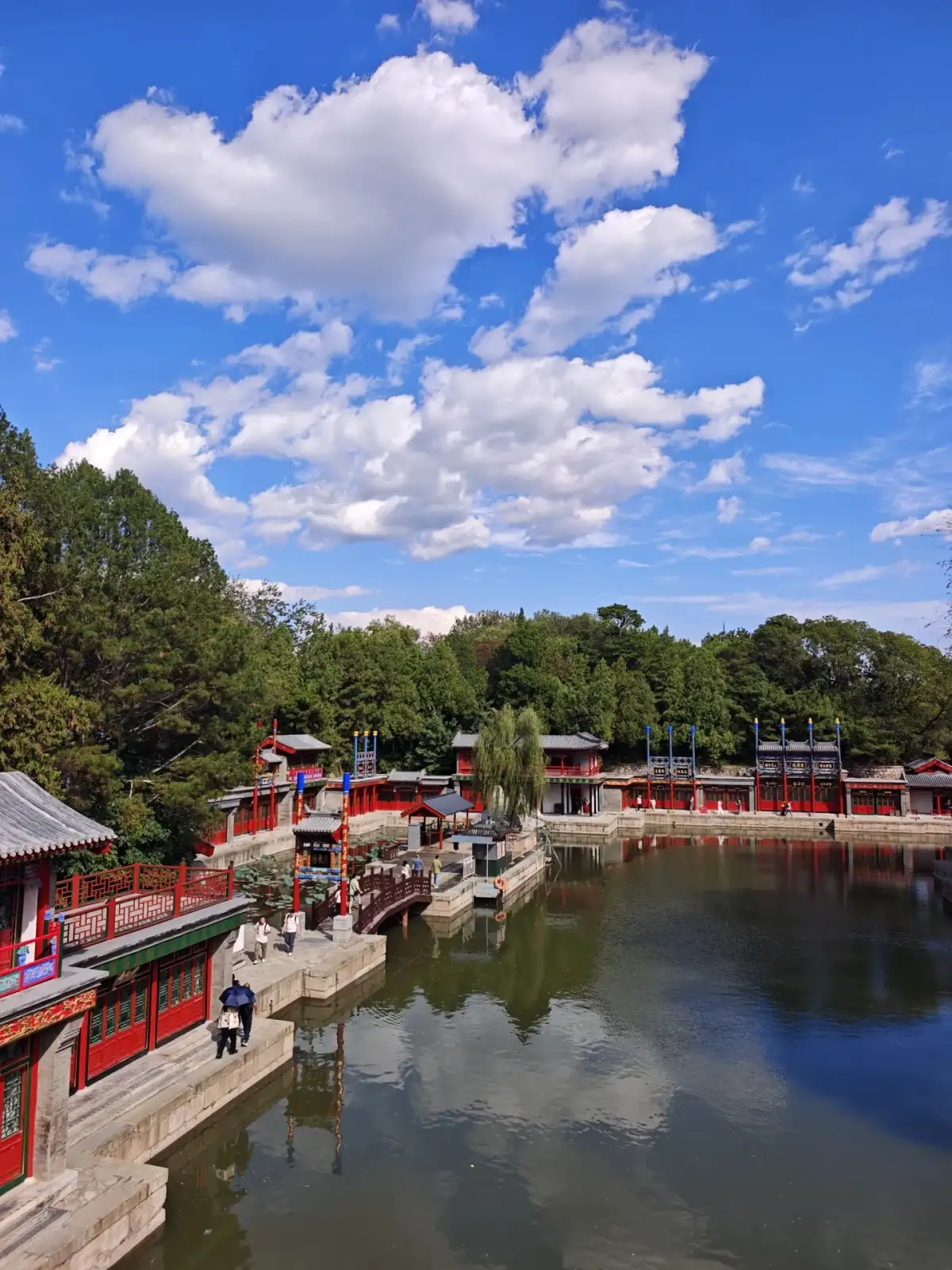
Red railings along the waterways of the Summer Palace and the buildings lining the shore. Photo:Xiao Mao · Original Post.
When planning stops, fact in needs such as finding seating, drinking water, using the restroom, and eating. Whether a specific spot in the park offers seating or is suitable for a stop on a given day depends on on-site conditions; do not include a guarantee simply because you see an empty chair in an online photo. When encountering heavy crowds, it is better to shorten the next viewing segment rather than have older family members continue to rush to keep up with the original itinerary. If a travel companion expresses fatigue, this should be acknowledged explicitly; only then will the physical fitness information discussed in advance truly inform the day’s arrangements.
Mealtimes should not be squeezed in after all the sightseeing. It’s a good idea to discuss in advance with the person in question their preferred mealtimes, acceptable foods, and any personal items they need to carry with them. Do not rely on a single online restaurant recommendation as your only dining option, nor assume that specific dietary needs will be met on-site. If you need to prepare food for health reasons, do so according to your individual needs and the venue’s rules. While travel articles can serve as a reminder to check these details, they cannot guarantee dining services or recommend a one-size-fits-all dietary plan.
A sunny day on the lake might inspire you to walk a bit further, while wet paths after rain may slow your pace; wind and temperature can also alter how you experience your time there. Family itineraries should include a section that can be easily shortened—for example, by skipping additional viewing points farther away—without affecting the highlights already selected. Shortening the route does not mean wasting the admission fee, and the quality of the trip should not be assessed solely by the number of buildings visited. Being able to return at a leisurely pace after seeing the main attractions, while still leaving everyone eager to discuss what they’ve seen, is a more realistic measure of success for a family outing.
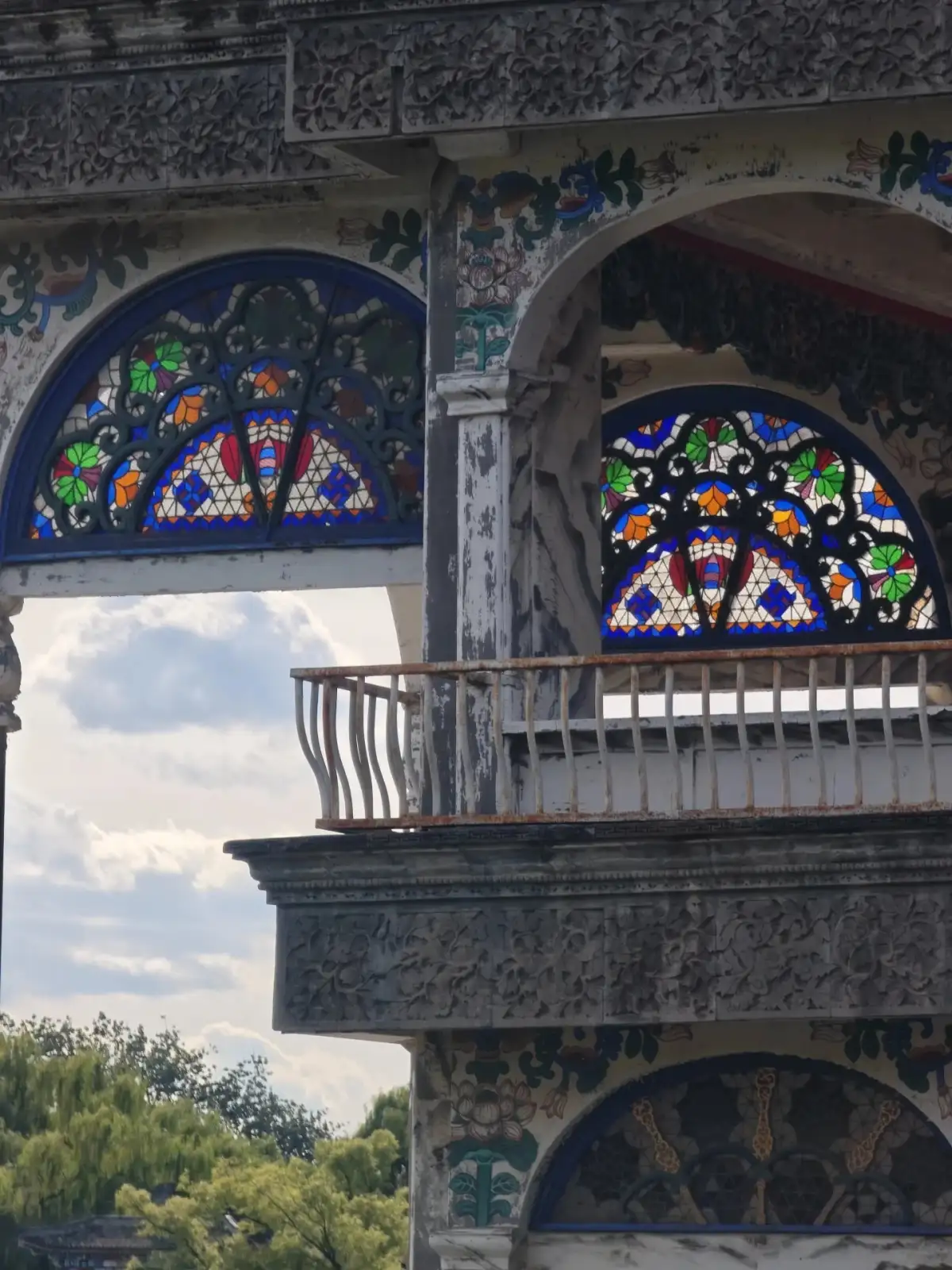
The stained-glass windows and railings on the upper deck of the Stone Boat at the Summer Palace. Photo:Xiao Mao · Original Post.
For elderly visitors from abroad visiting China for the first time, it is also important to prepare clear Chinese place names and meeting point information. The English names provided on this page can aid understanding, but when communicating with drivers or staff, you should use the official Chinese names of the locations. Verify the entrance to the scenic area separately from the pickup location after departure; do not assume they are the same place just because both are labeled “Summer Palace.” Actual pick-up and drop-off arrangements should be confirmed by the party responsible; this article does not provide unverified information regarding entrances, stops, schedules, or fixed times, nor does it present the garden tour as any form of service guarantee.
At the end of the day, you can ask each member of your group to share one moment they’d most like to remember: a distant view, an architectural observation, or a moment to sit down and chat. These don’t have to be the same. Incorporate these preferences into your follow-up plans.Beijing Travel PlanningOnly then can an advisor understand which themes and walking intensities are best suited for your family. The landscapes of the Summer Palace need not all become a burden on your feet; by selecting sections that allow for careful observation, you can still create a clear and complete memory of the garden.
Source and Editorial Notes
This article is an original travel interpretation compiled by the Dongxing Travel editorial team based on the provided information; it is not a firsthand account by the author. The full text of the original post has not been reproduced; accompanying images are used within the scope of authorization and are credited to the author and the source of the original post. They do not serve as proof of actual travel experiences or services provided to Dongxing Travel clients.
Xiao Mao · The Summer Palace pairs perfectly with blue skies and white clouds · Travel Notes; Verified/Compiled on: October 3, 2026.
UNESCO World Heritage Center · World Heritage Description of the Summer Palace · Official sources; Verified/Compiled on: October 3, 2026.