East Travel Editorial Department · Travel Diaries and Pre-trip Reading
Small gardens are best enjoyed with a lighter mindset.
Master of Nets Garden does not rely on vastness to impress. For travelers just beginning to explore Chinese gardens, its value lies in the ability to walk along the same stretch of pond shore repeatedly, allowing the subtle changes created by a single turn or a doorframe to gradually become clear. When planning a trip to Suzhou, you can dedicate a full half-day to this garden, pairing it with a stroll through nearby streets and alleys and a lunch; if you try to cram in several gardens at once, the details will easily blur together in your memory.
Before entering, consult the map to distinguish the locations of the residential hall and the garden. According to materials from the Suzhou Municipal Bureau of Gardens, the garden is centered around Caixia Pool, with the residential hall situated to the east. Once you’re aware of these two sections, there’s no need to rush to find the water as soon as you enter. First passing through the space defined by walls and doorways, then catching sight of the pond—this creates a visual progression from confinement to openness. A small area does not automatically speed up the tour; rather, it encourages visitors to look back, requiring a leisurely pause.
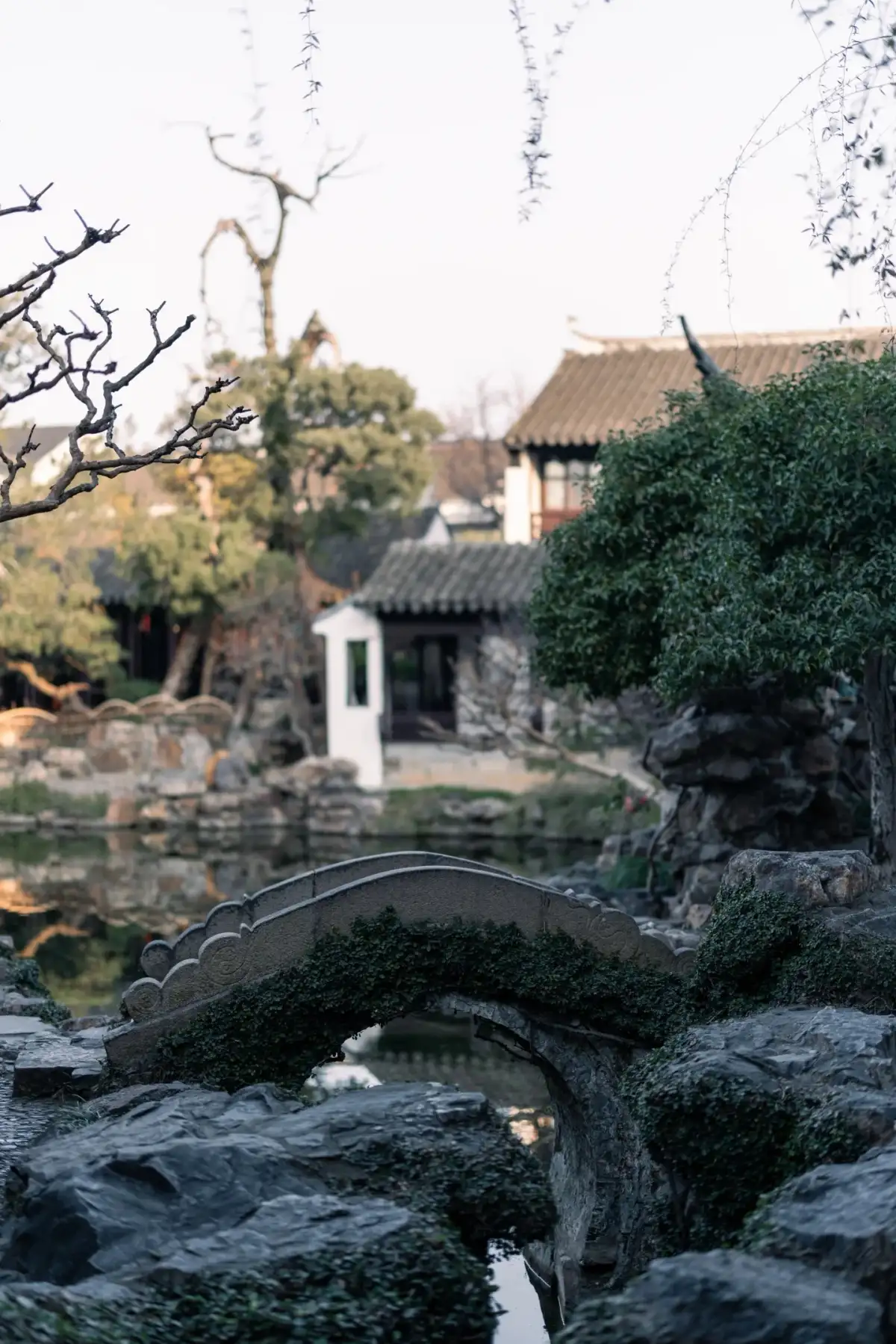
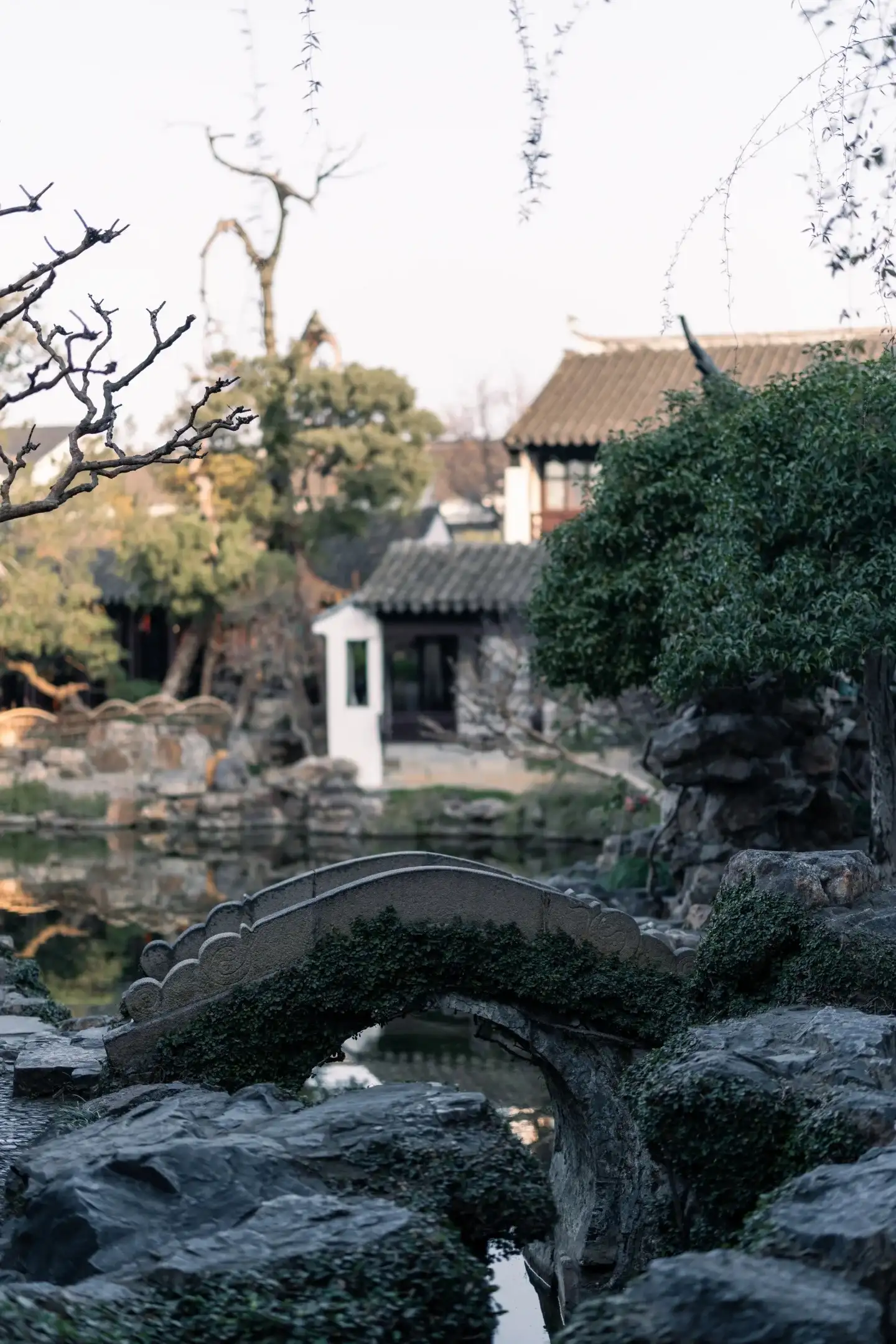
A small stone bridge by the pond in Wangshi Garden. Image source: Xiaohongshu · Mr. Xu, the Steady Cyclist The residential hall is the key to understanding the first half of the garden. When passing through the hall, don’t focus on how elaborate the decorations are; instead, observe how the rooms are arranged, whether the doors ar
The residential hall is the first half of understanding the garden
When passing through the hall, set aside thoughts of how elaborate the decorations are for the moment and instead observe how the rooms are arranged—whether the doors open in the center or on the sides, and where the light enters. The hall emphasizes the front facade and order, while the courtyard leaves a glimpse of the sky between the rooftops. Even if you cannot read the inscriptions on the plaques, you can still grasp this sequence through the direction of your movement: the threshold causes your footsteps to pause momentarily, the courtyard lifts your gaze, and the next hall draws your attention back indoors.
The brick-carved gatehouse at Master of Nets Garden is listed as a key architectural detail in official guides. When viewing it, start by examining the overall composition: first note the proportion between the archway and the carvings above, then observe how the patterns are arranged within the limited surface area. There is no need to press your camera lens right up against the artifact to see every detail, nor should you arbitrarily interpret the figures and plants in the brick carvings as part of a specific story. On-site explanations and formal guided tours can provide additional context, while your eyes should focus on discerning the lines, the play of light and shadow, and the materials.
When you reach the Cai Xia Pool, don’t rush to walk all the way around it just yet
Caixia Pool is the center of the garden, but being the center doesn’t mean there’s only one standard vantage point. Standing by the pond, the architecture, stone banks, and water surface each occupy different proportions. First, choose a spot where you can see the eaves on the opposite shore and observe how the reflections extend the architecture; then walk to the side to see if the windows and bridge that were previously obscured now come into view. The pond’s area is limited, so moving just a short distance can completely reorganize the entire composition.
while garden spaces often create depth through obstructions. Tree branches partially obscuring the roof, colonnades dividing the distant water’s surface, and stone banks making the pond’s edges appear and disappear—all these elements draw the eye to linger. Don’t view all these obstructions as obstacles to photography; they actually illustrate how the garden avoids being taken in at a single glance. You can also observe while sitting down to rest—the images you capture while walking differ from those you capture while standing still. There’s no need to complete all your observations in a single circuit; returning to your favorite spots is a perfectly reasonable approach.
You can also try a simple viewing exercise by the pond: first, stand in an open spot and take in the water, the stone banks, and the distant rooftops all at once; then, walk a few steps along the accessible path and observe how the architectural composition you just saw is now obscured by tree branches. The garden’s area hasn’t changed, yet the sense of depth within the scene has been redistributed. If your companion isn’t familiar with traditional gardens, pointing out a roof eave that has just disappeared from view is an easier way to communicate than reciting a string of technical terms. Reflections don’t always have to be seen as symmetrical replicas; when the water’s surface is rippled by the wind, clear lines turn into fragmented patches of color; when it’s calm, a stone bridge can appear to form a circle. You can observe both states; there’s no need to wait for a “perfect” moment defined by a photograph. The stones along the pond’s edge and the railings mark the boundaries of your view—if the camera angle isn’t ideal, simply shift your position. When you return to where you first stopped, if you can now identify which pavilion or section of wall is on which side, this loop will give you a much clearer sense of direction than when you first entered the garden.
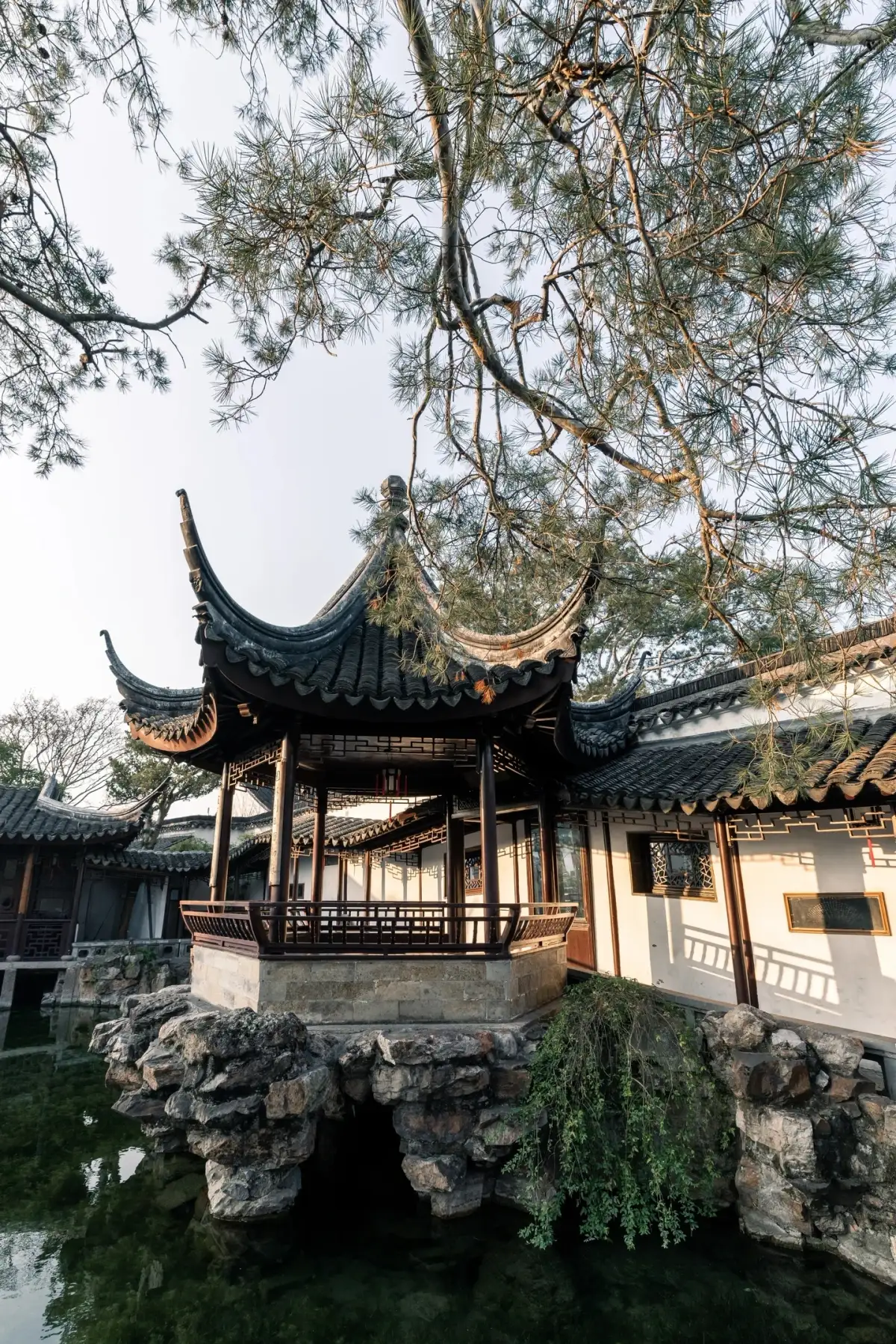
A pavilion by the pond in Wangshi Garden with pine branches. Image source: Xiaohongshu · Steady Cycling, Teacher Xu
The “Moon and Wind Pavilion” maintains a sense of distance between its name and the actual scene
The “Moon and Breeze Pavilion” west of the pond is one of the garden’s most memorable names. Garden names often infuse spaces with auditory elements, seasonal references, or poetic imagery, but a daytime visit doesn’t require waiting for the full scene implied by the name. What you can observe right before your eyes is the pavilion’s openness, the shadows beneath its eaves, and the angle at which it faces the water. Seeing how the pavilion’s pillars frame the distant scenery into several small vignettes offers a more concrete experience than imagining ancient people admiring the moon here every night.
if the setting allows for a brief stop at a pavilion, try sitting on different sides to observe the view. When facing the pond, the water’s brilliance is striking; when facing the trees, the close-up view of the plants is more vivid. This contrast helps first-time visitors understand that a pavilion is not only a structure meant to be viewed by others but also a space designed to direct the viewer’s gaze. This remains a public viewing area; make room for passersby—there’s no need to hog a seat until the scene is completely empty of people.
The “Viewing Pines and Reading Paintings” Pavilion is ideal for viewing the garden scenery as a series of layers
The “Viewing Pines and Reading Paintings Pavilion” northwest of the Caixia Pool offers another clue for this observation. Its name connects nature with painting, and on-site, one can discern layers through the foreground, middle ground, and background. The foreground might consist of railings or window frames; the middle ground features rocks, water, and plants; and the background comprises another group of buildings. When these elements are organized by doors and windows, the garden ceases to be a mere collection of scenery and instead resembles a composition that is constantly evolving.
If you’re interested, try this simple exercise: first, look at the view through an opening, then move to the side of the opening and compare the difference in your field of vision. The former offers a more focused view, while the latter provides a more complete one—neither approach is superior to the other. When taking photos, you can also include the doorframe to indicate your vantage point; cropping out the doorframe to capture only the distant scenery would actually obscure the garden’s thoughtful arrangement of the visitor’s path. Pay attention to changes in elevation and thresholds underfoot; when interpreting these spaces, walking slowly allows you to see clearly and ensures your body passes through smoothly.
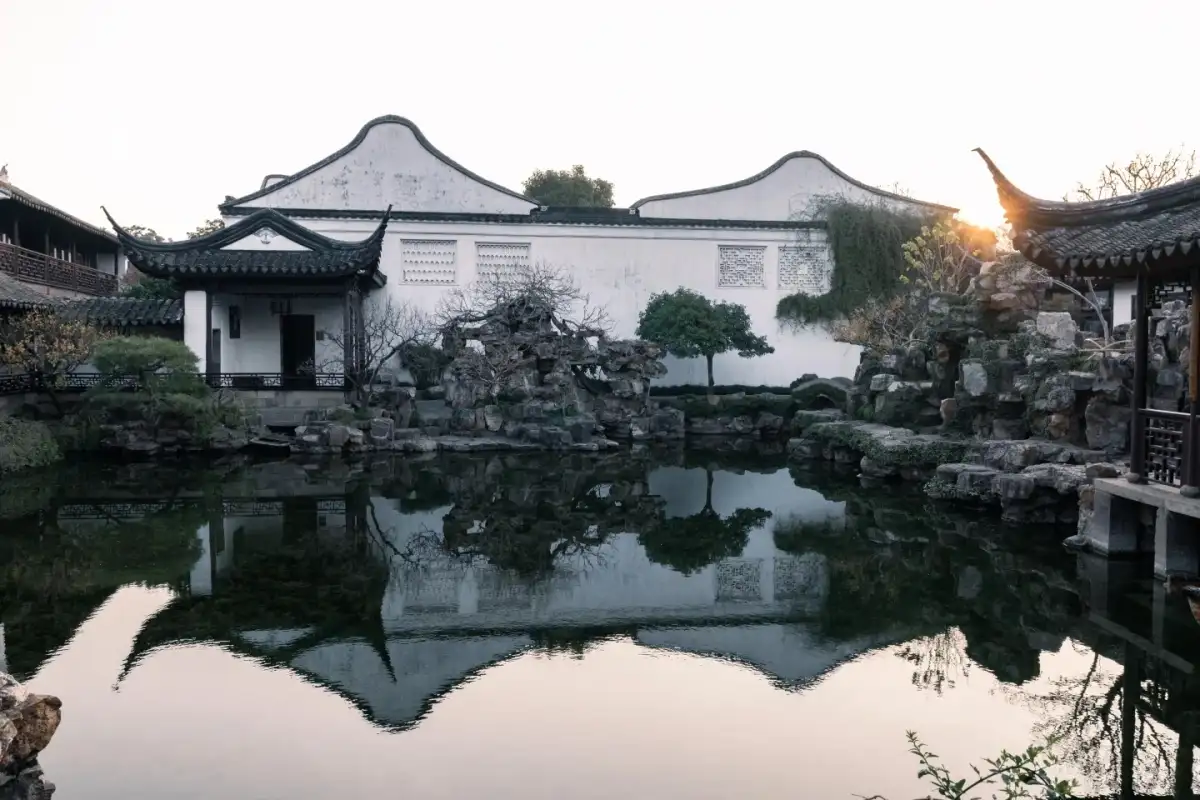
White walls, stone banks, and the reflections in the pond at Wangshi Garden. Image source: Xiaohongshu · Mr. Xu, the Steady Cyclist
The small courtyard of Dianchun’ai leaves a lasting impression not through grandeur
The Dianchun Pavilion, located in the northwest corner of the garden, is a small courtyard where visitors can linger on their own. According to records from the Suzhou Municipal Bureau of Gardens, it once served as the model for the Chinese-style garden at the Metropolitan Museum of Art in New York. While this connection holds great appeal for international visitors, once on site, one should focus on the proportions of the courtyard before them: the height of the eaves above the ground, the negative space on the walls, and the spacing between trees and rock formations—these are far easier to grasp than the abstract notion of “going global.”
which differs from the way one views the courtyard and the Colorful Clouds Pond area. The former feels more enclosed, while the latter offers a sense of expansiveness created by the water’s surface. As you walk from the pond’s edge into the small courtyard and feel the sky grow smaller, then return from the courtyard to the pond’s shore, this spatial transition will be imprinted in your body’s memory. Don’t photograph every corner from the same frontal angle; instead, capture a side view of the courtyard with the eaves casting shadows, creating a contrast with the expansive view by the pond. There’s no need to invent a story about which book a certain garden owner once read here—the architecture itself is rich enough.
Day and night are two journeys that must be experienced separately
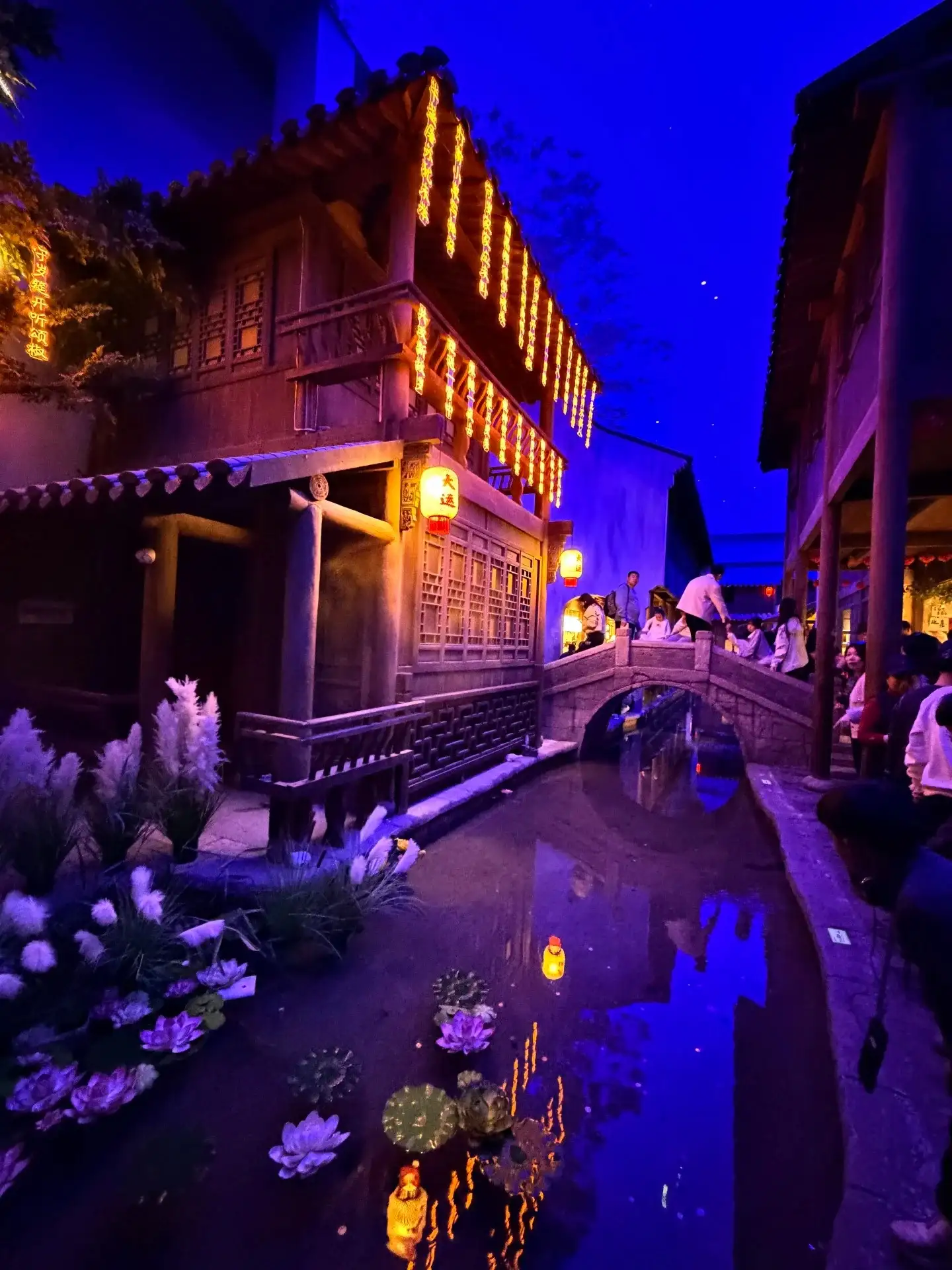
Master of Nets Garden offers nighttime cultural experiences, but daytime garden tours and nighttime programs should not be assumed to share the same schedule, entrance, or content. If you’re interested in a night tour, check the operator’s current announcements, available booking slots, required credentials, and return transportation options before you go. A single nighttime performance cannot replace a daytime exploration of the architecture and garden scenery; your choice should be based on your own interests, rather than simply to obtain a second ticket.
Spring blooms, summer shade, and autumn and winter branches shift the garden’s focal point. Do not rely on photos from a specific blooming season as a guarantee of what you’ll see during your visit. On rainy days, you can spend more time in the main hall and under the corridors, but in the event of heavy rain or operational adjustments, you may still need to alter your plans. For visitors with limited mobility, inquire in advance about thresholds, steps, and accessible areas; in classical gardens, “short distances” do not necessarily mean the entire path is level. For specific ticketing and admission rules, refer to official information; do not rely on outdated figures from social media posts.
After leaving the garden, allow yourself some ordinary time on Shiquan Street
Master of Nets Garden is located in the Kuojiaotou Alley area; after leaving, you can sit down for a meal on the surrounding streets before deciding whether to continue your stroll. Don’t turn an ordinary lunch into a quest to find a famous restaurant. After taking in the intricate garden scenery, a table by the street, a few hot dishes from the menu, and intersections you no longer need to decipher will allow the details of this half-day to slowly sink in, while also saving your energy for the afternoon.
On your way back, jot down the three spaces that truly stuck with you: a hall, a stretch of pond shore, and a small courtyard. If they feature different light, different viewing distances, and different walking directions, this visit has already established the basic grammar of garden design. The next time you visit another garden in Suzhou, your comparison will no longer be limited to size and fame, but will extend to how it organizes the residence, nature, and the visitor’s experience. A half-day at the Master of Nets Garden can thus serve as a concrete yardstick for your subsequent travels in the Jiangnan region.
Further Reading and References
Suzhou · Destination Introduction
Originally compiled by the Dongxing Travel Editorial Department based on publicly available travel notes and listed information, intended for pre-trip reading and not as a personal account of firsthand experience; opening hours, transportation, reservations, and service arrangements should be verified according to the actual travel date.