“A two-hour visit to Tianchi” sounds easy, but where you start counting those two hours will directly alter your day’s schedule. Do you start from leaving Urumqi, from the scenic area entrance, or from the moment you reach the lakeshore? The lake’s surface, the trees, and the mountains form a complete landscape, but reaching this scene requires actual travel. First, clarify where the time count begins; only then can you decide whether to make a brief stop or plan a full day—ensuring your journey isn’t dictated by a brief headline.
Xiaomada Adou’s comprehensive notes detail the route—taking the shuttle bus, reaching the lakeshore, walking toward Feilongtan, and returning to the shuttle—which he calls a “quick tour.” Cristina’s account also chooses not to take the boat or the cable car, and specifically notes that continuing forward versus retracing one’s steps leads to different outcomes. Both accounts raise useful questions: How can you minimize optional activities, and how can you avoid leaving the lakeshore only to discover you can’t return as planned?
Start with the lake and mountains—even a short stop can be fulfilling Xinjiang Uygur Autonomous Region Government’s Introduction to the Tianchi Scenic Area It explains that Tianchi is situated in the moun
Introduction to the Tianchi Scenic Area by the Xinjiang Uygur Autonomous Region GovernmentIt states that Tianchi Lake is situated in the mountainous terrain of Bogda Peak and is characterized by landscapes such as alpine lakes, forests, and snow-capped mountains. After verifying this background on October 3, 2026, the objectives for a brief stop become very clear: observe how the lake is encircled by the mountains, and then see how the trees near the shore create layers with the distant scenery.
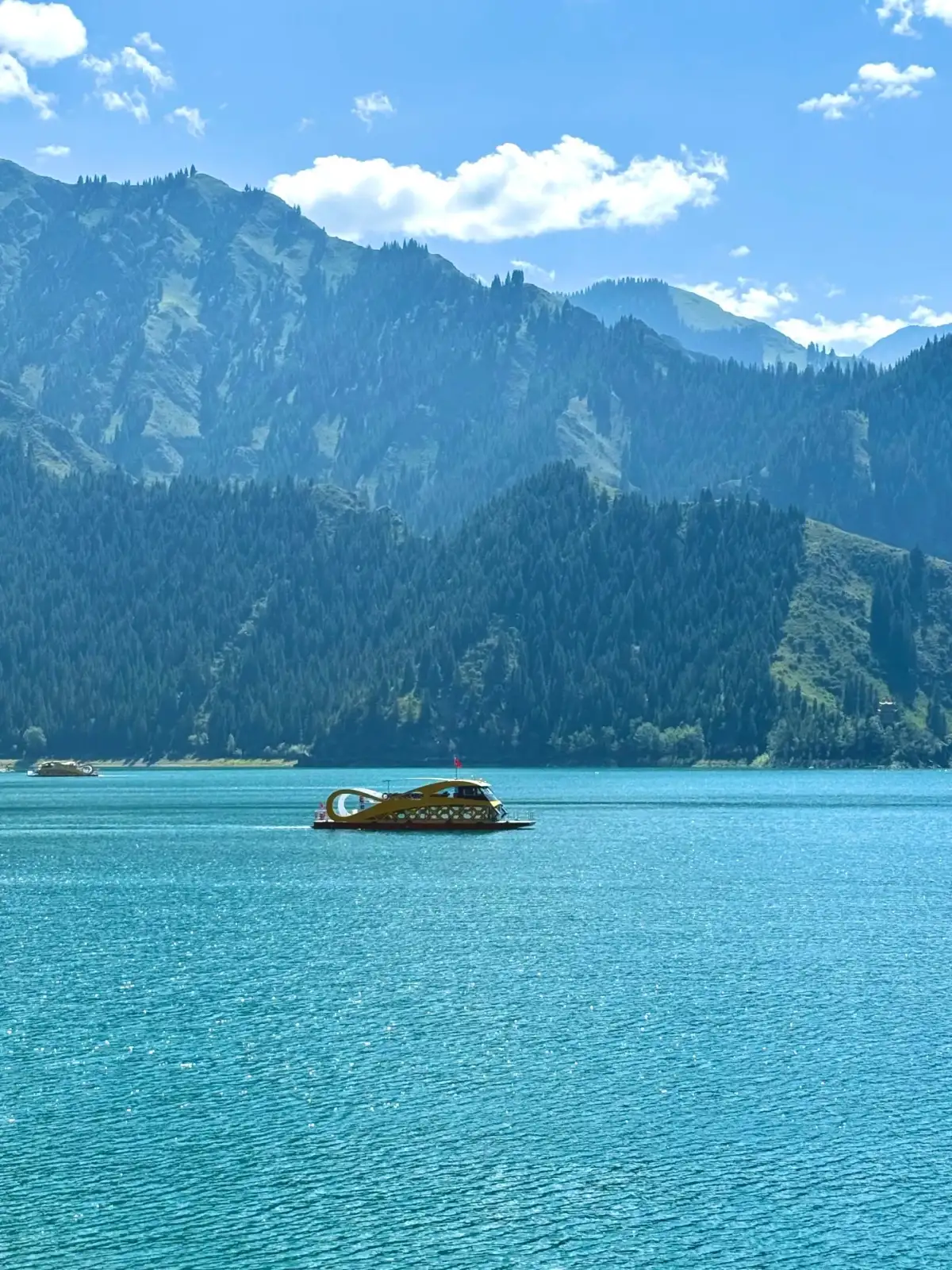
Upon reaching the legally accessible lakeshore, set aside some time to take in the overall view first. Take a wide-angle shot that captures the shoreline, trees, and distant mountains, then select a spot with reflections on the water or details of tree trunks to create a photo with a rich background. Some visitors may simply wish to quietly admire the lake and need not alter their itinerary for an additional paid experience; others who want to learn about the landforms and vegetation can read the interpretive signs or arrange for a guided tour. Even a brief stop should have a clear focus.
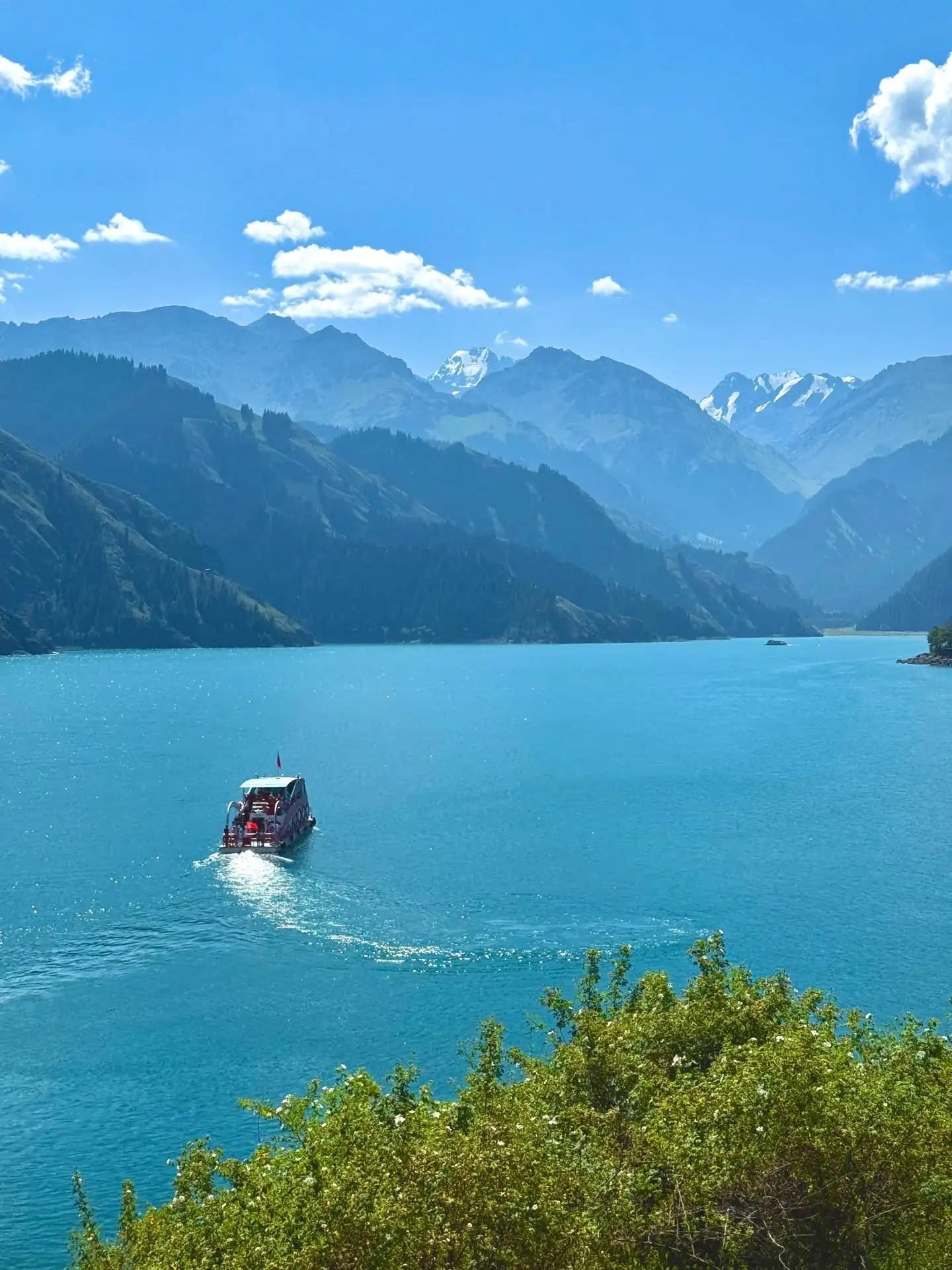
A sightseeing boat on the surface of Tianchi Lake in the Tianshan Mountains. Photo:Xiao Ma Da Dou · Original Post.
Weather conditions determine whether distant mountains are visible and how the lake surface reflects light. The original photos taken on a sunny day showcase a clear interplay between mountains and water, while overcast conditions may highlight the trees and water surface more prominently. Treating the lake’s color or snow-capped peaks as guaranteed subjects makes a short visit dependent on conditions that cannot be predicted in advance. Photographers can prepare for two objectives: capturing the overall scene when the distant landscape is clear, and focusing on the structures along the shoreline when the distant landscape is obscured.
A stroll along the lakeshore and a higher vantage point—each has its merits
Travelers who wish to explore details along the lakeshore and are willing to take their time can choose a section of the lakeshore path that is open that day. Stop whenever you find a spot you like; there’s no need to make “completing the full loop around the lake” the only measure of success. Your family members’ walking ability, trail conditions, and return arrangements will determine where you end your hike. Factoring in the return distance will help you avoid worrying about how to get back to the pickup point only after you’ve reached the latter half of the trail.
Those wishing to view the lake and mountains from a higher vantage point will need to research the cable car and its current operating status separately. Purchasing a vertical transportation ticket does not automatically mean you won’t have to walk after getting off; specific viewing spots and walking requirements should be checked in the product description. If you only have a short amount of time, adding the cable car means setting aside time for waiting in line, boarding and disembarking, and exploring new viewing areas. This choice should be based on whether a high-altitude view is your primary goal.
“Do I have to choose the boat, the cable car, and the hike?” You don’t need to treat every option as a must-do. A boat ride changes your vantage point on the water’s surface, the cable car changes your elevation, and the lakeside trails allow you to experience the immediate surroundings. Confirm whether these options are actually operating, as well as their specific details and conditions, based on the latest official information. Choosing the experience you’re most eager to try—and then setting aside time to simply enjoy the view of the lake—often provides a more fulfilling experience than constantly switching between different modes of transportation.
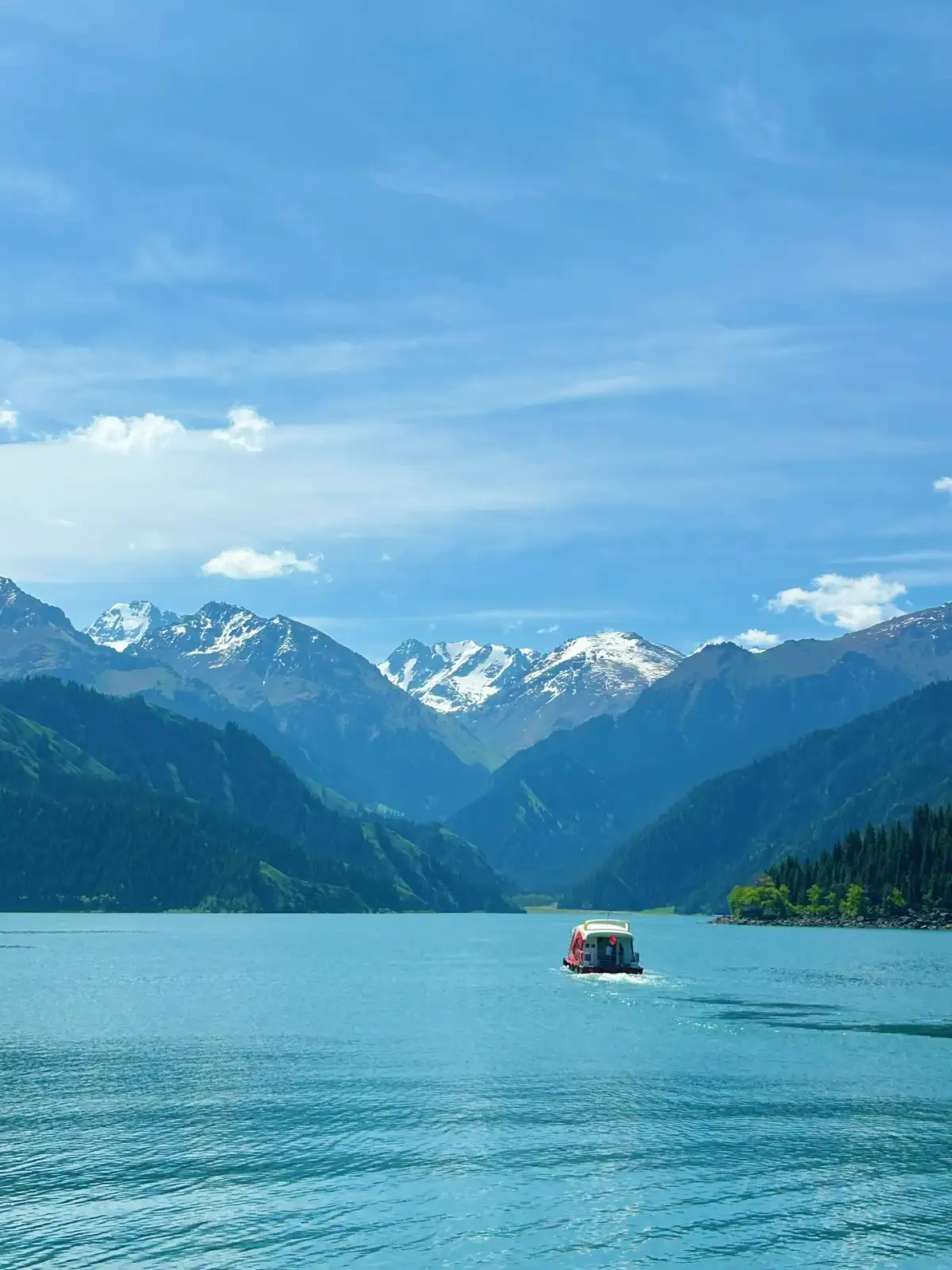
The surface of Tianchi Lake in the Tianshan Mountains and snow-capped peaks in the distance. Photo:Cristina · Original Post.
Toward Feilongtan: First, figure out how to get back
Both original posts describe the direction toward Feilongtan and the waterfall, and also mention the difference between continuing onward and retracing one’s steps. These types of personal accounts are best suited for prompting people to ask specific route-related questions: After entering this direction from the lakeshore, is it possible to return to the original lakeshore, or will it lead to a different bus stop? Information regarding the day’s open trails, stairways, and shuttle services is subject to on-site guides and staff instructions; avoid continuing your hike based solely on your sense of direction.
Report on Tianchi Ecotourism Released by the Autonomous Region Department of FinanceThe description covers the lakeside trail, the forest, and the Flying Dragon Ravine, among other sights, illustrating that the Tianchi experience encompasses diverse natural spaces. This article uses these as environmental context; it does not guarantee that every section described is currently accessible based on images from a specific day reported in the media. If you wish to include the waterfall route, treat it as an additional walking destination and allow for a practical buffer time for the return trip.
Those who enjoy the sound of flowing water and nearby rock faces may prefer this route; those who wish to take their time photographing their family by the lake may be better off staying along the lakeshore. The term “lazy people” mentioned in the original post also refers to uphill climbs, stairs, and waiting for transportation; it cannot replace the individual physical assessment of those traveling with you. When traveling with the elderly, ask about the specific number of steps and return points; if you have young children, confirm first whether they can walk the entire chosen section on their own.
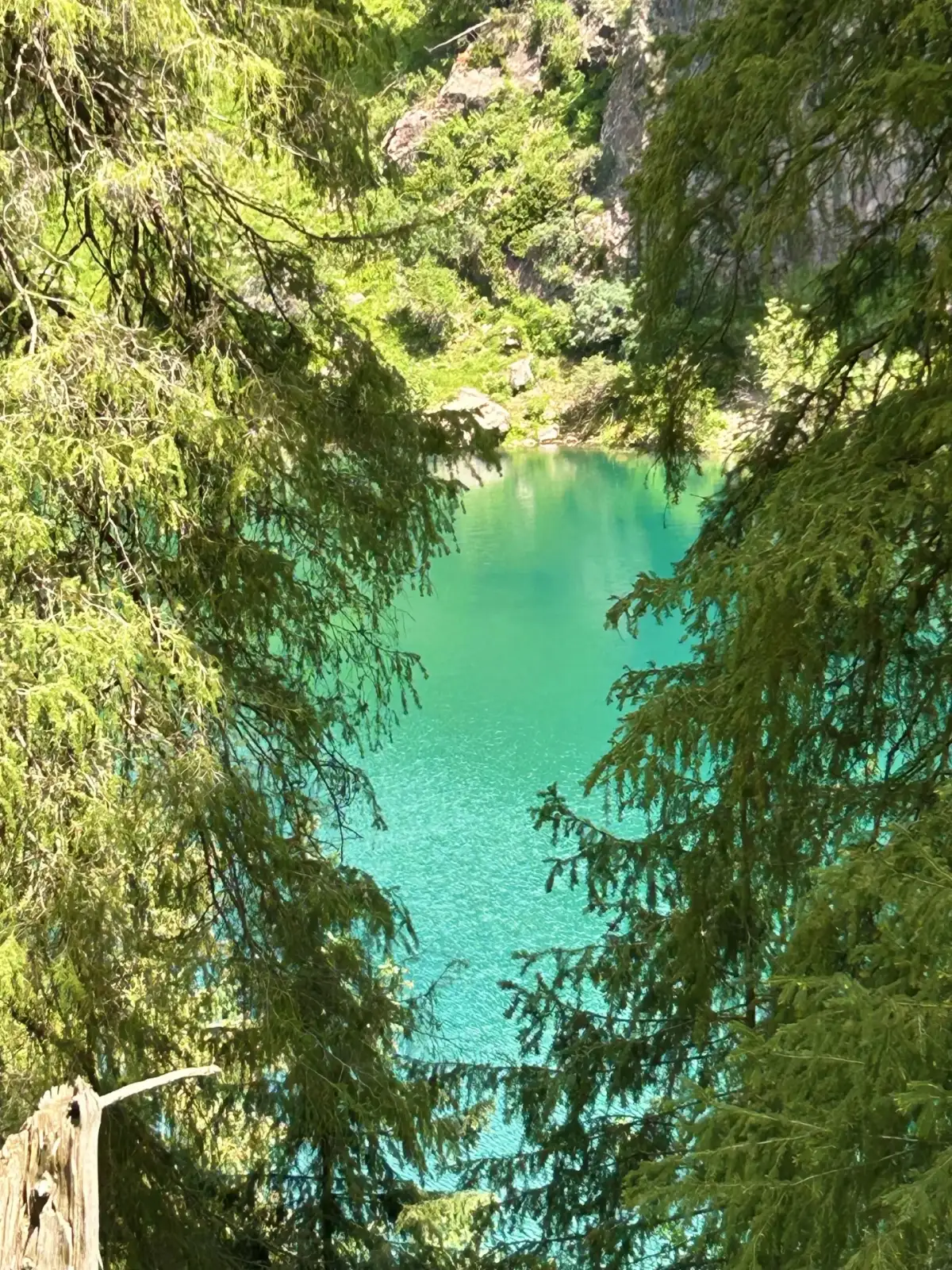
An emerald-green pond nestled among the trees in the Tianchi Scenic Area. Photo:Cristina · Original Post.
The itinerary for October 3, 2026, begins and ends in Urumqi
When departing from Urumqi, you must factor in the entire journey—from your city residence to the scenic area, check-in procedures at the entrance, internal travel within the area, and the return trip. The duration of a short tour within the scenic area cannot be directly equated with the round-trip travel time from the city. When choosing official transportation, clarify the departure location, the latest return time, whether there is a fixed group meeting point, and the procedures for late arrivals. Only when the service details are clear will travelers know exactly how long they can stay by the lake.
If you have a flight or train to catch that evening, it’s recommended to independently verify the connections between your intercity return trip and the airport or train station, rather than back-calculating a schedule that’s too tight based on travelogues. Weather conditions, visitor traffic, and road conditions on the day of travel can all affect your progress, so your itinerary should include activities that can be cut if necessary. The first items to eliminate are usually optional transportation experiences added on the spur of the moment; by retaining the original goal of seeing the lake, the trip remains viable.
Lunch and rest should also be factored in. For families traveling with parents or children, choosing a full day doesn’t necessarily mean adding more attractions—it can simply mean taking more time to enjoy the same sights. Start by viewing the lake, sit down for a meal, then choose a hike based on your stamina, and return in the afternoon. If you only want a short stop at one natural site, reduce the number of additional activities, but still account for the actual time it takes to get there and back.
Once you arrive at the lake, remember that it is also an ecological space
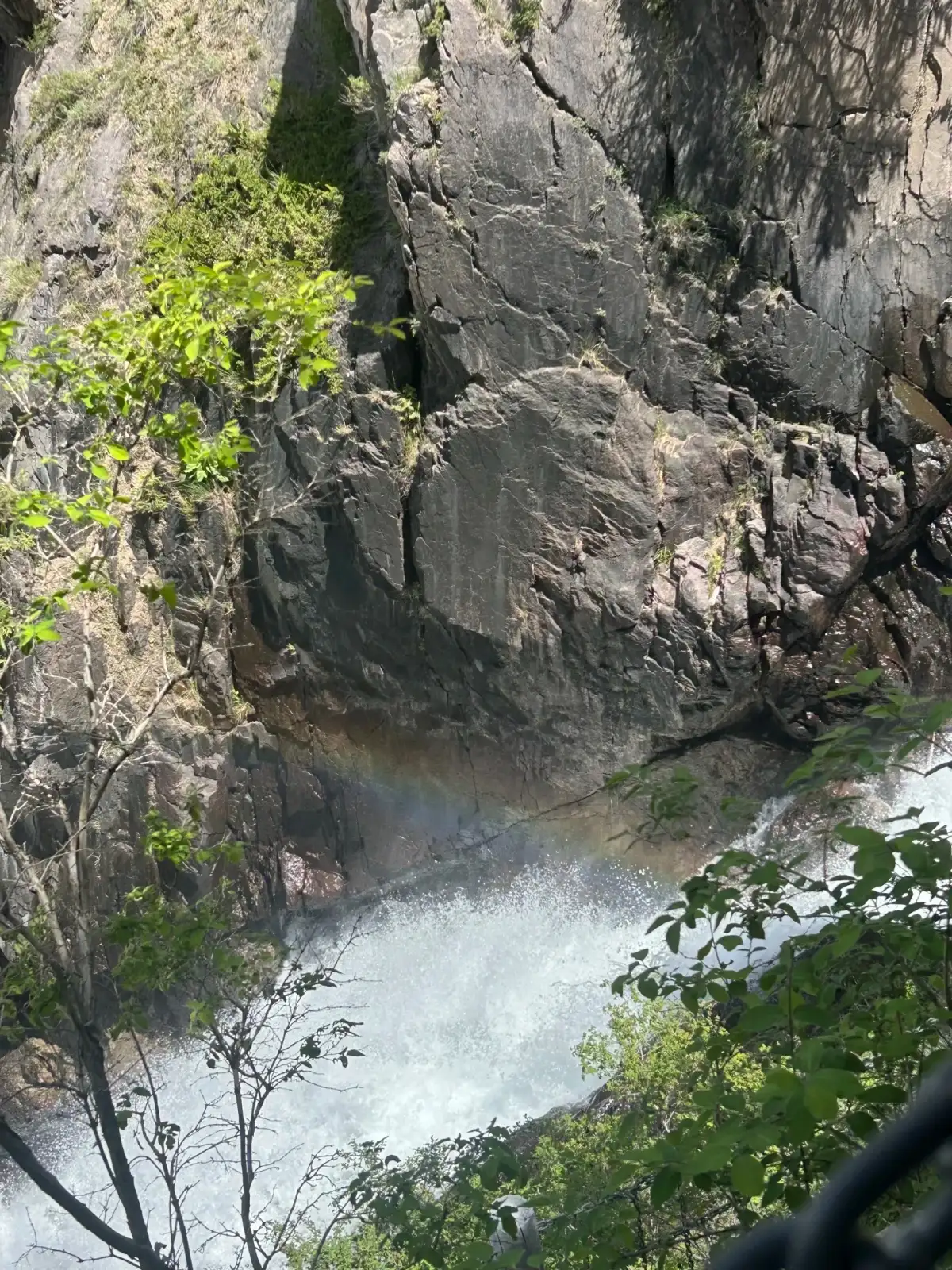
A waterfall between rock cliffs in the Tianchi Scenic Area. Photo:Cristina · Original Post.
Xinjiang Forestry and Grassland Bureau’s 2026 List of Important Wetlands, it was designated as the Tianshan Tianchi Autonomous Regional Important Wetland in Fukang City. This designation indicates that the water body and its ecological environment are worthy of protection, and visitors should view the area only within permitted boundaries. The shoreline, vegetation, and wildlife at your feet are not merely backdrops for photographs but also part of an environment that is subject to ongoing management.
When photographing wildlife, keep the surrounding environment in the frame from a distance; carry your food and trash with you at all times, and avoid straying from designated trails just to take a photo. Prioritize clothing and equipment that allow for ease of movement and are suitable for actual weather conditions; temperatures at high altitudes and near the water may differ, so tailor your preparations based on the latest forecast. Travelers using foreign passports should verify their real-name information, document requirements, and relevant program specifications before booking; do not assume that procedures used for someone else’s ID apply directly to your own situation.
If you tell the itinerary advisor, “I want to see the lake, but don’t need a boat or the cable car,” “I’d like a high vantage point, and I’m traveling with elderly companions,” or “I need to return to the station the same day,” they can further verify feasible arrangements. There’s no definitive “better” option between a short stop at Tianchi and a full day trip. By clearly knowing which aspects you want to see and allowing for practical travel time, you can move from a beautiful lakeside view to the first leg of your Northern Xinjiang journey that best suits you.
Source and Editorial Notes
This article is an original travel analysis compiled by the Dongxing Travel editorial department based on the listed materials; it is not a firsthand account by the author. The full text of the original post has not been reproduced; accompanying images are used within the scope of authorization and are credited to the author and the source of the original post. They do not serve as proof of actual travel experiences or services provided by Dongxing Travel.
Xiao Ma Da Dou · Traveling in Xinjiang | Tianshan Tianchi: A “Lazy Person’s” Two-Hour Quick Tour Guide · Travel Notes; Verified/Compiled on: October 3, 2026.
Cristina · Tianshan Tianchi One-Day Tour Guide · Travel Notes; Verified/Compiled on: October 3, 2026.
People’s Government of the Xinjiang Uygur Autonomous Region · Tianshan Tianchi Scenic Area · Official sources; Verified/compiled on: October 3, 2026.
Department of Finance of the Xinjiang Uygur Autonomous Region · Report on Tianchi Ecotourism · Official sources; Verified/compiled on: October 3, 2026.
Xinjiang Uygur Autonomous Region Bureau of Forestry and Grasslands · List of Important Wetlands in the Autonomous Region (Fourth Batch) · Official sources; Verified/compiled on: October 3, 2026.