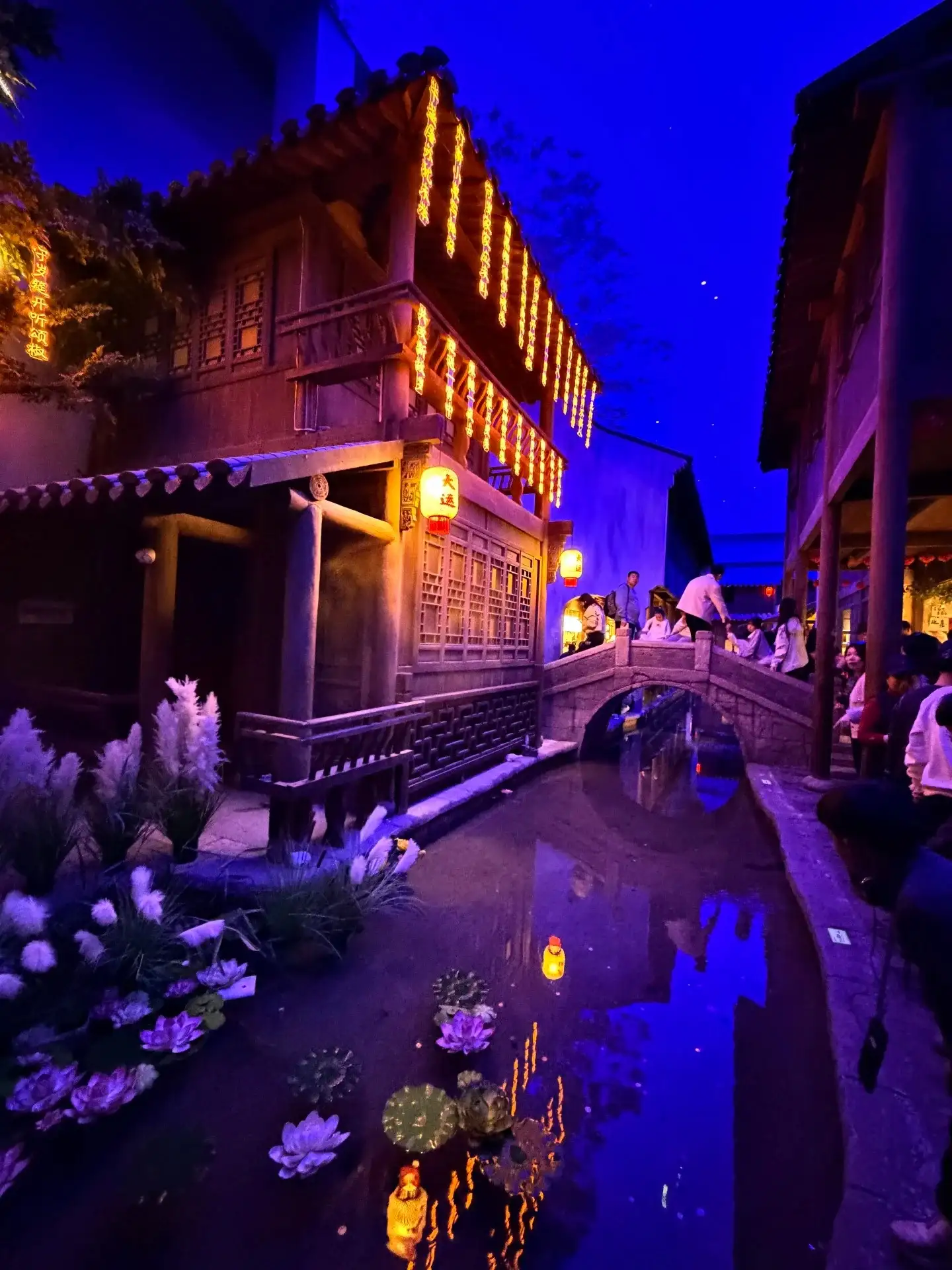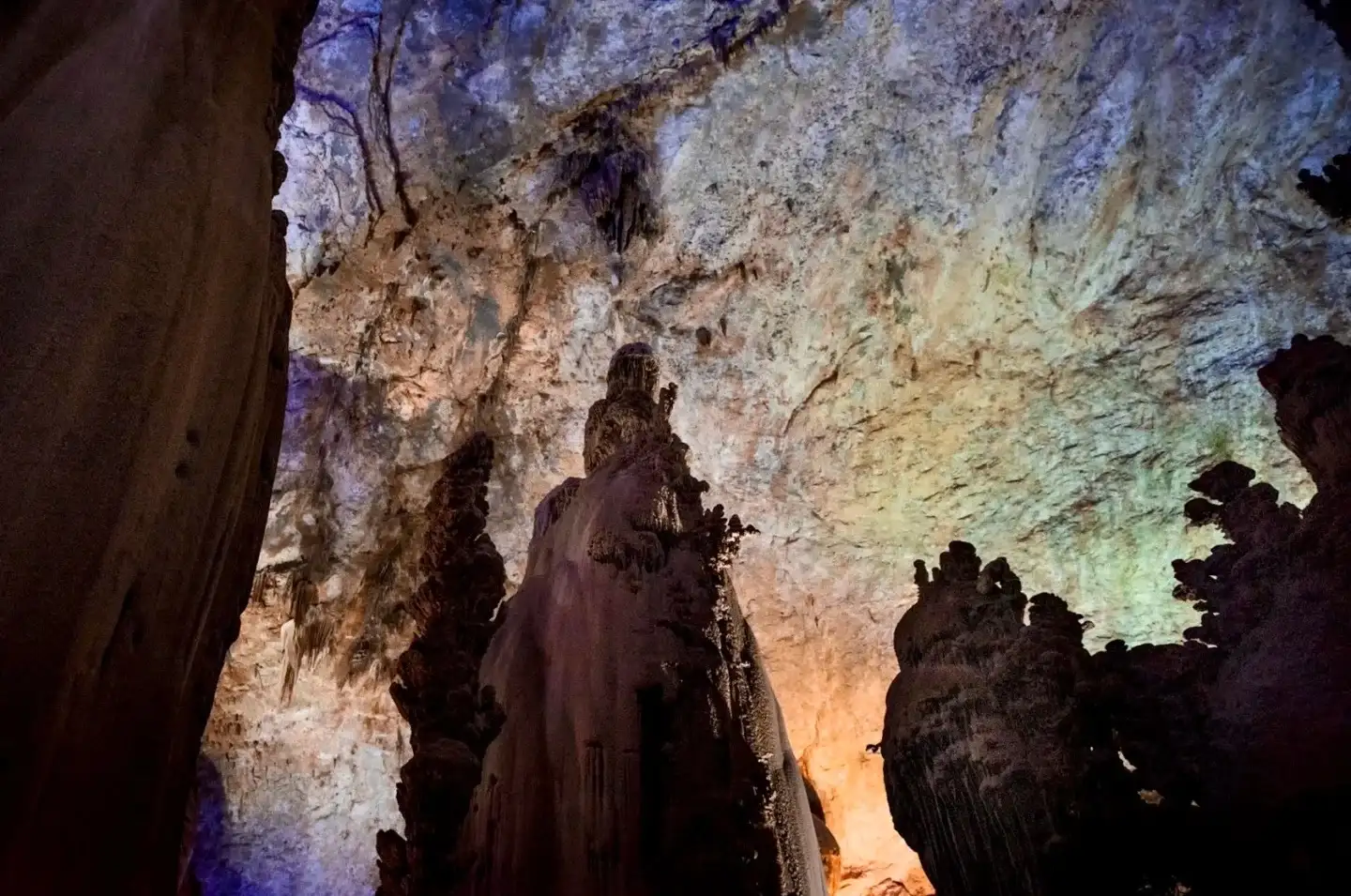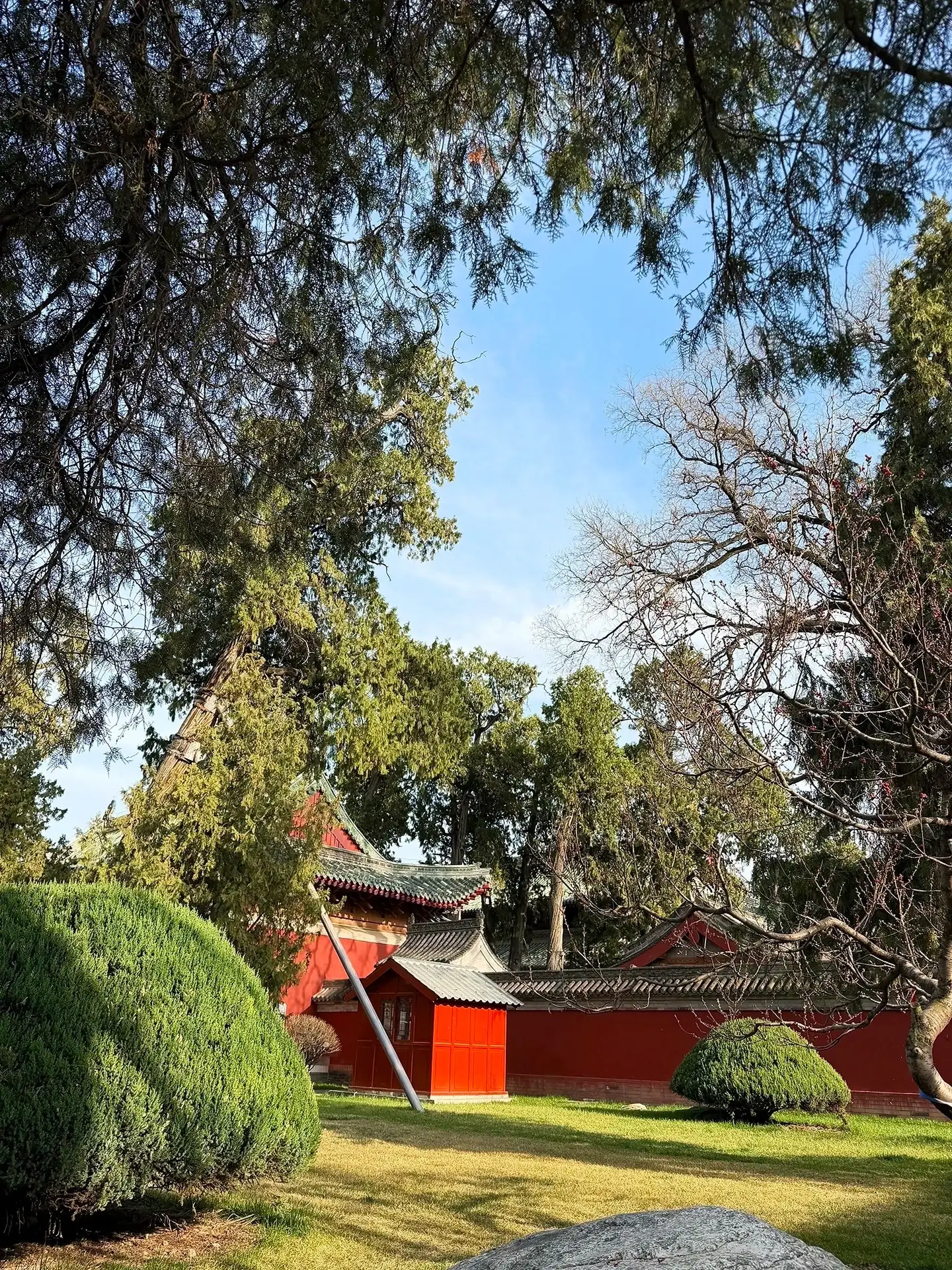
A day trip to Tianshui often begins with street food—and it’s just as easy to end the trip there because the food is so delicious. As you walk toward the Fuxi Temple, the city offers another clue: how do people transform an ancient legend into a space that can be entered, traversed, and used as a gathering place? The gates, courtyards, and main hall are not mere illustrations of the story; they organize the viewing experience and allow cultural identity to exist in the form of public architecture.
小红书作者“一_一”把城市街巷、博物馆与伏羲庙放进同一日路线,并特别注意馆内文物与庙宇院落。这份观察启发了一条不以吃遍、走遍为目标的文化步行:先理解祭祀空间,再看考古材料,最后回到城市日常。本文采用这条关系,具体交通时刻、价格和作者当次入场方式不作照搬。
Putting Legends in Their Proper Context
When the Tianshui Municipal Government introduces the Fuxi Temple, it places Fuxi within the cultural context of ancient historical legends. It is important to understand this when traveling: legends express imaginations, values, and identities that have evolved over time; they are not equivalent to an archive that allows for a point-by-point verification of a historical figure’s life. Appreciating them does not require forcing myths to translate into facts, nor should one lose interest in exploring them simply because they are legends.
You can start by asking why people are willing to keep retelling these stories. The figure of a cultural progenitor connects expectations regarding order, life, and wisdom; rituals and architecture, in turn, give these expectations a place within the city. For visitors from different cultural backgrounds, this is similar to understanding how a city commemorates its origin story, with the focus on how the story is preserved and expressed, rather than on pinpointing every moment when the legend unfolded.
When explaining to foreign-language visitors, start by clarifying that this is a cultural legend and a commemorative space, then introduce the symbols involved—this can help reduce misunderstandings. The Chinese concepts of “ancestor,” “ritual,” and “temple” do not necessarily have exactly the same connotations in other languages. If one were to summarize them using a single English divine name, it would be easy to reduce a complex culture to a category that visitors are familiar with but which is not identical. Retaining the original terms and explaining their functions will lead to a more accurate understanding.
Gates and courtyards give the story structure
The official guide lists the axial structures—such as the archway, the main gate, the ceremonial gate, the Xiantian Hall, and the Taiji Hall. On-site, first observe how they form a progressive sequence, then read their respective names. Passing through a gate, the view and walking space change; upon reaching a courtyard, one pauses; continuing toward the hall, the center gradually becomes clear. In this way, the architecture ensures that cultural content is not merely confined to text but becomes a sequence that can be experienced.
There’s no need to stop immediately after passing each gate to take a photo of the center. Instead, walk a stretch first to experience how the space transitions from open to confined, then choose a spot to look back. When looking back, the relationship between the front and rear gates and the hall becomes easier to understand. Viewing the center along the axis and shifting to the legitimate side to observe the layers—these two perspectives complement each other, avoiding a situation where you have only a single elevation view but lack a complete impression of the space.
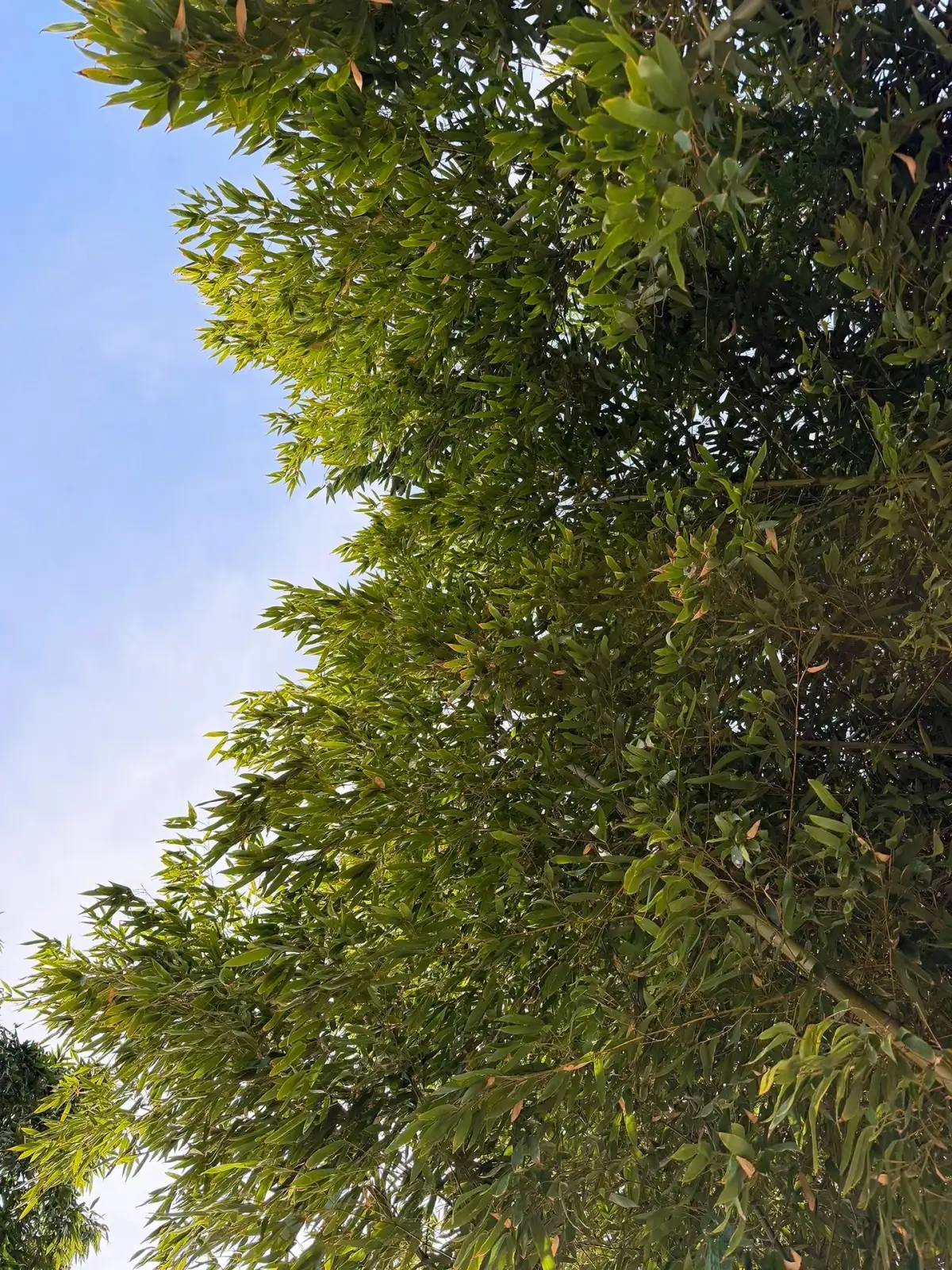
A canopy of green leaves against a blue sky. Photo:Yi’s Mom is Growing Up ✨ · Original Post.
For architecture enthusiasts, observing how people move within these spaces is equally valuable. Where it’s suitable to wait, where passageways narrow, and where sightlines are directed toward the center—these are all places where the layout serves a practical function. As visitors, management, and tour routes converge within the same historic architectural space, its current use continues to write its story. When taking photos, leave room for people to walk normally; this makes the viewing experience feel much more natural.
A symbol and a space should be viewed separately
Regarding symbols such as the Bagua, one can first observe their placement and form within the hall before delving into their cultural interpretations. These symbols carry meaning within ritual spaces; not every pattern that appears should be reduced to mere decoration. Thoroughly understanding a single symbol is often more helpful than trying to memorize all their names. Explanations should draw from official sources and guided tours, while personal interpretations can remain open to interpretation.
Children’s exploration can also begin with the physical space itself: Why are there so many doors, one after another? What can be seen from different vantage points? Why does the main hall at the front serve as the focal point? These questions are easier to answer than simply asking children to memorize the entire myth. When parents explain the concepts of commemoration and ritual in simple terms and then encourage children to describe what they actually see, cultural context and physical experience can reinforce one another.
Museums provide another kind of evidence of time
The original post discusses the artifacts at the Tianshui City Museum alongside the Fuxi Temple, suggesting that while both can be included in the same trip, they require different approaches to interpretation. The temple illustrates how legends are ritually honored and commemorated, while the archaeological materials in the museum explain the past through their context of discovery, form, and scholarly research. Although they are both part of Tianshui’s culture, a prehistoric artifact should not be directly equated with the relics of a legendary figure.
When viewing artifacts, focus your attention on the materials and craftsmanship. How a piece of pottery was shaped, how its patterns were arranged, and why the label indicates its place of origin—these questions bring history closer to the tangible objects. Even without delving into archaeology, one can remember an artifact’s form and a piece of background information. Comparing this to the symbols found in temples reveals that understanding the past requires both stories and materials.
two ways of interpreting the site exist side by side, which adds depth to the travel experience. If you visit the temple first, you can enter the museum with questions about cultural origins in mind; if you examine the artifacts first, you can then step into the courtyard to observe how the city commemorates and interprets its traditions. The order can be adjusted based on admission arrangements, personal interests, and physical comfort; there is no need to adhere to a single route. What truly matters is knowing, upon departure, which sections you heard the legends in and which sections you examined the archaeological materials.
How a City Walking Tour Leaves Room for Interpretation
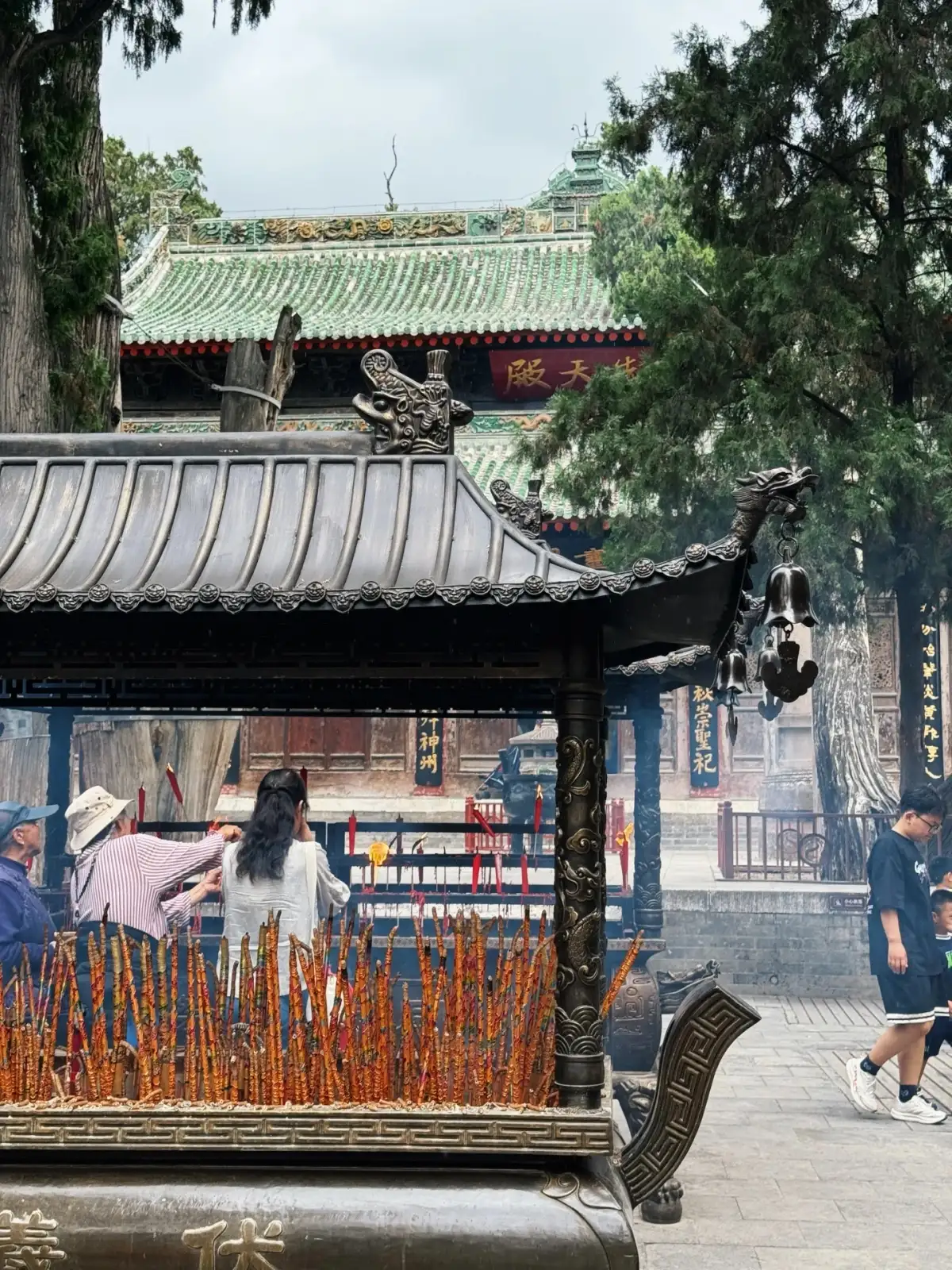
Incense burners filled with sticks of incense, gray-tiled eaves, and a green-tiled hall in the background. Photo:Yang Zhouwu (Traffic Scam Edition · Original Post).
It is not recommended to list the Fuxi Temple, museums, and all the city’s street food as a long, mandatory itinerary. Cultural exploration requires focus, while dining and rest require physical downtime. Assign a specific theme to each temple and museum, and set aside the rest of the time for exploring the streets and sitting down to eat—this makes it easier to maintain interest throughout the day. The “marathon-style” step count mentioned in the original post is not a goal every visitor should aim to achieve.
For seniors or children, you can treat the courtyards and exhibition halls as two distinct paces. The former involves moving between buildings, while the latter focuses on examining objects; schedule breaks in between to avoid listening to the commentary nonstop. If some people simply want to stroll through the courtyards while others prefer to delve into the exhibitions, you can briefly split into groups after clearly establishing meeting points and supervision arrangements. The insights gained from traveling together can still be shared over dinner, without everyone having to stay in sync the entire time.
The Tianshui City Museum has released information on improvements to scenic area services, including enhancements to payment facilities and visitor services. While this provides valuable guidance for international visitors, the actual availability of these services should still be confirmed based on on-site conditions. Passport holders should communicate in advance how they plan to identify themselves for their chosen tour activities, and foreign-language guided tours should clearly specify the language and theme. By arranging these practical details in advance, visitors can focus their attention on the cultural spaces with peace of mind.
As you leave, try to articulate three key points:
The first sentence describes how the legend helps the city understand its origins; the second describes the relationship between a gate, a courtyard, and a hall; the third explains the material and background of an artifact in the museum. This isn’t a knowledge quiz; it’s simply meant to help organize the travel experience. If these three sentences can be distinguished from one another, it indicates that the visitor’s observation has moved beyond mere visual appeal and has established their own method of understanding Tianshui.
Photographs can also correspond to three levels: a panoramic view of the space, a symbolic detail, and a cultural artifact that is permitted to be photographed. Each serves a different purpose and need not be filtered through the same lens to create a uniform mood. When looking back, knowing what each photo represents allows the images to aid memory, rather than leaving an entire day reduced to nothing more than a string of meaningless place names.
Fuxi Temple lies not only in the visible form of its ancient architecture but also in the way the legend remains continuously connected to public life. The museums in Tianshui then supplement this narrative with historical materials and a sense of time. By scheduling visits to both on the same day while maintaining the distinct boundaries of each experience, the city’s culture becomes richer than any single label could convey—and more inviting to explore at a leisurely pace.
Source and Editorial Notes
This article is an original travel interpretation compiled by the Dongxing Travel editorial team based on cited materials; it is not a firsthand account by the author. The full text of the original post has not been reproduced; accompanying images are used within the scope of authorization and are credited to the author and the source of the original post. They do not serve as proof of actual travel experiences or services provided by Dongxing Travel.
1_1 · Tianshui One-Day City Walk Itinerary 🔥 150 per person 💰 · Travel Notes; Verified/Compiled on: October 3, 2026.
Tianshui Municipal People’s Government · Fuxi Temple · Official material; verified/compiled on October 3, 2026.
Tianshui City Museum / Tianshui Municipal Bureau of Culture and Tourism · Fuxi Temple Scenic Area Service Enhancement · Official material; verified/compiled on October 3, 2026.
Yi’s Mom Is Growing Up ✨ · I’m Collecting Spring in This World | Fuxi Temple · Image source; this article does not cite the post as the basis for current policy.
Yang Zhou (Traffic Scam Edition · Tianshui | After visiting the Fuxi Temple, don’t forget to check in at the Little Potala Palace 👻 · Image source; this article does not cite the post as the basis for current policy.