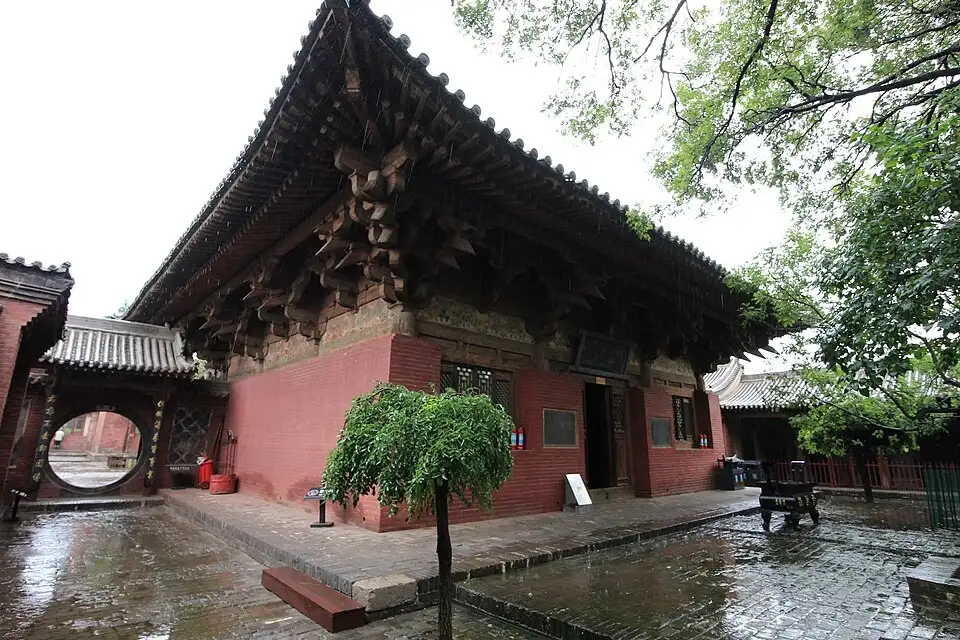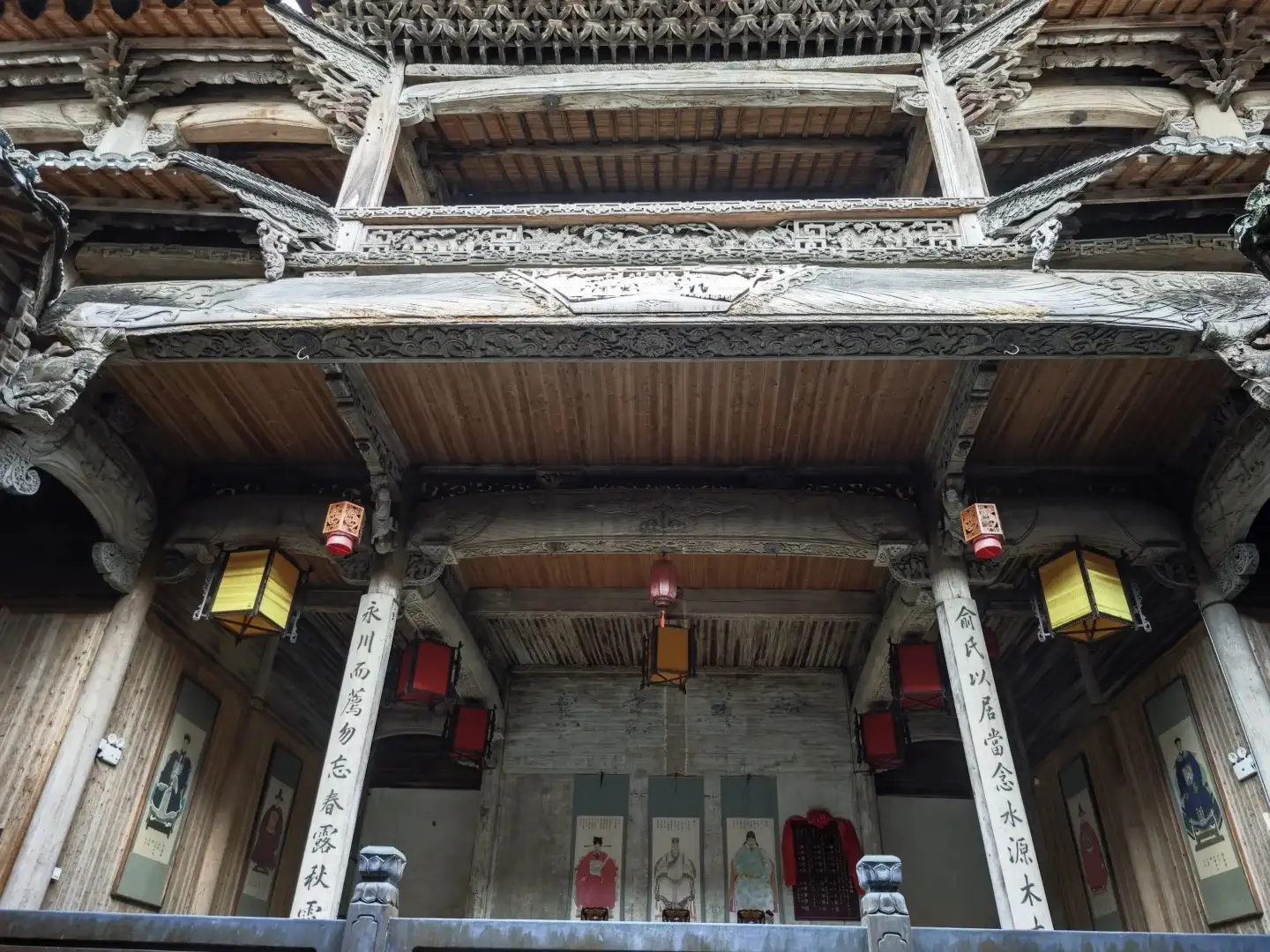
While distant views of ancient villages often leave one with the impression of white walls and black-tiled roofs, upon entering the buildings, a different scale emerges. The carvings on the beams, the inscriptions above the doors, and the layered composition of the courtyards all narrate their choices from up close. In Wangkou, Wuyuan, the Yu Clan Ancestral Hall is an ideal place to practice this kind of reading—moving from the whole to the individual components—without needing to first identify all the figures and allusions.
本文以这些真实观察为起点,三雕工艺背景依据中国非物质文化遗产网,江西官方文化报道作辅助。下面的阅读步骤是编辑建议,具体构件的年代、题材与用途仍从现场可靠说明辨认,不凭一张照片补写故事。
Carvings do not float on the surface of the architecture
According to the China Intangible Cultural Heritage Network, the “Three Carvings of Huizhou” encompass wood, brick, and stone craftsmanship, often associated with the decorative elements of residential buildings and ancestral halls. The material determines the treatment method, while the specific architectural component dictates the viewing conditions. Therefore, upon entering a building, one should first identify where the decoration is located, and then examine what is carved there. High beams and brackets, nearby doors and windows, and low-lying stone components are at different eye levels and are best observed from varying distances.
The significance of wood carvings is not limited to a single beautiful image. Attached to architectural elements, they are perceived in conjunction with the structure and the surrounding space. If a carved detail is cropped into a photograph on its own, the texture may be clear, but its original context may be lost. By first capturing a shot that includes the surrounding elements and then documenting the detail, one can understand how this story unfolds within the architecture, rather than merely collecting patterns.
at first glance, there is no need to use complete architectural terminology. Start by noting that it is above the door, between two wooden members, or beneath a beam; then consult the description to add the specific name. The name aids in research, while the location aids memory—the two support each other. If no explanation is available on-site, record your own description and verify it later with reliable sources; even a question is a valuable outcome of a visit.
first examining the space created by the carving technique, and then asking who the figures are.
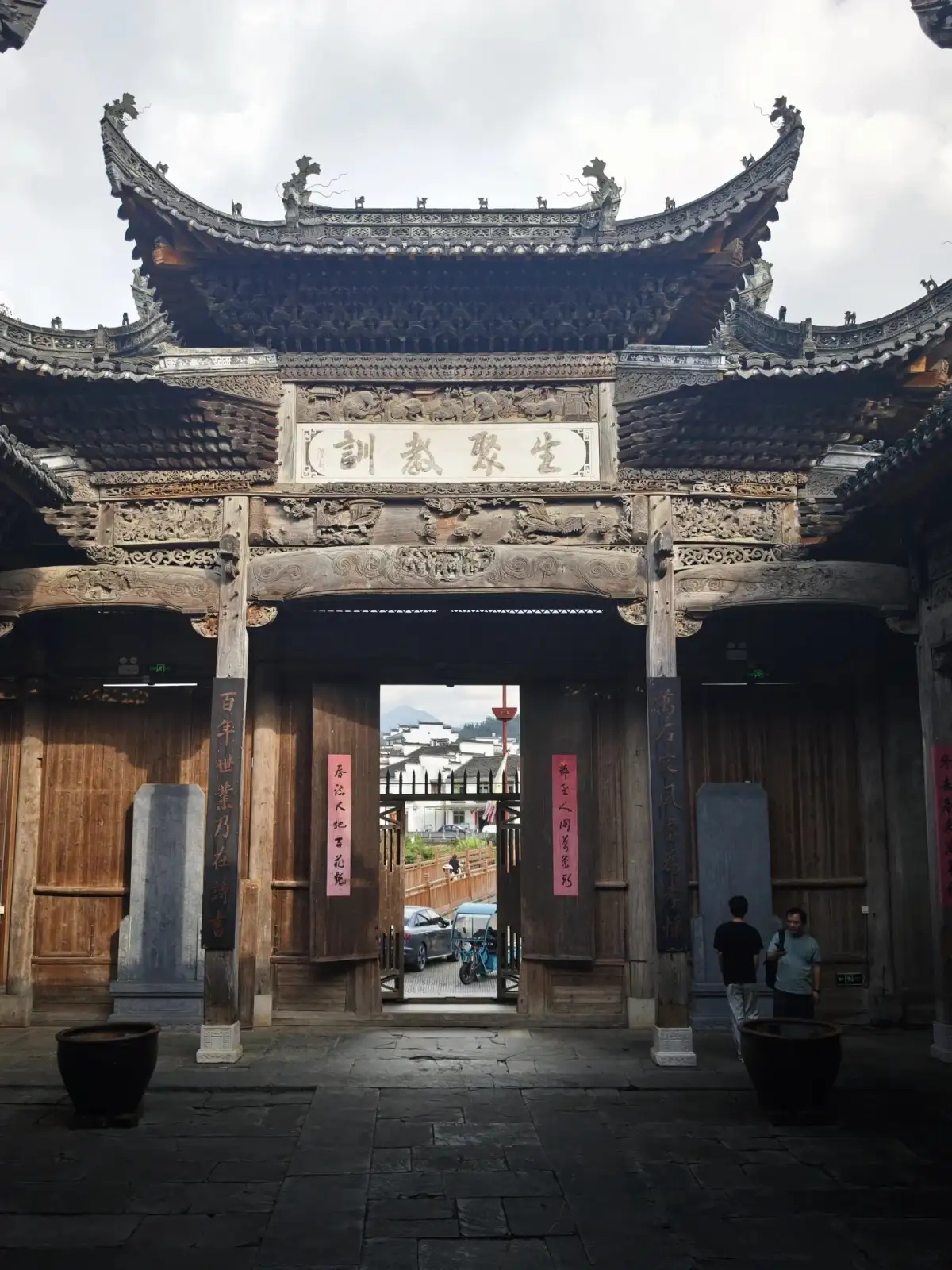
According to the official project description, the “Three Carvings” often combine different carving techniques. For visitors, the easiest way to engage with them is not by immediately distinguishing technical terms, but by comparing shallow and deep carvings, as well as solid forms and open spaces. How many layers does the image have? Which areas are carved through? How does a particular figure stand out from the background? These questions can be answered through direct observation and also help explain why the carvings appear differently under varying lighting conditions.
the narrative of the figures requires a second level of interpretation. First, describe the visible actions: who is facing whom, whether there are animals, buildings, or objects present, and how the figures are grouped. Then look for on-site explanations or ask a knowledgeable docent. Simply grouping every set of images into the same story based on a single similar allusion will, in fact, obscure the nuances. Carefully documenting what you see leaves room for a genuine interpretation.
The Jiangxi Daily’s reports on ancient village culture often interpret many carvings as three-dimensional depictions drawn from historical stories. While this provides a context for viewing, the specific stories themselves still require separate evidence. Children can describe the relationships between characters as if in a comic strip, while adults can then supplement the narrative with confirmed historical details. This approach not only sparks the imagination but also ensures that imagination and historical accuracy remain clearly distinguished in the record.
When the image features flowers, birds, or geometric patterns, examine the composition first. How do the borders frame the main motif? How does repetition create rhythm? Where are the areas of negative space? These questions do not rely on a fixed dictionary of auspicious symbols, yet they can explain the organization of the work. If the symbolism is confirmed through on-site documentation and recorded alongside the composition, the pattern takes on both formal and cultural dimensions.
Plaques: Allowing Another Form of Expression to Enter the Space
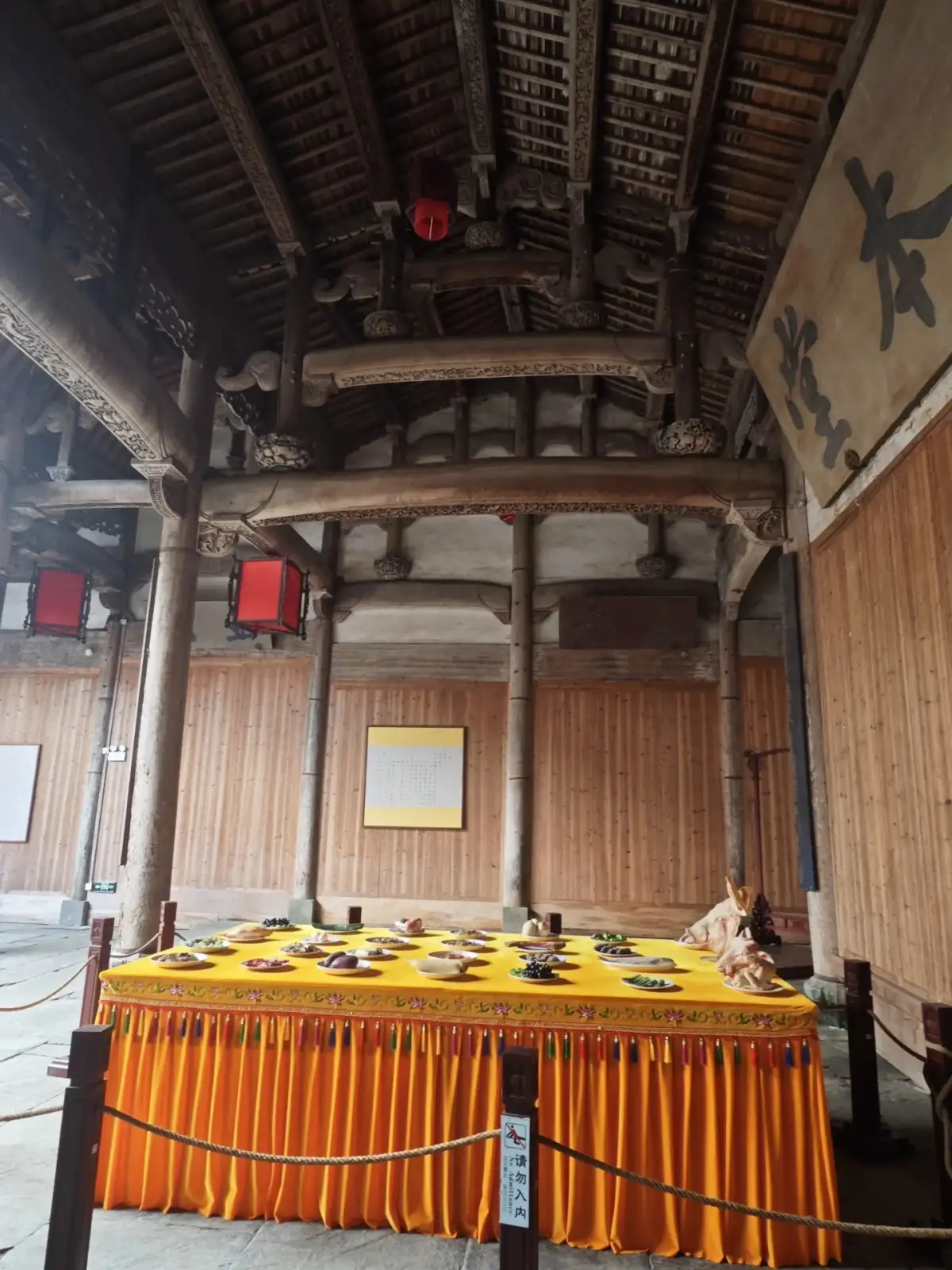
Read More: The original post noted plaques such as “Father and Son Served as Officials” and “Brothers Passed the Imperial Examinations Together.” These shift the focus from the carved imagery to the written records. First-time visitors may not be familiar with the terminology; they can begin by understanding that such inscriptions are linked to family memories and expressions of honor, and then look up specific figures and meanings. Plaques are not merely backdrops for classical calligraphy; they also hint at what the building’s users wish future generations to see.
If one needs to understand the complete story, a guided explanation is more appropriate than a quick translation. A single word may refer to historical officials or the context of imperial examinations, and a literal translation may not convey the full meaning. International visitors can first ask a guide to explain what it signifies in this specific context, and then delve into the details. Once the purpose is understood, even if one cannot remember all the proper names, one will still grasp why the text appears in this building.
Carvings and plaque inscriptions can form a contrast. The former conveys meaning through imagery, materials, and relief, while the latter organizes memory through words and calligraphy. Though both face people within the same space, they require different modes of interpretation. During a visit, choose one of each—recording the “relationships of sight” and the “content of the inscription”—to elevate your travelogue from a general praise of craftsmanship to a concrete understanding.
only then can the route reveal a second layer of meaning when the element is placed back within the village context.
After viewing the ancestral hall, walk out into the public streets and along the riverbank, then reflect on the architectural expressions you’ve observed. The distant view of the village provides a sense of scale regarding habitation and the environment, while the interior of the ancestral hall offers a sense of scale regarding collective memory and craftsmanship. The two complement each other, but not every residential building can be interpreted in the same way as an ancestral hall. Open exhibition spaces and residents’ living spaces each serve their own purposes; cultural interpretation can begin with the materials actually available for viewing.
If you have limited time, should you look at a single wood carving first or the entire building? You can start by using the overall view to pinpoint the location of the elements, then shift your attention to a specific wood carving, and finally select a plaque with an inscription. These three steps are sufficient to form a small theme. If time permits, add a stroll through the village and some context on traditional crafts; there’s no need to string together many ancient villages on the map from the start, otherwise you’ll only get similar distant views of each location.
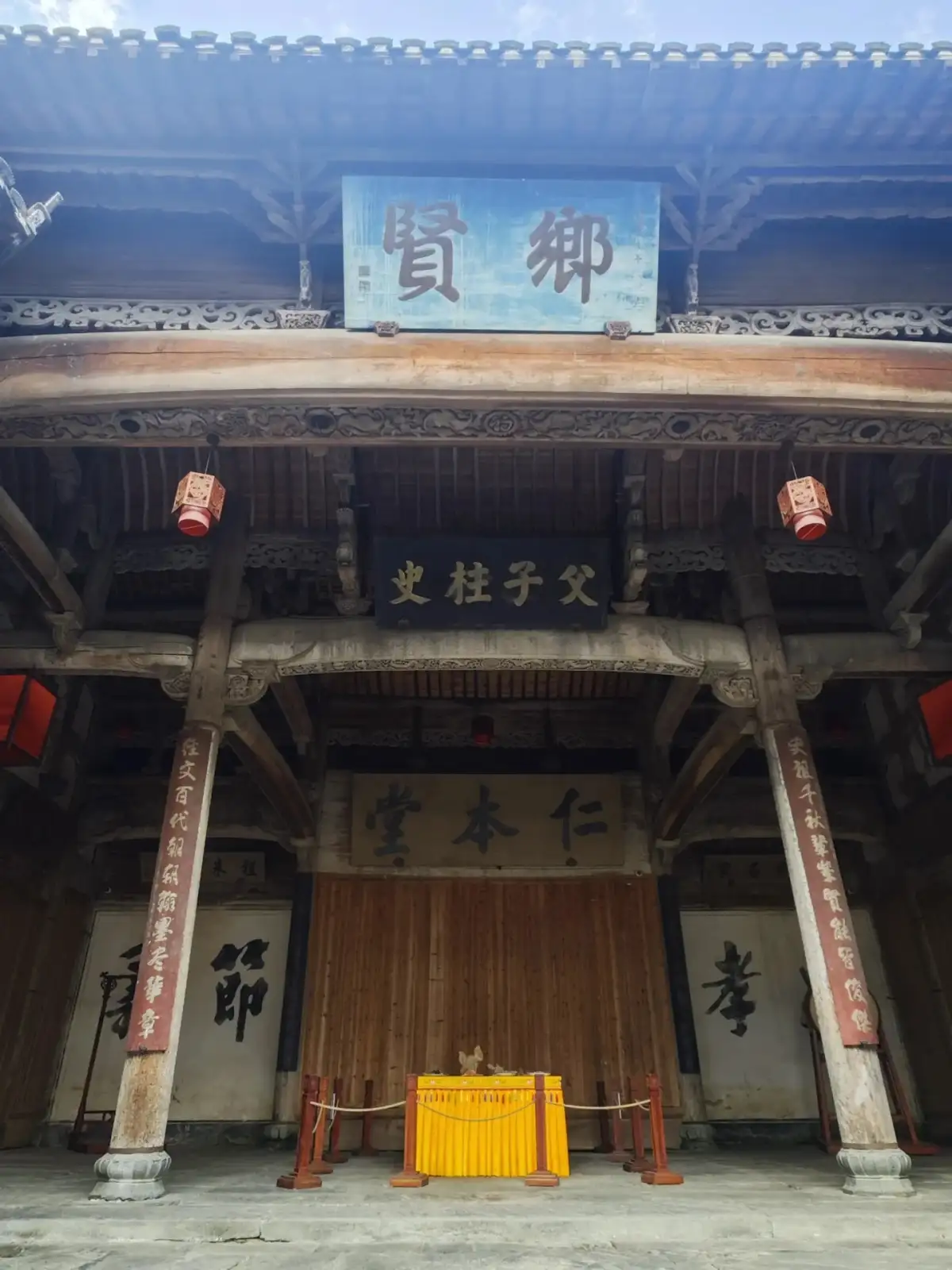
the photographer should pay attention to the contrast between light and shadow at higher elevations. Light from the eaves and courtyard may make it difficult to discern carving details; try adjusting your position and shooting angle instead of using a strong light or touching the components. In accordance with on-site photography requirements, switch to taking notes when necessary. Record the name, location, and any issues—it is not necessary to photograph every single detail.
Since fellow visitors may have different interests, it’s best for each person to choose a specific detail and then discuss together why it’s worth seeing. Some may be drawn to the carving technique, others may want to know about the figures on a plaque, and children might focus on a particular animal. Discussing these differences in relation to a single building allows everyone to participate and prevents the entire visit from turning into a continuous lecture by a single adult.
later, by looking back at the wide-angle view, one can also identify the building’s location within the village. The two scales—near and far—elucidate one another: the close-up allows one to appreciate the materials and artistic expression, while the wide-angle view helps one understand that it is not an isolated exhibit. Pairing an overall shot with a record of specific components allows one to bring the detailed observations from the journey back into their complete context. Whenever the interior of a private residence or the activities of its residents are involved, the viewing experience should still be organized based on the actual areas open to the public.
inWuyuan Cultural RouteWangkou serves as a stop on the journey from viewing the ancient village as a whole to focusing on its architectural details. The white walls and the river draw visitors here, while the wood carvings and inscriptions keep their gaze lingering. When you can pinpoint the location of a specific architectural element, offer a reliable interpretation of its subject matter, and identify a question that still intrigues you, this ancient village reveals a level of detail that goes beyond what a distant landscape photograph can capture.
Source and Editorial Notes
They do not serve as proof of actual travel experiences or services provided by Dongxing Travel.
China Intangible Cultural Heritage Network · Huizhou Three Carvings (Wuyuan Three Carvings) · Official source; Verified/compiled on: October 3, 2026.
Jiangxi Daily (published on Jiangxi Civilization Network) · Appreciating Art in Ancient Villages · Official source; Verified/compiled on: October 3, 2026.
Locate the carving before naming figures
For Wuyuan architectural details, first locate Wangkou wood carving on a beam, doorway or other component before asking about its figures. Yu ancestral hall plaques communicate through writing. Connect carving, inscription and building use instead of treating everything simply as ornament.
When a story is unclear
Record an inscription only where photography is allowed, then ask a guide to check it. Familiar-looking figures do not justify inventing a story. Leave timber and plaques untouched and confirm residential and hall boundaries separately. After a riverside visit, focus this return on two components.
Planning references