East Travel Editorial Department · Travel Diaries and Pre-Trip Reading
Enter from Daxue Road and first locate the old harbor.
Shapowei is perfect for a leisurely afternoon on Xiamen Island. Start by heading toward the neighborhood via Daxue Road, then walk down to the waterfront of the shelter harbor—this gives your route a clear starting point. Although it’s close to the sea, the waterfront here isn’t a straight, open stretch of sandy beach: low-rise buildings encircle a more sheltered body of water, and the connection between the streets and the shore is more striking than the distant horizon. First-time visitors might want to get their bearings by observing the water first, then the streets—noting which alleyways lead to the waterfront and which roads still have traffic—to avoid spending the beginning of their visit searching for specific shopfronts based on photos.
The term “shelter harbor” helps international visitors understand the area. It first suggests the harbor’s original function as a place for boats to dock, while today’s waterfront also serves as a hub for leisure, exhibitions, and commercial activities. Materials published by the Fujian Provincial Government outline Shapowei’s transformation from a fishing port to a cultural space; you can skim through them before setting out and then compare them with what you see on site. It is not a fishing village frozen in the past, nor should new shops be automatically viewed as spoiling the scenery. As you stroll along the street, pay attention to how the old buildings and new signs coexist; the transformation itself is the very theme of this urban walk.
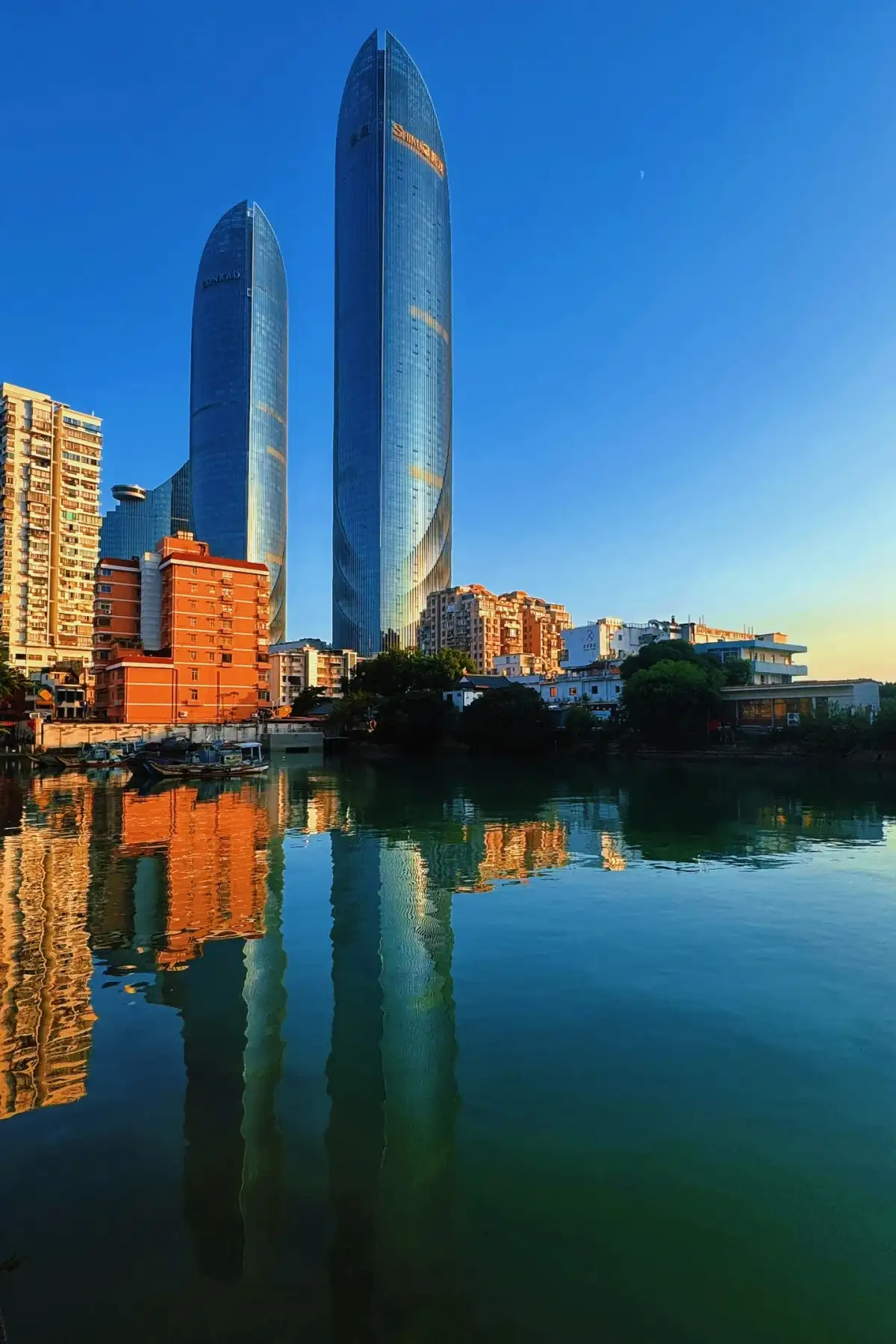
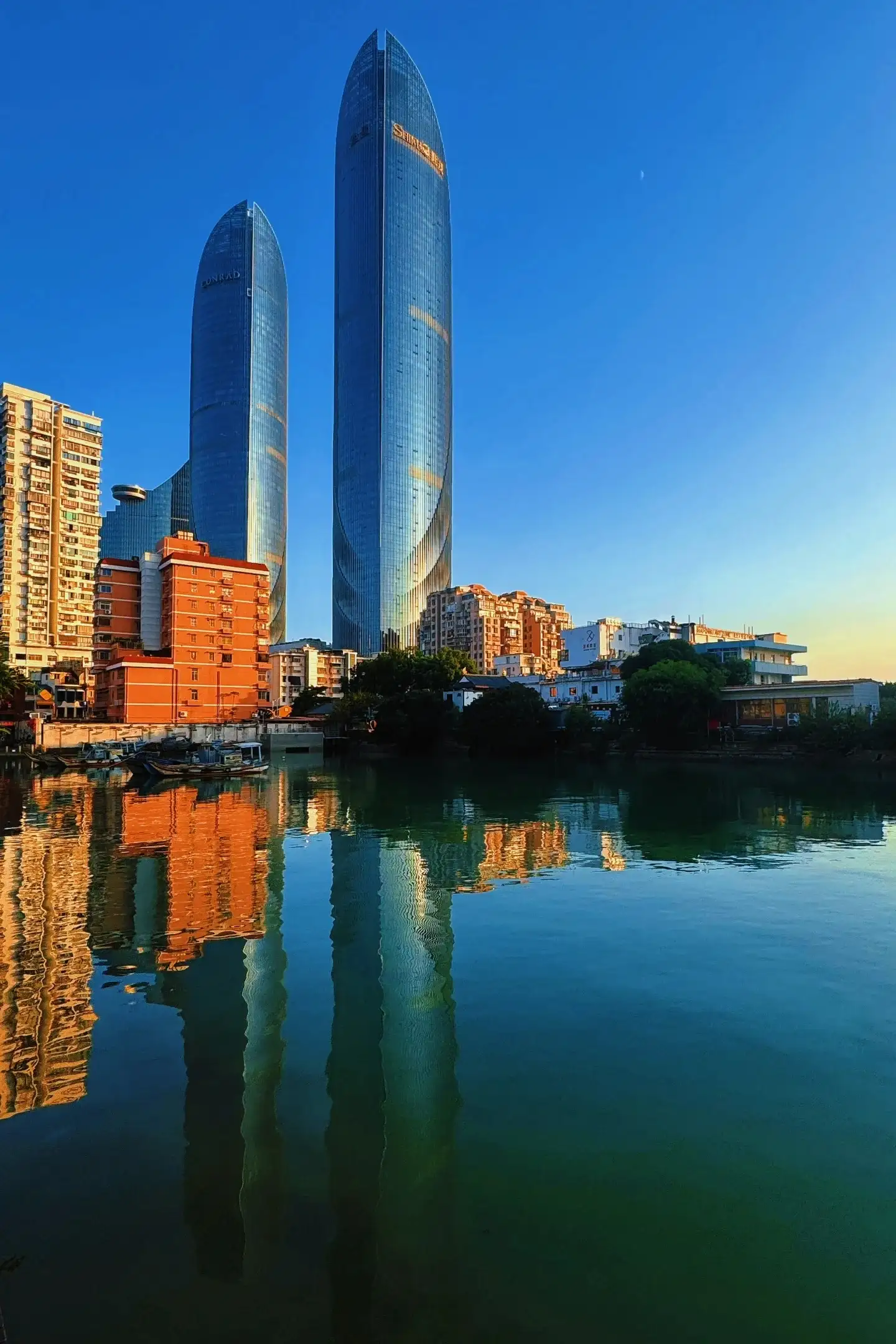
The waters of Shapowei Shelter Harbor and the Twin Towers.
Pause by the water’s edge—the tides constantly reshape the same spot.
Upon arriving at the shelter harbor, don’t rush to walk the entire circuit; pause first on the safe shore. The water level alters the relationship between the embankment, boat hulls, and building reflections: when the water is high, the reflections are longer; when the water is low, the texture of the shoreline may become more visible. The wind also breaks up the calm expanses of color into delicate ripples. Unlike mountain village streams, these waters are connected to the tides, so the same stretch of shoreline takes on different appearances at different times. Travel doesn’t have to be about chasing the “perfect shot” of high water and clear skies; understanding these changes actually makes it easier to interpret the harbor.
Pay attention to the mooring locations, access points along the shore, and existing exhibition explanations, but don’t assume a boat is engaged in daily fishing operations simply because it’s docked there. Official materials mention the phasing out of fishing and the harbor’s revitalization; it’s important to distinguish between the area’s former uses and its current ones. Good questions to ask local docent staff include: Which areas preserve the harbor’s history, which facilities were added later, and how is the water managed today? Observe only from the shore where access is permitted; do not walk onto the slippery water’s edge or the decks of boats. Neither your shoes nor your cell phone is worth risking for a low-angle photo.
Look at the buildings on both sides of the river—the city’s growth is etched into their facades.
The colorful storefronts along the waterfront easily catch the eye, but if you raise your gaze slightly, the windows, balconies, awnings, and air conditioner units on the upper floors will also come into view. Low-rise buildings often serve more than one purpose; street-level businesses and residential spaces on the upper floors can coexist. When observing architecture, there’s no need to interpret every color as a local tradition. Simply by distinguishing between brick surfaces and painted surfaces, and noting which windows still display laundry or potted plants, you can gain a deeper insight into neighborhood life than by merely reading store names. The waterfront remains a public thoroughfare; when you stop to look, be sure to leave space for passersby.
The coexistence of modern high-rises in the distance and older buildings up close is a striking urban dynamic in Shapowei. Though they belong to different eras of construction, they are visually connected in today’s landscape. You can compare how the evening light reacts differently on glass and brick walls: the glass reflects the sky, while the rough brick surfaces retain subtle shadows. Do not enter the stairwells of residential buildings or climb onto rooftops without permission just to find a high vantage point; the street level and public waterfront are sufficient to bring old and new architecture together. This perspective also allows for a more concrete understanding of Xiamen’s density—the seaside does not always mean open space.
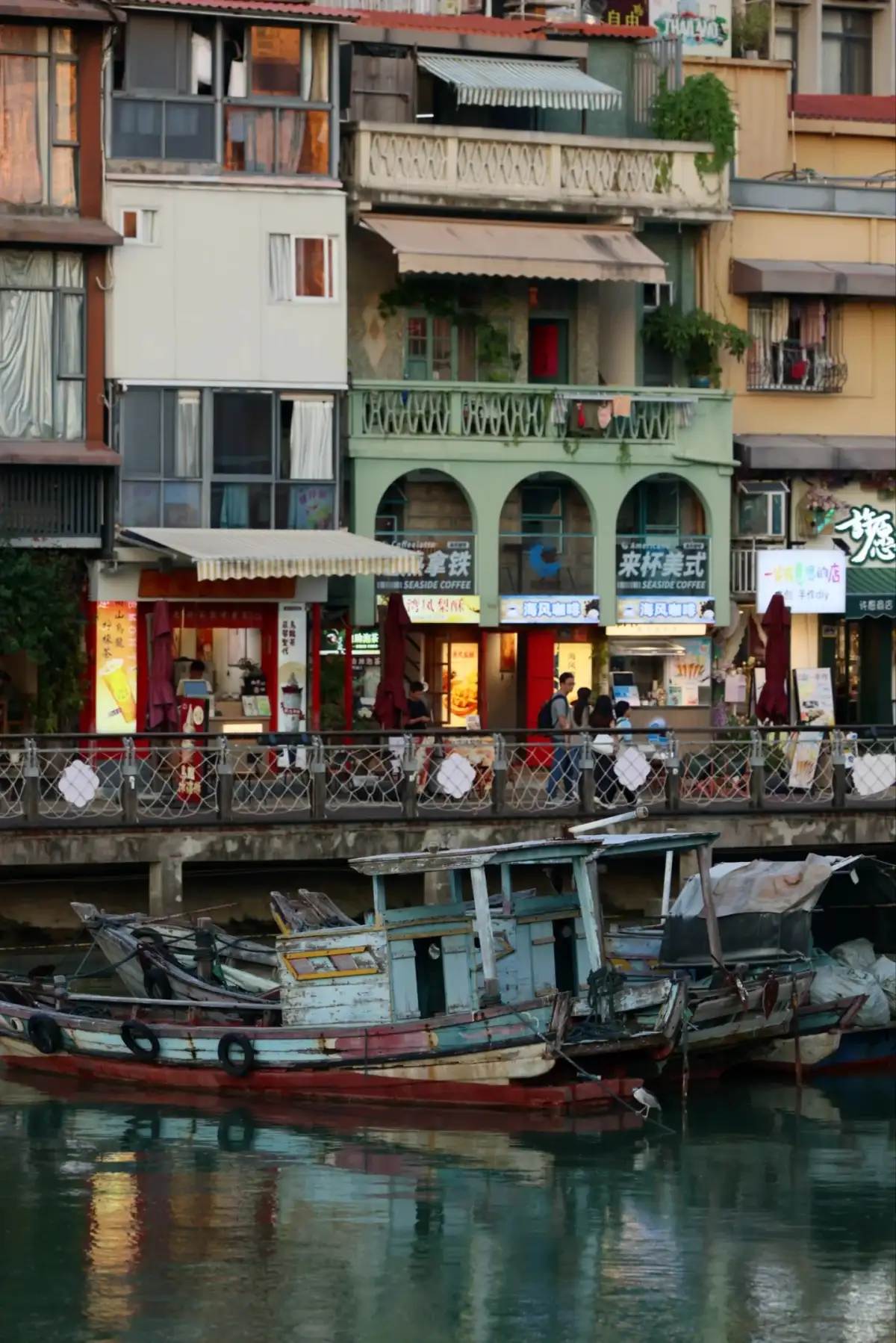
Old boats and waterfront shop houses in Shapowei.
Art West District: Presenting a New Challenge to Old Industrial Spaces
Leaving the waterfront and heading toward the Art West District, the focus of your stroll shifts from boats to the repurposing of spaces. Official descriptions mention the transformation of former seafood processing facilities; what exhibitions, markets, or events you’ll encounter today depends on the day’s schedule. Upon entering, start by reading the on-site guides and notices, then choose an exhibition or studio that’s actually open to take a closer look—there’s no need to visit every single booth just because it’s labeled “art.” If only the public areas are open that day, you can still observe the exterior contours of the old factory buildings, their doors and windows, and the newly added facilities.
Travelers can approach the area with a simple question in mind: Which parts of the old buildings have been preserved, and what new elements are needed to accommodate their current uses? Lighting, signage, seating areas, and store entrances often provide concrete answers. When looking at handmade items, ask about the materials and production process before deciding whether to buy—this offers a more engaging experience than simply searching for souvenirs based on a list of popular items. If there are live performances, confirm the start time, seating, or ticketing requirements, and set aside a full time slot for the event. If you decide to squeeze in a performance, shorten other parts of your walk accordingly so that not every activity is crammed into the same afternoon.
Beyond the shops, space is left for residents to pass through.
With so many shops in Shapowei, it’s easy for a visit to turn into a series of stop-and-shop stops. A more enjoyable approach is to choose just one place along the way where you’d like to sit down, and let the rest of your time be spent simply wandering the streets. The unloading of goods, food deliveries, and the comings and goings of electric scooters at shop entrances remind visitors that daily life continues here. When crossing the street, check for traffic before looking at the buildings; when taking photos, don’t stand in the roadway waiting for a gap in traffic. If someone is moving items in a narrow alley, giving way takes precedence over maintaining your own walking pace—only then can residents and travelers share the same path.
If you wish to observe the old houses, look at the doors, windows, and eaves from public areas—don’t peer through the windows into people’s private lives. If a shopkeeper is willing to chat, ask about a small, everyday matter, such as how a product is made or when the neighborhood is busiest; don’t assume that everyone has a fishing family history to share. Names, dialects, and the purpose of the shops already offer plenty of insight. For guests who don’t speak Chinese, a traveling companion can help translate brief questions and answers, but be sure to respect their privacy if they’re uncomfortable being photographed. By pausing to engage in this way, the neighborhood’s culture becomes more than just a uniform tourist experience.

Colorful storefronts in Shapowei.
For a light meal, start by asking about the broth and toppings
Dining can serve as a break midway through your walk, rather than a task hurriedly squeezed in before leaving. When you spot Shacha noodles or seafood snacks, first check the menu and portion sizes, then ask about the broth, peanuts, and specific seafood ingredients before deciding what to order. Preparations may vary from one shop to another, and even familiar dish names might contain ingredients you don’t usually eat. For international guests with allergies or dietary restrictions, translating the foods they need to avoid into Chinese in advance is more effective than explaining it after the dish has been served.
Don’t treat Shapowei as the one and only place to try every Xiamen snack. Sharing a small dish between two people, staying hydrated, and taking a break will ensure a comfortable walk; if you’re looking for a full dinner, staying at a restaurant to eat at your leisure is also a great option. When choosing a place to eat, check the operating hours, menu, and cleanliness, and confirm your order and price before paying. If the line is long during peak hours, have another suitable spot nearby as a backup. Once seated, reflect on the changes you just observed along the waterfront—culinary experiences and urban exploration can happen during the same stop, without needing to rush off to another popular spot.
You can wait for dusk, but you’ll need to read the weather by the sea
The evening light often casts different hues on brick walls, glass, and the water’s surface. If you wish to experience these shifts, plan to return to the waterfront later. First, familiarize yourself with the layout during the day; then, after sunset, walk back along the familiar public paths—this makes it easier to navigate than starting to search for vantage points once it’s dark. When the clouds are thick, the sunset might not appear, but the streets take on a different rhythm once the lights come on. You can observe the colors of the signs reflected on the water and listen to how the sounds of people and traffic gradually increase—there’s no need to stake the value of your entire journey on a single minute of sky.
Xiamen’s humid heat, sudden showers, and sea breezes can all affect your walking experience. In summer, schedule your walk along unshaded stretches for cooler times of day and plan indoor breaks along the way; during typhoons or severe convective weather, adjust your plans according to local announcements and avoid lingering in areas near the water. When taking a taxi to leave, it’s best to arrange a pickup on an outer road where vehicles can park normally; do not ask the driver to enter crowded alleys. If you also plan to visit nearby campuses or temples, check their reservation and opening requirements separately before scheduling separate time slots. Just because a place is nearby doesn’t mean there won’t be a wait, nor is it appropriate to treat a campus visit as a quick detour during this waterfront stroll.
Leave the shelter harbor, taking with you a memory of transformation
At the end of your walk, you can head back from the waterfront toward Daxue Road and compare the street corners you passed earlier with how they look now. Perhaps the lights are on, perhaps the tide has changed, or perhaps it’s simply that you now know where a certain path leads. Jot down these observations, and Shapowei will no longer be merely “the colorful houses beneath the Twin Towers.” It is an urban neighborhood where memories of the port remain discernible and its use continues to evolve; old buildings, new shops, seawater, and everyday traffic all come together to form today’s scene.
In your journal, jot down the answers to three questions: What first catches your eye along the waterfront? Which exhibit helps you understand the past? And on which stretch of street do you most need to slow your pace? If a particular exhibition hall is closed, there’s no need to fill in the gaps with an imagined visit; leaving the parts you missed for next time still makes for an honest and thought-provoking travel record. Before leaving, double-check your belongings and your route back, and allow plenty of time for dinner or your return to the hotel. Shapowei is best concluded this way: having witnessed a chapter of the city’s transformation, yet allowing it to continue living its own life after you’ve gone.
Further Reading and References
Compiled by the Dongxing Travel Editorial Department based on publicly available travel notes and listed materials; intended for pre-trip reading and not as a personal account of the experience. Opening hours, transportation, reservations, and service arrangements should be verified according to the actual travel date.
Fujian Provincial Government: Shapowei—From Fishing Port to Cultural Space
Where should the harbour and art-area walk begin?
Start a Shapowei Xiamen walk by locating the harbour edge and comparing waterside low-rise buildings with the streets behind. Shapowei harbour observation considers the link between an old port and current urban space; a present-day shop alone does not establish fishing history. Follow with one actually open subject for a Shapowei Art Zone visit to compare how former industrial spaces are used.
Photographs and food within a living quarter
Beyond the art area, choose a stopping place that leaves movement clear, then make time for food. Ask about broth and ingredients so dietary needs have a practical basis. Leave doorways, delivery routes and narrow lanes unobstructed. If you hope to stay for dusk, establish the return point beforehand rather than treating a particular water colour or sunset as certain.
Planning references