Dongxing Travel Editorial Department · Travel Diaries and Pre-Trip Reading
Before you arrive, set aside a full day for Lintong
Although the trip to the Terracotta Army begins in Xi’an, it’s not the kind of attraction you can just drop by on a whim like a downtown museum. Located in Lintong, the round-trip transportation, security checks at the entrance, and moving between different exhibition areas will all take up a significant amount of time. If this is your first introduction to Qin dynasty history, limit your day to one main objective: first, take the time to thoroughly explore the three pits and the close-up displays in the Terracotta Army exhibition area, then decide whether to visit Lishan Park based on your energy levels and the day’s schedule. Don’t try to cram Huaqing Palace, the hike up Mount Li, and the evening performance into a tightly packed itinerary. Lintong certainly has plenty more to offer, but the terracotta warriors are best viewed when you’re fully alert. Before entering the exhibition hall, it’s also helpful to keep this simple context in mind: the military formation before you is part of the burial complex of Emperor Qin Shi Huang’s mausoleum. There is a distinct separation between this scene and the actual battlefield, the exhibition hall built later, and the railing where visitors stand today. Understanding these layers of relationship is more helpful than simply memorizing a few staggering statistics.
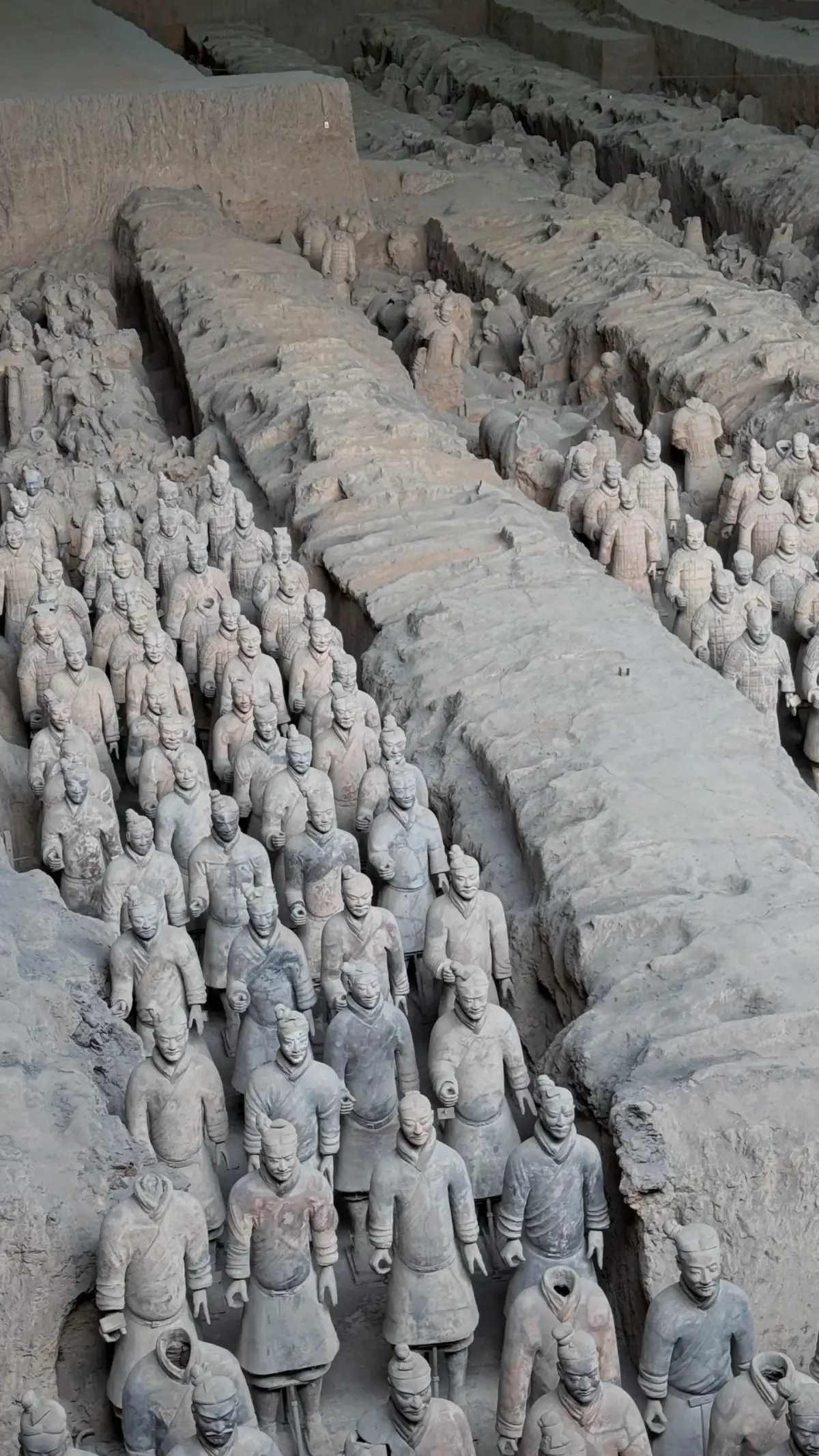
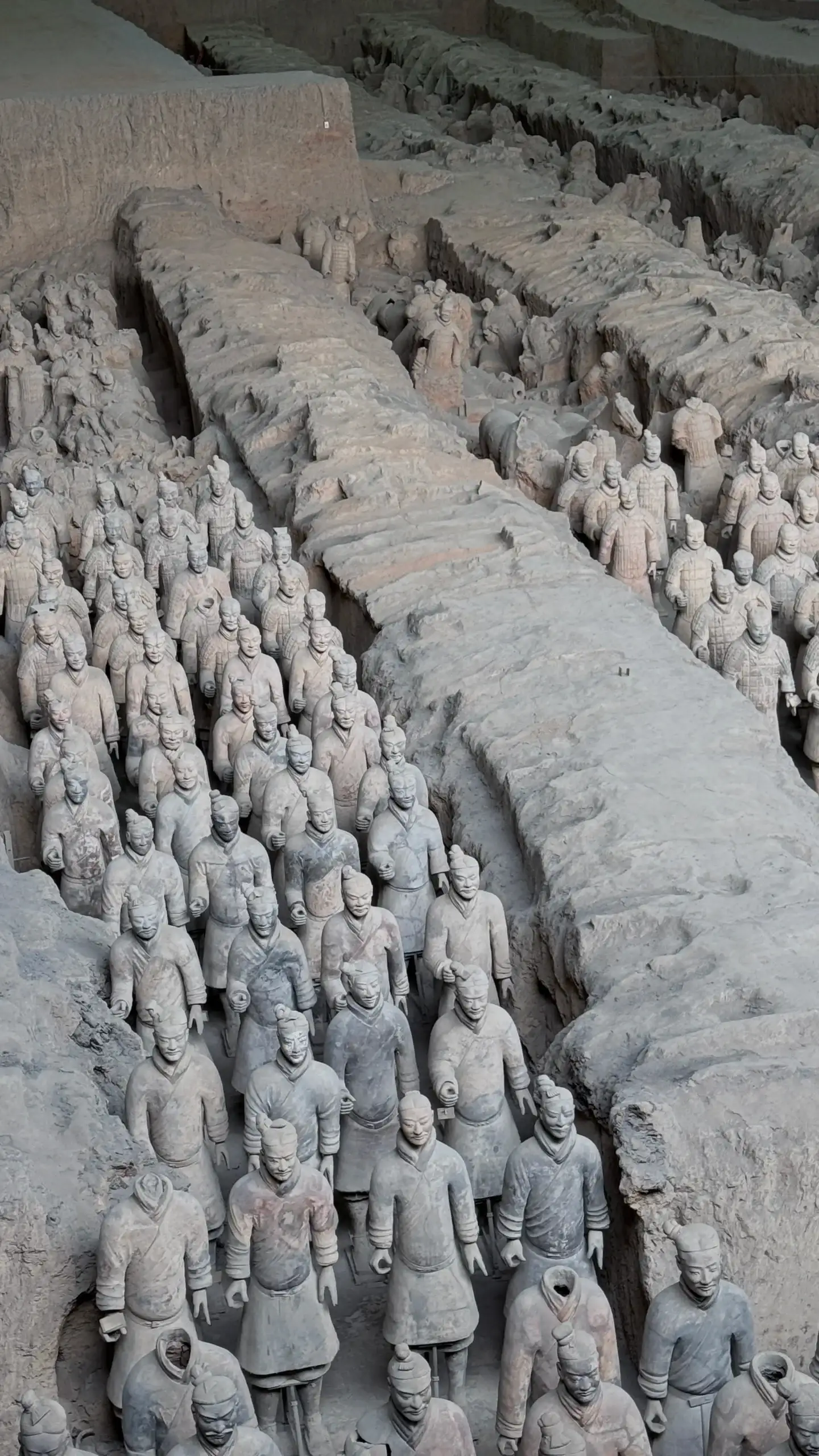
Formations and earthen partitions inside the Terracotta Army pits. the Formations; Then, Walk Along the Perimeter Pit No. 1 is the one where visitors are most likely to linger near the entrance, holding up their phones to capture the vast array of te
Pit No. 1: First, Take in the Formations; Then, Walk Along the Perimeter
Pit No. 1 most often tempts visitors to linger near the entrance, raising their phones to capture the sea of terracotta warriors. That initial overall impression is indeed essential: long earthen partitions divide the passageways, and rows of figures line these paths. The earth and terracotta share a similar grayish-brown hue, making the human forms both striking and seamlessly integrated into the surroundings. After taking in the view from the entrance, follow the on-site path along the edge of the exhibition hall to compare the arrangements as seen from the front, side, and at an angle. From the side, it’s often easier to discern the spacing, the contours of the clothing, and the positions of the terracotta horses, while the pit walls in the distance gradually become part of the composition. When the crowd is large, there’s no need to jostle for a spot in the very front row to get the same angle; waiting briefly in the back or moving to another area where lingering is permitted can offer fresh insights. The uniformity of the formation does not lie in every figure being identical; rather, it is precisely within their shared orientation that many differences are concealed. Keeping this in mind as you proceed to the next section will help you avoid the regret of simply snapping a few wide-angle shots and leaving in a hurry.
Turn your gaze to the sections that are still incomplete
Inside the pit, you’ll find both standing terracotta warriors and areas with fragmented figures, scattered pieces, and sections still covered by layers of soil. These incomplete sections are perfect places to pause and reflect: The image of the Terracotta Army we’re familiar with today is the result of archaeological discovery, documentation, research, and restoration—not all terracotta figures were found standing upright when unearthed. Start by observing a cross-section, then examine the missing parts of adjacent figures, and finally place them back within the layout of the entire pit. If exhibition labels describe ongoing work, rely on the information provided on the labels; do not judge the age of a figure solely based on its relatively fresh color or neat lines. For children visiting with you, you can shift the focus of their questions from “How many soldiers are there here?” to “Which parts can be connected, and which still require further study?” This approach to viewing does not require familiarity with archaeological terminology, yet it shifts the visitor’s perspective from a completed historical picture to a body of knowledge that is still being accumulated.
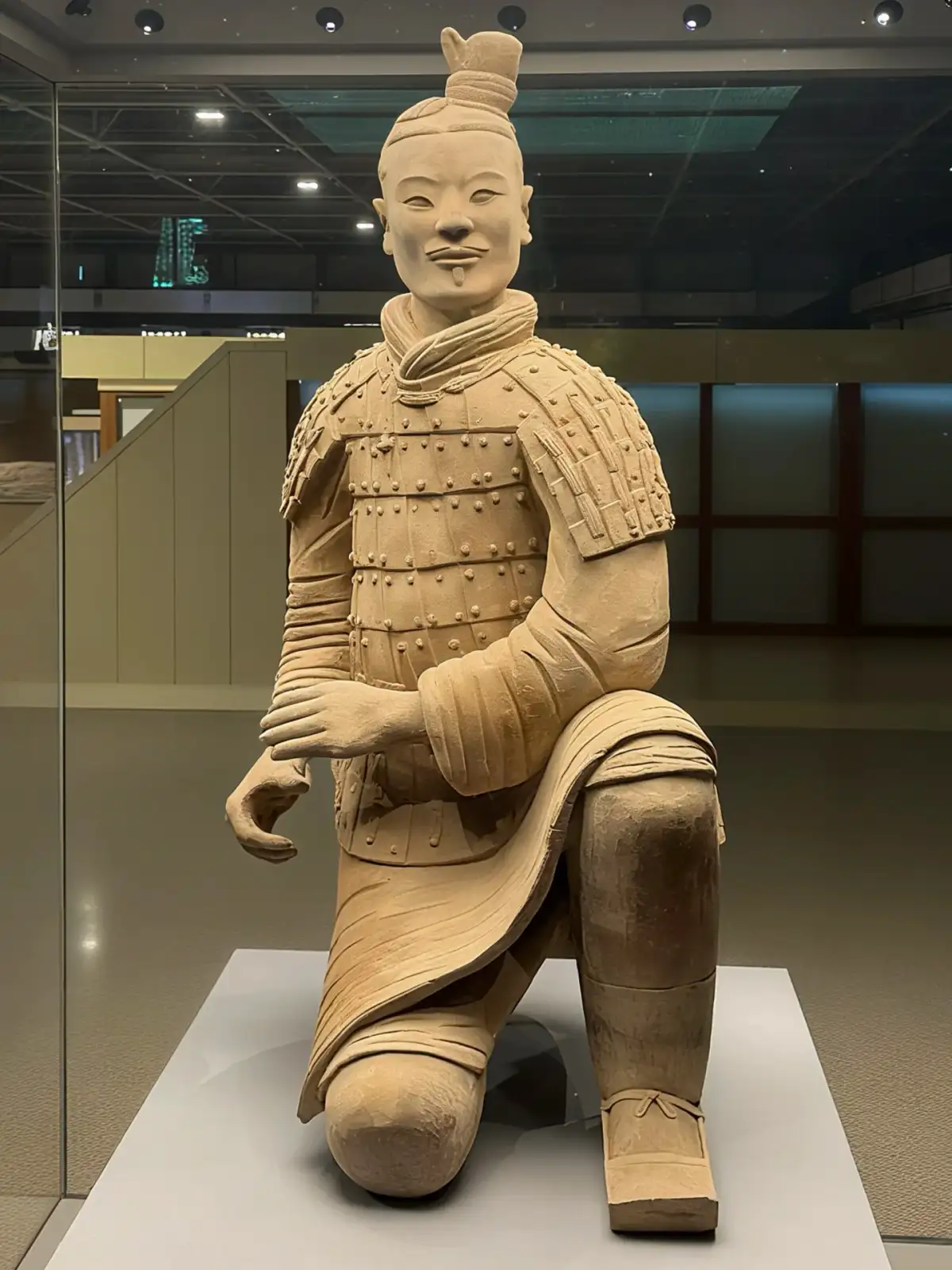
Close-up view of kneeling archers and the folds of their armor.
Pit No. 2: Take More Time to Appreciate a Single Pose
As you move from the main military formation to Pit No. 2, try focusing on the relationships between different military units and their postures. The museum’s description explains this as a military formation combining crossbowmen, chariots, infantry, and cavalry; reading the layout explanations on-site and then matching them to the corresponding areas within the pit often provides a clearer understanding than simply memorizing the names. The kneeling archers displayed up close are particularly worth a detailed look; the bend of the knees, the shape of the boots, the overlapping folds of clothing, and the layered armor plates all translate a military posture into concrete physical movements. The gap between the original equipment they held and what we see today also serves as a reminder not to casually fill in history with modern postures. Start by taking in the whole scene, then focus on a single detail—such as a scale of armor, a hair bun, or a finger—and observe how it connects with the texture of the clay. There’s no need to try to capture every detail through the glass; when reflections are unavoidable, put down your camera and simply look for a moment—you’ll find it easier to remember the relationship between facial expressions and clothing.
Pit 3: Breaking Down the Grand Scale into Manageable Parts
Pit No. 3 is smaller than Pit No. 1, so you can adjust your pace accordingly. The official tour links its layout to the command and organization of a military formation. When considering this explanation, pay attention to both the pit’s layout and the orientation of the terracotta warriors, rather than simply treating “command center” as a fact you must memorize. Coming here from the first two pits, the change in scale will make you realize that spaces within the same mausoleum complex can serve different functions. If a professional guide is available, you can ask what archaeological evidence this interpretation is based on, or inquire about which questions have yet to reach a consensus. A high-quality historical tour does not require a simple answer to every question. After leaving the exhibition hall, reflect on the repetitive arrangements in Pit No. 1, the combination of military units in Pit No. 2, and the organizational relationships in Pit No. 3—you’ll find that these three perspectives complement one another. The connections between them create a more complete memory of the visit than simply taking photos of each pit separately.
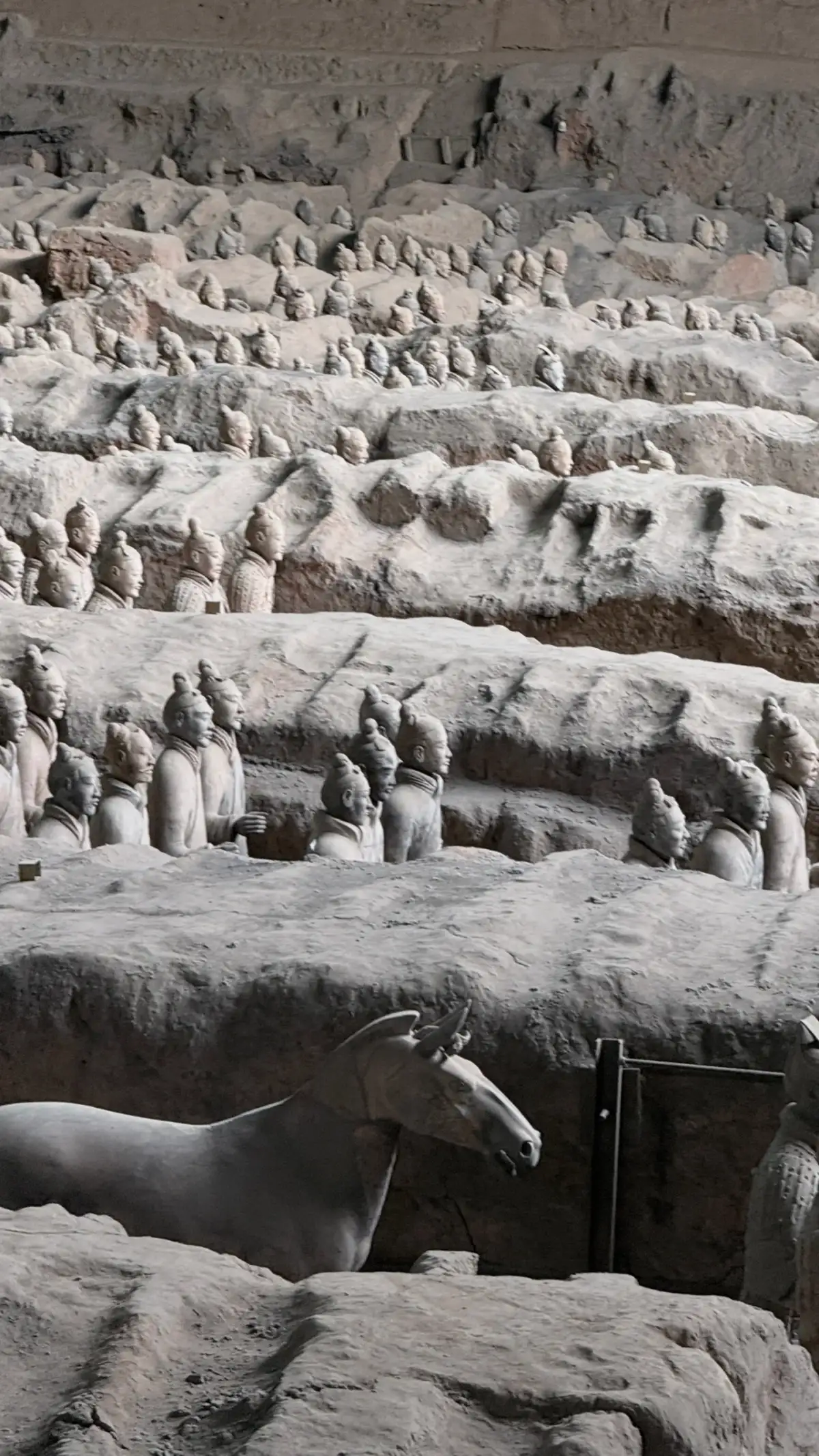
Fragmented terracotta warriors and horses inside the Terracotta Army pits.
View a face in conjunction with its outfit
The Terracotta Army is often described as having unique faces, but if you focus only on the eyebrows and eyes, you’ll easily miss other ways the figures are sculpted. Hair buns, beards, necklines, belts, armor, and shoe soles all contribute to the expression of the figures’ forms. Choose a terracotta warrior in a clearly visible spot. First, observe how the head sits on the shoulders, then examine the folds of the clothing across the chest, at the elbows, and at the knees; the sculpture’s vitality will then extend from the face to the entire body. Also, do not assume that every face is a direct portrait of a specific historical figure; the relationship between the terracotta figures and their real-life counterparts requires scholarly research to explain. Regarding color, the grayish-brown hues seen in today’s exhibition hall do not represent the full range of the Qin Dynasty’s painted finishes. When encountering displays introducing remnants of painted decorations and conservation efforts, compare them with the exposed clay. Returning to the military formations with this in mind, you can imagine the originally richer visual world while maintaining a sense of caution regarding the parts that have been lost.
Lishan Park: Decide Whether to Continue Before You Go
The museum’s tour also includes Lishan Garden; be sure to set aside extra time to move between the Terracotta Army exhibition area and that section. If you’re particularly interested in the mausoleum complex as a whole, the burial customs, or the bronze chariot and horse exhibits, check the official guide before you go to confirm the areas open that day, shuttle arrangements, and closing times—then decide which sections to visit first. If your companions are already tired after visiting the three pits, you can make the Terracotta Army exhibition area the highlight of the day and save some questions to read about later. Viewing the mound of the Mausoleum of the First Emperor of Qin and the surrounding ruins is quite different from looking down on the military formations from the edge of the pits; these should not be viewed as simply another exhibition hall filled with terracotta figures. Once there, it’s better to focus on discerning the undulations of the ground and the relationship between the exhibition buildings and the archaeological sites. When visiting both sites, be sure to hydrate and take breaks along the way to avoid rushing through the final exhibition hall. You should also factor travel time into your schedule rather than treating it as an afterthought.
Preparations for Reservations, ID, and Guided Tours
Before departing, verify the designated entrance, required identification types, and current opening arrangements through the museum’s official channels. International visitors, in particular, should confirm the correct format for entering their passport name and number and bring the identification used for the reservation. Do not assume that just because someone else successfully entered the museum on a previous visit, you will definitely be able to purchase tickets on-site. Confirm tour details in advance through official channels or reputable travel arrangements; key points should include language, meeting location, exhibition areas covered, and estimated duration. If using an audio guide, be sure to allow time for reading the instructions and quiet viewing. Queues during holidays can disrupt normally smooth routes. Although most sightseeing takes place indoors on rainy days, you’ll still need to walk between the parking lot and the exhibition halls. In the summer, navigating the outdoor sections is just as physically demanding as navigating the indoor crowds; comfortable shoes, water, and lightweight personal items are more practical than carrying a large amount of photography equipment. If you encounter temporary crowd control measures, follow the staff’s directions—a complete viewing experience does not depend on a fixed, unchanging order.
After returning to Xi’an, one question about the terracotta remains
On the way back, you can distill the highlights of the day into a few specific images: the formations between the earthen partitions, the drapery folds on a kneeling archer figurine, the unassembled components, and the sense of spatial extension within the mausoleum complex. While flipping through photos over dinner, pick the spot where you lingered the longest and look up the museum’s description for it—this will help you form a deeper understanding more easily than continuing to collect dozens of similar panoramic shots. If you plan to visit exhibitions on Shaanxi history or cultural relics in Xi’an later, carry these questions—about craftsmanship, polychrome painting, and tomb systems—with you as you continue your journey. The appeal of the Terracotta Army certainly lies in its imperial scale, but it also stems from how a lump of clay is shaped into a human cuff and how restoration makes fragments legible once more. By placing the military formations alongside these minute details, grand history ceases to be merely a distant backdrop. A Lintong itinerary that leaves room for reflection can thus continue to grow long after you’ve left.
Further Reading and Reference Sources
Originally compiled by the Dongxing Travel Editorial Department based on publicly available travel notes and listed information, this guide is intended for pre-trip reading and does not constitute a personal account of the experience; opening hours, transportation, reservations, and service arrangements should be verified according to the actual travel date.
Qin Shi Huang Mausoleum Museum: Visitor Guide
Qin Shi Huang Mausoleum Museum: Introduction to Pit No. 2
How can the three pits offer different questions?
A Terracotta Army three pits visit can begin with the overall formation in Pit 1, turn to postures and military types in Pit 2, then ask a new spatial question in Pit 3. You need not move through each at the same pace: linger where your interest is strongest. Incomplete areas are part of an archaeological site rather than evidence of a failed display.
Should a close look begin with the face?
Read Terracotta warrior details by combining faces, clothing folds, armour plates and balance instead of seeking expressions alone. Describe visible making details before using labels to understand identity and archaeological restoration observation. If you also want Lishan Garden, verify its content and travel arrangements separately. Protect a continuous period in Lintong instead of forcing several Xi'an attractions into the same half-day. Before arranging Terracotta Army tickets, check the museum's official instructions and carry the original valid identity document matching the booking.
Planning references
Planning reference: Terracotta Army three pits 1