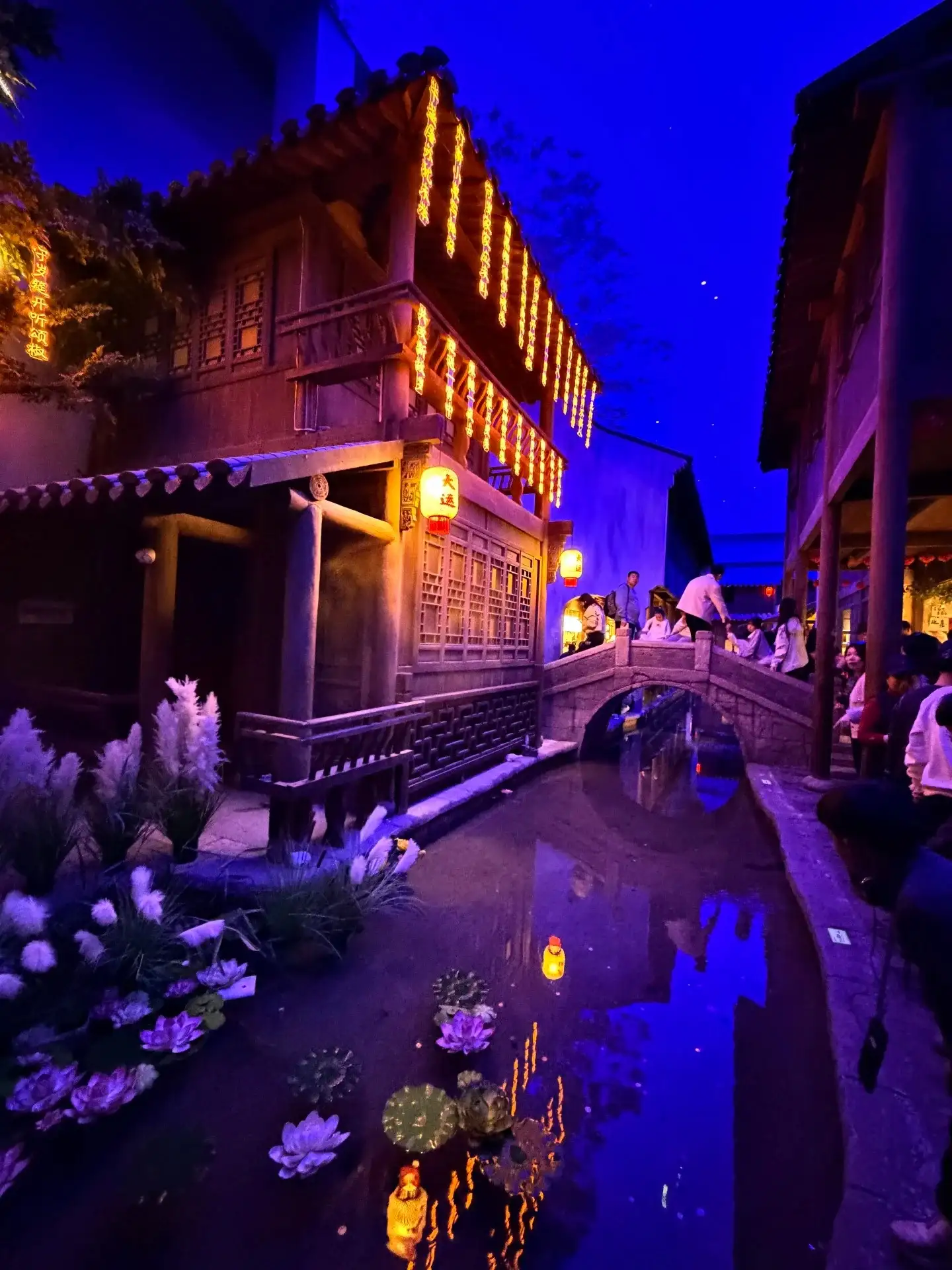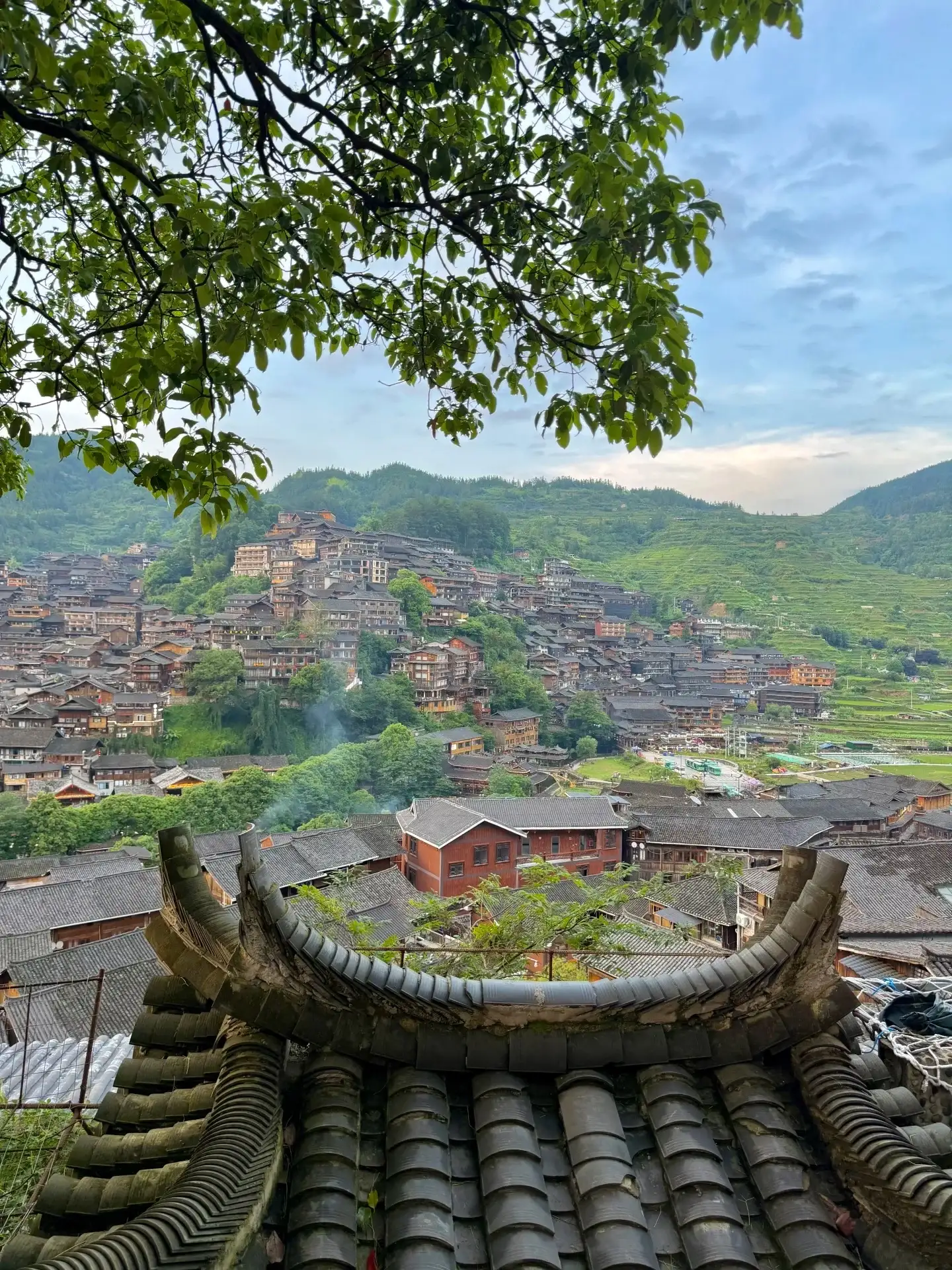
A single outfit and a terrace with a view of the rooftops are enough to make a special trip to Xijiang worthwhile. However, a complete photo shoot involves selecting outfits, applying makeup, waiting, moving around, and taking pictures—while traveling companions may also want to see the architecture, shop, or have a meal. If all this time is crammed into “taking a few photos,” the family’s various wishes are likely to clash once they arrive at the location. A full day in Xijiang allows the photo shoot to have its own dedicated segment while also leaving the daytime free for exploring the culture and the village.
Xia Wen’s complete notes suggest dedicating one day to a photo shoot and another to leisurely exploration, noting that many shooting spots require climbing slopes. The locations she lists—the study, art gallery, coffee shop, and observation deck—demonstrate the diversity of photography spots and suggest that many compositions are tied to specific venues. For first-time visitors to Xijiang, it will help to clarify whether they want a professional photo shoot or simply wish to incorporate photography as part of their village tour; this will make planning much clearer.
Before selecting attire, first understand its various contexts
Introduction to Miao Silver Ornaments on the China Intangible Cultural Heritage Websiteexplain the silver jewelry within the context of social life and cultural heritage. After verifying this background on October 3, 2026, travelers can examine the styles, materials, and craftsmanship with a specific focus, rather than treating all silver accessories as having the same meaning. Commercial travel photography outfits also do not automatically represent the complete traditional attire of a particular region, family, or occasion.
ask at the shop about the style of the clothing, the materials of the accessories, whether they are comfortable to walk in, and which locations will be used for the shoot. Knowing what you’re wearing adds more depth than simply choosing the most eye-catching outfit. If children or seniors do not like heavier accessories, they can choose combinations that suit them better. The photo experience should, first and foremost, ensure that the participants are willing to take part; there is no need to require everyone in the same family to look exactly the same.
separate sightseeing from shopping. First, understand the production process and actual materials, then confirm the weight, price calculation, and after-sales service. A beautiful appearance or a name containing “Miao silver” does not directly prove the silver content or the handcrafted production process. For valuable items, be sure to keep the store name and proof of purchase; if you simply wish to bring back a cultural souvenir, you can also choose ordinary cultural and creative products with clearly defined materials and uses.
book a photo shoot as a specific activity
specify the number of outfits, shooting locations, delivery format (negatives or finished prints), scope of photo retouching, and total cost when booking a photo shoot. Whether makeup, an escort, transportation, or admission fees to commercial venues are included should also be clearly stated in the service description. Compared to “guaranteed results,” these details are easier to verify. If the photos are intended for personal keepsakes, public use, or commercial purposes, clarify the licensing terms and obtain subject consent separately with the service provider.
If you plan to complete the photo shoot during the day, family members can schedule cultural visits or rest periods around that time; if you prefer a nighttime photo shoot, focus on your favorite travel activities during the day. Night photography and museum visits have different time requirements, so it’s not advisable to have the whole family wait around for a single set of lighting conditions. When deciding on a shooting time slot, consider both your own need for rest and the activities of your travel companions.
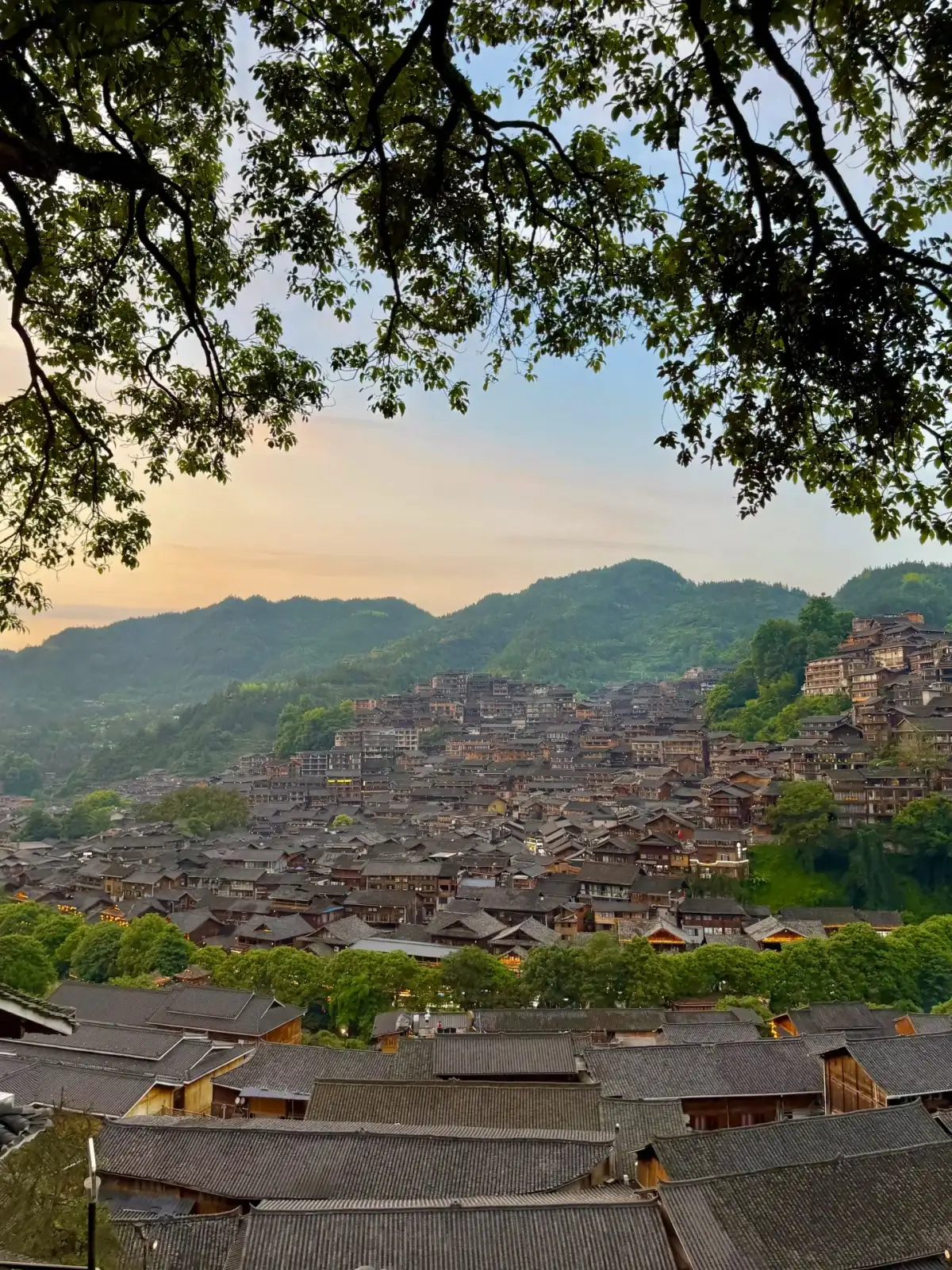
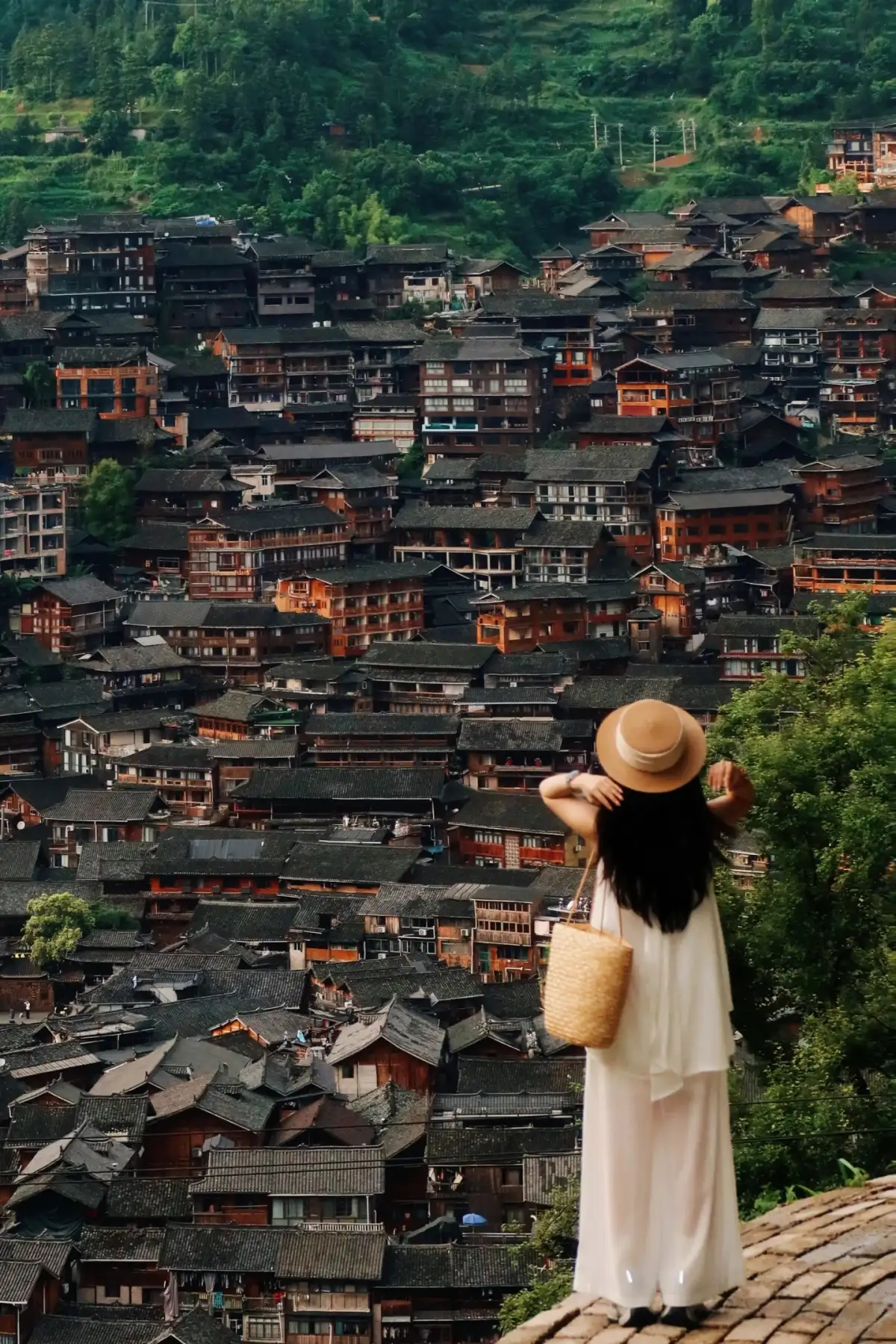
The rooftops of the wooden houses at Xijiang Thousand-Household Miao Village at dusk. Photo:Xia Wen · Original Post.
In the original post, several photo spots are linked to coffee shops, art spaces, and travel photography studios. Each has its own operational and visitor guidelines; before entering, be sure to check the permitted access, pricing, and actual areas open to the public. Even without booking that specific service, you can still view rooftops and alleyways from public pathways. Travelers’ cultural memories need not be built entirely on the exclusive context of a single shop; public spaces offer equally rich experiences.
Why do the wooden houses stretch along the hillside?
Protection Plan for Xijiang, a Historic and Cultural Town in Leishan Countyincorporate the Miao stilt house construction techniques and related historical contextual elements into the scope of protection.Introduction to the Xijiang Miao Ethnic Museumexplain the connection between the local stilted wooden houses and the mountainous environment. Observations here can focus on roof levels, supporting structures, and elevation differences; this information is used to understand the architectural context, not to assert that every house is the same age or serves the same purpose.
explore the village during the day, when the structure of the wooden buildings is easier to discern than after the lights come on. Start by viewing the overall layout from public vantage points, then walk along accessible paths to examine the exteriors up close. The distant view reveals how the houses are arranged, while the close-up view shows how the doors, windows, and roads connect. Combining these two perspectives provides the daytime spatial context for the layered lights seen at night.
Children can look for clues as to “how the houses stand on the slope,” while adults can observe the eaves, pillars, and the space beneath them. Some people enjoy comparing the exteriors of different buildings through photographs, while others prefer to listen to explanations about construction techniques; both approaches can form the basis of a tour theme. For wooden houses that are currently inhabited or used for business, visitors should leave a clear path for those entering and exiting; an open door does not necessarily mean the courtyard is open to the public. Obtaining the host’s explicit consent before touring will make the interaction more natural.
Museums give a piece of clothing a richer story
If interested in the attire and its cultural significance, they can include a visit to the Miao Museum in their daytime itinerary, subject to current opening hours. First, review the exhibition labels for region, era, and purpose, then examine the details of the actual artifacts or images. This will help you connect the colors and accessories in your photographs to a more specific cultural context. Please confirm current exhibition openings and guided tour services directly with the museum, as the information on the website does not guarantee that every item will be on display that day.
A tourist’s silhouette in front of a wooden house in the Xijiang Thousand-Household Miao Village. Photo:Xia Wen · Original Post.
visit the museum for a focused, in-depth experience. Select a piece of attire that interests you, and observe which parts were crafted using different techniques, as well as how patterns and materials are combined. Read the exhibition labels carefully to understand what they explain, and do not guess the meaning of unexplained elements based on appearance alone. If you want to know more, feel free to ask the relevant docent. For children, drawing a pattern or comparing the outlines of two garments is a more engaging way to participate than simply memorizing a list of names.
For culturally themed photos, they can document details that are legally permitted to be photographed while also retaining caption information, thereby reducing confusion during post-processing. Photography rules are subject to on-site requirements. Silver jewelry, textiles, and architecture each offer distinct visual experiences; families can share their favorite item during lunch. This way, even if some do not participate in the photo shoot, there will still be shared topics for discussion during the trip.
structure a day’s itinerary into segments that everyone can participate in
The family can spend the morning viewing architecture or cultural exhibits, take a break at noon, and then have the members who wish to have a photo shoot participate in the pre-arranged service. Other family members can wait at a clearly designated meeting point or engage in short activities of their own interest. Minors should be supervised by a responsible adult, and the meeting location and contact information should be clearly communicated in advance. There is room for everyone’s preferences, so the photo shoot won’t become a lengthy task where the entire family has to accommodate just one person.
“Can I stay just one night and still balance a photo shoot with cultural experiences?” Depending on arrival time, choose one more comprehensive activity and make a brief stop for the other. If arriving relatively late, arrange lodging and dinner first, then decide on evening activities based on your actual energy levels; set aside the next day for a daytime theme. If arriving early, you can start with cultural sightseeing before the photo shoot. It’s better to have fewer specific activities than to rush through each one—that way, you’re more likely to create lasting memories.
Xijiang’s sloping roads can affect the movement of luggage and photography. When selecting accommodations, inquire about parking areas, luggage shuttle services, and the location of stairs relative to your room—especially if traveling with elderly family members. The original itinerary should not be automatically linked in the order of the photos; the actual road conditions and access restrictions will determine the route. Travelers with foreign passports should also verify the accommodation registration process and scenic area reservation details in advance to minimize last-minute issues upon arrival.
leave with a set of portraits, or with wide-angle shots of the wooden houses, close-ups of specific accessories, and individual snapshots of family members. The photos make the journey visible, while the cultural experiences during the day explain what is seen in the photos. Xijiang is well-suited to preserving this dual memory: people within the landscape, and an understanding of how that landscape connects to real life.
Source and Editorial Notes
This article is an original travel analysis compiled by the Dongxing Travel editorial team based on the listed materials; it is not a firsthand account by the author. The full text of the original post has not been reproduced; accompanying images are used within the scope of authorization and are credited to the author and the source of the original post. They do not serve as proof of actual travel experiences or services provided by Dongxing Travel.
Xia Wen · I came all the way to Qianhu Miao Village just for these 18 photos! (Includes 📷 camera angles) · Travel Notes; Verified/Organized on: October 3, 2026.
China Intangible Cultural Heritage Network · Introduction to Miao Silver Ornaments · Official source; Verification/compilation date: October 3, 2026.
Leishan County People’s Government · Protection Plan for the Xijiang Historic and Cultural Town · Official source; Verification/compilation date: October 3, 2026.
Leishan County Xijiang Miao Museum · Introduction to the Xijiang Miao Museum · Official source; Verification/compilation date: October 3, 2026.