first recognize a silhouette and then learn about a piece of history
Photographs of the Western Xia Tombs are often simple: the earth-toned outlines of the ruins, with mountains in the background and open space all around. While such simple images make it easy to remember the shapes, they can also obscure the historical layers beneath. When visiting Yinchuan, you can approach the site in two steps: first, sense the relationship between the ruins and the Helan Mountains; then, use the exhibits and text to understand the society that left these remains behind. The distant view provides the first impression, while the true cultural interpretation gradually unfolds after that initial impression.
The Xiaohongshu post “Yinchuan | When I Thought Domestic Aesthetics Were Doomed” documents the author’s experience of visiting the museum first, followed by Tomb No. 3 and the surrounding mountainous landscape; the “Yinchuan Two-Day Itinerary Guide” combines the ruins with urban and desert attractions. This article takes these perspectives as its starting point for observation. UNESCO’s 2025 decision to inscribe the site on the World Heritage List provides the basic context for the Western Xia Tombs’ history, location, and cultural value; the itinerary selections below are editorial recommendations.
The earthen color of the site blends seamlessly with its surroundings
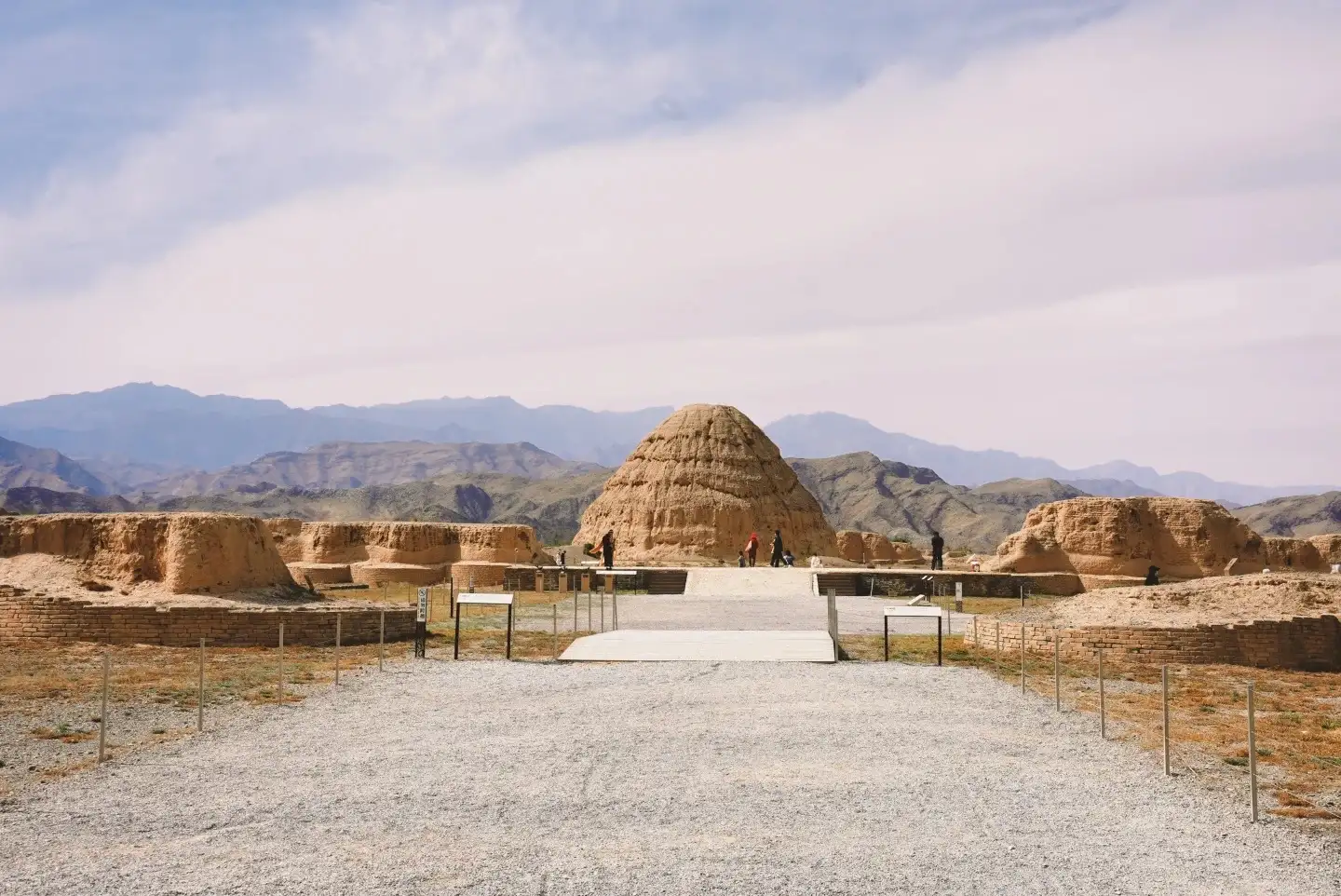
A distinctive feature of viewing archaeological sites is that their forms may blend closely with the color of the surrounding land. The gaze is not always immediately drawn to vivid eaves and decorations, as it would be when facing a painted palace; you need to slow down to discern how the contours, the ground, and the distant mountains complement one another. This approach to viewing is best suited to first taking in the broader landscape to understand the site’s context, then focusing your attention on a specific, distinct feature of the ruins, allowing your gaze to shift back and forth between the near and the far.
UNESCO’s heritage description emphasizes that the visual and spiritual connection between the tombs and the Helan Mountains remains intact. For visitors, this raises a practical question: How much would the experience of the site change if the mountains were cropped out of a photograph? When the distant mountains are included, the structures are connected to the landscape; when only a detail is viewed, the materials and surfaces take center stage. These two perspectives complement each other and remind us that the environment itself is an essential part of understanding the heritage site.
Photography enthusiasts may choose one wide-angle shot that incorporates the surrounding mountains, followed by a closer shot that highlights the earth tones and the structure’s contours. Tourists visiting the site in the distance can help convey a sense of scale, but they need not be the focal point of the image. The compositional focus can be on the relationship between the structure and the empty space, allowing the image to retain the sense of openness found on-site. A photo series like this can explain what you saw and provide concrete subjects for your travel writing.
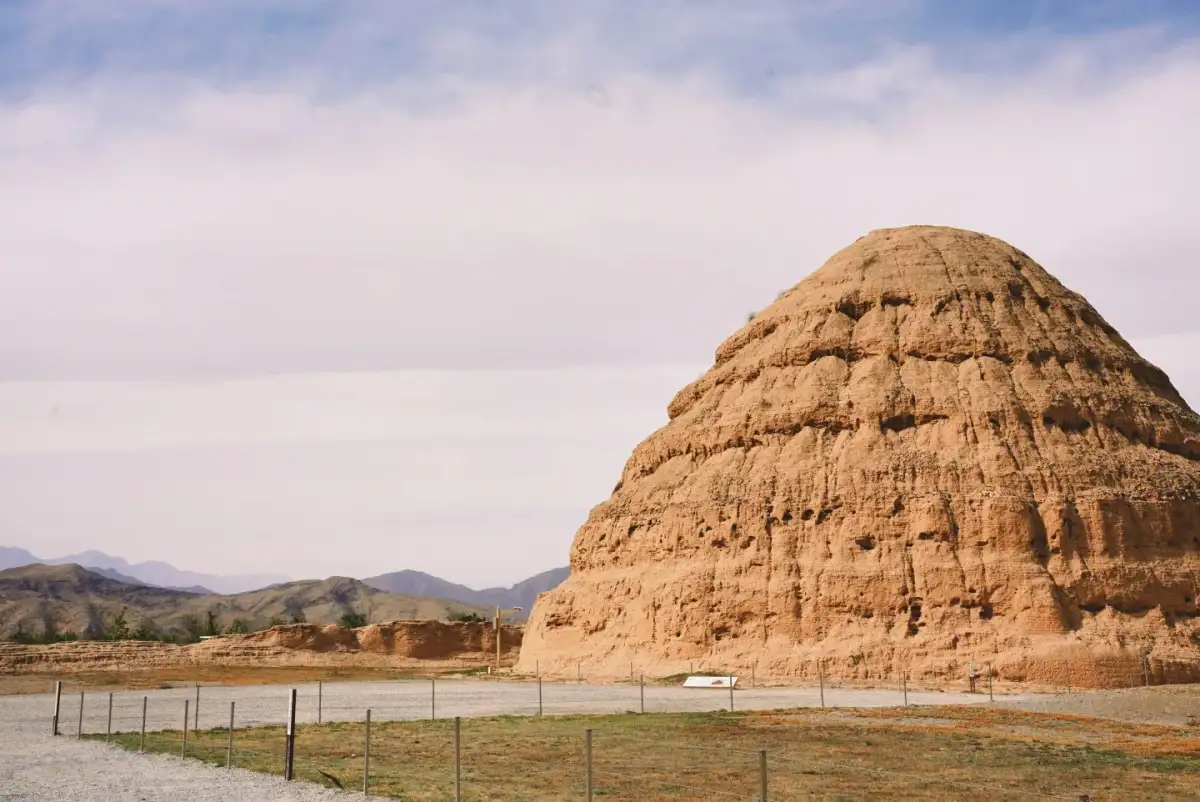
a towering earthen structure with layers of erosion patterns, surrounded by a low fence. Photo:Xiao Yang Wini · Original Post.
Museums Make Invisible Architectural Relationships Understandable
Earthen ruins often lack intact architectural facades, so visitors need to rely on diagrams, models, and archaeological materials to understand the original layout. When visiting a museum or on-site exhibition, start by finding a clear spatial diagram and then take it with you to the site. In this way, a connection is established between the surviving outlines and the historical structures; a scene that might otherwise be interpreted simply as a single earthen mound begins to raise questions about architecture, rituals, and the layout of the burial grounds.
When examining a scale model, start by identifying the relationships it illustrates: center and periphery, entrance and main sections, and architecture and environment. There’s no need to memorize every label at once; it’s enough to choose one relationship you can clearly explain. Then, when you arrive at the site, observe how the features visible today correspond to the diagram. This back-and-forth connection allows both the exhibition and the open-air ruins to play their respective roles, ensuring that the visit doesn’t experience a sudden break between indoor and outdoor spaces.
If on-site explanations of excavated artifacts are provided, one can begin by considering what activities the materials were originally associated with. Architectural components prompt reflections on how spaces were decorated or organized, while textual materials provide access to information and expression. The identity of the objects and their specific displays are subject to on-site conditions, but viewing themes can be prepared in advance. This approach to the visit is suitable for those encountering Western Xia history for the first time, as it begins with a few easily understandable elements before connecting them to the historical context.
The Western Xia script offers travelers a sense of a strange yet tangible entry point
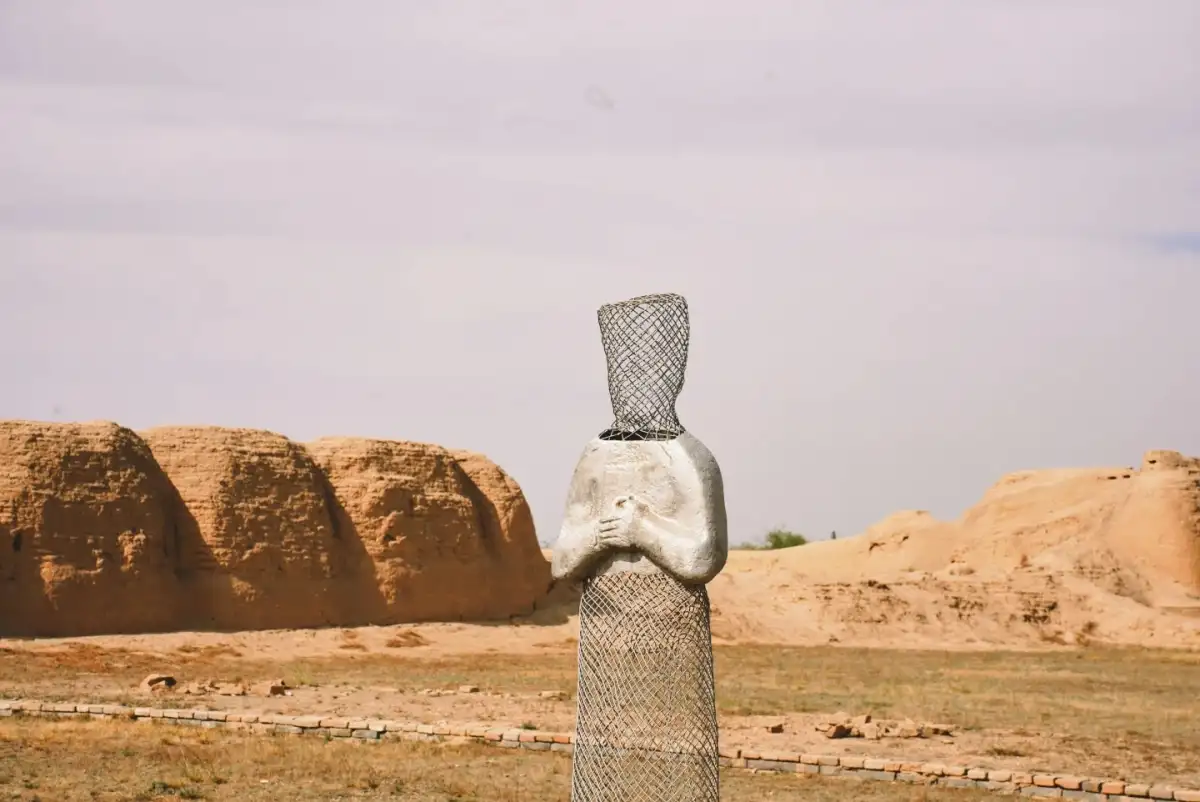
stone carvings of figures wearing tall hats and with hands crossed over their chests in the same frame as the earthen wall ruins. Photo:Xiao Yang Wini · Original Post.
The UNESCO description mentions fragments of stele inscriptions bearing Western Xia script. This clue serves as a timely reminder to visitors that history is not confined to architectural outlines but is also preserved in language and writing. When encountering unfamiliar characters, one can first observe how the characters are arranged and the rhythm of their strokes, then read the explanations provided on the exhibition labels. Even if one cannot decipher them, one can still recognize that the material before one’s eyes belongs to a specific system of expression, rather than being mere decoration.
When visiting with children, you can first ask them to describe their impressions of the characters’ shapes, then compare them to characters they are familiar with. If adults then explain that this is a writing system requiring specialized study and research, children can understand the difference between “looking like a character” and “being able to read it.” This sense of unfamiliarity has educational value in itself and shifts the focus of cultural travel away from merely viewing grand architecture toward how people record and convey information.
For international visitors, text is also a natural common topic of conversation. Everyone has a language they are familiar with, and everyone may encounter characters they cannot immediately read. Guides can begin with this experience and then provide the necessary background. Cultural understanding does not require everyone to first master Western Xia history; rather, it involves discovering a question worth further exploration from the specific materials: What identities, memories, or beliefs do these texts record?
A royal tomb is also a clue to cultural encounters
UNESCO situates the Western Xia Tombs within the historical context of the 11th to 13th centuries and discusses the influences of various cultures and religions. This context allows the site to address questions broader than the name of the dynasty: How does a society shape its own architecture and forms of expression through interaction with others? Visitors can follow the diagrams, architectural elements, and text in the exhibition to find concrete clues, transforming cultural exchange from a mere general term of praise into a specific, object-based interpretation.
For those interested in Silk Road travel, the Western Xia Tombs can add another layer of meaning to the familiar image of “caravans passing through.” The movement of people brings not only goods but also fosters encounters between beliefs, crafts, and social systems. The archaeological site and its exhibits provide tangible material for discussing these connections. Specific examples should be explored through the exhibits, allowing visitors to ask questions and understand which elements reflect shared influences and which contribute to the unique character of this heritage site.
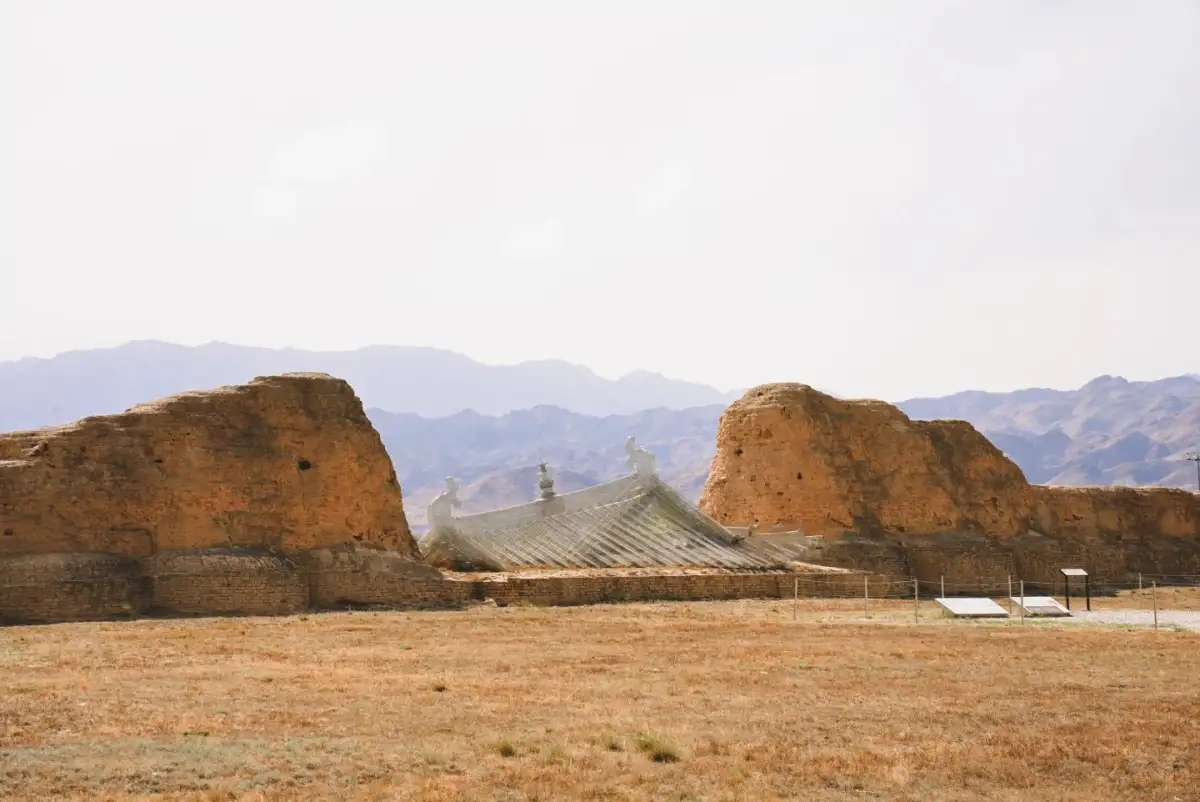
a gray roof peeking out between two sections of earthen wall, set against a backdrop of distant mountains and an open sky. Photo:Xiao Yang Wini · Original Post.
The theme of this half-day tour: how to balance it with other attractions in Yinchuan
If culture is the primary interest, indoor exhibits and the on-site ruins can be arranged as a unified experience, establishing a clear sequence between the two. If you wish to include other outdoor activities, it’s best to first assess your energy levels after visiting the ruins and consider practical transportation options before deciding whether to continue. The two-day itinerary on Xiaohongshu reflects personal preferences and is best used to explore potential interests; it does not need to be followed as a fixed sequence by every family.
For slower-paced companions, you can narrow the scope of on-site viewing to focus on a single site and a specific exhibition thread; those interested in delving deeper into the culture can pay closer attention to the text and architectural diagrams. When visiting as a group, start by identifying elements that everyone can engage with, then adjust the focus based on individual interests. If, in half a day, you can grasp the relationship between the landscape at the foot of the mountain, the site’s form, and the text, you’ve already grasped the complete theme—there’s no need to add many more names.
Specific itineraries for the Yinchuan area can be found on this websiteTourist ItineraryDiscussions with consultants highlight the interplay between cultural interpretation, outdoor interests, and the pace of the group. What makes the Western Xia Tombs a worthwhile stop is the process by which the site and its surroundings mutually illuminate one another: first, recognizing the earth-toned contours; then, understanding a display; and finally, returning to the open site with questions about the text or architecture. That wide-angle photograph thus gains historical depth and is more likely to become a genuine travel memory.
Sources and Editorial Notes
This article is an original travel interpretation compiled by the Dongxing Travel editorial department based on published materials; it is not a firsthand account by the author. The full text of the original post has not been reproduced; accompanying images are used within the scope of authorization and are credited to the author and the source of the original post. They do not serve as proof of actual travel experiences or services provided by Dongxing Travel.
Xiao Yang Wini · Yinchuan | Just When I Thought Domestic Aesthetics Were Doomed… · Travel Notes; Verified/Compiled on: October 3, 2026.
He’an’s Travelogue · 📍 Yinchuan 2-Day Itinerary Guide / Exploring History and the Desert · Travel Notes; Verified/Compiled on: October 3, 2026.
UNESCO World Heritage Committee · Xixia Imperial Tombs inscription decision 47 COM 8B.15 · Official sources; Verified/compiled on: October 3, 2026.