Ancient water conservancy projects are often described as sturdy and ancient, as if they could remain in the river indefinitely as long as the materials are strong enough. Reports on the conservation and restoration of the Yuliang Dam offer a different perspective: stones need to be numbered, components must be refitted, and sections downstream affected by scouring also require maintenance. Visiting this dam in Shexian to understand how it is cared for is just as worth the time as seeing how it holds back the water.
小红书作者生活微微一勺盐记录了九月渔梁坝水量较小的个人到访,并注意到石锁与石块。这是特定现场经验,不作为今天可上坝面的依据。本文工艺与修缮事实来自黄山市政府二〇二五年报道和二〇二六年专家访谈,把维护知识转成公开区域的观察问题,不安排施工或坝体内部探访。
Why are the stones numbered?
Official reports on the start of restoration mention coffer dam drainage and the numbering and archiving of stone blocks. For visitors, this numbering system makes an abstract conservation principle concrete: stones are not merely materials of the same color; they are tied to their specific location, condition, and the structure as a whole. By understanding this documentation process, visitors will not simplistically view restoration as merely replacing old stones with new ones, nor will they regard color matching alone as the sole indicator that conservation is complete.
If restoration photographs are publicly displayed on-site, you can first determine which stage the photo illustrates: documentation of the original condition, dismantling and consolidation, reassembly, or treatment of a specific section. Different stages involve different tasks, and post-restoration landscape photos may not necessarily reflect the entire process. Visitors can choose a procedure they understand and relate it to the structure on-site. Engineering judgments remain the responsibility of professionals; visitors are simply reviewing publicly available information.
Even if the color or surface of the stone appears different, one should not immediately judge which stones are “real” and which are “fake.” The age, source of materials, restoration methods, and surface condition require documentary explanation; visual impressions alone are limited. Visitors can jot down their questions, consult official descriptions, or ask a docent. Approaching the ancient dam in this way preserves a sense of curiosity while ensuring that descriptions are based on verifiable facts, rather than automatically equating weathered appearances with historical age.
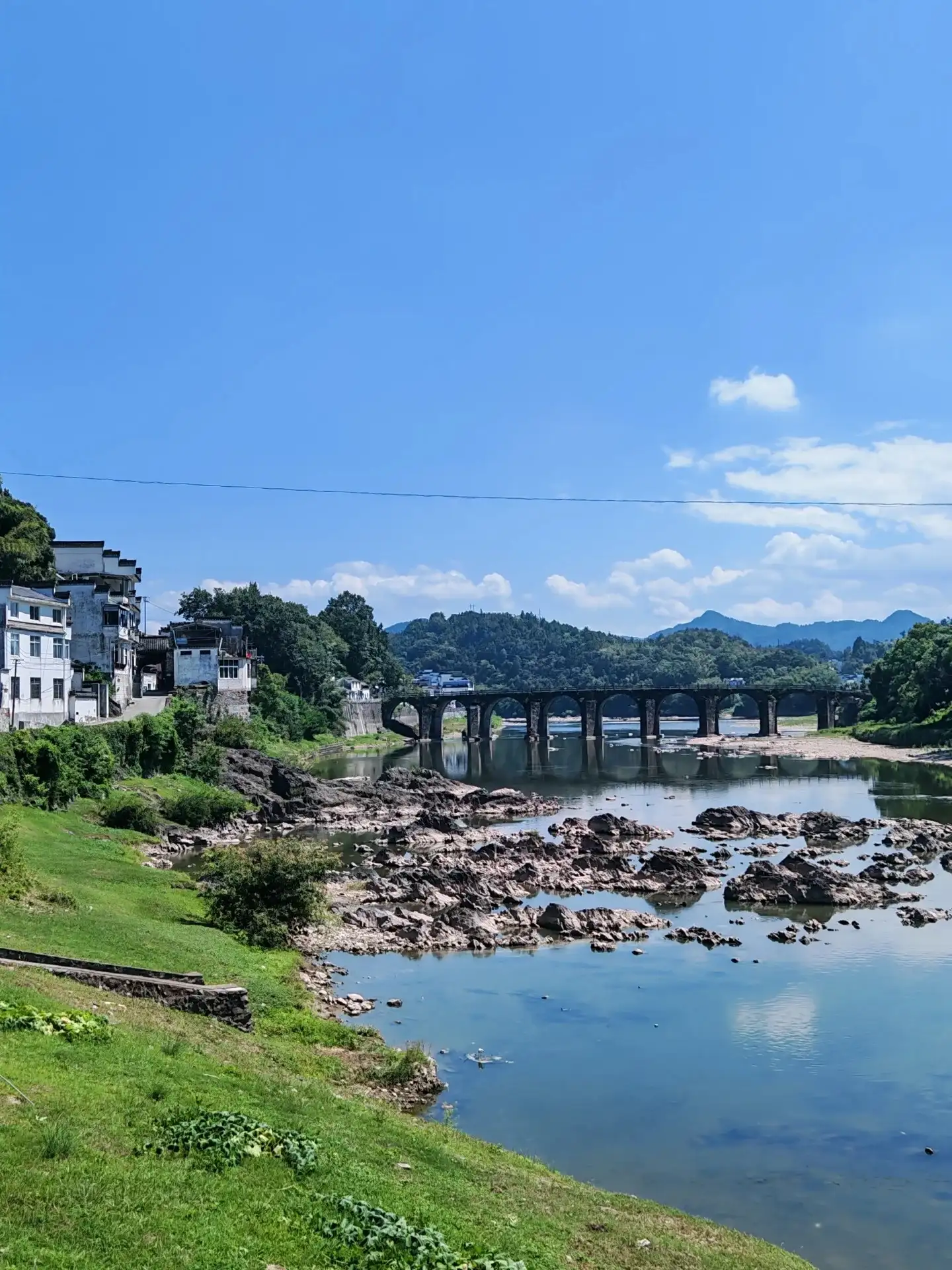
The water surface and rocky riverbank at Yuliang in Shexian County. Photo:A Pinch of Salt in Life · Original Post.
Dovetail Joints and Ingot Nails: The Connections Behind the Names
In a report by the Huangshan Municipal Government, workers are shown repairing and reinstalling the stone slabs on the dam face and manually installing dovetail joints; the report also introduces traditional techniques such as stone tenon and mortise joints and “yuanbao” nail anchoring. For those encountering these terms for the first time, it is helpful to first understand that they are clues to how the structure is connected and stabilized, and then examine the specific forms using the publicly available diagrams. The names are descriptive, but they do not fully explain all the force-bearing mechanisms involved.
How can visitors view these sites so they don’t just take a photo of a single stone? You can break down the viewing experience into three levels—the whole, the connections, and the location—with each level addressing a specific question.
Overall View: From a permitted viewing point along the shore, observe the relationship between the dam, the water surface, and both banks; identify which section constitutes the dam body and which parts belong to the surrounding roads and revetments. Only after establishing the overall context can detailed photographs be understood within their proper context.
Connection: Use the public explanations to understand how the components are used between the ashlars. Identify visible details on-site, and use diagrams to supplement the parts that cannot be seen; do not enter restricted areas for the purpose of observation.
Location: Place the water gate, downstream protective pond, and other features mentioned in the introduction back onto the spatial map to see why the restoration involves more than just the dam crest. Understanding the spatial relationships between these elements helps illustrate that the project involves the coordinated work of multiple components.
For this kind of observation, all you need is a general overview photo and a formal schematic diagram—it’s not necessary to stand right on top of the dam. A post on Xiaohongshu once showed someone approaching the structure during a period of low water flow, but water levels, road conditions, and management policies are subject to change. Whether access to the dam surface is permitted should be determined according to on-site regulations; the fact that others have walked across in the past does not automatically grant permission to do so today.
The conservation pond draws the eye beyond the dam
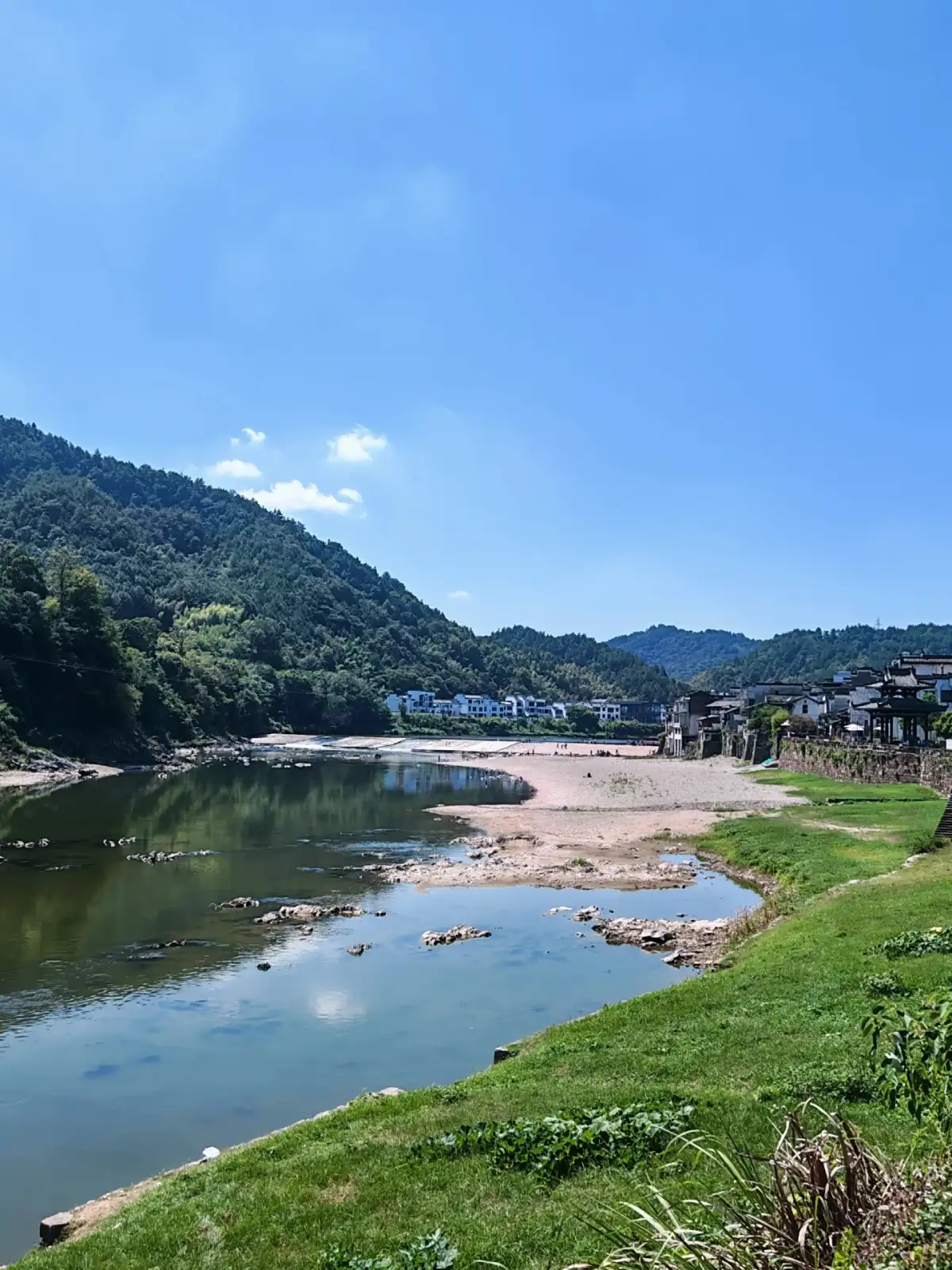
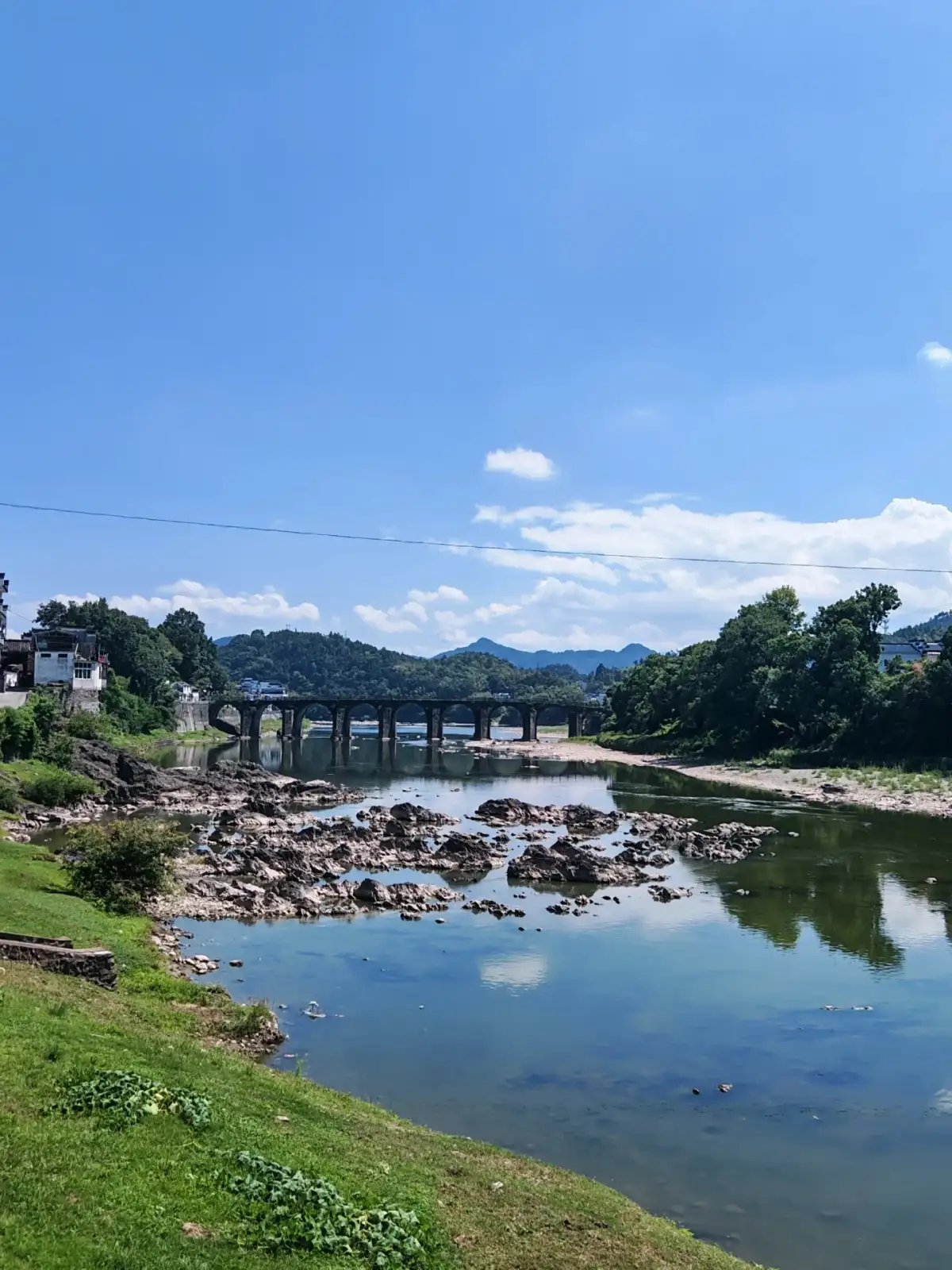
Yuliang River and an ancient mountain village. Photo:A Pinch of Salt in Life · Original Post.
According to official restoration reports, the embankment downstream—which had been damaged by long-term water erosion—was repaired simultaneously using stone materials and traditional techniques that match those of the ancient dam. This fact reminds readers that the scope of engineering conservation extends beyond the most conspicuous row of stones. Rivers and structures constantly interact; the stability of the surrounding area also affects the entire dam, so maintenance must consider both the dam itself and its environment.
An expert interview published in the Huangshan Municipal Government’s journal in 2026 also characterized the Yuliang Dam as an urban infrastructure project that remains functional, rather than merely a historical symbol. This is key to understanding the boundaries of the visit: what visitors see is a site that serves both as a cultural relic and a functional structure. Water levels, weather, and management information influence viewing locations; when planning, the public shoreline and the ancient street should be designated as stable viewing areas, without guaranteeing close-up access at any specific spot.
When visiting with children, you can discuss why restoration is necessary. No matter how heavy the stones are, the surrounding water flow and the site’s continued use still require ongoing management; workers use documentation and craftsmanship to help the structure endure. It’s more accurate to have children look for the overall structure and its connections in the public diagrams than to present the project as a magical building that will never fall into disrepair. Explanations of the structure’s actual functions should follow the museum’s or site’s guidance, while children’s speculations should be left open for discussion.
Set aside some time to explore the theme between the historic street and the riverbank
Yuliang is well-suited for combination with other activities in Shexian, but the theme can focus on preservation and sustainable use. Start by viewing the overall site from a suitable riverside vantage point, then walk along a section of the ancient street that is currently open to the public, juxtaposing the building materials with the living spaces; if there are public displays, incorporate them into the experience. The itinerary need not cover all aspects of Huizhou architecture at once; presenting a single historic structure with its complete set of challenges may leave a more lasting impression than including numerous sites.
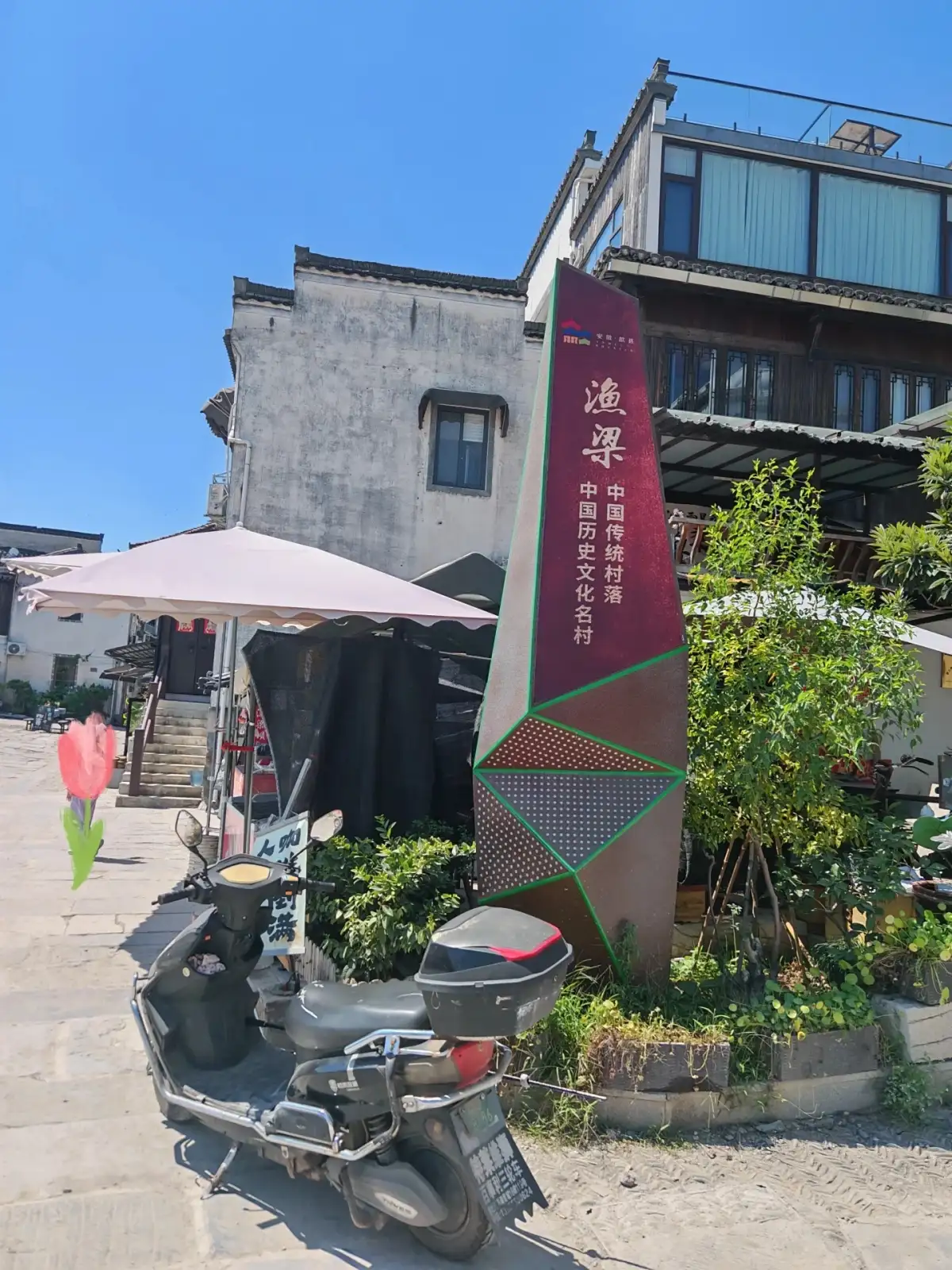
Buildings along the streets of Yuliang Ancient Village. Photo:A Pinch of Salt in Life · Original Post.
If water levels or weather conditions on a given day do not allow for a prolonged stay, you can shorten the time spent by the water and focus on learning about the restoration techniques through confirmed exhibits or reading materials. The visible parts of the structure vary with water levels, so you cannot expect the same stone surfaces to be exposed every time. Clearly describing your own location and what you observed is more reliable than using a close-up photo taken by someone else to supplement your own on-site experience.
Photographers can compose their shots with a focus on documentation rather than proof. A wide-angle shot should frame the dam and the riverbank, while another should highlight the scale of the materials; captions should specify the exact location and date of observation. If restoration photographs come from official sources, they should be properly cited according to the relevant terms of use and not confused with personal visit photos. A comprehensive portrayal of history and conservation relies on a clear relationship between different materials, rather than on capturing every single detail oneself.
Both the old dam and the historic street are actively used in daily life; please maintain public access while exploring and do not use residents’ entrances as resting spots. If you wish to ask locals about their memories of the maintenance work, listen to their personal experiences when they are willing to share, and then contrast these with official records. Personal memories can add a human touch, but conclusions regarding project timelines and techniques still require formal documentation; when the two come together, the story becomes richer.
The restoration of Yuliang Dam can be approached through three key concepts—numbering, interlocking joints, and pond protection—ultimately leading back to a structure that remains functional today. Ancient does not mean unchanged; preservation encompasses documentation, adaptation, and ongoing care. If travelers take the time to observe this aspect more closely from the riverbank, the sound of the water will be more than just the soundtrack to the scenery; it will also remind us that history remains visible today because there are people who have consistently carried out the concrete work required to preserve it.
Source and Editorial Notes
This article is an original travel analysis compiled by the Dongxing Travel editorial department based on published materials; it is not a firsthand account by the author. The full text of the original post has not been reproduced; accompanying images are used within the scope of authorization and are credited to the author and the source of the original post. They do not serve as proof of actual travel experiences or services provided by Dongxing Travel.
A Pinch of Salt in Life · ‼️ Anhui · Huangshan, Shexian County | Yuliang Dam · The Dujiangyan of Jiangnan 🌊 · Travel Notes; Verification/Organization Date: October 3, 2026.
Huangshan Municipal People’s Government · Launch of the Conservation Restoration of Yuliang Dam in She County · Official documentation; Verification/Compilation Date: October 3, 2026.
Huangshan Municipal People’s Government · In-Depth Maintenance of the Yuliang Ancient Dam in Shexian County Is Progressing Steadily · Official documentation; Verification/Compilation Date: October 3, 2026.
Huangshan Municipal People’s Government · The Effective Preservation of Huizhou Culture—Cheng Jiyue Discusses the Documentary *Millennium Huizhou* · Official documentation; Verification/Compilation Date: October 3, 2026.