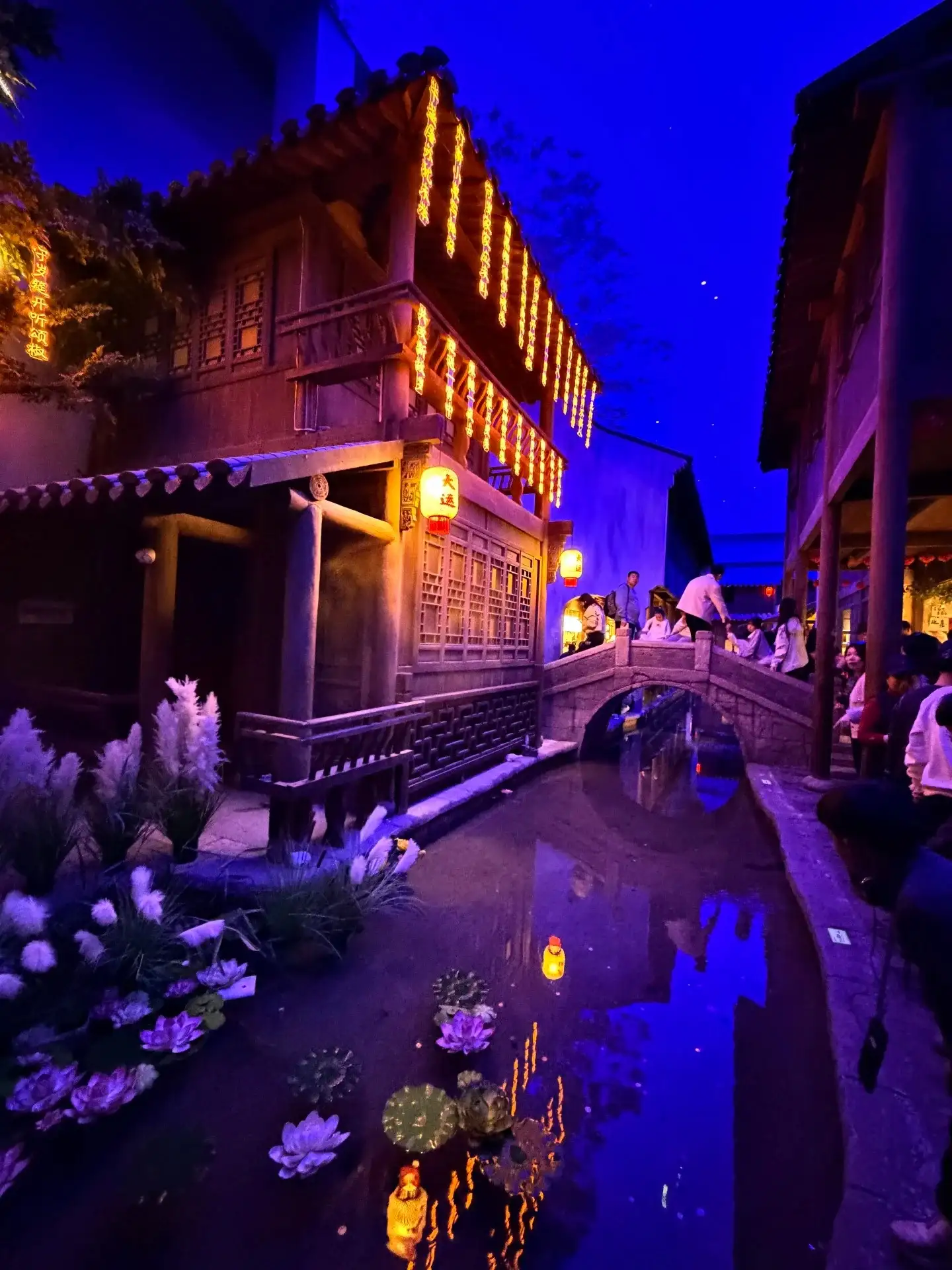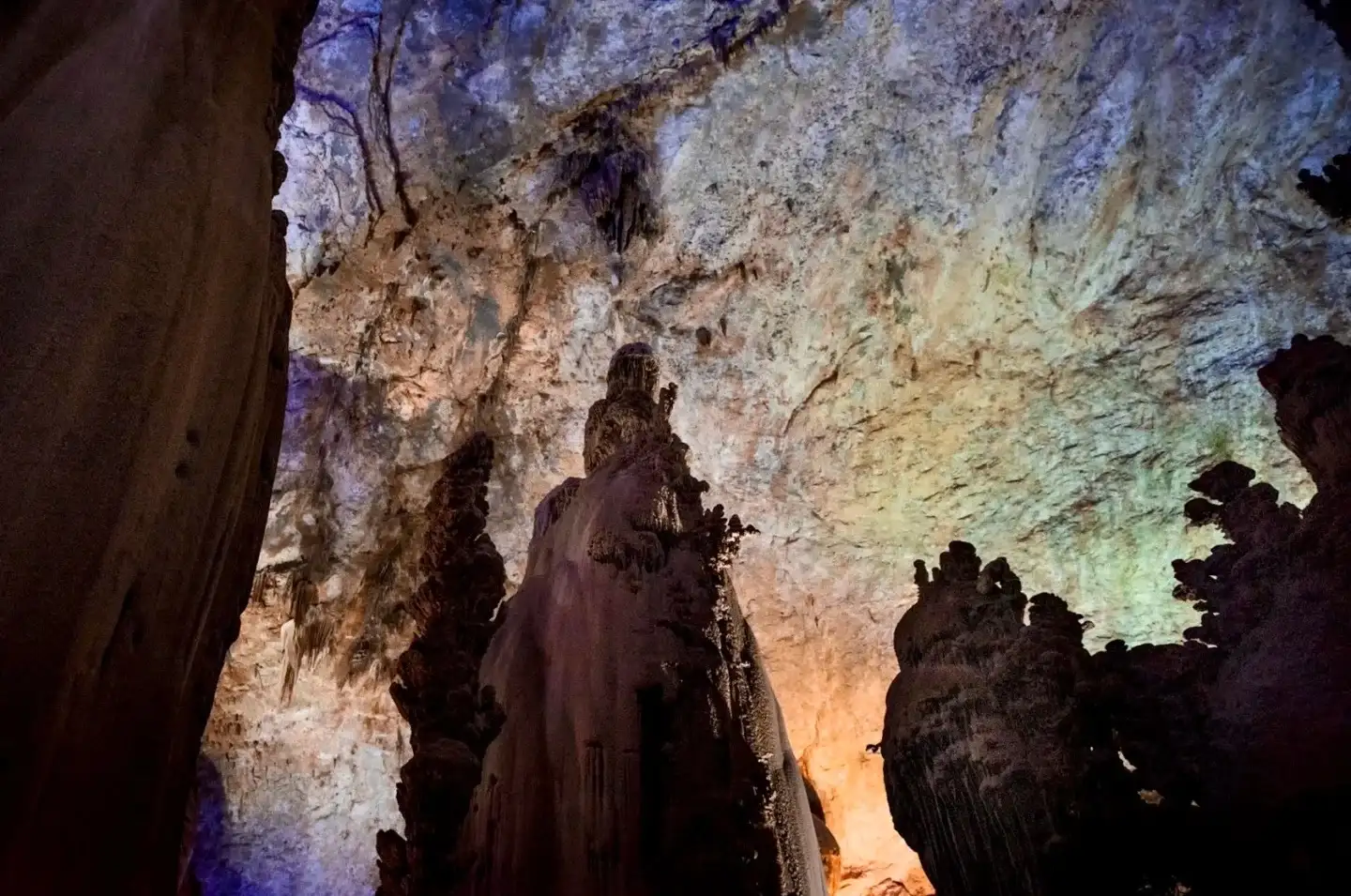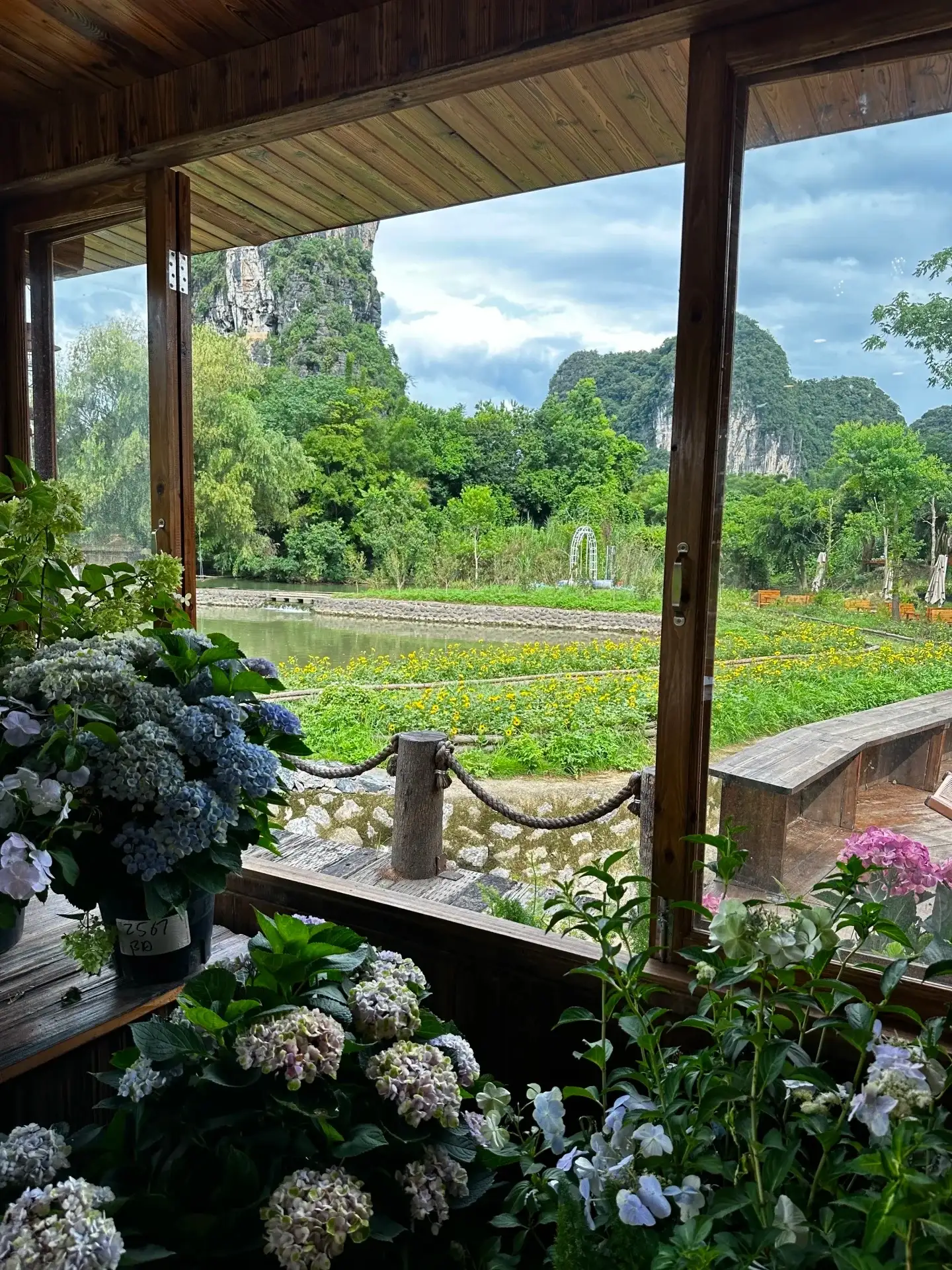
“staying by the Yulong River” may sound like a simple solution, but in reality, it encompasses a range of different needs: some want to wake up to a view of the mountains; others want to ride a bamboo raft every day; some need easy access to their room after their children’s afternoon naps; and still others simply want to spend an afternoon in a coffee garden. If you try to cram all of these into the phrase “river view room,” you might still find that moving around every day isn’t convenient, even after choosing a place that looks great in the photos.
小红书作者小辣空空介绍过一处遇龙河边小院,重点是花、草坪、木屋和咖啡;Dolphin的笔记则喜欢烟雨里的河流。这些观察展示了河边停留的不同情绪,不能证明所有住宿都有同样的景观、服务或交通条件。广西林草部门的风景名胜区规划将遇龙河的峰林、河流、田园与村落一起作为景观资源,也提醒我们:河景之外,周边环境同样参与旅行。
Does booking a river-view room for the entire trip mean you can skip transportation planning?
Not recommended. The view from the room and the walking route from the accommodation to daily destinations are two separate matters. When booking, ask the property to provide an accurate Chinese address and map location, then separately confirm parking, luggage handling, dining options, and the pier you plan to visit. The river view shown in the room photos may be from a balcony, a common area, or another vantage point; you should specify which specific room offers the view in your booking communication.
If your travel companions prefer a fixed base, we recommend choosing accommodations that meet your main daily needs and minimizing the number of times you change locations each day. After breakfast, plan short excursions in the surrounding area; return to the room to rest in the afternoon, and head out again in the evening. For those who prefer a continuous itinerary, it is even more important to specify pickup and drop-off locations; no matter how good the view is, it cannot compensate for the time spent on repeated back-and-forth trips. Choosing a riverside location is about establishing a certain rhythm of life, and transportation should support that rhythm.
Coffee Courtyard or Village-Edge Accommodations—which is better suited for children?
It depends on what your child needs most during the day. The lawns and gardens described by “Xiao La Kong Kong” are based on the author’s observations at specific locations; parents can use this information to inquire with the venue about common areas, access boundaries, and how children are permitted to use the facilities. Do not assume that just because a photo shows a lawn, it is safe for children to run freely, approach the riverbank, or use the facilities.
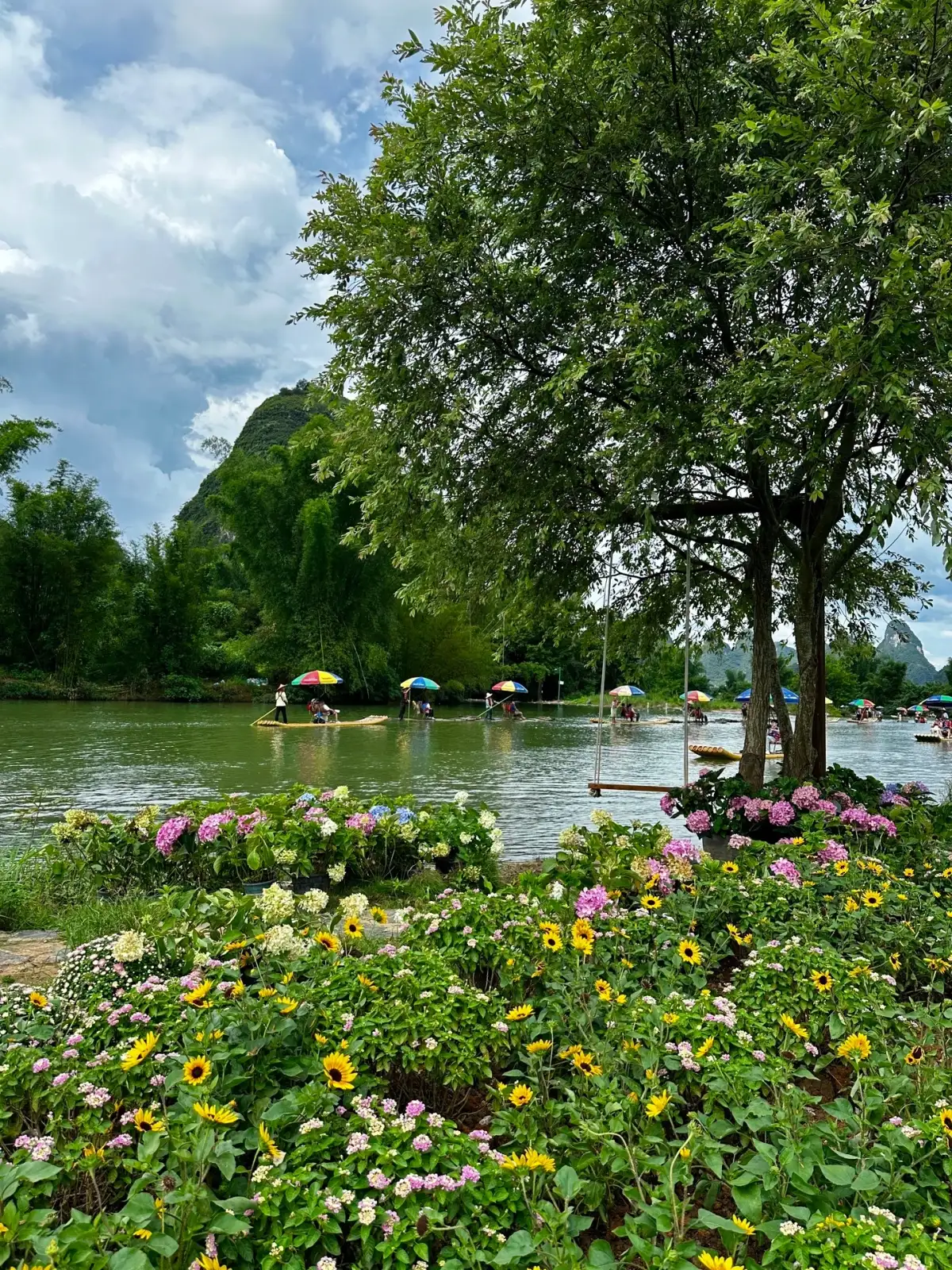
Flower beds along the Yulong River and bamboo rafts. Photo:Xiao La Kong Kong · Original Post.
If children need an afternoon nap, a quiet room, easy access back to the room, and meal arrangements are generally more important than the number of parking spaces in the courtyard. If children enjoy observing nature, nearby fields, rivers, and mountains can be turned into themes for short walks, but be sure to choose paths where access is explicitly permitted. Crops in the fields and irrigation canals are part of a real agricultural environment; when taking children to see plants, keeping them on the paths also teaches them to understand the boundaries of rural travel.
There is also a type of family that prefers to simply spend some time by the river while staying at a location with transportation that better suits their itinerary. A visit to the Coffee Courtyard can be arranged as a separate activity and does not necessarily require an overnight stay. This way, you can enjoy the garden and river views without having to alter your entire itinerary for a single afternoon’s activity.
Can vegetarians feel confident ordering meals just because they see rice noodles and greens on the menu?
Menu names provide only preliminary clues. When confirming vegetarian meals, be specific about your dietary restrictions: whether you consume eggs and dairy, whether you accept animal-based broths, fish sauce, or other seasonings, and whether there are any ingredients you must strictly avoid. Ask the restaurant how a specific dish is prepared—not just whether the restaurant “offers vegetarian options.”
riverfront accommodations, meal arrangements can be discussed when booking. Ask the provider to specify the breakfast menu, whether it can be adjusted to meet specific dietary requirements, and the actual dining options available when eating out. If someone in your family has strict dietary restrictions, you can bring backup food with confirmed ingredients to ensure simple provisions during the trip. This preparation allows everyone to eat at their normal pace and avoids spending the entire day searching for the “most authentic” restaurants.
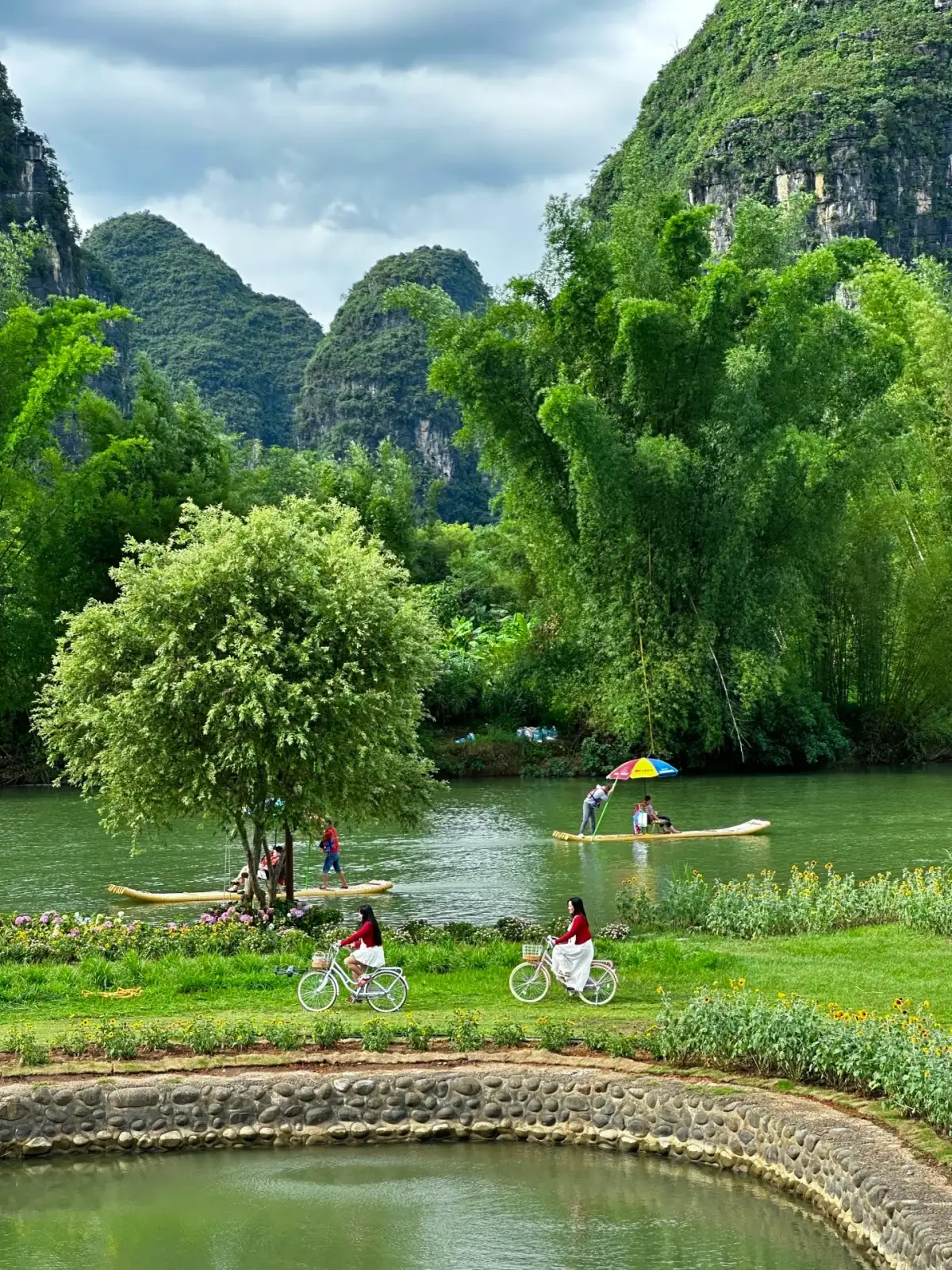
The Yulong River bank with cyclists in the distance. Photo:Xiao La Kong Kong · Original Post.
When traveling in a group, designate one person who can clearly articulate your requirements to handle communications, and write down all confirmed details. Different restaurants have different preparation methods, so a response received from one establishment does not automatically apply to the next. When conveying dietary requirements to a travel advisor or accommodation provider, please retain the original, specific description to allow them to confirm each item individually.
If you want to photograph landscapes, do you have to stay at the exact same courtyard shown in the photos?
is not necessary. Photos of courtyards typically feature gardens, furniture, or architecture maintained by businesses; such images convey a specific aesthetic arrangement. The landscapes of the Encun River area, however, also encompass karst peaks, villages, and pastoral scenes. Guangxi’s official planning emphasizes that these elements collectively form the landscape; visitors can find their own compositions at public spots where stopping is permitted, without needing to limit their trip to a specific seat on the second floor of a particular establishment.
photography enthusiasts should compare their desired subjects when selecting accommodations. A room with a mountain view is ideal for quiet morning observations; a riverside location is suitable for compositions combining water, plants, and fields; and a courtyard is perfect for close-ups of architecture and gardens. Since these three subjects require different types of spaces, it’s best to describe your vision in terms of specific visual elements rather than simply saying “I want to get good shots.” This allows vendors to explain where the views come from, and consultants can more easily select locations that are actually suitable.
Misty rain and sunny weather alter the contours of the mountains and the reflections on the water’s surface, so the atmosphere depicted in the original post may not be replicated every day. If the mountains are obscured by clouds on a given day, you can shift your focus to nearby vegetation, eaves, and water surfaces; there’s no need to wait endlessly for the same distant view. When photographing family members, figures in the background help establish a sense of scale; other visitors should not be included as close-up subjects without prior consent.
Can bamboo rafting, coffee, and cycling all be squeezed into the same afternoon?
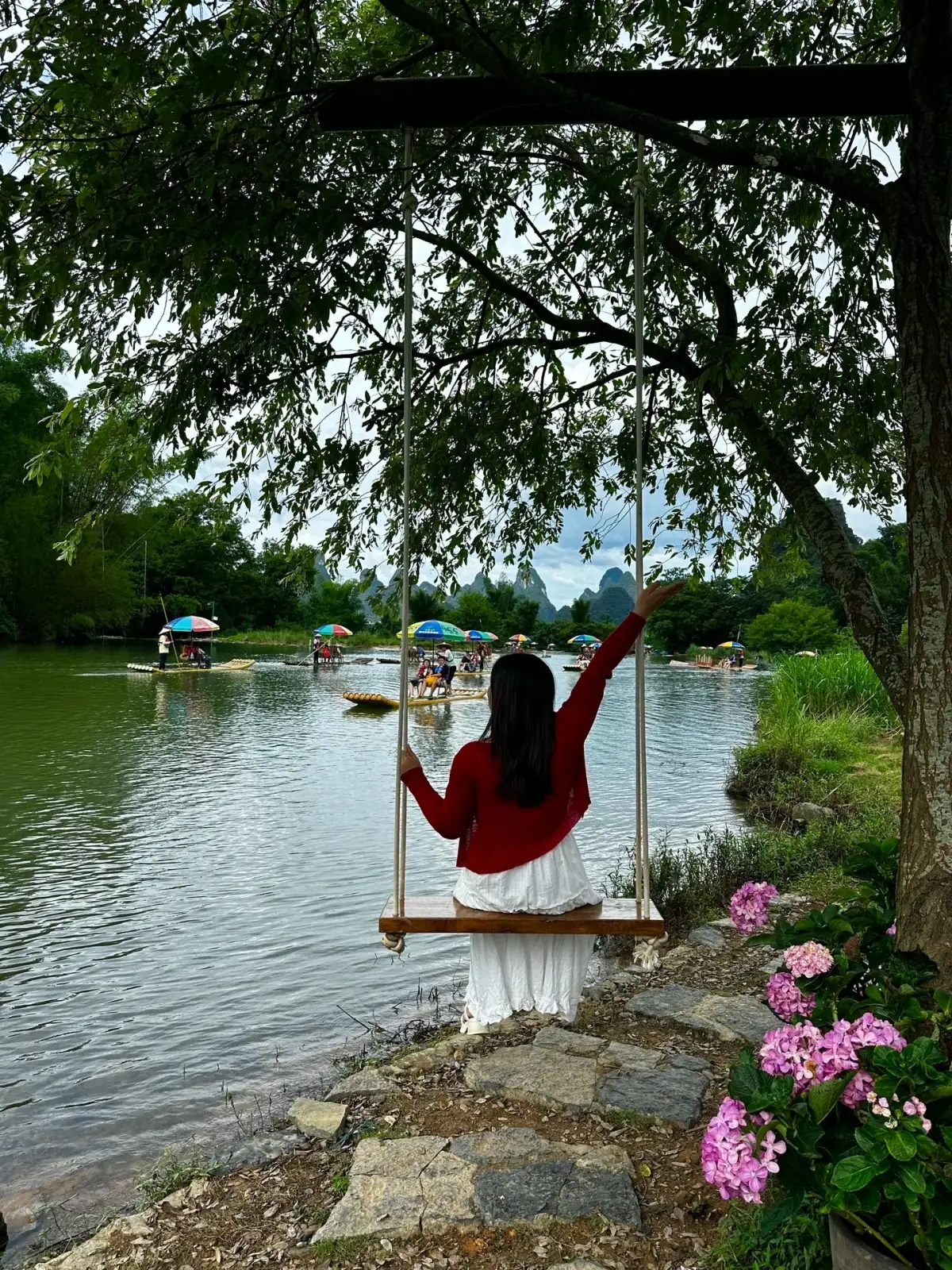
A tourist’s silhouette on a swing along the Yulong River. Photo:Xiao La Kong Kong · Original Post.
can be compared, but first determine which activity is the main focus. Bamboo rafting involves specific ticket sections, boarding and disembarking locations, and eligibility requirements; cycling involves roads, bike rental and return locations, and the skill levels of your travel companions; coffee stops depend on business hours and seating availability. While these three activities may appear close together on a map, the practical logistics of completing them differ significantly—you cannot assume the entire route will be convenient based on a single photo taken along the riverbank.
If your main focus is bamboo rafting, clearly plan the sections available for purchase that day and your return to the accommodation; save coffee breaks for when you have extra time. If you’re primarily planning a leisurely family trip, start by selecting a specific riverside route and schedule rest breaks in the courtyard in between; cycling isn’t suitable for every child, but walking and shuttle services can also achieve a similar experience. If your main goal is to relax, simply stay in a courtyard with a suitable environment and minimize travel between areas—this can also make for a fulfilling afternoon.
combining accommodations, meals, and activities into a personalized itinerary, the Wuylong River will be more than just a photo of a “breezy courtyard.” You could start the day by admiring the mountains, take a walk along the rice paddies, return in the afternoon for a meal or rest, and then watch the changing light by the river. When seeking assistance from a travel consultant, providing details about your preferred room views, your children’s schedules, dietary restrictions, and the activities you hope to experience will lead to a much better arrangement than simply submitting a list of popular businesses.
one-night stays, you should also factor in luggage upon arrival and departure. Arriving at the property in the morning does not necessarily mean the room is ready for check-in. Confirm luggage storage and handover procedures with the accommodation provider first before deciding whether to go sightseeing immediately upon arrival or rest in the common areas.
Source and Editorial Notes
This article is an original travel analysis compiled by the Dongxing Travel editorial team based on the information provided; it is not a firsthand account by the author. The full text of the original post has not been reproduced; accompanying images are used within the scope of authorization and are credited to the author and the source of the original post. They do not serve as proof of actual travel experiences or services provided to Dongxing Travel clients.
Xiao La Kong Kong · Off to the Yulong River!! Encountering a breezy courtyard just like the one in Dali · Travel Notes; Verified/Organized on: October 3, 2026.
Dolphin · Yulong River 📍 Spring mist and rain shroud Yangshuo ⛰️ · Travel Notes; Verified/Organized on: October 3, 2026.
Guangxi Zhuang Autonomous Region Forestry Bureau · Guilin Li River Scenic Area Master Plan · Official information; Verified/compiled on: October 3, 2026.