When people think of the Colorful Danxia, they often picture only a vast mountain landscape; but once inside the scenic area, the day is actually made up of getting on and off vehicles, walking, sightseeing, and resting. Only by clearly considering each of these activities separately can you determine whether a particular route is suitable for children or elderly family members. Scenic area shuttle buses handle transportation between stops, but once you arrive at a viewing spot, you’ll still need to walk the rest of the way on foot.
小红书作者“不见榴花”记录了接驳车、多个观景位置与强烈阳光下的个人感受;“一珂草莓”则分享阴天的山色。这两份观察提醒我们:同一片山体可以对应不同的观看条件。以下清单的中心是怎样组织参观,而不是承诺哪一天一定拍到最鲜艳的颜色。
and write down your needs as five items before you go.
Who is most interested in wide-angle mountain views, and who just wants to see the actual landscape? Clearly state both goals so the photographer doesn’t assume the whole family is willing to wait a long time at a single spot.
To what extent can your travel companions tolerate prolonged standing, stairs, and being outdoors? Discussing their actual condition during their most recent trip is more accurate than a vague statement like “I’m in pretty good shape.”
Can you store your luggage before entering the scenic area? Constantly carrying large items back and forth between the car and the steps can turn what should be a relaxing sightseeing experience into an unnecessary burden.
Will you need to catch a bus or travel long distances afterward? Determine your departure transportation requirements first, then plan your stay within the scenic area with flexibility, so your return trip doesn’t become an afterthought.
Do you need communication support in languages other than Chinese? Save the names of the scenic area, its entrances, the meeting point for the return trip, and contact information as text that can be displayed directly to reduce the stress of on-site identification.
These questions are best answered by the entire group. This is especially true for families with members of different ages, where photography interests, rest needs, and anxiety about the return trip often don’t align. Acknowledge these differences first, then discuss whether everyone should stay at a particular viewpoint, or if some should continue on while others wait in a designated area. An ideal itinerary starts with everyone knowing exactly what they’ll be experiencing.
Shuttle buses are not the same as the viewing platforms themselves
The scenic area’s publicly available materials describe a tour format organized by shuttle services between the entrance and viewing points. Official reports from Zhangye also mention the expansion of boarding platforms and facilities to separate pedestrians from vehicles. This information indicates that boarding and sightseeing are two distinct spatial phases: vehicles help bridge distances, while platforms allow people to approach the mountains from a specific vantage point. When planning your itinerary, be sure to allow sufficient time for both.
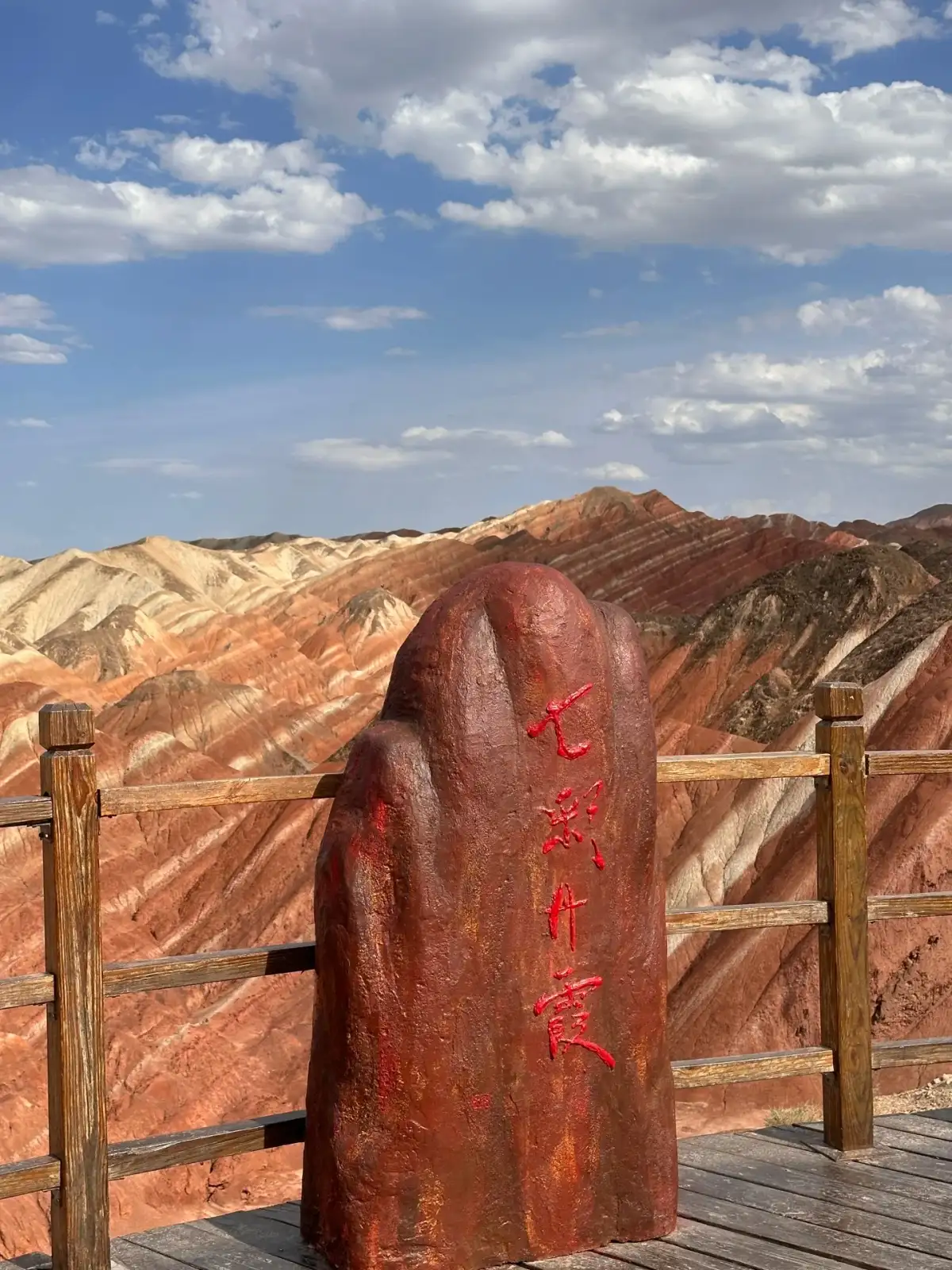
Signage at the Zhangye Seven-Color Danxia Viewing Platform and the surrounding mountains. Photo:"No Pomegranate Blossoms" · Original Post.
When you get off the vehicle, first check the direction of the next walk and the meeting spot, then decide how to split up. Children might run straight to the nearest railing as soon as they get off the bus, while photographers will likely want to find a vantage point. If the family hasn’t agreed on a meeting point, even a short distance apart can turn into a search for one another. Use visible landmarks to pinpoint your location rather than just remembering “where the bus was just now,” because vehicles and waiting lines are constantly changing.
Specific routes, open entrances, and transfer arrangements within the scenic area may vary depending on the day’s operations; be sure to check the routes posted on-site when purchasing tickets and entering the park. The most useful preparation is understanding the transportation layout; once you arrive, map that layout onto the day’s map. Don’t treat the sequence of entrances listed in a particular set of notes as a strict plan you must follow, especially if the pickup and drop-off locations for your vehicle differ from those mentioned by the author.
Checklist for when you arrive at a specific location
Read the directional signs first to confirm the pickup location for your return shuttle; then choose which sights to see, so you won’t have to ask for directions at the last minute while rushing back to the vehicle.
Take in the overall view from a flat, legally accessible vantage point, then decide whether to continue upward based on your stamina; the number of steps and the condition of the path provide a better indication of the difficulty than the short distance shown on a map.
Find a spot to stop that doesn’t block the path, so you have room for both a quick break and taking photos; stopping to wait for someone where people and vehicles mix will disrupt both you and other visitors.
agree on a meeting method for those continuing on and those taking a break—so you’ll have a common meeting spot even if cell phones are temporarily out of range—and ensure that anyone requiring supervision is not left alone.
Before leaving, take a moment to survey the entire landscape and connect the specific details you just observed with the overall orientation of the mountains; this single glance often helps form memories more effectively than taking numerous similar close-up photos.
Sun, wind, and photos—plan for each separately.
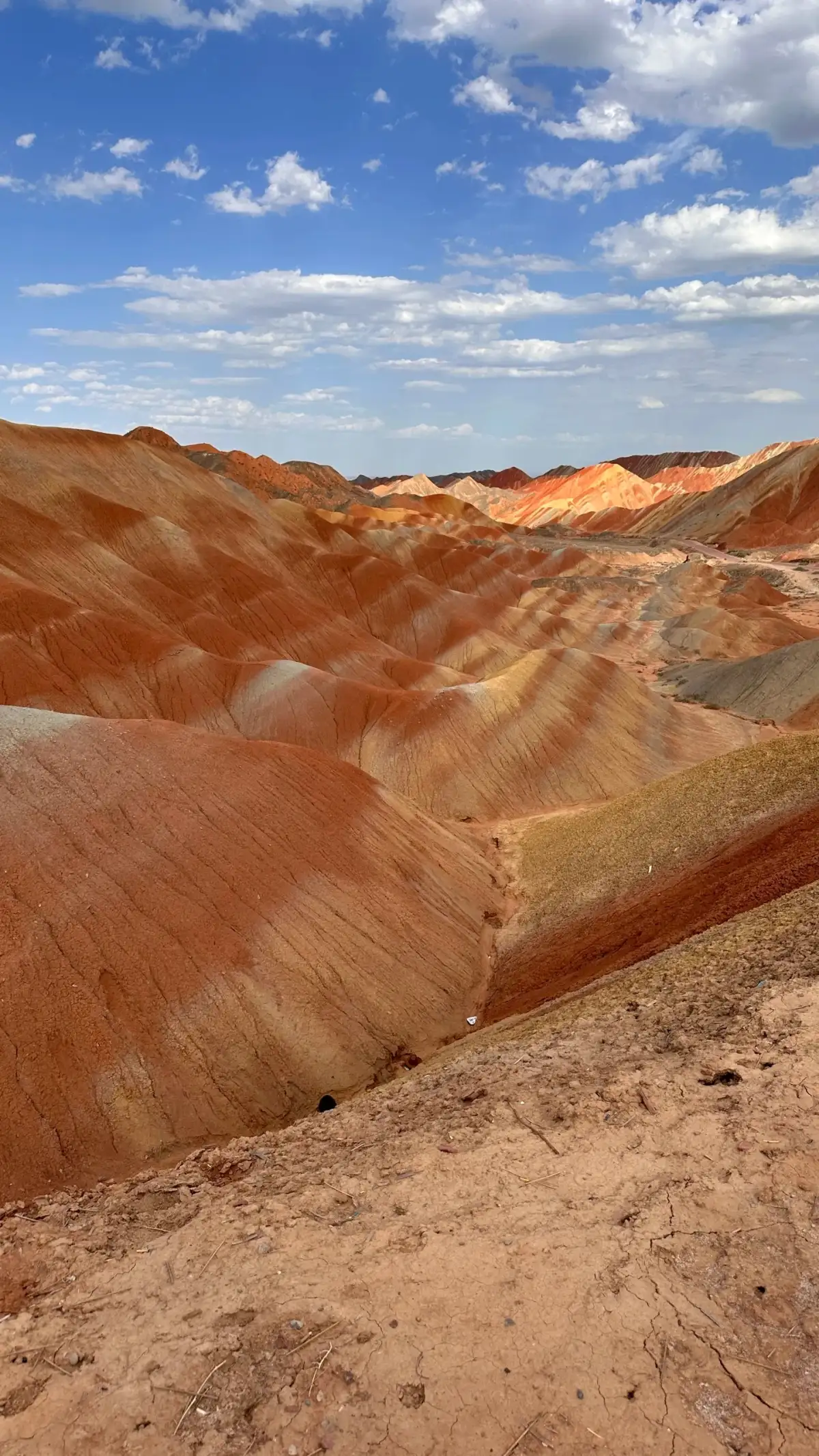
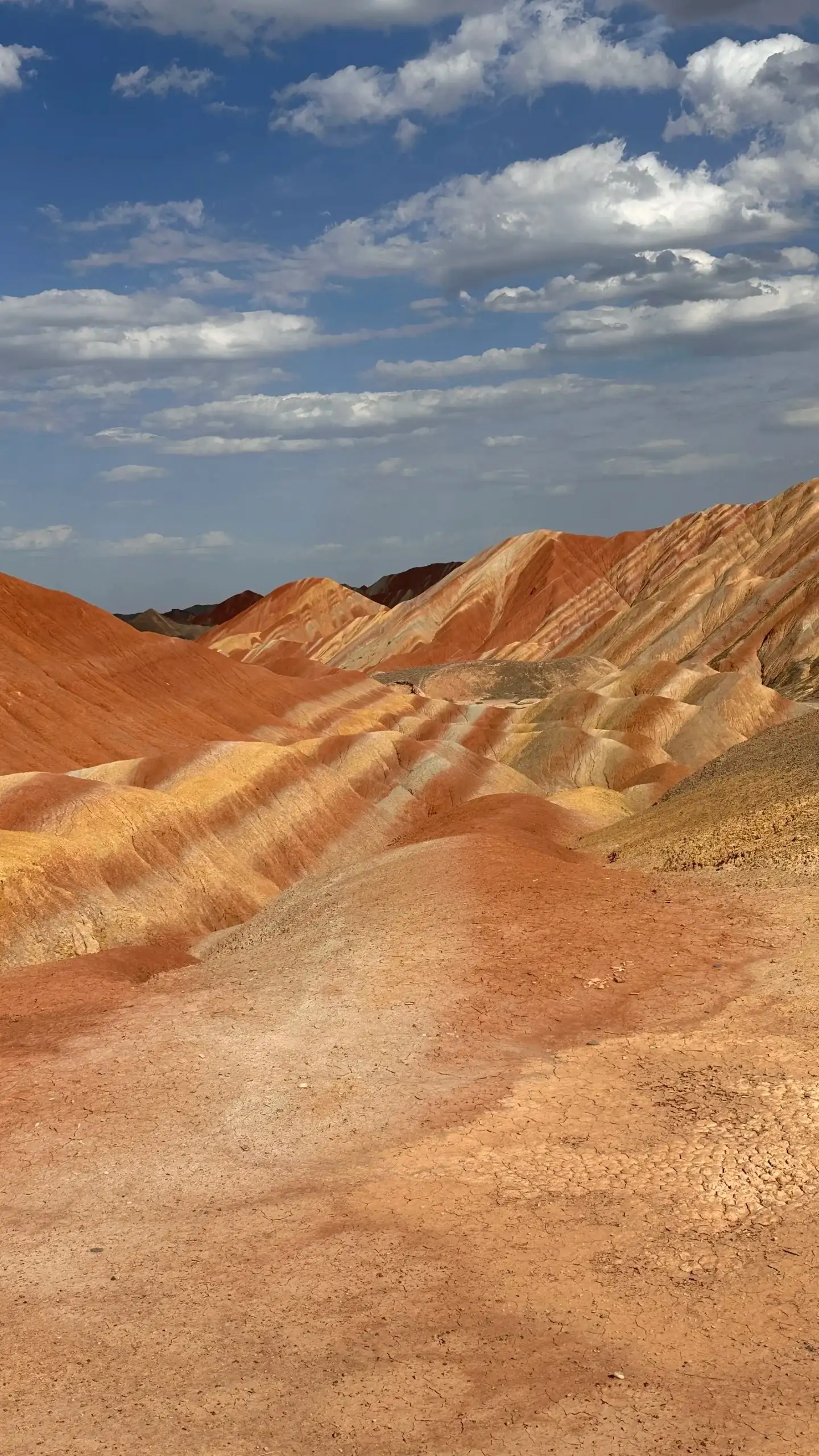
Zhangye’s Seven-Color Danxia layered rock formations. Photo:"No Pomegranate Blossoms" · Original Post.
The dry outdoor environment can lead people to underestimate how long they’ve been exposed to the elements, since time spent in the car can feel like a rest. Once you step out and are exposed to the sun and wind again, fatigue will build up. We recommend carrying water, wearing shoes suitable for walking, and bringing sun-protective clothing that’s easy to put on. Schedule water breaks and rest stops as fixed points in your itinerary—don’t wait until everyone is already feeling uncomfortable before scrambling to find a place to stop.
and be sure to have clear goals when taking photos. Start by capturing a panoramic view of the mountain, then select a spot to highlight the layering or undulating details—this alone illustrates the relationship between the vast landscape and its surface. If your group’s stamina is limited, there’s no need to repeat the same poses on every set of steps just to capture similar compositions. Take individual photos in open areas that don’t block the path; climbing over guardrails to find a shot with fewer people won’t enhance your understanding of the landscape.
Visual conditions differ between cloudy and sunny days. The former may reduce harsh light and shadow, while the latter may make the contrast on hillsides more pronounced; the final experience also depends on your viewing angle and the conditions on the day. Before you leave, keep your photography goals open-ended so you can focus on the actual scenery once you’re there. Weather forecasts help you plan your clothing and itinerary, but retouched photos shouldn’t be taken as a guarantee of color accuracy.
Families can choose between two pacing options
The first approach is shared viewing: At each viewpoint, the whole family first takes in the entire scene together before deciding whether to continue or take a break. This works well for groups who want to share the experience or have children who need supervision. Explanations can focus on visible ridges, slopes, and layers, avoiding the constant recitation of technical terms. When an adult poses an observational question and the child searches for the answer, it’s easier to hold their attention than with a lengthy lecture.
The second option is to split up: those with more stamina and interest can explore further, while the rest choose a gentler spot to rest. This requires reasonable group division, with clear meeting locations and contact information. It allows photographers to have some alone time without forcing the whole family to wait around constantly. A day spent together doesn’t mean everyone has to stay in the same spot the entire time.
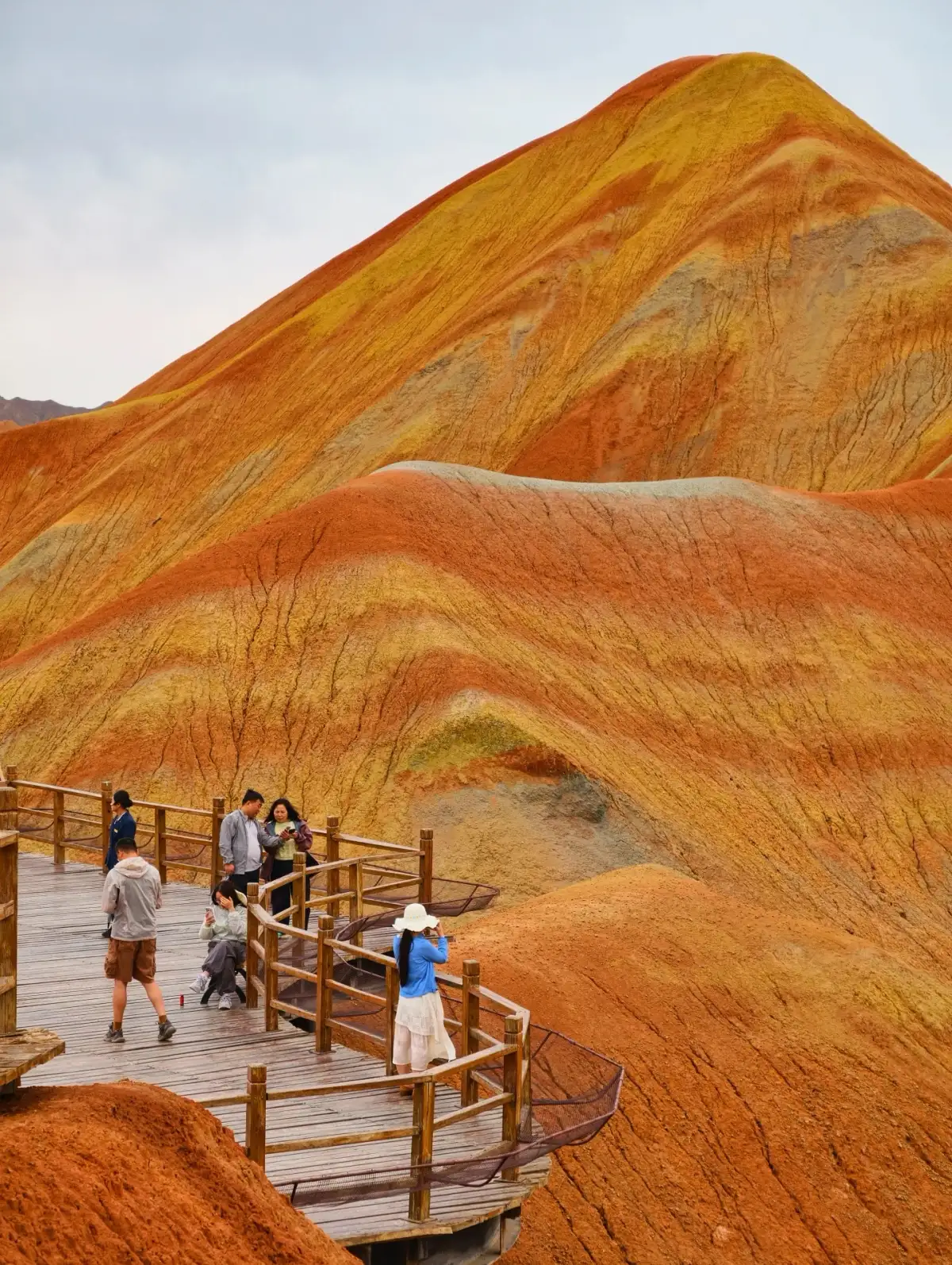
The Zhangye Seven-Color Danxia Trail with visitors in the distance. Photo:Yike Strawberry · Original Post.
For international visitors, we recommend saving the Chinese place names on the map alongside notes in your own language. When being picked up or dropped off, show the driver the actual entrance and the agreed-upon meeting spot; when communicating, clarify whether you’re meeting outside the scenic area or at a specific viewing point inside. When names are similar, the full Chinese text is easier to follow than a casual English translation; the contact person should also know whether the family is splitting up into groups.
and set aside time to wrap things up before returning to the city.
Finishing at the last viewing spot doesn’t mean you’re already on your way back. You still need to return to the transfer point, complete any moves within the park, exit through the gate, and find your ride. Include this entire sequence in your plan so you won’t suddenly feel rushed between the mountain scenery and the clock when it’s time to leave. If you have a long-distance trip planned for the same day, set a clear time limit for your sightseeing stops while allowing yourself the flexibility to end early.
The most valuable takeaway might be a view of the mountains, or perhaps your child’s first realization that things look completely different from a distance than they do up close. A well-planned itinerary doesn’t require the whole family to conquer every staircase; instead, it ensures you reach spots where you can truly appreciate the scenery and leave while still feeling comfortable. The sense of openness in the colorful Danxia landscape should come from the act of viewing itself, not from constantly rushing to catch the next bus.
Source and Editorial Notes
This article is an original travel analysis compiled by the Dongxing Travel editorial team based on the information provided; it is not a firsthand account by the author. The full text of the original post has not been reproduced; accompanying images are used within the scope of authorization and are credited to the author and source of the original post. They do not serve as proof of actual travel experiences or services provided by Dongxing Travel.
No Pomegranate Blossoms · Pure Enjoyment of Real-Life Photos of the Colorful Danxia Landscape · Travel Notes; Verified/Updated: October 3, 2026.
Yike Strawberry · And this is just the colorful Danxia landscape on a cloudy day! · Travel Notes; Verified/Updated: October 3, 2026.
Zhangye Municipal People’s Government · Report on Infrastructure Improvements at Linze Seven-Color Danxia · Official documents; Verified/compiled on: October 3, 2026.
Zhangye Danxia Culture and Tourism Co., Ltd. · Publicly Disclosed Documents of Zhangye Danxia Culture and Tourism Co., Ltd. · Official documents; Verified/compiled on: October 3, 2026.