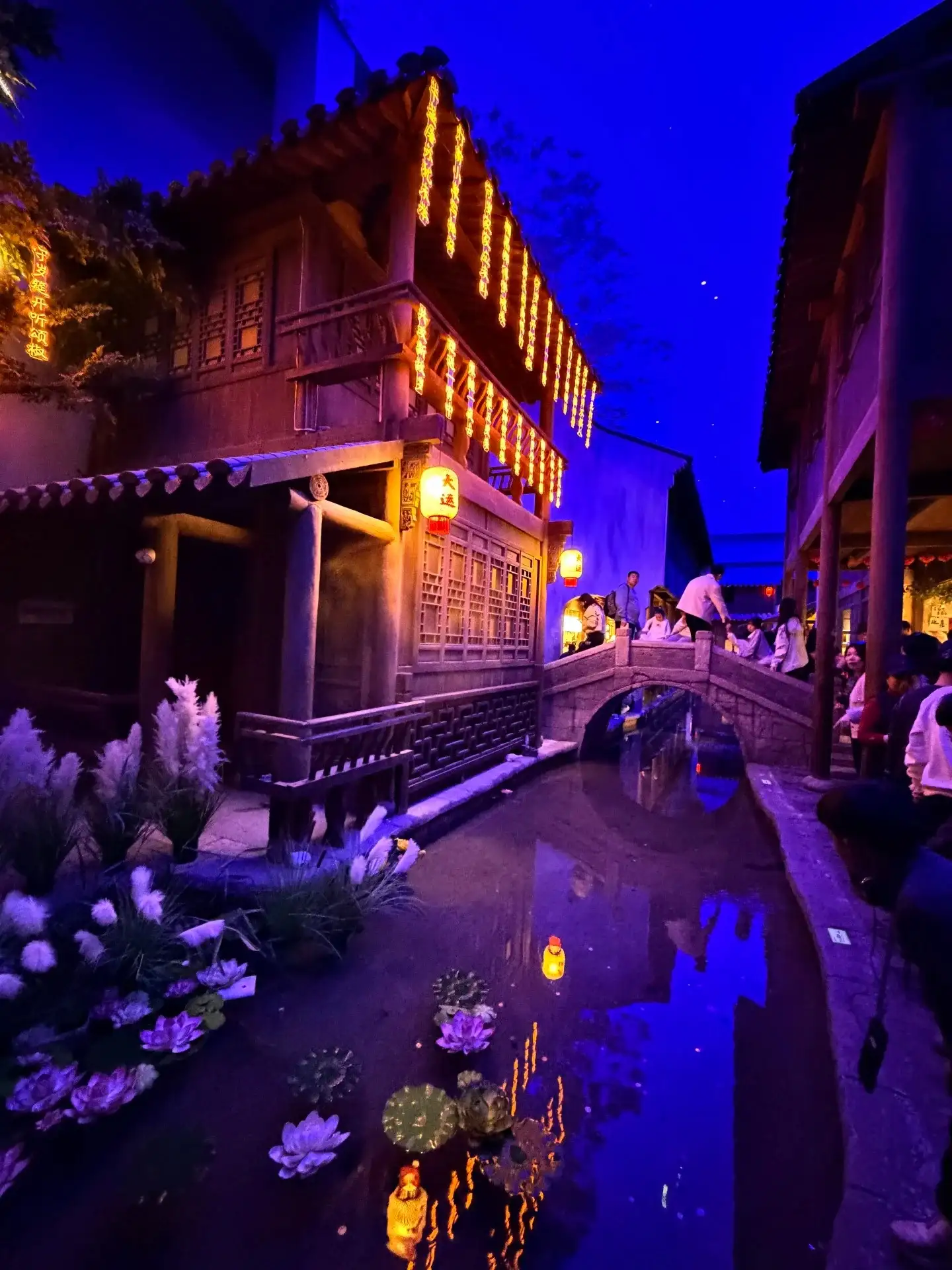
When watching a puppet show, one is most likely to be captivated first by a crisp, precise movement: a tiny character turns, swings its arm, and comes to a halt—and the audience quickly understands whether it is hesitating or angry. Even before understanding the dialogue, the emotion has already reached the audience through the movements. When traveling to Zhangzhou, if you’re willing to set aside a little time for such a performance, Minnan culture will step out of the streets, alleys, and architecture and onto a stage brought to life by hands, voices, and the puppets themselves.
小红书作者还有灯塔的漳州笔记建议在古城内外缓步穿行,提到文庙周边街巷与饮茶停留。这提供了安排文化半日的地域线索;木偶戏的知识依据中国非物质文化遗产网项目介绍和研究文章。福建省外办也曾记录来访团队观赏木偶、学习指法的活动,本文不把该次活动当作每天都有的服务。
Bag puppets: How do the hands become the character’s body?
According to the description of this National Intangible Cultural Heritage project, Zhangzhou glove puppet theater involves direct manipulation of the puppets using the fingers and palms, integrating elements such as the script, music, production, costumes, props, and scenery. It is not merely a collection of beautifully carved dolls, but a complete form of theater. Travelers can start by learning the basic manipulation technique: the performer supports and controls the puppet from below, keeping their hands close to the puppet, which often results in the character’s movements being agile and precise.
Are glove puppets and marionettes the same thing? Their methods of manipulation differ. Glove puppets are controlled directly by the fingers and palms, while marionettes perform their movements through the manipulation of strings. When watching a performance or reading exhibition labels, first identify the type, then understand the technique you’re observing. Different regions of Fujian also have distinct traditions; the glove puppet experience in Zhangzhou does not automatically represent all Minnan puppets, nor should they be ranked based on which is “more advanced.”
Research articles describe the technique where a performer controls one character with each hand. If a live performance features two characters, observe whether they perform different actions simultaneously and how one responds when the other pauses. This is a worthwhile aspect to watch for, though not every production will include such scenes. Only by shifting your focus from the results of the movements to the relationships between them will you notice just how complex a performance the performers have orchestrated within such a small space.
If you don’t understand, you can still appreciate the encounter itself.
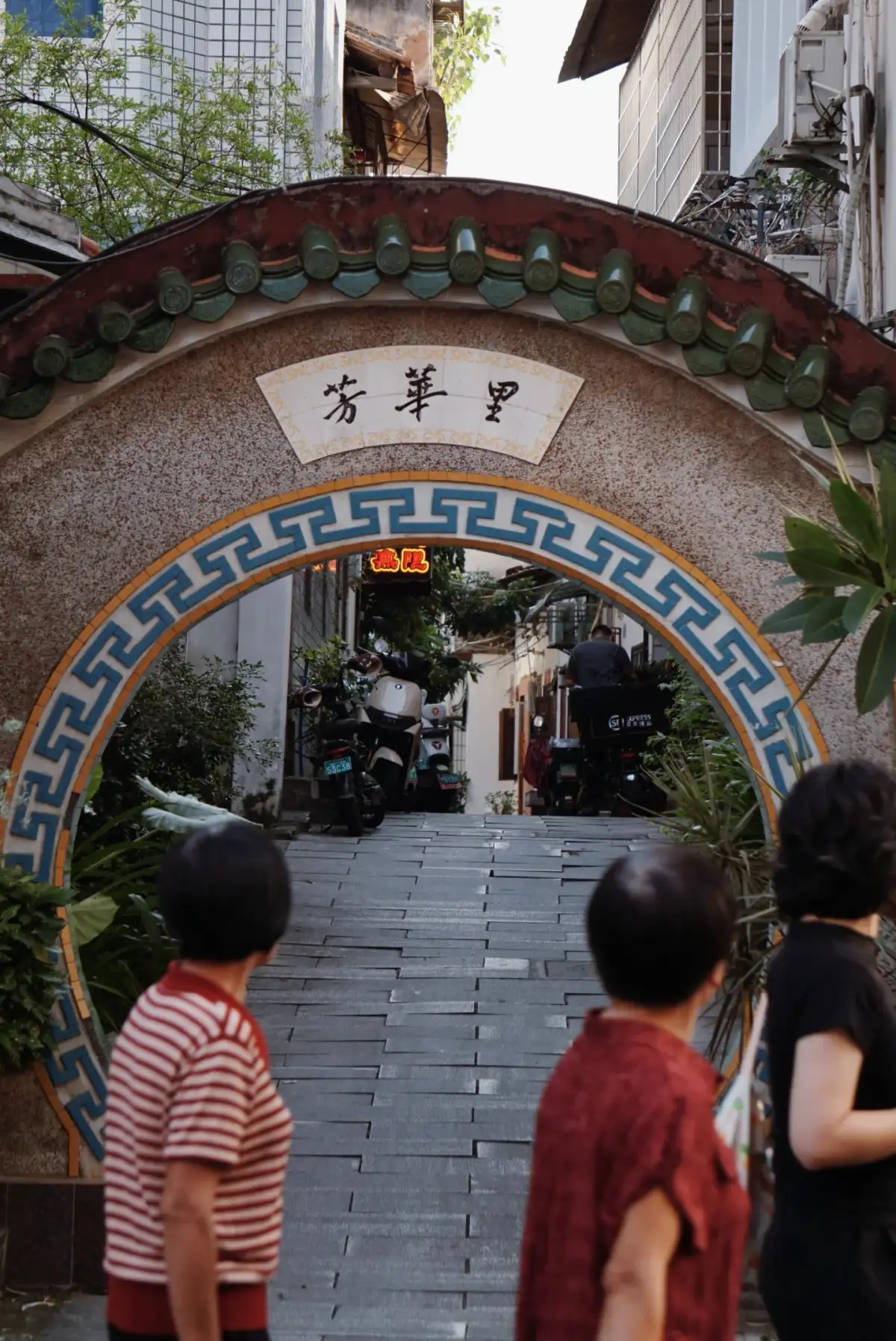
A tourist’s silhouette beneath the archway in Zhangzhou’s Old Town. Photo:There’s also a lighthouse · Original post.
Faced with local dialects and singing styles, international visitors often worry they won’t understand a thing. Before the performance, familiarize yourself with the show’s title and a brief synopsis to know who the characters are and what’s happening in the scene. If subtitles or program notes are available, make use of them; if not, you can still find background information in the public program guide. By establishing the story’s framework first, you won’t need to translate every line word for word while watching, allowing you to focus your attention on the rhythm and the characters.
When watching, start by following a single character—observe how it enters the stage, how it approaches another character, and when it stops. Pauses and turns often help you understand shifts in relationships, while variations in vocal volume and the rhythm of the music provide another set of clues. These are methods for observing theater; specific emotions must be judged in the context of the plot. A single movement may carry different meanings in different stories; you cannot apply a fixed set of descriptive terms to all performances. If there are martial arts or acrobatic sequences, observe how the movements flow together, rather than just waiting for the most spectacular flip. The positioning of two characters, the pause after a move, and the rhythm of the next sequence can help the audience understand their strength and personality. When watching with children, choose a segment with actions everyone can describe; after it ends, have everyone share what they saw—this is more likely to spark interest than immediately quizzing them on the plot.
When viewing exhibits, connect the puppet’s head to the performance.
When puppets are temporarily placed in display cases, their movements cease, but their forms reveal a different kind of information. You can interpret them through the face, costume, and props: how the eyebrows and eyes shape the character’s personality, what the attire suggests about the role, and how the objects in their hands relate to the story. If the exhibit label specifies the character’s identity or the manufacturing process, use that information as a reference. For unnamed figures, there is no need to force a connection to a specific historical figure; accurately describing the visible characteristics is equally valuable.
The China Intangible Cultural Heritage website, in its introduction to Xu Zhuchu’s puppet carving, emphasizes the expression of theatrical emotions and character traits. This reminds visitors that the design of the puppet’s head should be considered in the context of the stage: from the audience’s perspective, does it make the character easier to recognize, and which lines stand out under the lighting? Craftsmanship and performance are not two isolated disciplines; a carved puppet must help the character express itself through movement, allowing the viewing experience to move beyond mere aesthetic appreciation to a deeper understanding of its practical purpose.
If you have the opportunity to participate in a formal explanation or interactive session, you can ask about the steps involved in making a small puppet, how the character’s movements are practiced, and what you’re allowed to operate during public hands-on experiences. Trying it out under guidance allows you to appreciate the difficulty of coordinating your fingers with your body. Materials for hands-on activities and performance props are managed differently; in such cultural settings, it is more appropriate to explain your intentions—whether you want to take a photo or touch an item—before doing so, rather than simply picking up an exhibit.
If you only have half a day, first confirm which performances or exhibitions you can actually see, then schedule a stroll through the nearby ancient city before or after them. Events with fixed start times serve as good anchors for your day’s schedule, while exploring the streets and alleys and enjoying dim sum can be more easily adjusted according to your energy levels. Additionally, locations mentioned in the “Lighthouse Notes”—such as the Confucian Temple and Hong Kong Road—are ideal for solo exploration. Since the focus of this article is puppet culture, there’s no need to follow the exact route described here.
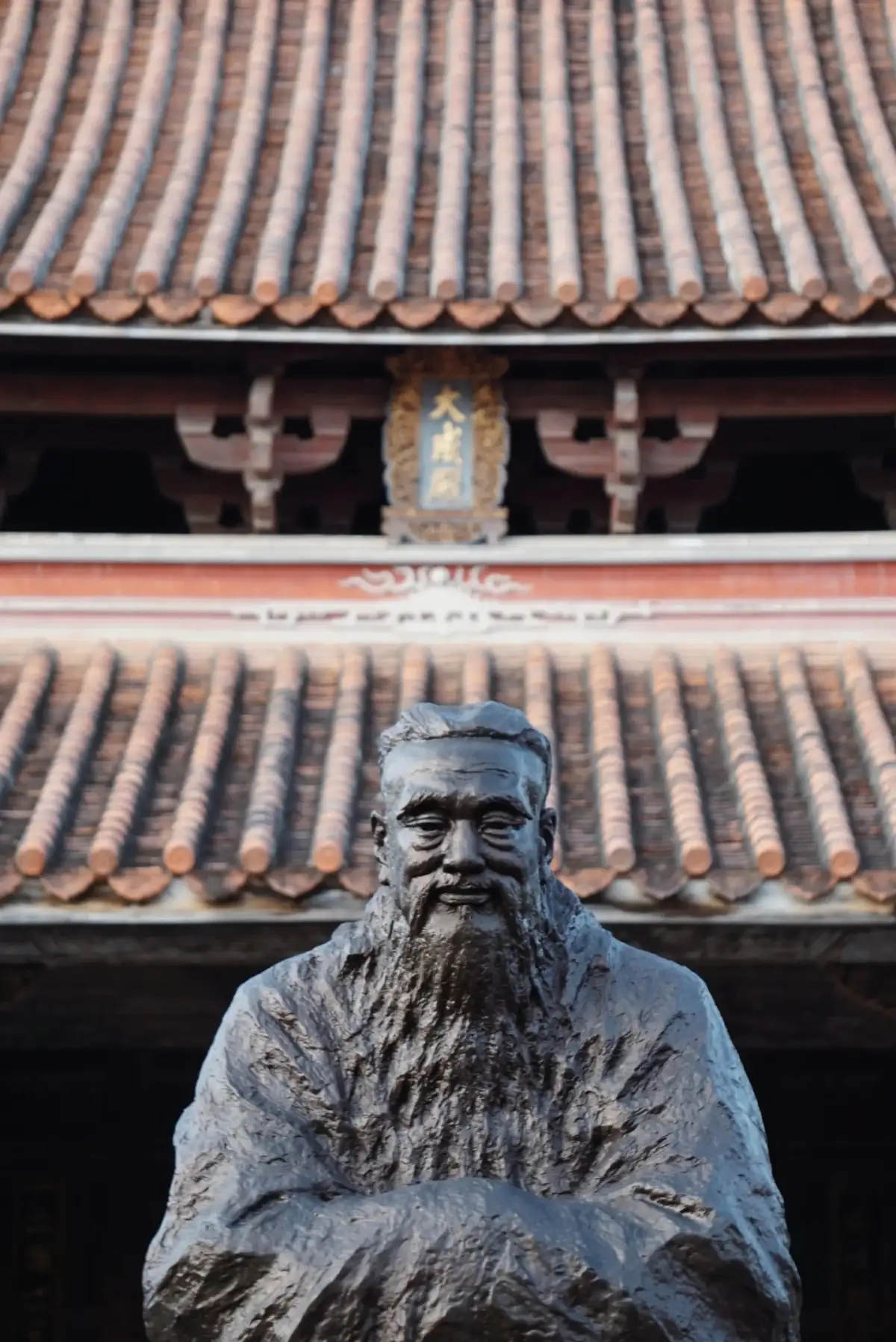
A statue of Confucius in front of the eaves of an ancient building in Zhangzhou. Photo:There’s also a lighthouse · Original post.
If there is no suitable performance that day, you can also visit confirmed exhibitions to learn about puppet heads, costumes, and stage materials. A trip doesn’t have to rely solely on chance encounters with performances to fulfill all your cultural exploration goals. Start by examining an exhibit and understanding how it’s used, then supplement your knowledge with official descriptions of the performance—you’ll still gain a concrete understanding. The next time you have the opportunity to watch a performance, your existing knowledge will help you observe it in greater detail.
When bringing elders or children, seating, waiting times, and the acoustic environment should also be considered. Performance content and lengths vary; some people prefer short segments, while others enjoy hearing the entire story. Ask the service provider about the actual program and seating arrangements to determine whether your family can comfortably attend. It’s best to plan rest stops in advance, allowing for a breather between the activity and your walk.
Whether photography is permitted during a performance depends on the organizer’s guidelines; even if allowed, avoid blocking the view of those in the back rows with your phone. After the show, jot down a movement, a sound, or a character trait—just a few lines are enough to help you recall the experience. If you wish to take photos of the performers or speak with them, choose a time that is convenient for them; there are appropriate times for both the performance and for visitors to ask questions.
Puppet culture can also be combined with other attractions in Zhangzhou to create a leisurely itinerary: observe the scale of architecture on the streets, the scale of characters on stage, and discuss the movements you’ve just seen while enjoying tea. While there are connections between these elements, avoid blending different forms of intangible cultural heritage into a single, unified performance. Tea, puppetry, and woodblock New Year prints each have their own materials and traditions; choosing one to explore in depth often leaves a deeper impression than quickly skimming through many different projects.
If it’s your first time watching Zhangzhou glove puppetry, you might start by asking a simple question: How does a single hand bring a character to life? The answer may lie in a brief pause, the interplay between two characters, or a single line on the puppet’s head. Official materials provide a framework for the art form, actual performances offer an immediate experience, and street performances bring the stage back into local life. Even if you don’t understand all the dialogue, there’s still plenty of concrete detail to take in.
Source and Editorial Notes
This article is an original travel interpretation compiled by the Dongxing Travel Editorial Department based on listed materials; it is not a firsthand account by the author. The full text of the original post has not been reproduced; accompanying images are used within the scope of authorization and are credited to the author and the source of the original post. They do not serve as proof of actual travel experiences or services provided by Dongxing Travel.
Also: Lighthouse · Zhangzhou | Take a Leisurely Stroll to Experience the Essence of Minnan (Includes Photo Spots) · Travel Notes; Verified/Compiled on: October 3, 2026.
China Intangible Cultural Heritage Network · Puppet Theater (Zhangzhou Glove Puppet Theater) · Official source; Verified/Compiled on: October 3, 2026.
China Intangible Cultural Heritage Network · Gao Shu: The Essence of Shadow Puppetry—The Origins, Techniques, and Connections of the Chinese Hand Puppetry Tradition · Official source; Verified/Compiled on: October 3, 2026.
China Intangible Cultural Heritage Network · Xu Zhuchu’s World of Puppets · Official source; Verified/Compiled on: October 3, 2026.
Fujian Provincial People’s Government Foreign Affairs Office · Provincial Foreign Affairs Office Organizes “Foreign Influencers Explore Fujian’s Zhangzhou” Event · Official source; Verified/Compiled on: October 3, 2026.