visiting Zhijin Cave and the Grand Canyon on the same day can easily lead to a simplistic notion: “Since we’re here, let’s see both.” It is only upon arriving at the visitor service area that one realizes the day’s itinerary involves more than just two names—it also involves entrances, exits, transfers, the physical stamina of fellow travelers, and what everyone actually wants to see. If one initially treats the cave and the canyon as two stops of the same type of scenery, the second stop may end up being nothing more than a rush to get there; only by understanding their spatial differences can one easily create a worthwhile combination.
two complete Xiaohongshu posts happened to present different sequences. Wen Nuan Xuan chose to visit the canyon first and the cave second, prioritizing the direction of travel; Ven chose to visit the cave first and the canyon second, taking into account morning crowds and afternoon lighting. There were also differences in their perceptions of temperature and the prices of local services. These observations illustrate that personal experiences can vary depending on the date and conditions. The editor has focused here on the issue of route selection; costs, transportation, and operating hours should be confirmed separately using the latest official information.
Underground Halls, Surface Openings Introduction to the Zhijin Cave World Geopark Featuring caves, canyons, natural bridges, and sinkholes as its core geological landscapes, it is said tha
Introduction to the Zhijin Cave World GeoparkListing caves, canyons, natural bridges, and sinkholes as core geological landscapes indicates that the combined evolution of surface and underground karst formations constitutes the observational value of this site.the park’s formation and evolutionexplains that the cave formed through stages such as groundwater flow and uplift, creating layered structures and sedimentary landscapes within the cave. The information was verified on October 3, 2026, and helps travelers understand why the two sites are worth exploring in different ways.
When exploring the cave, start by orienting yourself in the space before examining the formations. Upon entering a wide section, first identify the positions of the ceiling, the sides, and the path ahead to sense how your sense of scale shrinks; then observe the stalagmites, stalactites, or other features corresponding to specific landmarks. Treat the names of the scenic spots merely as memory aids; there’s no need to insist on recognizing the animals or buildings described in the guide at every location. Simply observing their true forms provides more than enough to appreciate.
in the canyon, one can focus on how light enters the surface opening and how the relationship between the rock walls on either side changes from different vantage points. As you move from underground to the surface, the sky reappears in the frame, creating a distinct turning point in the day’s observations. Photographers can capture the scale of the underground hall and the interplay of light and shadow at the canyon’s opening, rather than simply taking a single “wide-angle shot” of the distant landscape at both locations.
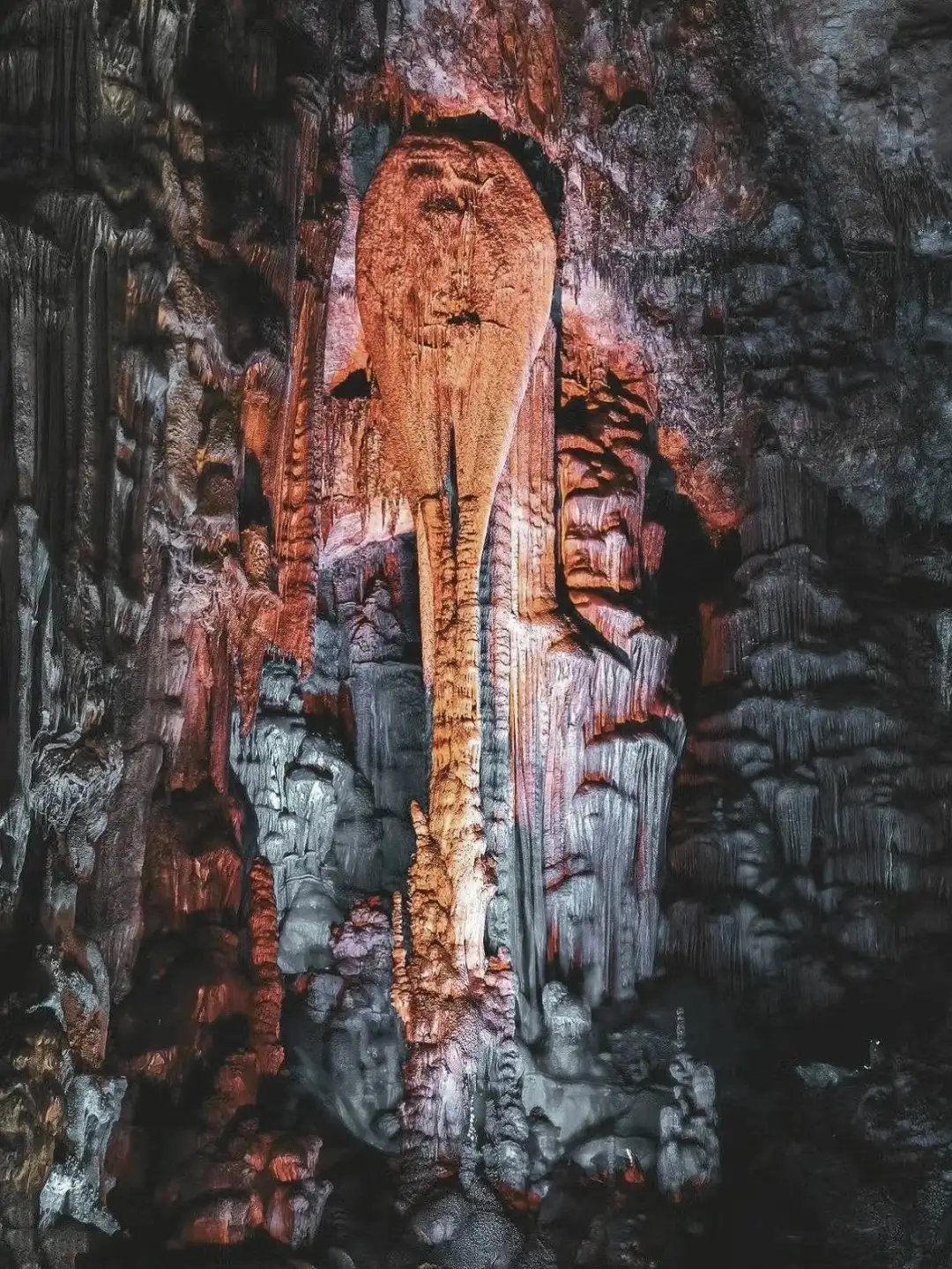
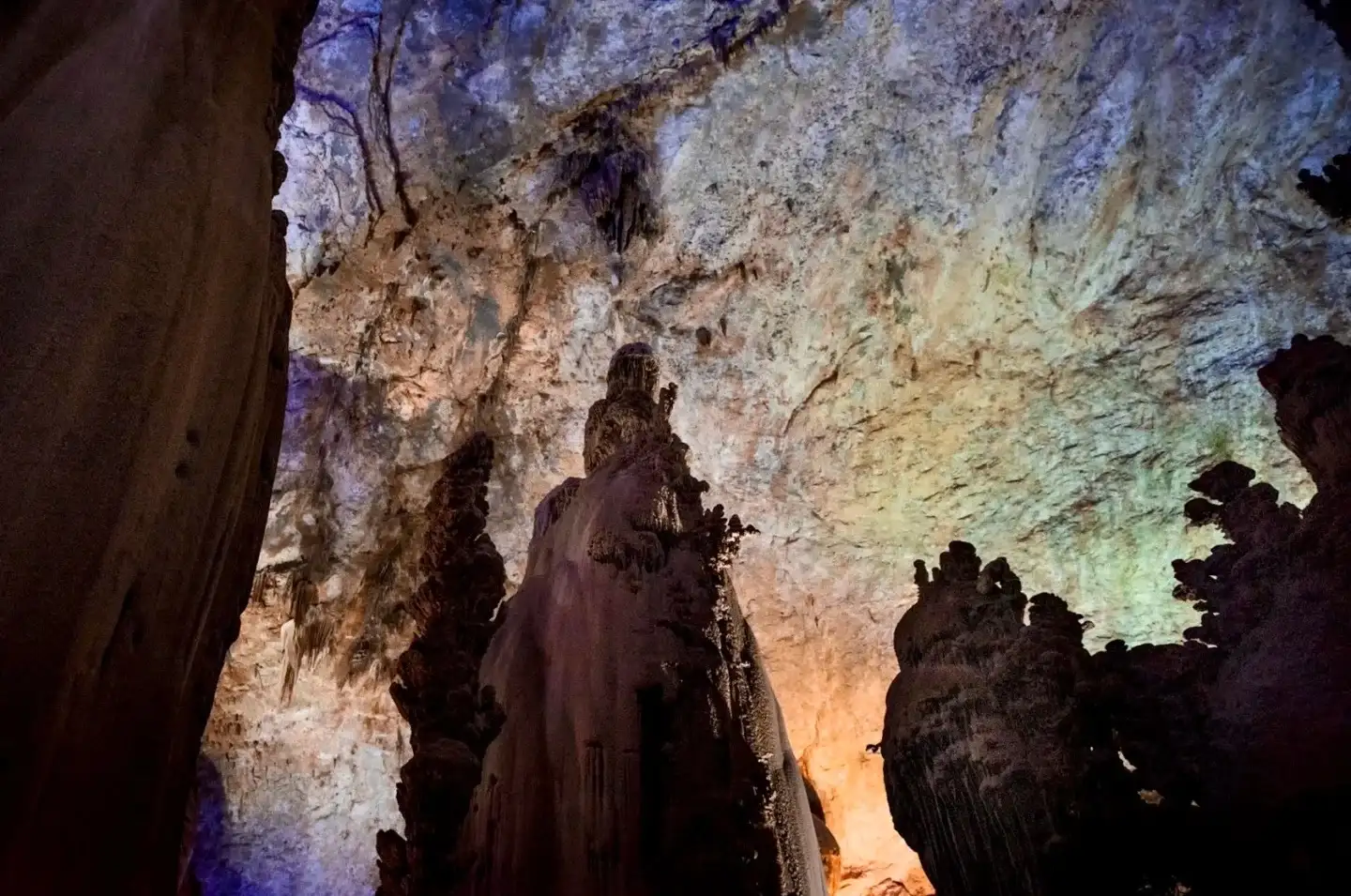
Curtain-like cave deposits hanging beneath orange lighting. Photo:Ven · Original Post.
When is it worth combining the two sites?
if your travel companions are willing to set aside a full day to appreciate the changing landscapes, and your itinerary allows for transfers and rest stops along the way, a combined tour can provide a seamless exploration of the geological narrative. The editor recommends taking a short break after finishing the first site—to look at photos, drink some water, and assess your energy levels—before proceeding to the second site. A continuous geological narrative requires some time to digest; especially when traveling with children, you might ask them to first describe their favorite space from the previous section rather than immediately starting the next round of sightseeing.
only during shorter visits can the cave serve as a standalone attraction. There are clear reasons for choosing to visit just one site: a family that wants to focus on the underground spaces, or someone who dislikes frequent transfers. This arrangement allows time to be spent reading interpretive signs, enjoying the views, and resting. Conversely, those particularly interested in comparing the surface and underground areas can set aside a full itinerary for both sites, minimizing the need to squeeze in other, more distant attractions before or after.
whether “the combined ticket is a better deal” requires calculating based on your specific itinerary. What is included in the ticket price, and whether transportation or additional experiences are listed separately, should be verified based on the details on the official purchase page. Total amounts mentioned in others’ notes may be based on different dates, different combinations, or different promotional terms. Decide first which areas you want to visit, then verify which items are required; this will help you avoid taking unnecessary detours just to save money.
the order should be discussed in conjunction with the shuttle route.
that both “cave first, canyon later” and “canyon first, cave later” can be viable options depending on specific conditions. The editor recommends keeping the current tour map handy and marking the first entrance, the first exit point, the second entrance, and the final return point. Only by clearly identifying these four points can one be said to truly understand the route. Self-driving visitors should also note their parking location, as the point where they return to their vehicle is not necessarily the same as the exit point from the scenic area.
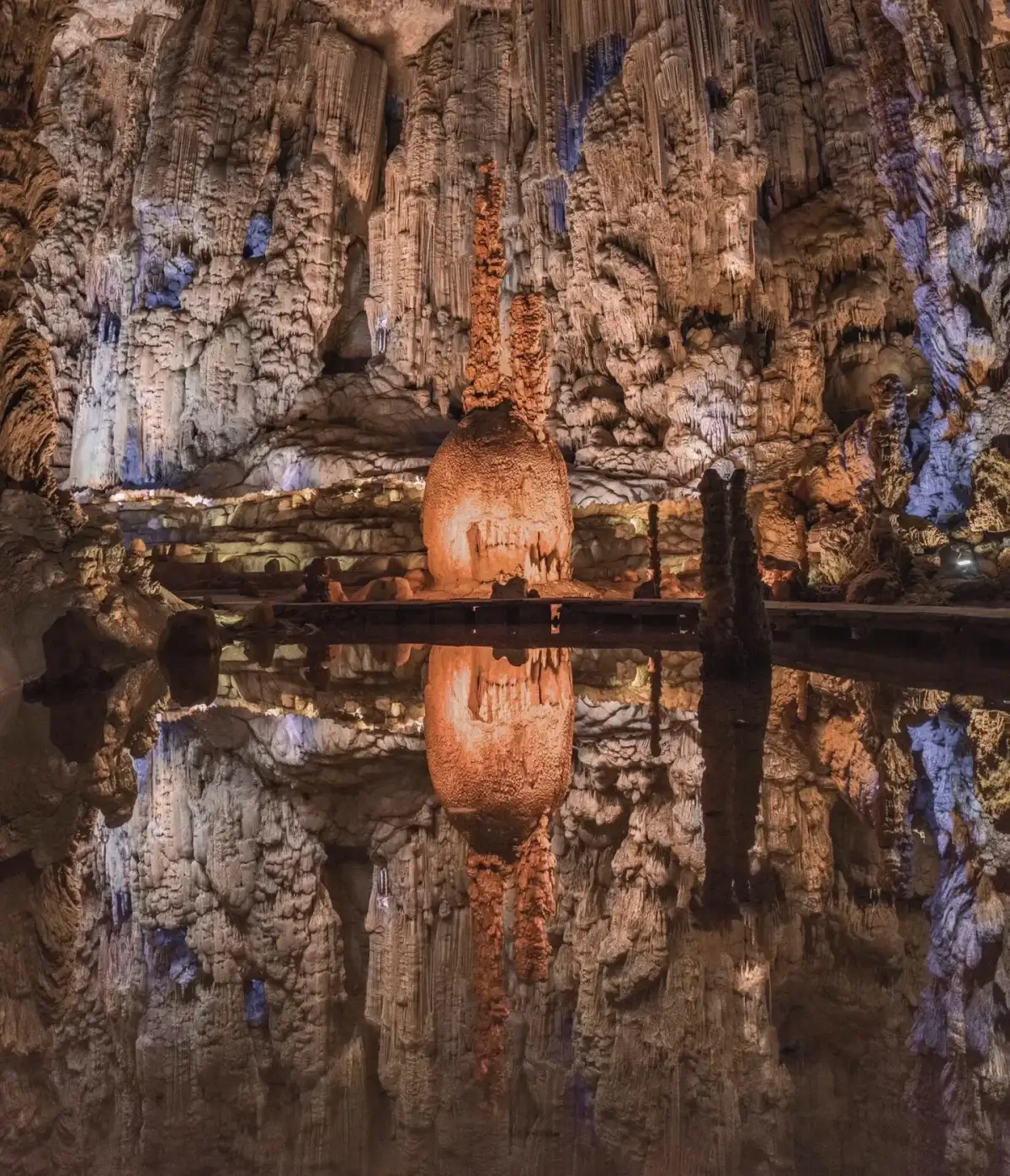
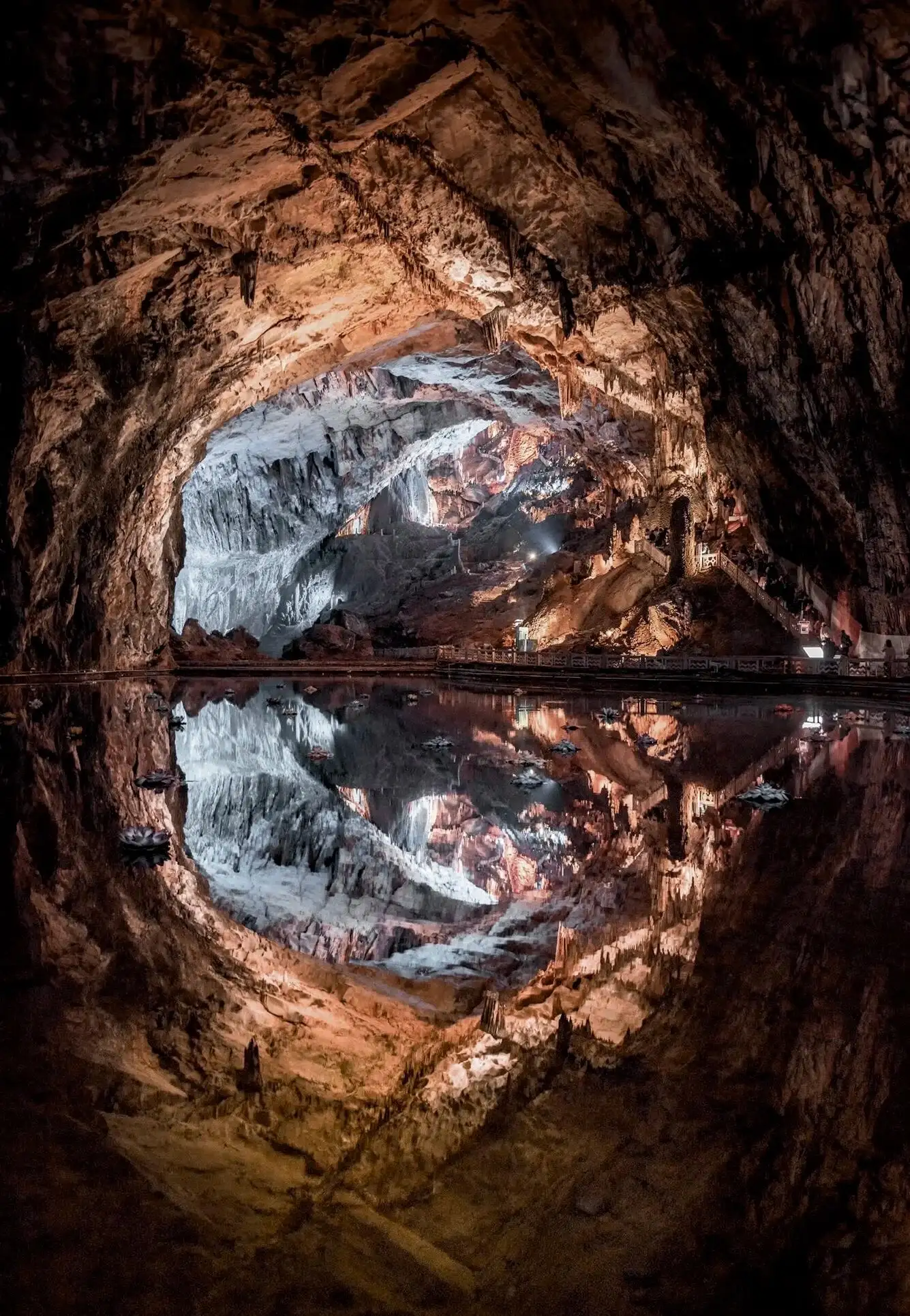
The water surface inside the cave reflects the stone pillars and the walking path along the shore. Photo:Ven · Original Post.
The original post included a reminder about the different directions of shuttle buses, which is precisely the kind of travel observation worth retaining. Before boarding, tell the staff your next destination and final return point—this is more specific than simply asking, “Is this the shuttle to the scenic area?” You can save the location names as text to share with your travel companions, reducing the risk of mishearing verbal instructions. For families visiting the park where some members cannot read Chinese, have one person designated to handle the itinerary verify the details, allowing others to relax and enjoy the scenery.
there’s no need to include a minute-by-minute countdown for each segment in the itinerary. It’s more useful to identify an activity that can be shortened and a fixed departure time. That way, if you get absorbed at the first stop or encounter longer-than-expected wait times, the schedule for the second stop can be adjusted naturally. Those wishing to experience additional boat rides, elevator rides, or other services should check separately for current operating schedules, applicable restrictions, and fees; do not assume that everything is operating as usual based on social media posts.
Regarding walking needs for families, please be more specific.
“Can the elderly go?” is too broad a question. When inquiring, specify whether your companions can walk up and down stairs continuously, whether they need handrails, how often they need to rest, and whether children are willing to walk on their own. Cave tours involve specific walking routes; floor plans only indicate directions and cannot fully depict elevation changes along each section. Consulting the scenic area based on your specific mobility needs will yield answers that better align with your family’s itinerary.
The differing perceptions of temperature in these two notes also serve as a reminder to travelers not to base their clothing choices solely on the phrase “it’s cool inside the cave.” Wearing a single layer that’s easy to add or remove offers more flexibility than preparing strictly for a specific temperature. When choosing shoes, prioritize stability and traction; for backpacks, opt for a design that facilitates walking. Keep your camera and water in easily accessible spots so you won’t have to rummage through your pack for extended periods in the middle of the trail when you stop to take photos.
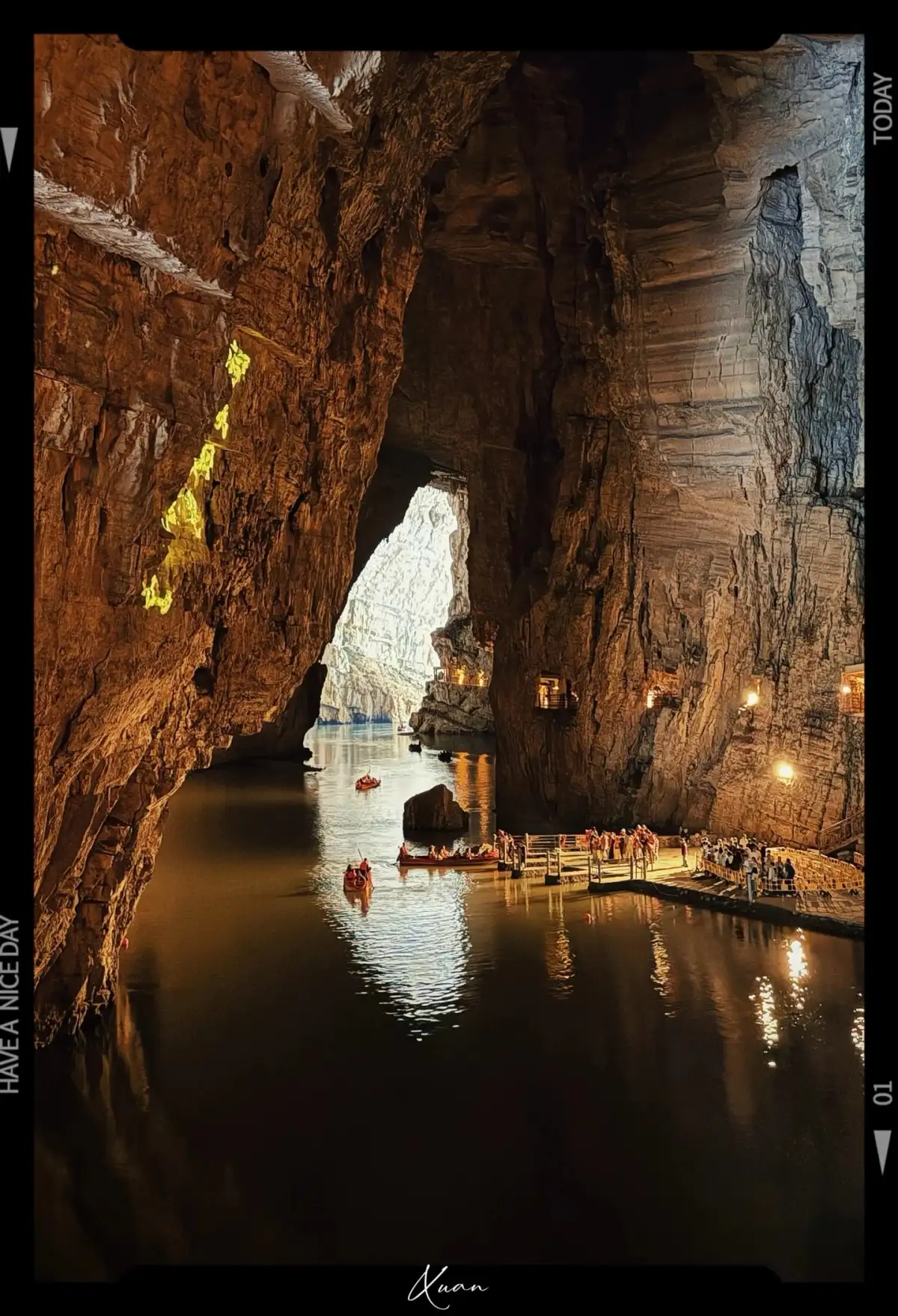
The water surface inside the cave reflects the towering rock walls and the bright cave entrance in the distance. Photo:Wen Nuan Xuan · Original Post.
For family photography, adults who can move around should take their own photos first, then help children observe the surroundings. Keep moving through narrow sections, and discuss the landforms at wider spots where you can pause. If you’re unfamiliar with the lighting conditions, make sure to see the path clearly underfoot before adjusting your equipment. Whether the use of flashlights, flashes, or other photography equipment is permitted is subject to on-site management guidelines; a pleasant visiting experience depends on maintaining a respectful distance between visitors.
Leaving with a few key observations
for the cave section, note the variations in “size, scale, height, and density”; for the canyon section, note “openings, light, rock walls, and the sky.” These simple terms are enough to spark discussions among children and travelers encountering such landforms for the first time. Afterward, reading official educational materials helps connect these impressions with geological processes. A trip doesn’t require memorizing complex geological time scales; simply understanding the interconnection between the underground and the surface has already transformed the way we view the landscape.
for photographers, a well-layered photo series could include wide-angle shots inside the cave, a close-up of a specific formation, the canyon opening, and finally, a shot with people to convey scale. Photographing people requires consent, and framing must be limited to open pathways. The evocative power of the photos in the original post can inspire themes, but actual compositions should be based on legally authorized material or your own compliant photography. How you combine Zhijin Cave and the canyon ultimately depends on your interests and walking style; both spaces deserve their own dedicated viewing time.
Source and Editorial Notes
This article is an original travel analysis compiled by the Dongxing Travel editorial department based on the listed materials; it is not a firsthand account by the author. The full text of the original post has not been reproduced; accompanying images are used within the scope of authorization and are credited to the author and the source of the original post. They do not serve as proof of actual travel or services provided to Dongxing Travel clients.
Wen Nuan Xuan · October 6: Zhijin Cave Quick Guide (Time- and Effort-Saving Edition) · Travel Notes; Verified/Compiled on: October 3, 2026.
Ven · The Most Comprehensive “Lazy Traveler’s Guide” to Zhijin Cave + Grand Canyon in Bijie, Guizhou: Stunning Beauty · Travel Notes; Verified/Compiled on: October 3, 2026.
Zhijin Cave World Geopark · Introduction to Zhijin Cave World Geopark · Official source; Verified/compiled on: October 3, 2026.
Zhijin Cave World Geopark · Formation and Evolution Model of Zhijin Cave · Official source; Verified/compiled on: October 3, 2026.