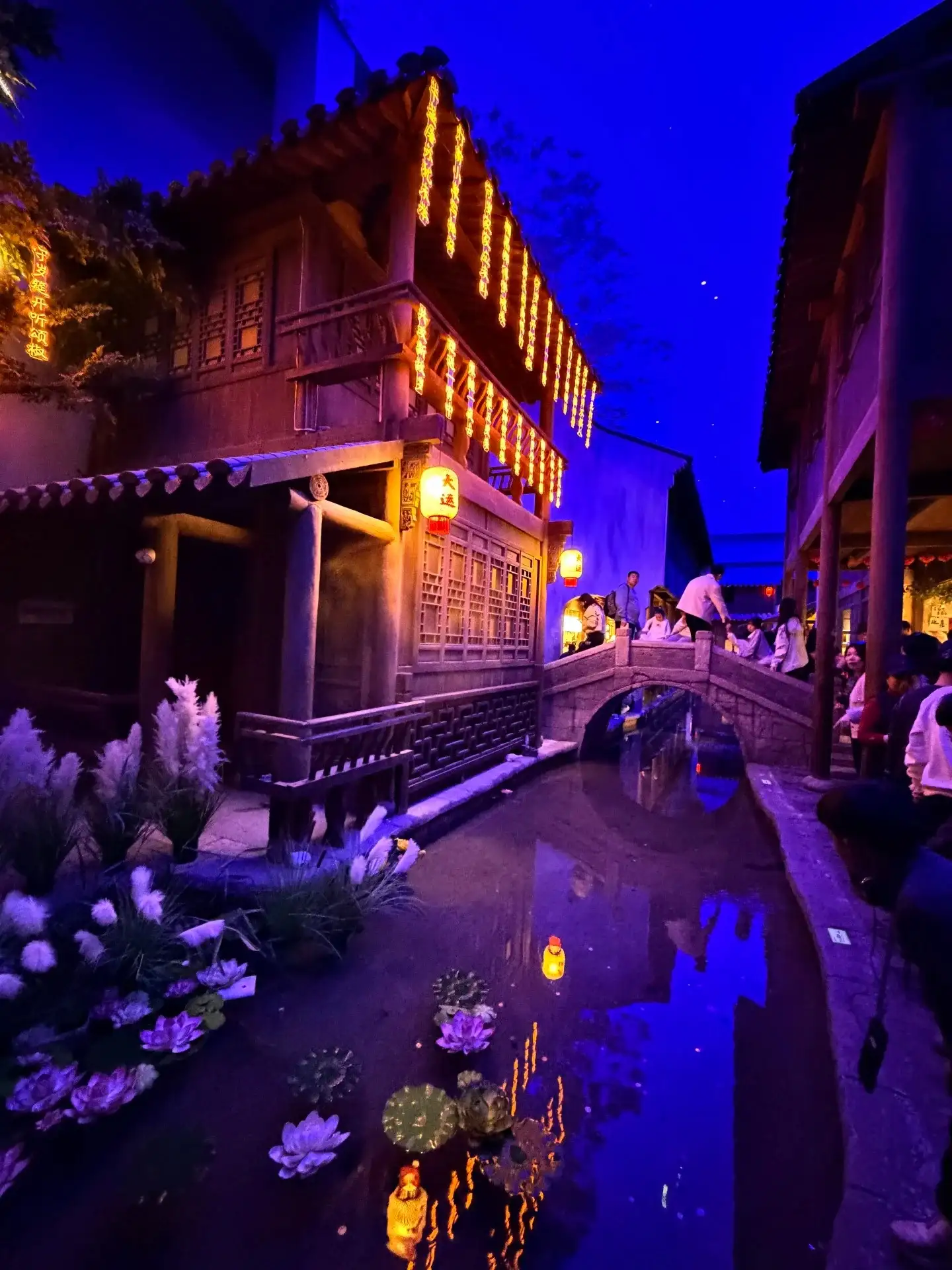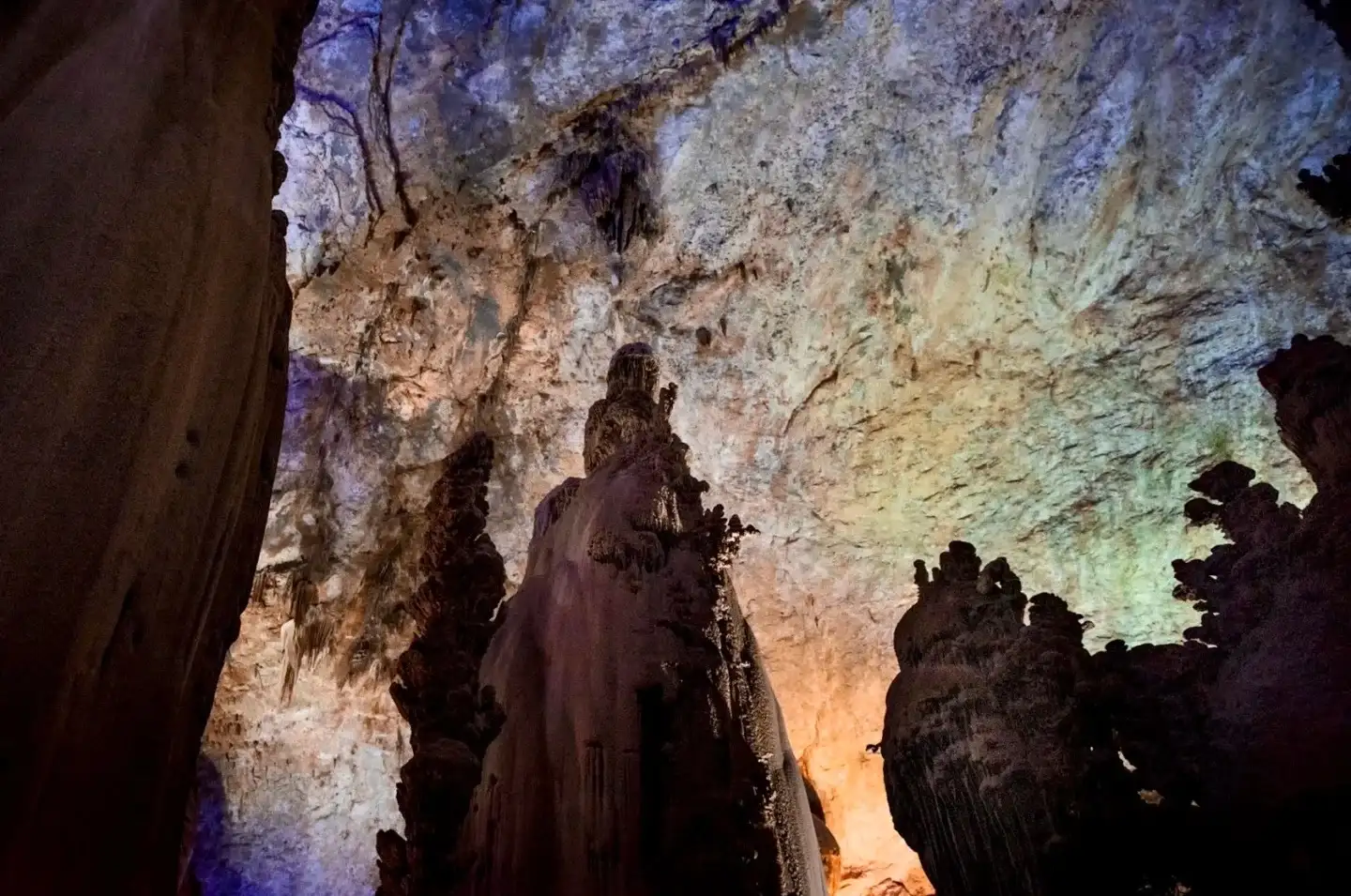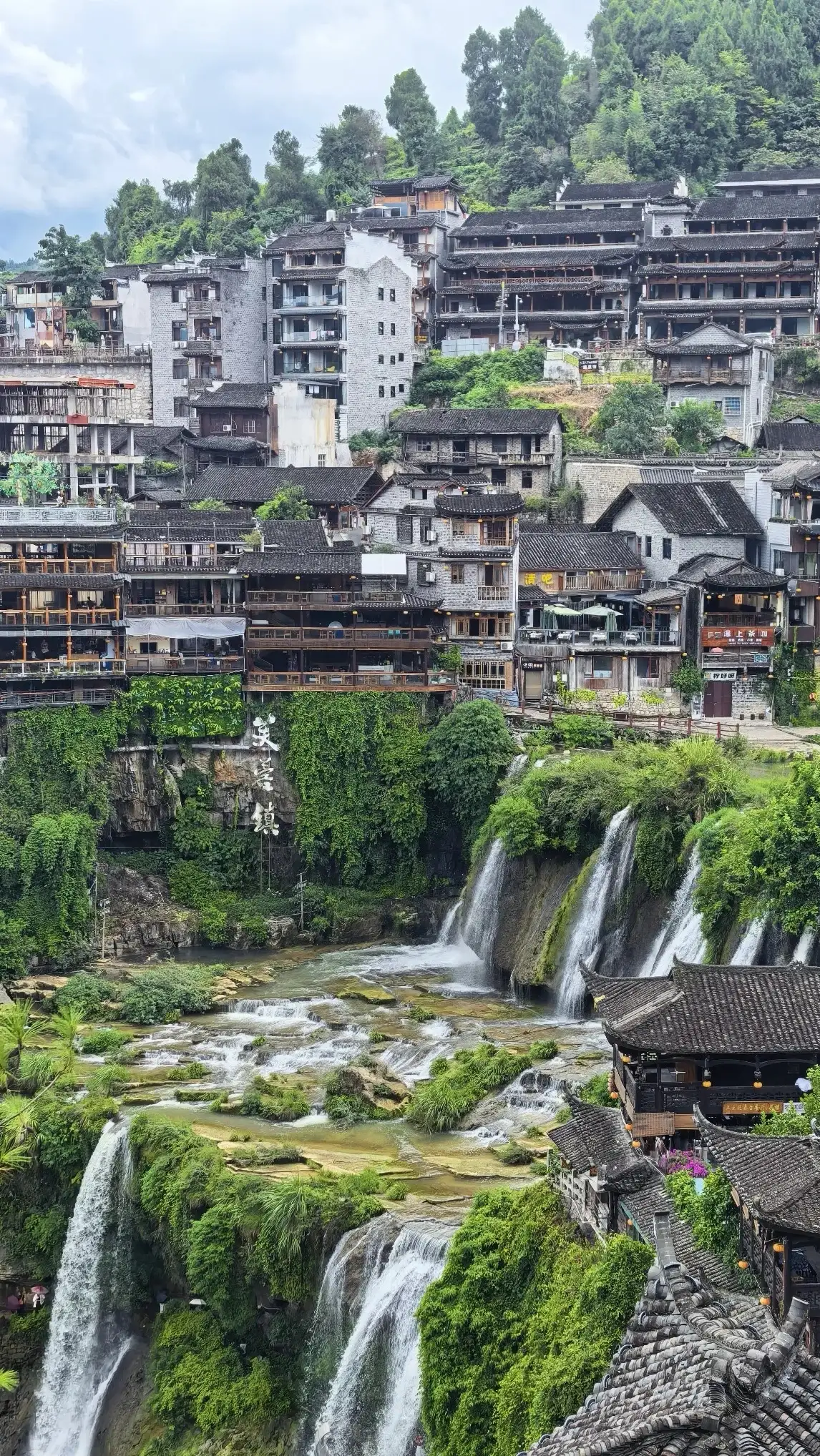
芙蓉镇的夜景很容易成为湘西旅程的最后一张照片:瀑布亮起,吊脚楼像沿水层叠的窗,游客在石板街上寻找晚餐。小红书作者Brynn也是在张家界行程之后傍晚抵达,先看夜景,第二天才慢慢走日间街镇。她的笔记里另有一个值得展开的名字——铜柱园,它把视线从灯光引向了古镇更长的历史。
If you’re willing to spend a day in Furong Town, you can explore it through three key aspects: how waterways turned the town into a port; what the exhibits on the copper pillars reveal; and how films have transformed the way tourists perceive this place. The waterfall remains on the itinerary, but it no longer bears the sole responsibility of explaining the entire ancient town.
The Shape of the Town Shaped by the You River
A special report by the Hunan Provincial Government notes that Furong Town was originally named Wangcun; it became a historic trading port thanks to water transport on the You River and was later renamed after the film *Furong Town*. Viewed against this backdrop, the streets, shops, stone-paved paths, and waterside buildings are more than just picturesque, old-world backdrops for photos; they are intrinsically linked to the flow of goods and people.
When exploring, shift your focus from a shop’s storefront to the street itself. Consider which section of the waterfront the street connects to, what architectural layers you see as you walk up the slope, and how the openings facing the water relate to the houses on the hillside. Today’s tourist routes do not correspond to historical transportation routes, but the topography still helps explain why towns and streets feature such a mix of high and low-lying spaces.
Since Brynn had already explored Zhangjiajie and was running low on energy, she did not visit the pier area on that occasion. This specific trade-off is quite practical: if you arrive in the evening, check in first and take a short walk to see the night views; if you’re interested in the history of water transport, it’s better to set aside the following day to explore the waterside environment and related exhibits. Even with just one night, you can enjoy both types of experiences—there’s no need to cram all the sites into the few hours after arrival.
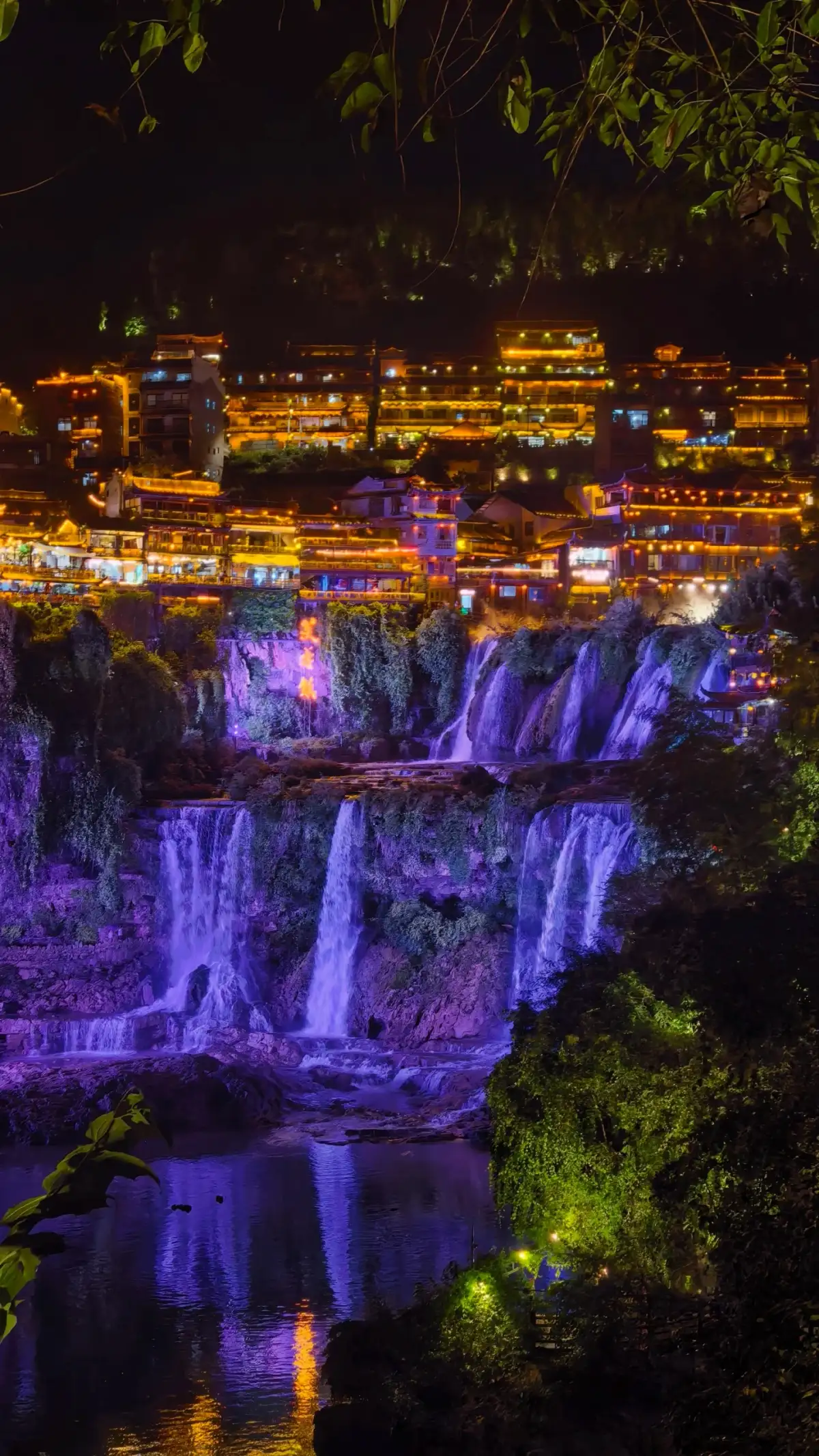
The waterfall in Furong Town illuminated at night. Photo:Brynn · Original Post.
Stilt houses are particularly worth examining within the context of the terrain. When observing a row of buildings, first note their relationship to the slope, then examine the roofs and tiered windows, and finally consider their current functions. The homestay experience mentioned in the original post is merely a personal choice; when booking accommodations, visitors should confirm the specific room, entrance, and luggage delivery arrangements. A room with a waterfront view and one that’s convenient for resting may not necessarily be the same room type.
Tongzhu Park is more than just a photo spot.
The history of the Xizhou Bronze Pillars involves wars and treaties from the 10th century. According to the Hunan Provincial Government’s introduction to Laosicheng in Yongshun: The Battle of Xizhou took place in 939, and the following year, the two sides reached a reconciliation, with the terms of the alliance inscribed on a bronze pillar. For travelers, the focus isn’t on remembering the names of every battle, but on understanding how an inscribed object serves to formalize the agreements reached after a conflict has ended.
When you arrive at the relevant exhibit, you might first consider: Who was the primary audience for the inscriptions on the bronze pillar? Why were materials chosen that would ensure its long-term preservation? And why have later generations continued to display it? Rather than merely observing the form, reading an accurate description helps connect the bronze pillar to the governance, corvée labor, and local relations of that era. This is a concrete, object-based approach to history that avoids forcing modern concepts onto the past.
There is also a matter of location that requires clarification here. The Hunan Provincial Government’s report on Furong Town describes the group sculpture depicting the treaty signing scene in the Bronze Pillars Garden; the feature on Laosicheng, however, introduces the bronze pillars in the museum and their history. Travelers should rely on on-site signage to determine whether what they are viewing is an original artifact, a replica, an illustrative image, or a modern sculpture; they should not assume that every location is the same cultural relic simply because it shares the same name.
If you wish to visit the Laosicheng Museum specifically, you should make separate travel arrangements. The address for Laosicheng provided in official materials differs from that of Furong Town; it is not an exhibition hall that appears just a few steps down the ancient town’s stone-paved street. For those with a keen interest in history, you can ask a travel consultant to include both sites in a Western Hunan cultural itinerary; for a general visit to Furong Town, however, it’s sufficient to understand the historical context through the local exhibits—there’s no need to add long-distance travel just to cover all the historical sites.
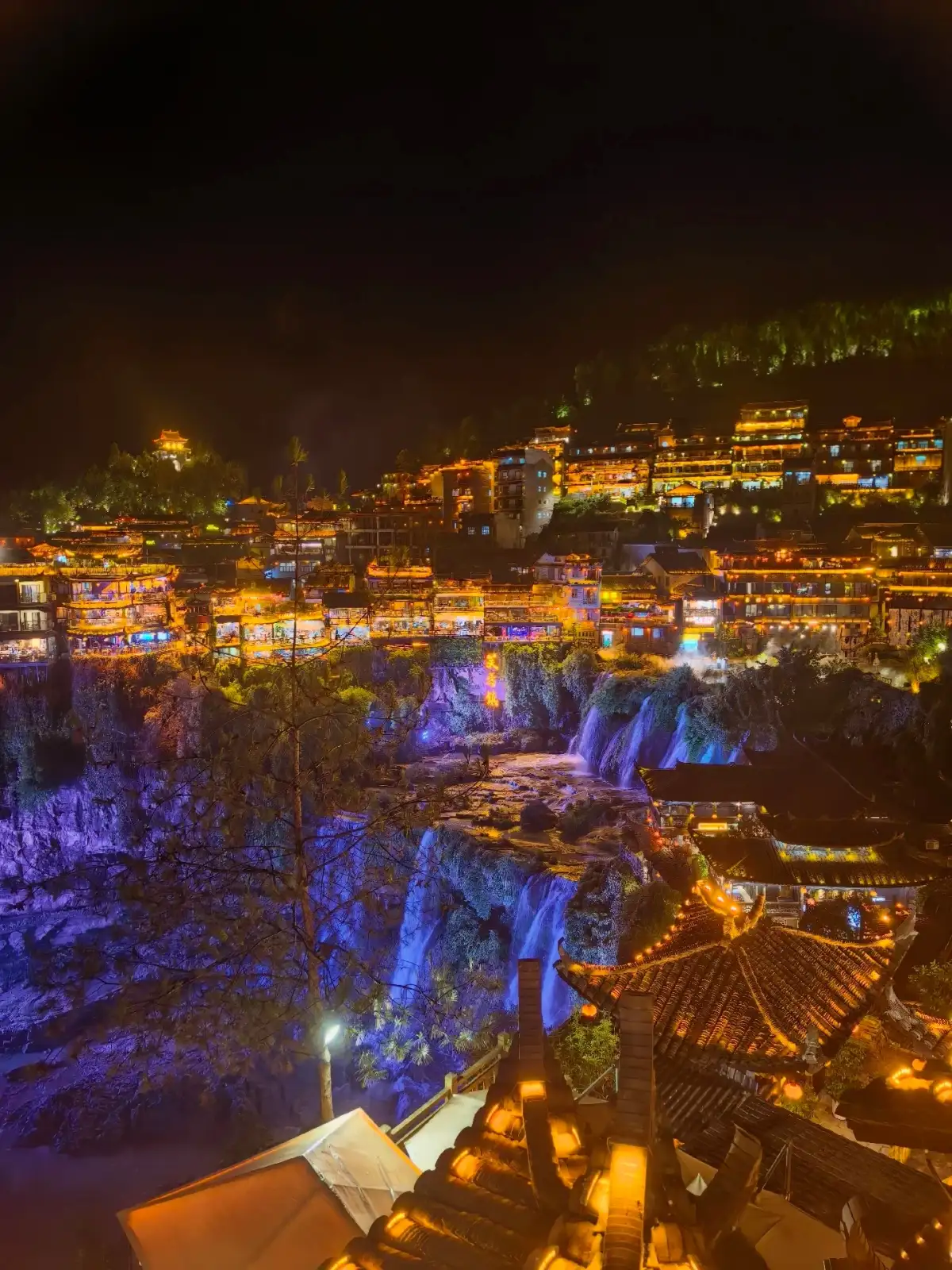
Night view of Furong Town’s waterfront buildings and waterfalls. Photo:Brynn · Original Post.
When accompanying children to view the group sculpture, you can start by asking, “What are these figures doing?” and then explain that a covenant means both parties have put their agreement in writing. Children can start by observing the figures’ postures, positions, and objects, while parents can then provide the historical context. If not all figures can be identified, understanding a single scene is sufficient; part of the joy of a historical journey lies in reimagining seemingly static displays within the context of the events they represent.
Movies, Rice Tofu, and Today’s Viewing Experience
The name “Furong Town” has made the film a separate layer of cultural memory. For those who have seen the film, it’s worth revisiting the film’s background before the trip and then exploring the town to understand the real-world setting; for those who haven’t seen it, knowing that the town’s current name is linked to its portrayal in the film prevents them from mistakenly assuming that all the signs and scenes have always existed in this form. The history of the ancient town, the story of the film, and today’s tourism industry are all interconnected, yet each belongs to a different era.
Rice tofu also appears in the official feature and Brynn’s notes. Treating it as a simple meal during your trip can deepen your experience of town life; if you have vegetarian or other dietary restrictions, please ask directly about the actual seasoning and preparation methods—don’t just rely on the name. Finding a place to sit down and relax is a better way to extend your cultural experience during the day than constantly waiting in line for “the same thing.”
Even for nighttime performances, it’s important to know exactly what you’ll be seeing. Official Hunan sources mention cultural resources such as the Tujia Baishou Dance and Daliuzi, but this does not mean the same performance will take place on any given day or at any specific time. When booking your itinerary, you can confirm the day’s program and commentary with the scenic area; after understanding the background of the dances and music, you can then decide whether to attend. A single commercial performance cannot represent the entirety of a particular ethnic group’s daily life.
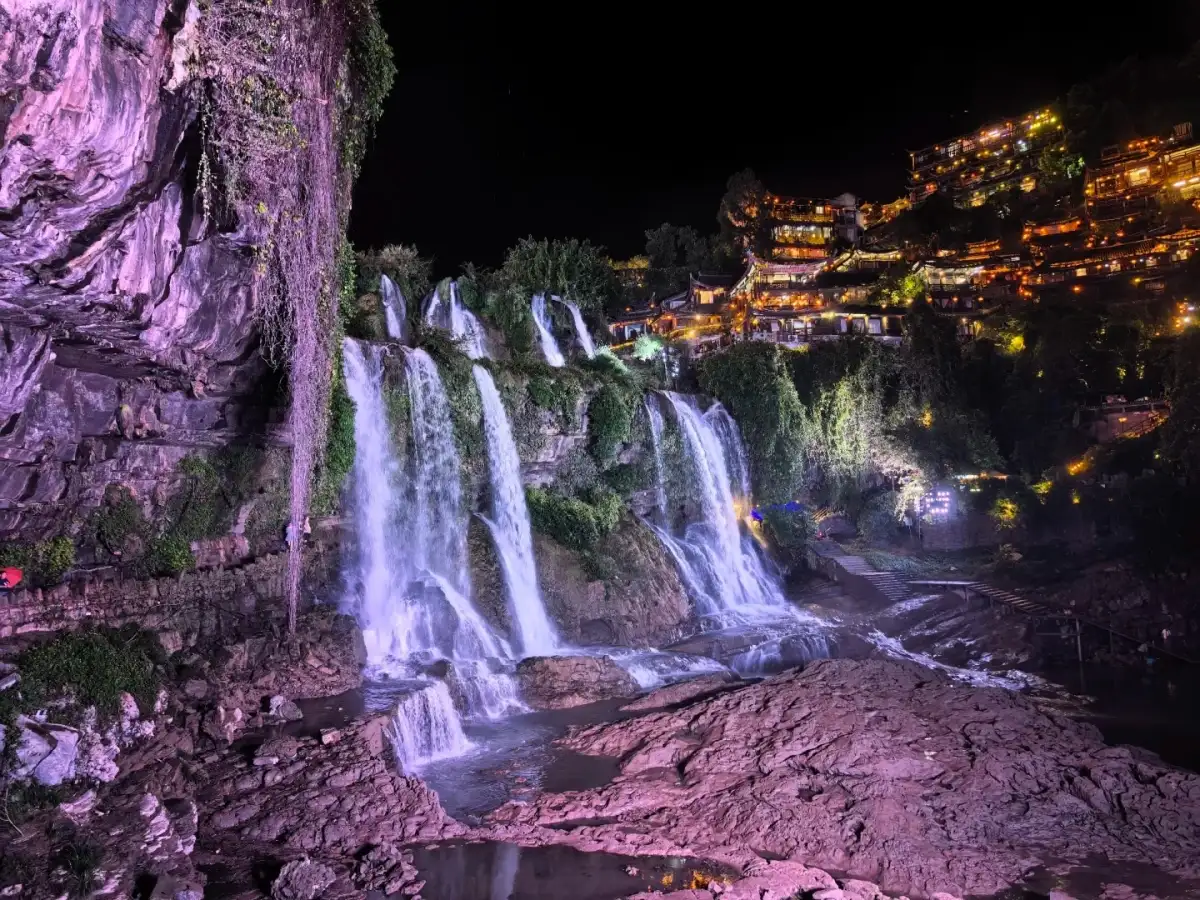
Lights along the waterfall boardwalk in Furong Town. Photo:Brynn · Original Post.
If you’ve been walking continuously in the mountains the previous day, the cultural tour of Furong Town can be kept shorter: start the day by visiting an interpretive exhibit, then walk along a path that showcases the relationship between the water and the streets, followed by a meal and rest; In the evening, choose just one spot with a good night view to linger at. If you have plenty of energy and specific interests, you can add more architectural sightseeing or performances. The length of the itinerary should be tailored to the theme, ensuring that fatigue doesn’t overshadow your appreciation of the experience.
When taking photos, be sure to capture both daytime and nighttime shots. During the day, it’s easier to see the streets, eaves, and topographical layers, while at night, the lights of businesses in operation and the festive atmosphere of the town come to life. Do not use the latter type of image to replace historical explanations, nor should you ask residents and business owners to stop what they are doing to pose for the camera. Allowing the images to faithfully illustrate how the town is used today has narrative value in and of itself.
After seeing the waterfall, being able to articulate the connection between Wangcun, water transport, and the Bronze Pillars exhibition adds another layer of lasting memories to Furong Town. The next time you come across that nighttime photo, what lies behind the lights will no longer be merely the label of a “beautiful ancient town,” but a story that unfolds through the river, historical alliances, films, and the town’s contemporary life.
International visitors may want to prepare a few brief Chinese place names and their English explanations before their trip: What are Wangcun, You River, Tongzhu Park, and Laosicheng? Map addresses and cultural interpretations each serve their own purpose—the former ensures accurate transportation, while the latter helps families connect the scenes they see throughout the day.
Sources and Editorial Notes
This article is an original travel analysis compiled by the Dongxing Travel editorial team based on cited sources; it is not a firsthand account by the author. The full text of the original post has not been reproduced; accompanying images are used within the scope of authorization and are credited to the author and the source of the original post. They do not serve as proof of actual travel experiences or services provided by Dongxing Travel.
Brynn · Furong Town—An Ancient Town Above the Waterfall · Travel Notes; Verified/Organized on: October 3, 2026.
People’s Government of Hunan Province · Timeless Charm, Viral Beauty—Impressions from Furong Town, Yongshun County · Official sources; Verified/compiled on: October 3, 2026.
People’s Government of Hunan Province · Yongshun Laosicheng Ruins and Museum · Official sources; Verified/compiled on: October 3, 2026.
Hunan Provincial Department of Culture and Tourism · Hunan’s Top Ten Distinctive Cultural and Tourism Towns of 2019 · Official sources; Verified/compiled on: October 3, 2026.