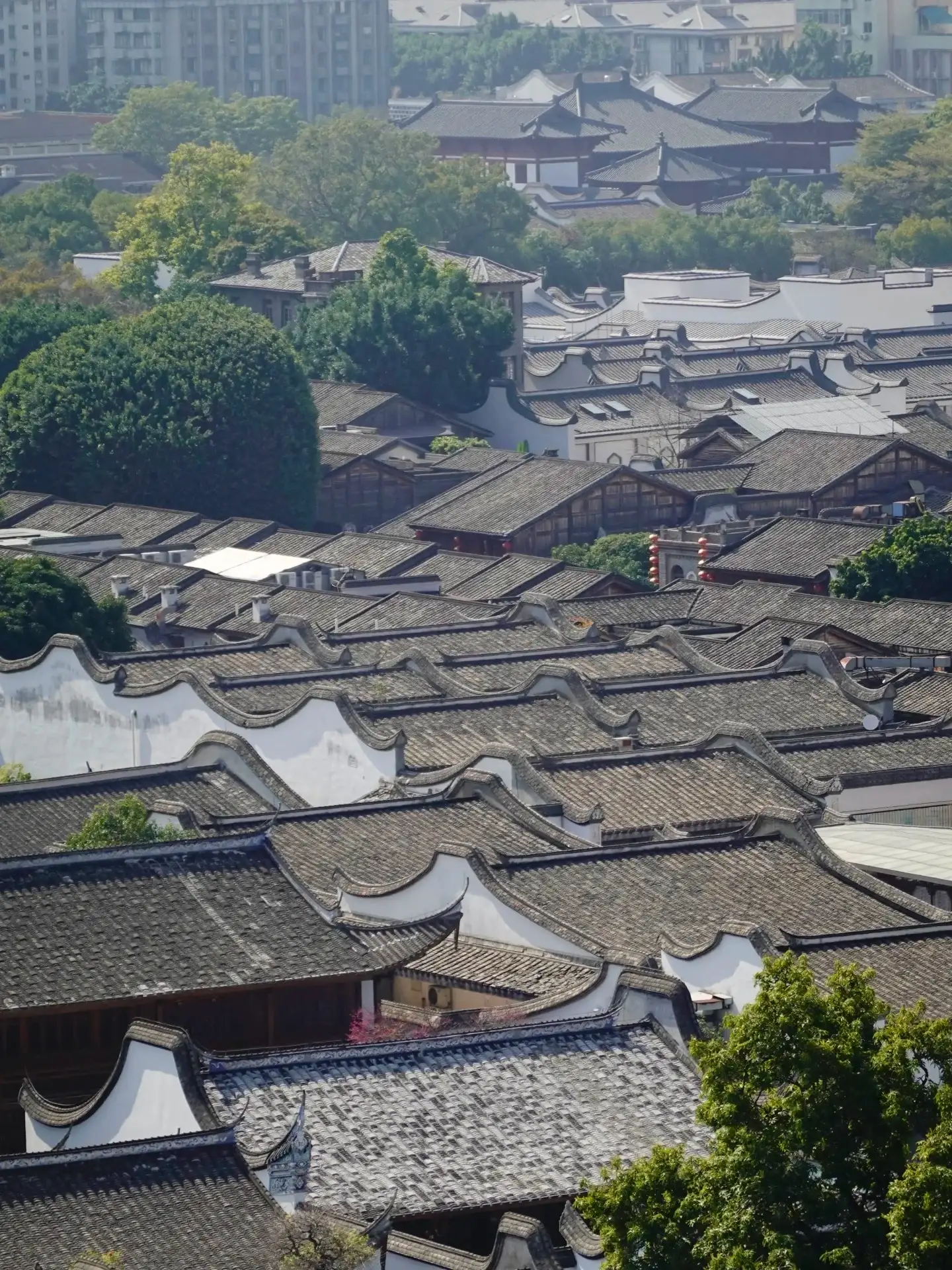
a single undulating wall can help viewers recognize Fuzhou, but it still fails to convey what life is like within the alleys. Architectural photography of the Three Lanes and Seven Alleys benefits from two perspectives: observing the roof patterns from legally accessible vantage points, and returning to the public streets to view facades and the human scale. Only by combining these two distances can a photo series capture the transition from the city to the home. The availability of elevated vantage points should be confirmed separately; even without suitable locations for aerial shots, observations along the streets are sufficient to create a layered series of images.
First, sketch out the relationships this series of photos aims to convey
Before shooting, you can write down three compositional tasks on paper: identify the neighborhood, understand the passageways, and observe a specific architectural detail. The first task requires a broader spatial scope; the second task involves observing how the alleyways extend; and the third task focuses on the materials and ornamentation of the entrance walls. These tasks are more flexible than a shot list; if there are many people on site or renovations are underway, simply replacing the subject with one of the same level of detail will still make the photo series coherent. Since the content of each photo is different, there’s no need to fill the photo album with a large number of similar eaves.
Fuzhou Municipal GovernmentIntroduction to the Culture of Sanfang QixiangLink the neighborhood layout, historic buildings, and historical figures. Before shooting, familiarize yourself with the alley names and publicly available descriptions of the selected buildings, then decide on the focus of each photo. Stories about historical figures are best conveyed through verified architectural captions; a building on the same street with a similar exterior should not be attributed to the same historical figure simply because it is nearby. Accurately documenting locations is the foundation for architectural imagery that can be reviewed and shared later.
Look down at the rooftops, noting repetition and spacing
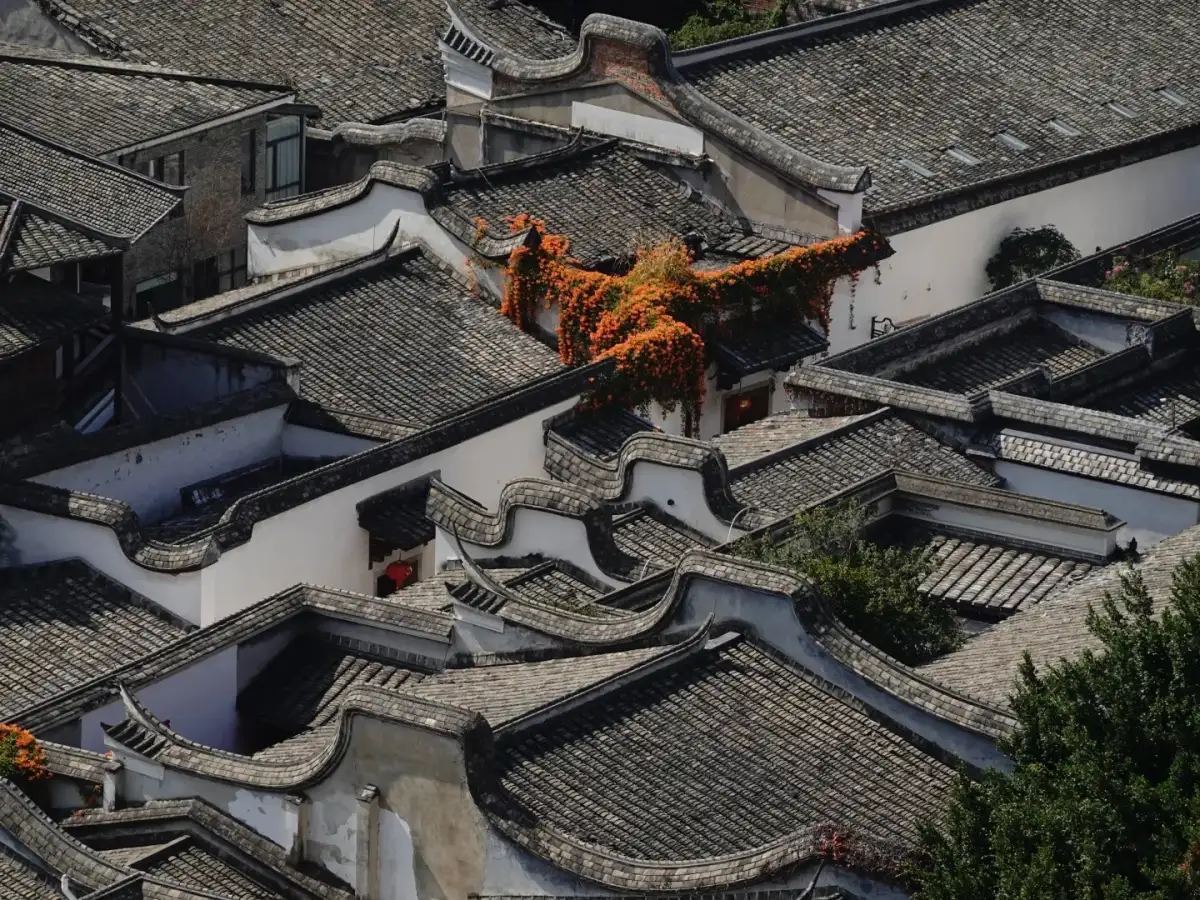
Amid the white walls and gray-tiled roofs, a single orange flowering tree adds a splash of color to the neighborhood. Photo:Lü Daye’s Walking, Sitting, and Lying Down · Original Post.
小红书作者吕大也的行走坐卧的Notes from the Heights of Sanfang QixiangI prefer expansive rooftop views and have documented my personal approach to finding vantage points. This article draws inspiration from the complementary nature of panoramic and ground-level perspectives; however, the floors, staircases, and service areas associated with these vantage points are not currently accessible to tourists. For elevated vantage points, verify actual access hours and photography permits; respect the boundaries of commercial facilities, work areas, and private spaces—do not assume free access simply because a location is featured in an online post.
Once you’ve found an authorized vantage point, first observe the repetition of wall tops, the spacing between roofs, and the lines formed by the alleyways. Whether using a camera or a smartphone, start by taking a wide-angle shot for reference, then select a group of wall tops with the most variation for your second shot. Simply zooming in can make the roofs appear to merge into a single plane; retaining appropriate gaps helps viewers recognize that these buildings do not form a single plane. Contemporary buildings in the frame can also serve as scale references; there is no need to remove real-world spaces in post-production just to create the illusion of a “purely ancient city.”
Is an overcast day suitable for panoramic shots? First, consider visibility and lighting. When cloud cover is even, it may reduce harsh shadows, resulting in more continuous details on walls and roof tiles; however, in heavy fog or heavy rain, the depth of field in the background may be reduced. Choose clearly visible sections and allocate a reasonable proportion of the frame to the sky—there’s no need to wait for completely clear skies. If the roof appears too dark on the screen when shooting against the light, compare different exposure settings. Since settings vary depending on your equipment and the shooting conditions, it’s more useful to zoom in after shooting to check the edges of the wall copings and the tile surfaces than to rely on fixed values.
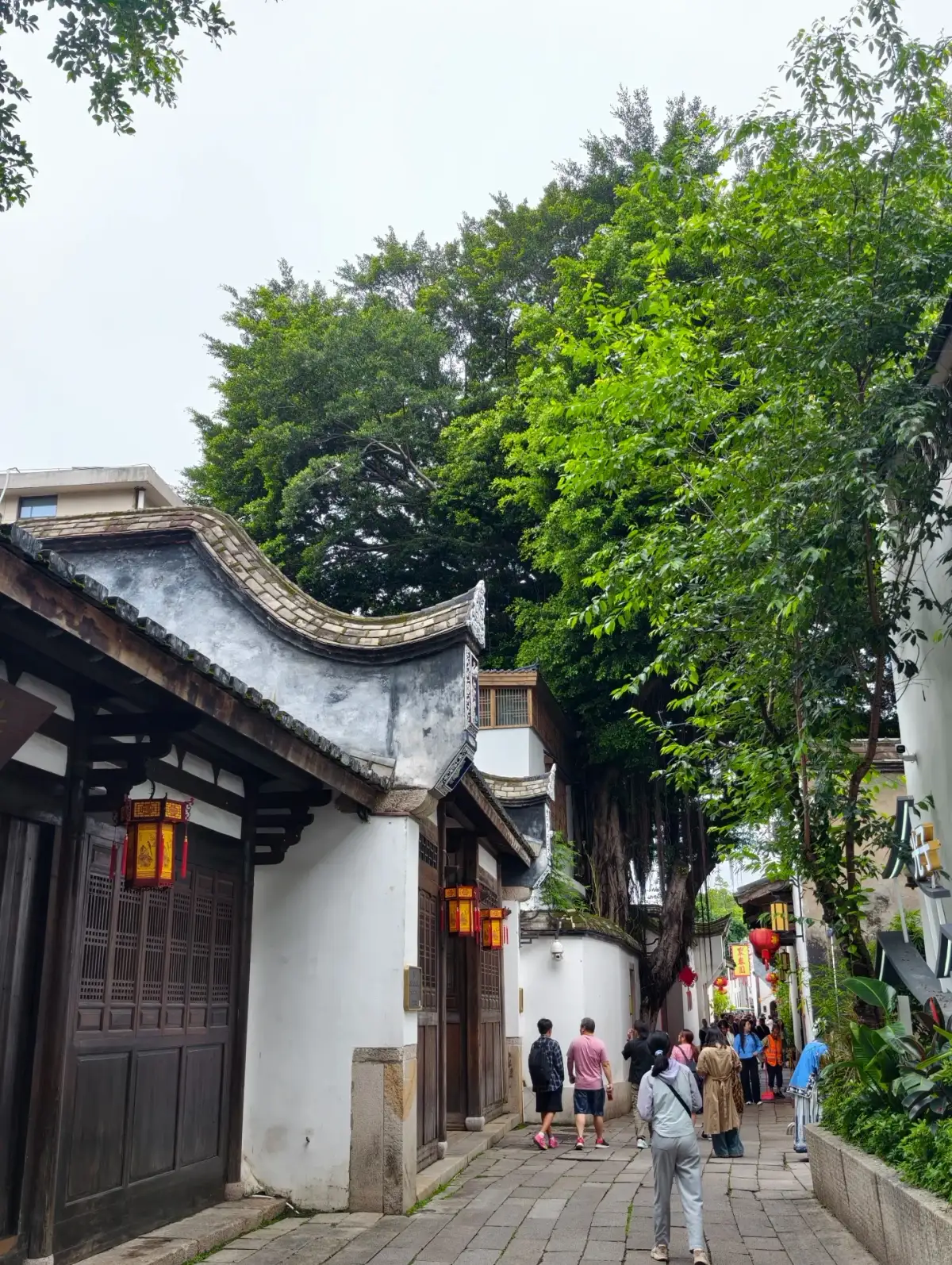
White walls and wooden doors flank the stone-paved alley, while gable walls, trees, and pedestrians in the distance all stretch toward the end of the alley. Image:cici · Original Post.
Back in the alley, the saddle wall is more than just a silhouette
Fuzhou Gulou District GovernmentIntroduction to Saddle WallsDiscussing the enclosing and fire-prevention functions of saddle walls;Introduction to Wall Cap DecorationsList various decorative motifs. The cultural context provides a specific question for the photographs: for the same curved wall coping, which parts are structural and which are decorative? On-site, you can pair a full-wall shot with a close-up, allowing the viewer to see where the details are located.
ground level, the near and far ends of the alley will create a sense of perspective. Including the doorway, the base of the wall, and a section of the pavement in the frame helps convey the scale of the residence relative to the street. A smartphone’s ultra-wide-angle lens may cause vertical lines to appear tilted at close range. First, keep the device steady, then compare the results of shooting with an upward tilt versus a more level perspective. There is no single aesthetic answer regarding whether vertical lines should be perfectly vertical; the key is to understand how the composition alters the sense of space. If the photo is used for architectural documentation, you should strive to preserve recognizable, accurate proportions.
By ciciDocumentation of the Alleys of Sanfang QixiangFocusing on the walls, stone pavements, and projecting eaves offers a different perspective. The planning for this photo series incorporates location records and compositional layering in addition to the two observational essays; I will not reproduce their text or images here. When photographing streets and alleys, you can wait for a moment when the passageway is less crowded; it is not necessary to require that all photos be taken without people in them. If people who have given their consent appear in the frame, they can also help convey the scale of the architecture.
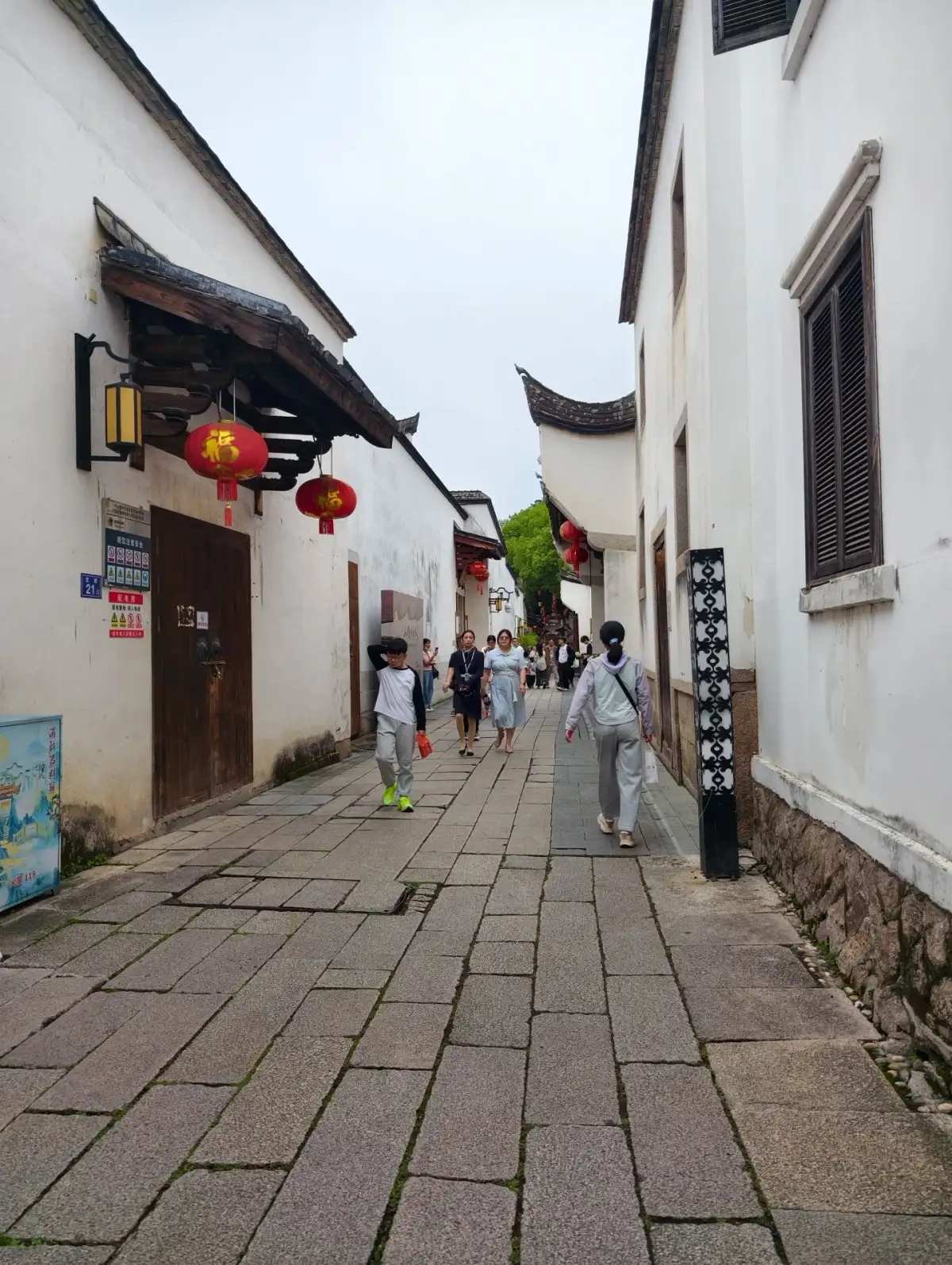
Red lanterns hang in front of the door of a narrow alley with white walls, while in the distance, someone walks along the stone-paved path... Photo:cici · Original Post.
lintels and ornamentation—first identify them, then name them.
close-up that allows the location to be identified—such as a lintel, wall cap, or a window ornament in a public area. First examine the description, then record the name; if you encounter an unfamiliar pattern, temporarily describe it by its shape. Historical terms such as “cloud patterns” and “scroll motifs” must be verified against reliable sources; do not label each decorative element based solely on impression. Writing “detail of a wall coping in a public alley” beneath a photo is sometimes more helpful than an unverified, precise term. Verify the details later and add the description then; this approach will make your observations more reliable.
close-up of the same detail—while retaining as much of the surrounding environment as possible—to help identify its location on the wall. After shooting, review the screen to check whether your shadow, reflections, or the focus are obscuring any details. Shooting distance is determined by what the site allows; maintain a safe distance from construction barriers, residents’ doorways, and closed courtyard gates. Permits for indoor visits and photography must be obtained separately; just because a room is visible through a window does not mean you can point your camera inside. Before treating everyday items in private homes as aesthetic material, consider the residents’ wishes first.
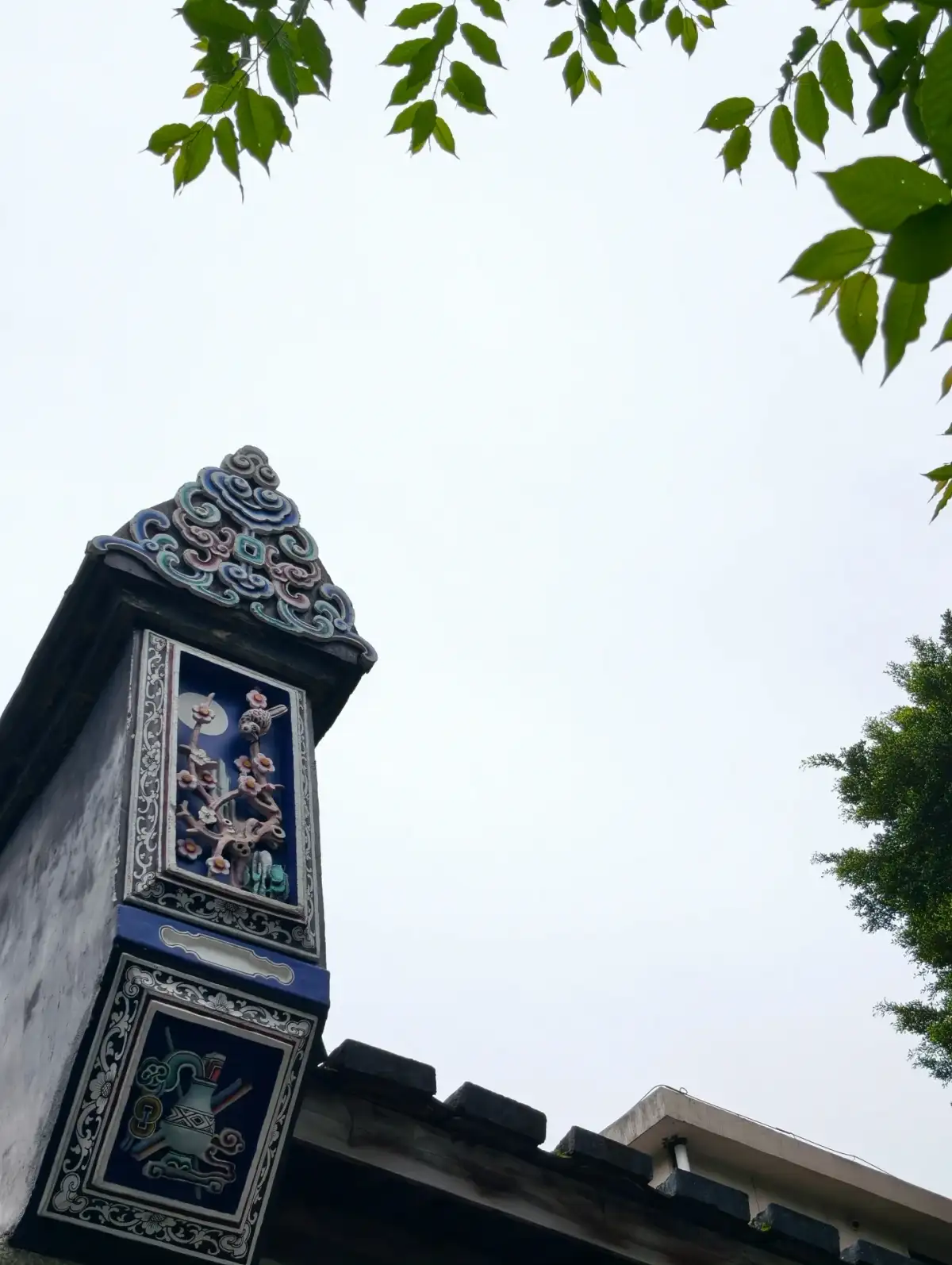
The blue decorative patterns on the wall tops and ridges form the foreground, with tree branches visible in the background. Image:cici · Original Post.
How many photos are needed for a set? Start by making a small but complete selection: one showing the neighborhood scope, one of the alleyway, one of a doorway wall with contextual positioning, plus one of the most interesting detail. If you don’t have permission for aerial shots, use a wide-angle view of the alley entrance to substitute for the first photo. The number of photos is a suggestion for editorial practice, not a mandatory template for the website. Each photo serves a specific purpose; when there are visual cues connecting the photos, viewers can move from the big picture to the details. Repeated shots of the same wall can be kept for practice, but there’s no need to include all of them when sharing.
After finishing the shoot, save the location name, the basis for your observations, and your personal notes separately. Only when the geographical location, architectural identity, and permissions from subjects are clearly established should you consider public display; even if a museum or neighborhood permits individual photography, this does not automatically cover all commercial uses. This siteIntroduction to Destinations in Fuzhoucan serve as a gateway to the next step in cultural interpretation. The visual clues of the Three Lanes and Seven Alleys should ultimately lead back to the spatial context: observing the rhythm of a wall from above, and understanding from ground level what kind of streets and alleys these walls enclose.
You can also take one photo of the same wall from each of two distances: a shot at the alley entrance captures its connection to the street, while a close-up makes the decorative patterns the focal point. When organizing the photos, pair them first, then verify the alley names and building identities you’ve recorded. Similar white walls in close-ups can be easily confused; location records help distinguish them. When selecting photographs, include shots from both distances so that a single photo of a decorative motif does not have to serve as the sole illustration for the entire block; the spatial clues between the photos also provide a starting point for future examination of lintels and courtyards.
Source and Editorial Notes
This article is an original travel analysis compiled by the Dongxing Travel editorial department based on the listed materials; it is not a firsthand account by the author. The full text of the original post has not been reproduced; accompanying images are used within the scope of authorization and are credited to the author and the source of the original post. They do not serve as proof of actual travel experiences or services provided by Dongxing Travel clients.
Lü Daye’s Daily Life · Small Scenes | Sanfang Qixiang Photographed at Dongbai · Travel Notes; Verified/Compiled on: October 3, 2026.
cici · 1⃣ Fuzhou Trip | Sanfang Qixiang: Architectural Character · Travel Notes; Verified/Compiled on: October 3, 2026.
Fuzhou Municipal People’s Government · Sanfang Qixiang Culture · Official Materials; Verified/Compiled on: October 3, 2026.
Fuzhou City Gulou District Government · Our Sanfang Qixiang (34) · Official Materials; Verified/Compiled on: October 3, 2026.
Fuzhou Gulou District Government · Our Sanfang Qixiang (35) · Official Materials; Verified/Compiled on: October 3, 2026.