Inside a porcelain display case, a seam may be more worth pausing to examine than a single, intact, glossy glazed surface. It reminds viewers that the form before them has undergone fragmentation, excavation, sorting, and reassembly. At the Imperial Kiln Museum in Jingdezhen, in addition to snapping photos among the brick arches, you might also want to spend some time with a single artifact: Which parts come from fragments? How do we know what it originally looked like? And what additional layer of history do the seams reveal to us?
景德镇市政府的公开介绍说明,御窑博物馆许多馆藏器物由御窑厂出土残损瓷片拼对修复而来。小红书作者周周分享建筑取景,牙膏Soda记录附近工坊中素坯与制作步骤。本文用两篇真实观察分别提出空间和工艺问题,器物来源与修复事实采用官方资料,不把个人机位清单当成展览目录。
Why don’t the seams need to be concealed?
From a permissible viewing distance, first observe the complete outline, then pay attention to identifiable seams, cross-sections, or distinct sections. It may not always be possible to determine the cause of these features with the naked eye; the exhibit labels and restoration descriptions are the key to understanding. Visitors do not need to determine for themselves whether every detail is a restoration, but they can note their questions: Where are the original materials? Does the exhibition explain the excavation and restoration processes? How has the overall shape been reinterpreted?
Does piecing-together restoration mean treating newly made porcelain as an antique? These are not the same thing. The core of the official explanation is the sorting, matching, and restoration of excavated materials for use in research and exhibition. When visiting, be sure to read the specific exhibit descriptions carefully to distinguish between excavated artifacts, restored pieces, and replicas on display. The museum’s labeling should be taken as the definitive guide; a single photograph taken from a distance cannot replace these written descriptions.
For those unfamiliar with ceramics, observing the seams actually provides an easy starting point. First, determine whether the seam is on the body, the rim, or the base, then consult the description of the object’s function. The location of the seam may draw attention to a particular part, but the object’s function and date should still be determined based on the exhibit label. This approach to viewing does not rely on memorizing ceramic terminology but instead leads the viewer from the material before them to a specific question.
One artifact, three types of information
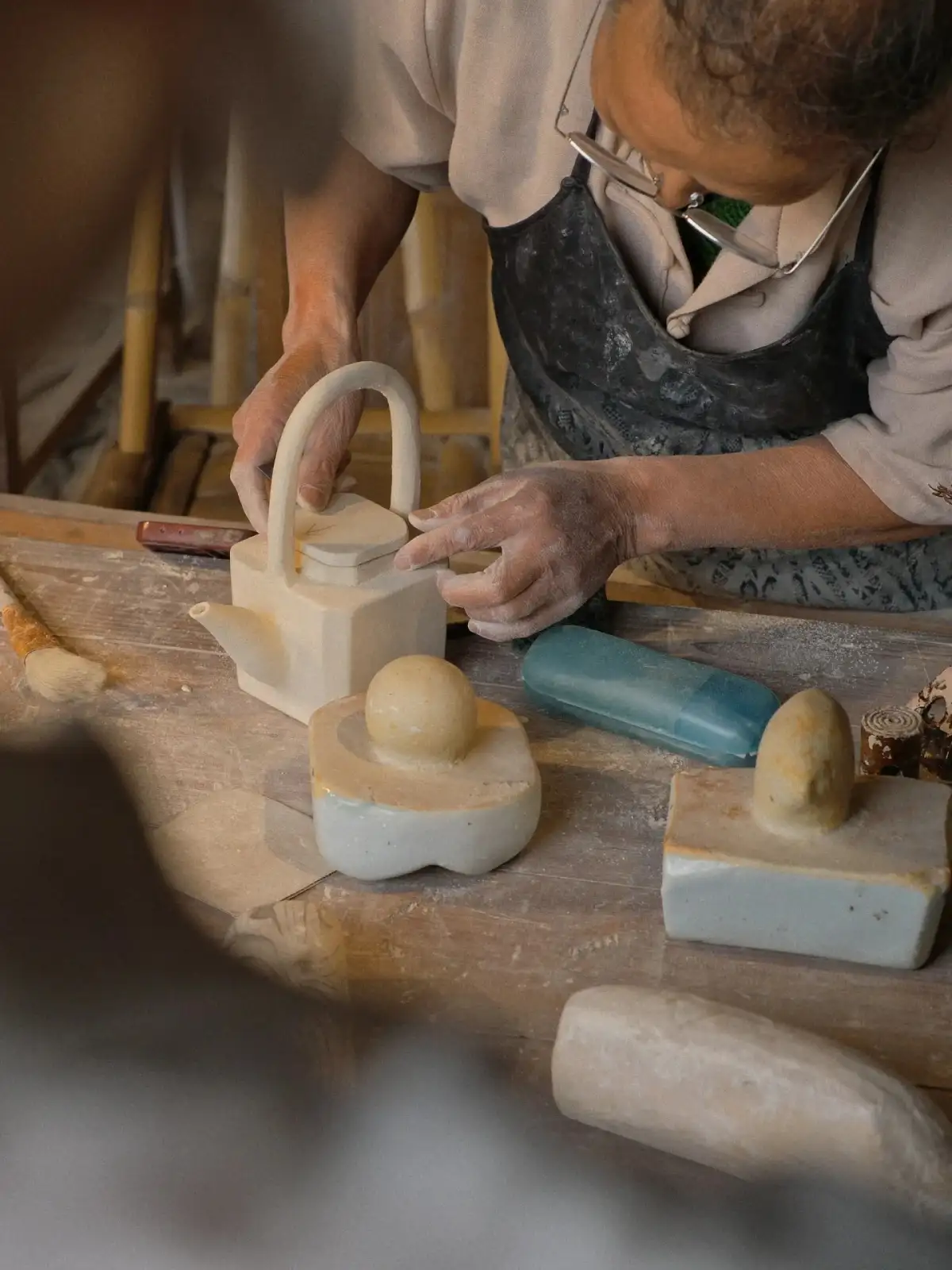
A scene of artisans at the Xujia Kiln in Jingdezhen crafting by hand. Photo:Toothpaste Soda · Original Post.
The first type of information concerns form: how the rim, neck, body, and base come together as a whole. To appreciate an object’s contours and proportions, it’s best to view it from the front first, then compare its side profile along the permitted viewing route. The second type concerns the surface: the location of glaze colors, patterns, and inscriptions. The third is context: the date, excavation site, and the exhibition’s explanation of the artifact’s intended use. By separating these three layers, even complex exhibit labels become easier to understand.
A practical approach is to select two exhibits of similar types for comparison, rather than trying to memorize the entire museum. Do their rims look similar? How do the proportions of the body differ? Where is the decoration concentrated? And what differences do the captions point out? Base your conclusions on the actual exhibits. Even if you end up remembering just one difference between two objects, it’s more concrete than simply thinking “pretty” after viewing a long row of pieces. When visiting with children, you can turn the task into drawing an outline, finding a seam, or observing a repeating pattern. Then ask your child how they think this shape might be used, and read the museum’s description together to see if their guess matches the explanation. Guessing is a way to engage with what you’re seeing—it shouldn’t be presented as historical fact. This process turns the exhibition into a shared discussion, giving your child their own perspective on what they’re observing.
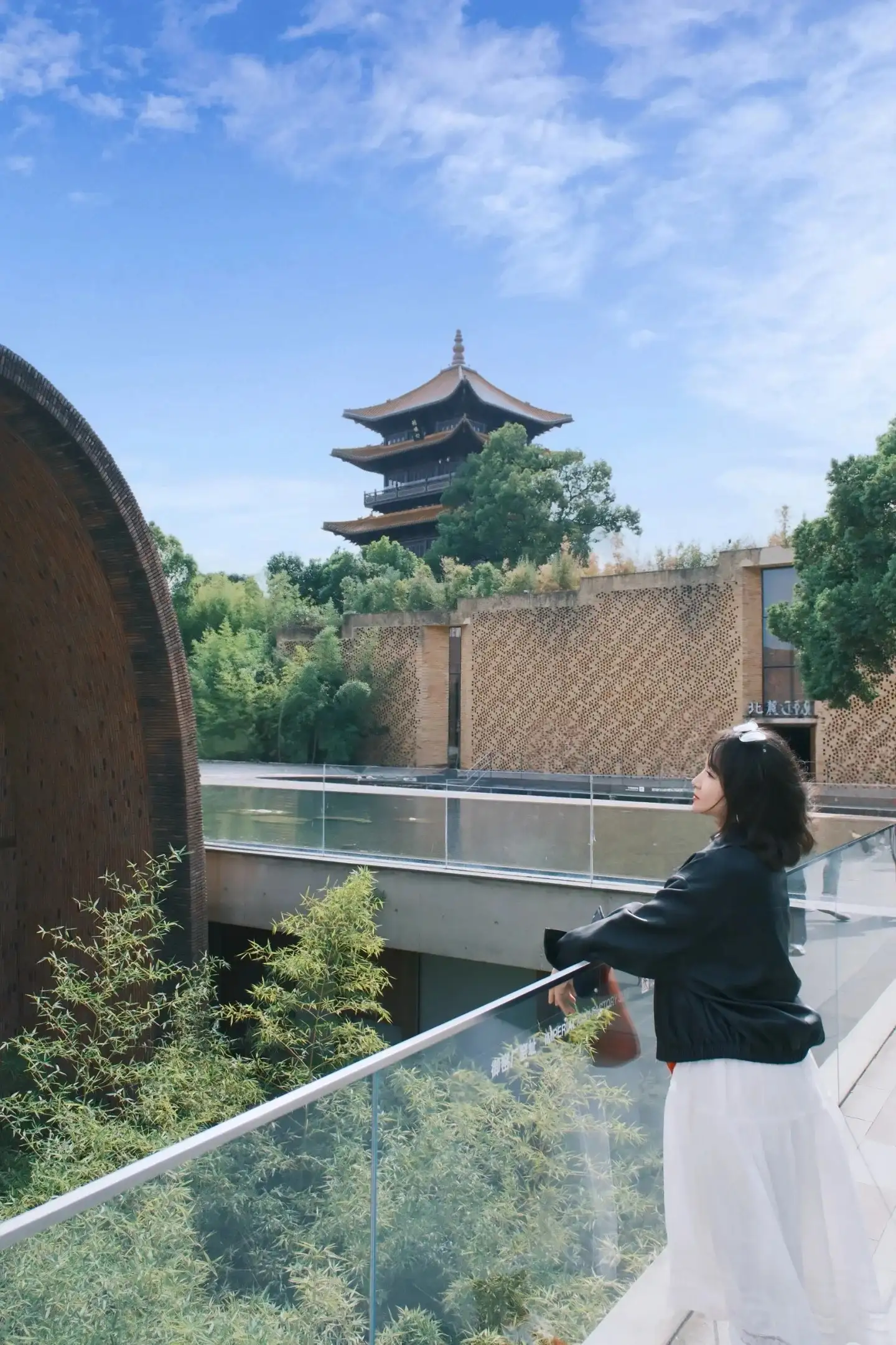
Zhou Zhou’s notes list photographic cues such as brick arches, water surfaces, and doorways, illustrating that architectural spaces hold their own unique appeal. You can set aside time for photography as a distinct segment of your visit, then put away your equipment and select a few exhibits to study. Both experiences are worth preserving, but constantly switching between architectural vantage points and display cases can easily reduce the artifacts to mere backdrops for your photo tour.
When photographing the space, pay attention to the layering of the archways, the interplay between the brick surfaces and the light, and frame your shots within the areas actually permitted. Terraces, workshops, or walkways mentioned in personal notes may fall under different administrative jurisdictions. Do not assume that a single ticket or reservation covers all areas simply because their names appear in the same article. Before your visit, identify the actual entrance and tour itinerary; once on-site, take architectural photos from locations that do not obstruct other visitors’ view.
Photographing exhibits requires a different set of considerations. Look for signs indicating where photography is permitted, and avoid causing glare, standing too close, or using equipment that disturbs others. When you’re able to photograph the exhibit labels, associate the text with the artifact itself—you’ll only know what you’ve photographed once you organize your images later. If photography isn’t allowed in a particular area, jot down the exhibit’s name and any details that interest you in a single line of text; this will still help you retain the information. You don’t need to rely on having a photo of every single exhibit.
Unglazed clay bodies make the production process visible
“Toothpaste Soda’s” workshop notes highlight the gray-white unglazed clay body, as well as processes such as wheel-throwing, trimming, glazing, and painting. The clues provided can help visitors connect the finished exhibits with the production process: shaping, surface treatment, and firing are distinct stages. At which stage is the object you see in the workshop currently? The specific process varies depending on the product and the workshop, so it’s best to follow the staff’s explanations rather than judging the entire process based on appearance alone.
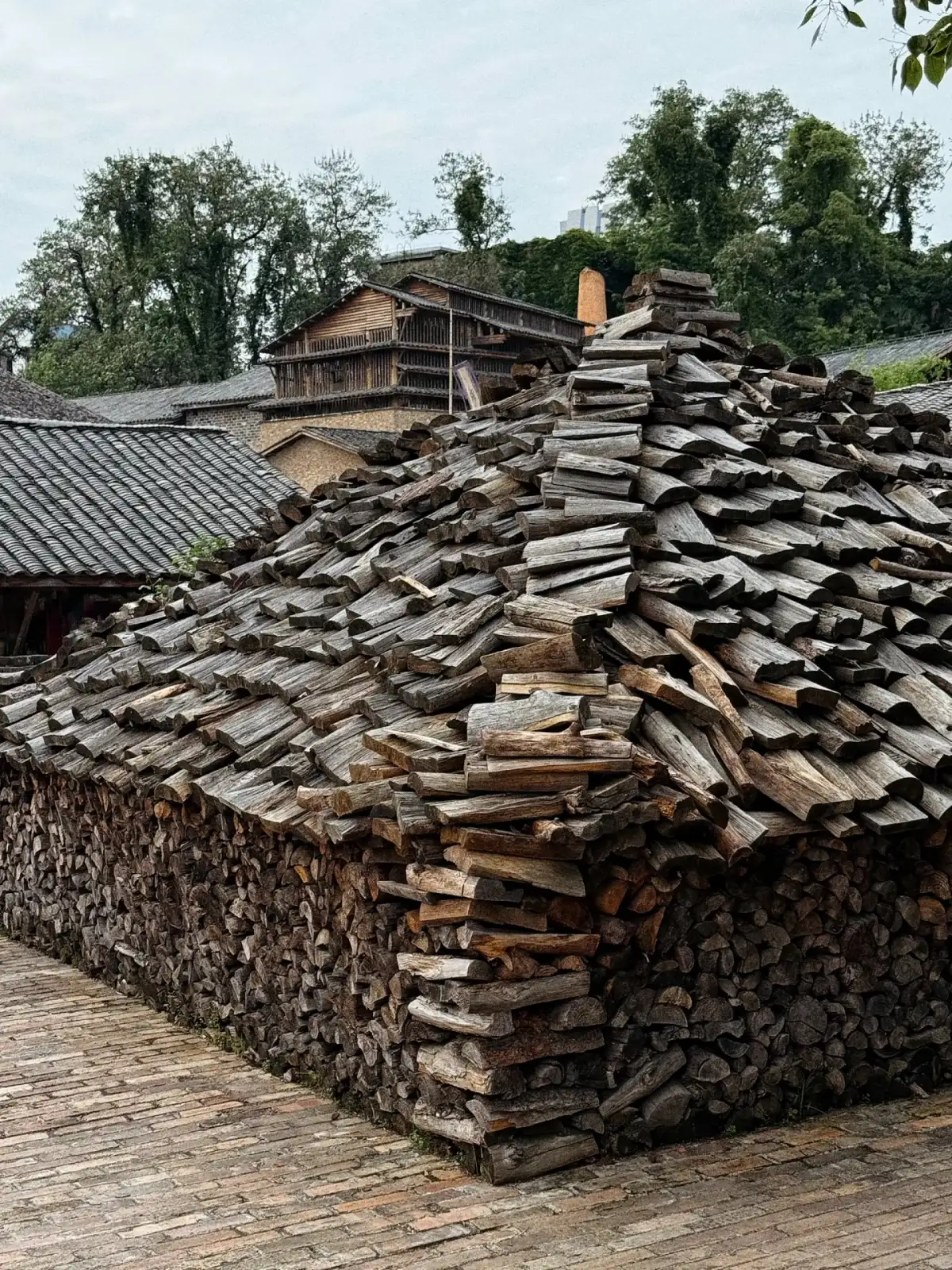
Firewood stacked in the courtyard of the Xu Family Kiln in Jingdezhen. Photo:Toothpaste Soda · Original Post.
When examining a raw ceramic body that lacks the luster of a finished piece, first observe its contours and thickness, then compare it to the proportions of similar objects in the display case. If on-site explanations are permitted, ask what the next step is and which step is most likely to alter the shape—these questions are more specific than a general inquiry about how long the process will take. Craftsmanship requires different roles and levels of experience. The author feels that a sense of composure is a personal experience and should not be used to infer the work pace of every artisan.
Before participating in a hands-on workshop, you should also clarify what you’ll receive upon completion: a practice piece finished on-site, a finished product to be fired later, or an item that needs to be shipped. For international travelers, the time required to complete the piece and the shipping address will determine whether the workshop is a suitable option. While hands-on activities are fun, these workshops cannot replace the entire professional production process. By clarifying your expectations in advance, you’ll avoid having to make last-minute changes to your travel plans while waiting for your finished piece before your return trip.
If you only have half a day, you can start by going through a section of the exhibition, select one restored artifact as your focus, and then explore a section of the architectural space. Whether to include the workshop depends on the actual reception and how much energy you have left. The itinerary isn’t about photographing all the popular spots first and then catching up on the exhibition; rather, it’s about gathering three key pieces of information about your chosen artifact: what it is, how the excavated materials are interpreted, and what the production steps entail.
If you have more time, you can split your visit into two segments: observing the artifacts and exploring the nearby public craft demonstrations, with a break for lunch in between. Short notes taken after the visit are best used to jot down your own questions; there’s no need to immediately provide a professional classification for every glaze color. The next time you visit a workshop or another museum, the questions you’ve already formulated will help you compare new materials, allowing your exploration of Jingdezhen to continue and unfold.
As you leave, pairing a photograph of the building with information about a specific artifact can tell a very clear story: how the exterior space drew you in, and how the interior fragments transformed your understanding of the complete porcelain piece. The seams at the Imperial Kiln allow the artifacts to be viewed alongside their restoration process, while the unglazed clay bodies redirect that process back toward the finished product. It is precisely this interplay that makes this ceramic city worth exploring at a leisurely pace.
Source and Editorial Notes
This article is an original travel analysis compiled by the Dongxing Travel editorial department based on cited sources; it is not a firsthand account by the author. The full text of the original post has not been reproduced; accompanying images are used within the scope of authorization and are credited to the author and source of the original post. This content does not serve as proof of actual travel experiences or services provided by Dongxing Travel.
Zhou Zhou 📷 · How to Capture All the Instagram-Worthy Spots at the Imperial Kiln Museum in an Hour and a Half · Travel Notes; Verified/Organized on: October 3, 2026.
Toothpaste Soda · Jingdezhen🍶 Xujia Kiln — Experiencing the Beauty of Unglazed Clay · Travel Notes; Verified/Organized on: October 3, 2026.
Jingdezhen Municipal People’s Government · The Millennial Porcelain Capital Shines Brightly · Official materials; Verification/Compilation Date: October 3, 2026.
Jingdezhen Imperial Kiln Museum · Jingdezhen Imperial Kiln Museum Official Website · Official materials; Verification/Compilation Date: October 3, 2026.