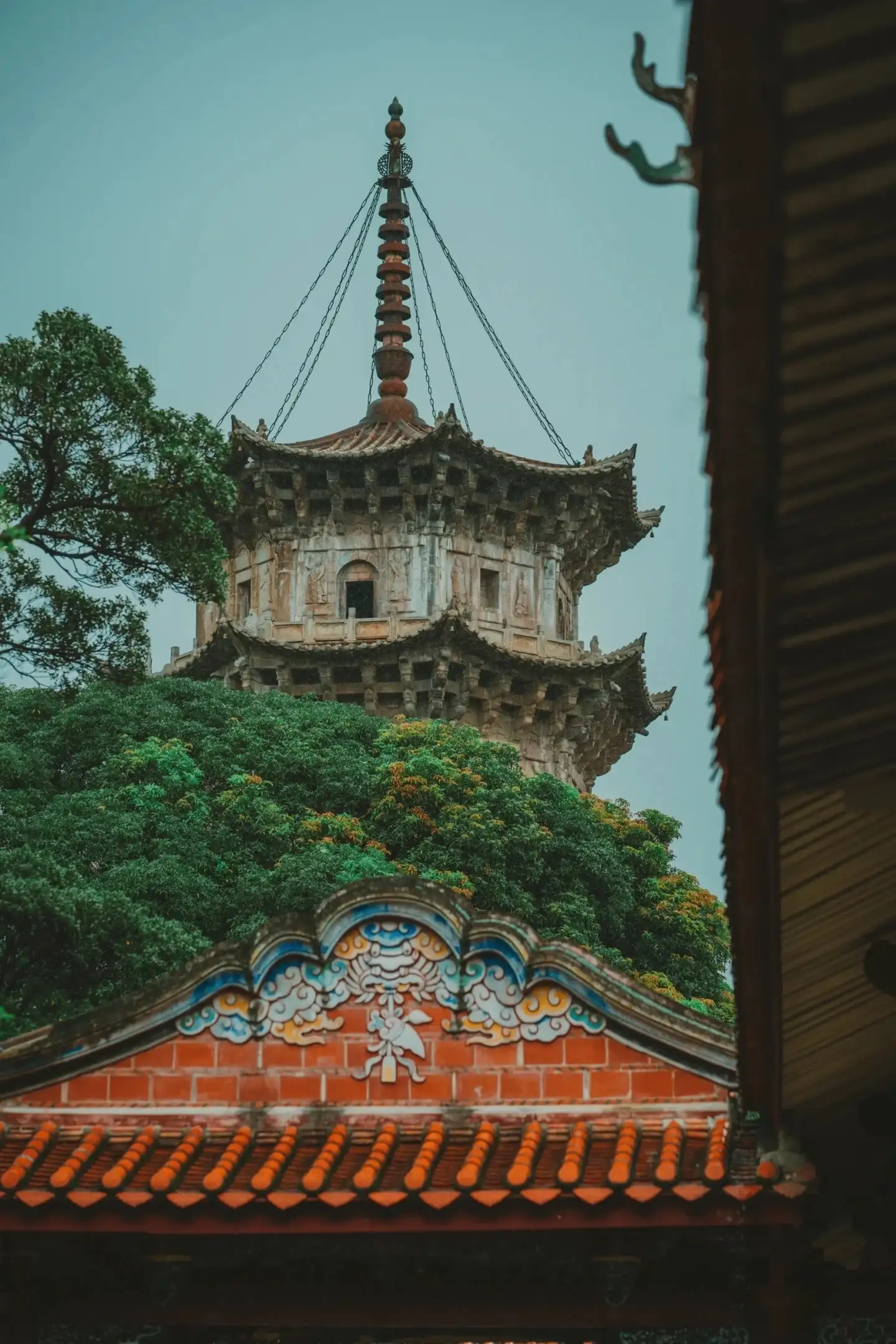
look up at the twin pagodas and look down to observe how people enter and exit the gates—these are two things you can do simultaneously on your first visit to a Quanzhou temple. The architecture preserves history, while religious sites also have ongoing daily use. A spot popular with tourists for taking photos might actually be the path others use to reach the main hall. Starting at Kaiyuan Temple, first identify the areas open to the public, then let the architecture and explanatory notes guide your gaze—this will help you understand the space before you more easily than simply chasing photos along a pre-set list of shooting spots.
Once inside, first observe how the space is being used
Check the on-site notices before entering to learn which areas are open that day and what activities are taking place. When encountering ceremonies or group activities, keep the aisles clear, keep your voice down, and follow staff instructions first. Companions can agree to discuss matters in public outdoor areas and pause conversations in places where quiet is required. Ask for permission before taking portraits, especially of people engaged in worship, prayer, or religious activities. Confirm separately whether the person is willing to appear in the photograph and what the photograph may be used for afterward.
Should visitors mimic others’ religious gestures? Visits should primarily consist of quiet observation. If you see others burning incense, praying, or circling in a specific order, respect their personal space first; whether you choose to participate should be based on understanding and voluntary choice. If you’re unsure about specific practices, feel free to ask on-site staff. For altars, ritual objects, and other religious artifacts, maintain a safe distance as indicated by signs and guidelines. Touching them to “check the material” can alter the boundaries of cultural relics and religious spaces; observation should remain within permitted limits.
and their attire and belongings should also comply with the venue’s requirements. Rather than memorizing a list of unverified taboos before you go, check the official visitor guidelines and read the signs for specific areas once you’re inside. Children in your party can start by understanding one clear principle: “People are doing important things here, so we give them space.” Framing etiquette as a matter of respecting others’ needs makes it easier for children to know when they can speak and when they need to stop and wait.
Beyond the Twin Pagodas: Placing the Temple Back in the Harbor City
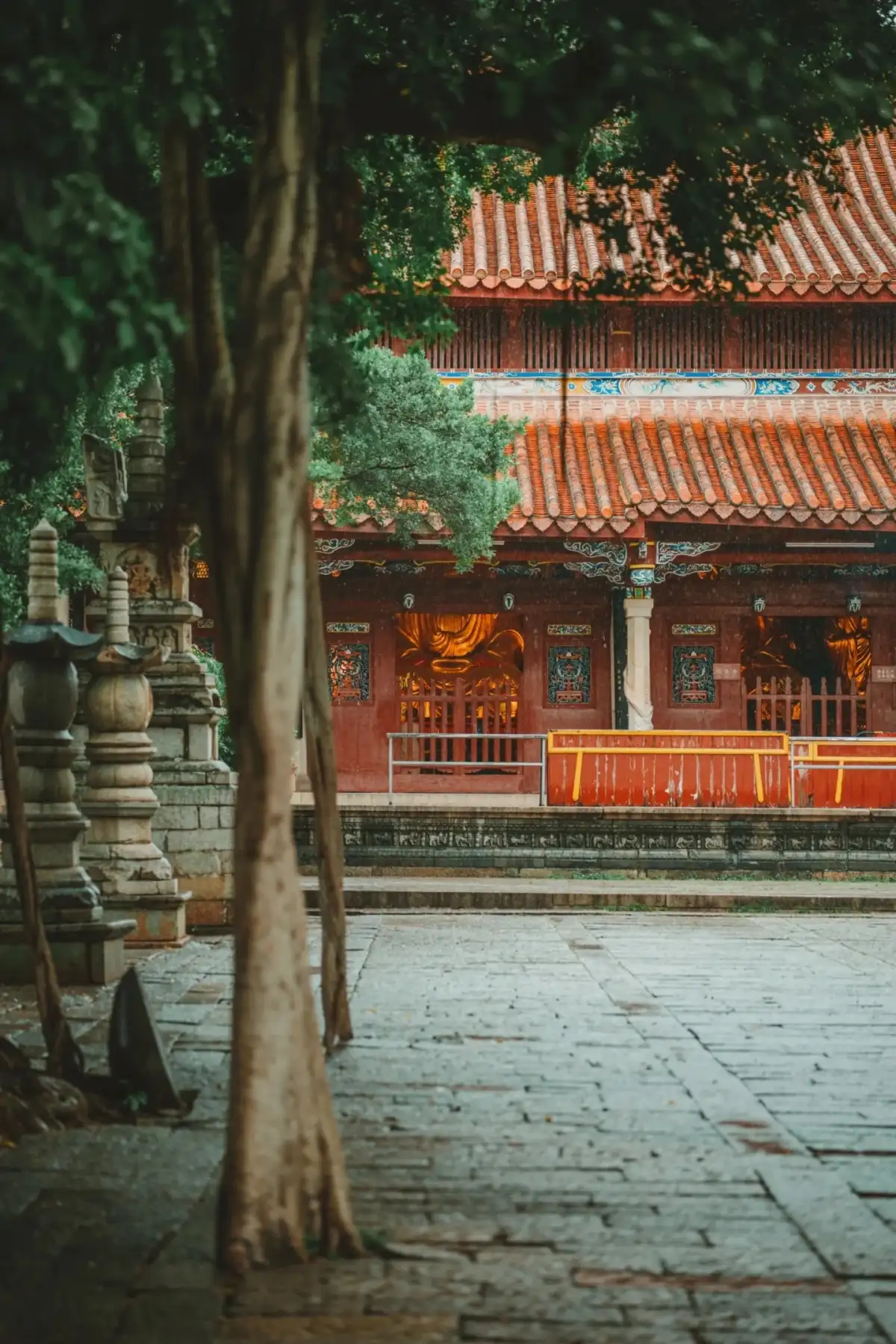
The stone-paved courtyard in front of the large tree glistens with moisture, flanked by red halls and stone lanterns. Photo:Lai Pi Yang’s Photography Workshop · Original Post.
UNESCO’s Introduction to the Quanzhou World Heritage Sitelinking Quanzhou’s production, transportation, commerce, and institutional culture, illustrating that the city was once a major maritime trade hub during the Song and Yuan dynasties.UNESCO Silk Road Resourcesalso discusses the Twin Pagodas of Kaiyuan Temple and Quanzhou’s diverse religious and cultural heritage sites. These contexts raise a travel-related question: How does a port city accommodate the cultural spaces of different communities?
this is a question best addressed on-site, but the answer cannot be deduced solely from the building’s exterior. When you see unfamiliar motifs in the decorations, look for an official explanation first; if none is available, note the location and later consult the museum or heritage records. Architectural elements may date from different eras, and a single motif does not necessarily represent the sole cultural origin of the entire temple. Keeping your immediate observations separate from verified historical facts allows your cross-cultural curiosity to continue unfolding, rather than rushing to conclude, “This is the style of a certain country.”
On your first visit, consider viewing the site from three distances: far, medium, and close. From a distance, observe the overall relationship between the pagoda and the courtyard; from a medium distance, examine the architectural layers and circulation patterns; and up close, within permitted limits, study the stone carvings and materials. As you shift your viewing distance, both your photographs and the questions you ask will change accordingly. The distant view is ideal for considering how the architecture serves as a landmark for the city, while the close-up view is best for pondering what a specific image conveys. There’s no need to memorize all the historical terms at once; simply choose the detail that interests you most, and your visit will naturally follow its own narrative thread.
When it rains, adjust your viewing distance
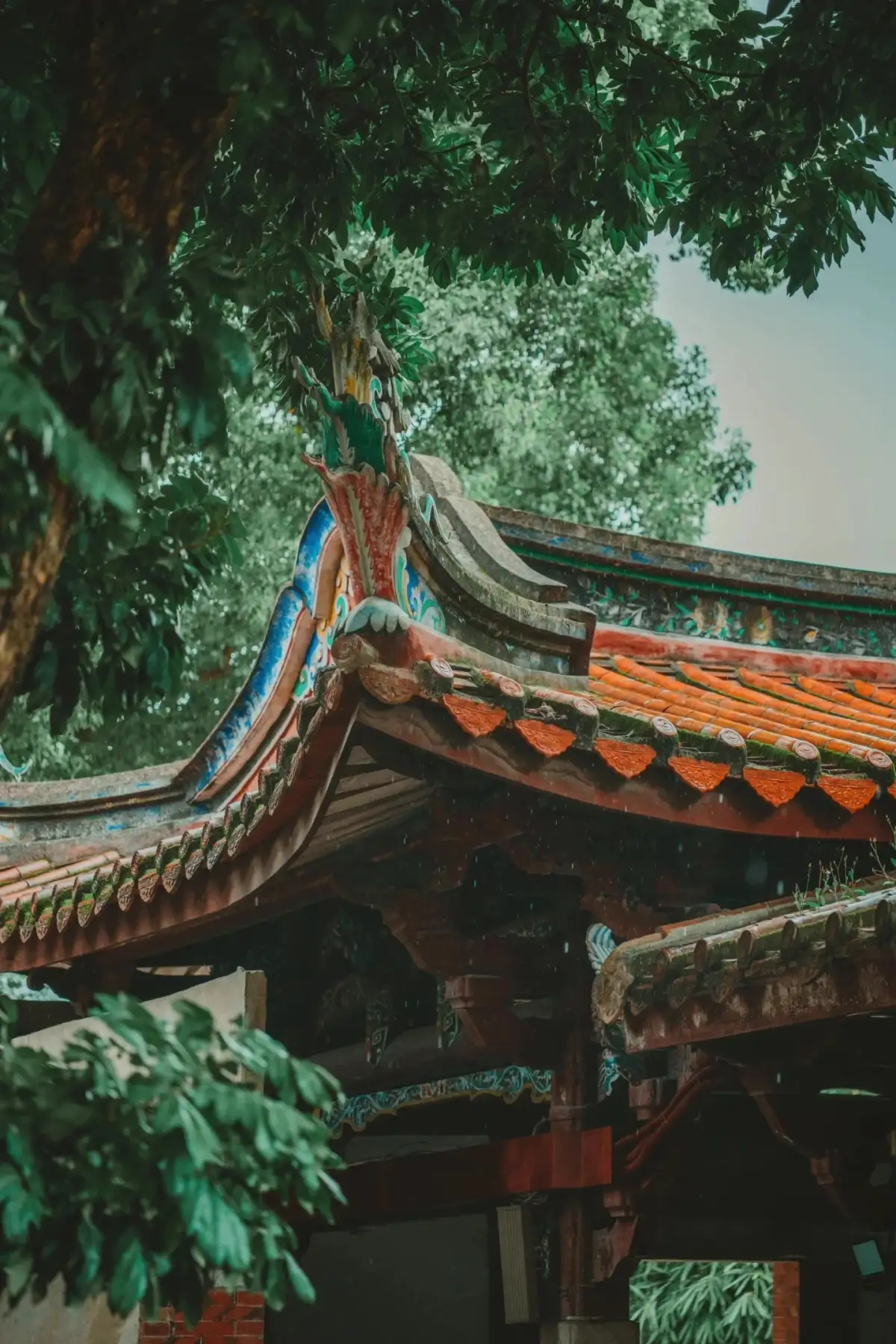
with green foliage in the background, while the orange roof tiles and the ornamentation on the upturned eaves form the foreground. Photo:Lai Pi Yang’s Photography Workshop · Original Post.
小红书作者赖皮羊的摄影小作坊的Notes from Kaiyuan Temple in the RainFocus on details such as wet rock surfaces, eaves, and pagodas. This is a record of the author’s experience observing the mountain in the rain. The observation method extracted from this post is that one can adjust the viewing distance when weather conditions change; information on prices, opening hours, pagoda heights, or optimal shooting times from the original post is not included. Historical background is provided by official sources; specific visit details are subject to on-site announcements on the day of the visit. The remaining arrangements in the main text are methods proposed by the editor.
In light rain, distant towers may appear hazy, while the textures on nearby stone surfaces become more visible. Choose a safe spot to stand, check the condition of the ground beneath your feet, and then decide whether to take the photo. Protect your camera and cell phone according to the device’s specifications, and ensure that your clothing or umbrella does not come into contact with exhibits or decorations. If warnings about lightning or strong winds are issued, adjust your outdoor activities accordingly; eaves and large trees are not automatically safe places to take shelter. Only after confirming that conditions are safe should you consider how to incorporate the rain into your composition.
but is a cell phone the only option? In areas where photography is permitted, using your cell phone to capture the overall scene and exhibit labels can be very helpful. Auto exposure may exaggerate the contrast between light and dark areas; review a sample photo after taking it and adjust settings accordingly—there’s no need to copy someone else’s settings. If photography is prohibited in a certain area, jot down a brief observation of your own. Even in spaces where photography isn’t permitted, you can still create lasting memories through quiet observation; there’s also no need to download photos from original posts to fill in gaps in your own visit that you didn’t witness firsthand.
West Street and the temple—allow for a transition from observation back to daily life.
After your visit, take a moment to rest in the surrounding neighborhood where access is permitted. Reflect on what you’ve just seen before deciding whether to continue to other cultural sites. Viewing within a temple emphasizes quiet and etiquette, while the shops and daily comings and goings on the streets have a different rhythm. Alternating between these experiences helps avoid constantly entering similar spaces on the same day without having time to truly understand them. Check for suitable places to sit nearby, storage options, and specific operating hours when actually planning your route; do not assume what services are available based solely on a door shown in a photo.
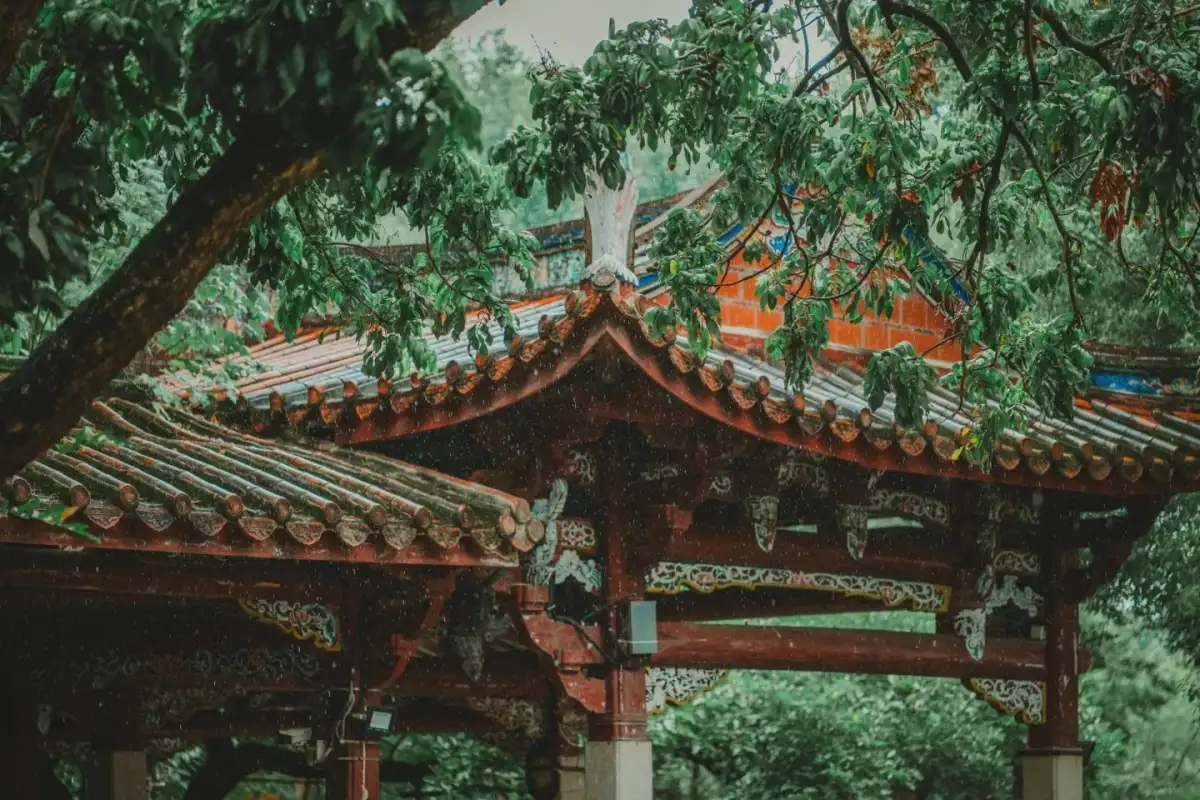
Branches frame the colorful roof ridge and the temple entrance; the courtyard is visible beneath the archway. Photo:Lai Pi Yang’s Photography Workshop · Original Post.
Should you try to visit all of Quanzhou’s religious sites in a single day? If your goal is to gain an initial understanding of one site, prioritize exploring a single theme thoroughly. Different sites have their own traditions and requirements; do not apply the visiting rules you heard at Kaiyuan Temple to mosques, Taoist temples, or other religious spaces. Once you’ve selected your second location, look up its official description and visiting guidelines separately. Comparisons should focus on urban location, architectural form, and historical context, rather than substituting cultural diversity with simplistic aesthetic rankings.
if you’re unfamiliar with Chinese proper nouns, jot down the Chinese and English names of the location, a architectural detail, and a question to look up later in your notes. For families traveling with children, as long as the child can explain “where the pagoda is, where people are gathering, and why we need to keep the aisles clear,” they’ve already made the connection between the architecture and its use. On the return trip, verifying the site that interested you most using official sources will yield more valuable insights than collecting a large number of unverified legends in a single visit. The cultural depth of a temple does not depend on how many facts a visitor memorizes on the spot.
When planning your visit, start by checking this websiteQuanzhou Destination Guidedecide whether you want to explore the history of the harbor, religious architecture, or life in the streets and alleys. Before setting out, verify the specific dates and entrance points, and confirm on-site which areas are open and any photography guidelines. By the end of your visit, you may take away two permitted photographs, a narrative you’ve come to understand, and a deeper appreciation for the people who use this space. The twin towers remain striking, and daily life at their base has found its own place.
Source and Editorial Notes
This article is an original travel interpretation compiled by the Dongxing Travel editorial team based on published materials; it is not a firsthand account by the author. The full text of the original post has not been reproduced; accompanying images are used within the scope of authorization and are credited to the author and source of the original post. This content does not serve as proof of actual travel experiences or services provided by Dongxing Travel.
Lai Pi Yang’s Photography Workshop · The Charm of an Ancient Temple Lies in the Rain | Kaiyuan Temple, Quanzhou · Travel Notes; Verified/Organized on: October 3, 2026.
UNESCO World Heritage Centre · Quanzhou: Emporium of the World in Song-Yuan China · Official documentation; Verified/Updated: October 3, 2026.
UNESCO · Quanzhou | Silk Roads Programme · Official documentation; Verified/Updated: October 3, 2026.