Why Does a Single Cultural Memory Require Three Types of Spaces?
The “Three Confucian Sites” in Qufu are often remembered simply as three landmarks to visit in sequence. However, upon truly engaging with them, one discovers that each poses a distinct question: The Confucius Temple prompts reflection on how reverence is organized through architecture; the Confucius Mansion reveals the connection between family life and public identity; and the Confucius Forest shifts attention to how remembrance endures. By keeping these distinctions in mind during your visit, your journey will become more than just a repetitive cycle of passing through gates, viewing trees, and photographing buildings; instead, it will involve shifting your scale of observation while remaining within the same overarching theme.
The Xiaohongshu post “Qufu Confucius Temple | A Thousand Years of Ritual and Music Return to Donglu, Ten Thousand Generations Pay Homage to the Sage in Formal Attire” focuses on the architectural axis and impressions of ritual and music, while “Confucius Temple’s Xingtan Hall · The ‘Douba’ Ceiling” turns its attention to the details of the roof. These two original posts highlight two distinct perspectives: the holistic and the detailed. This article further explores these perspectives through a functional comparison of the “Three Confucian Sites”; while their basic purposes and heritage contexts are based on UNESCO data, the specific identities of the buildings and artifacts should still be confirmed through on-site explanations.
Confucius Temple: Observing How Reverence Transforms into Spatial Order
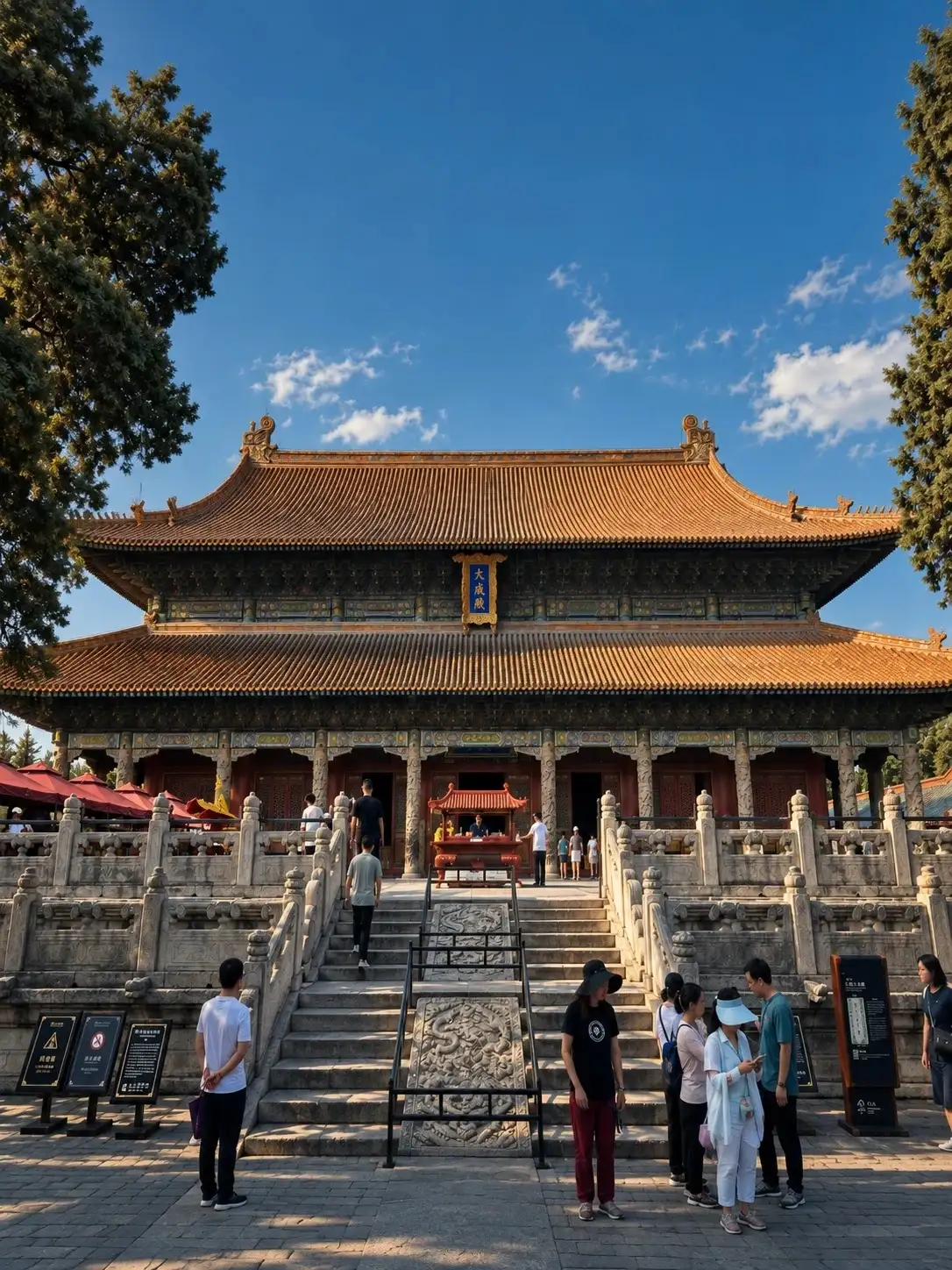
When exploring the Confucius Temple, one might begin by examining the sequence of movement. What distances and hierarchical relationships exist between the entrance and the key structures? After passing through the gates and courtyards, how does the line of sight establish a new focal point? How does the same building appear differently when viewed from the front versus the side? These questions do not require prior familiarity with all the architectural terms, yet they help visitors understand how a ceremonial space guides people to adjust their pace and focus—rather than merely judging whether the architecture is magnificent.
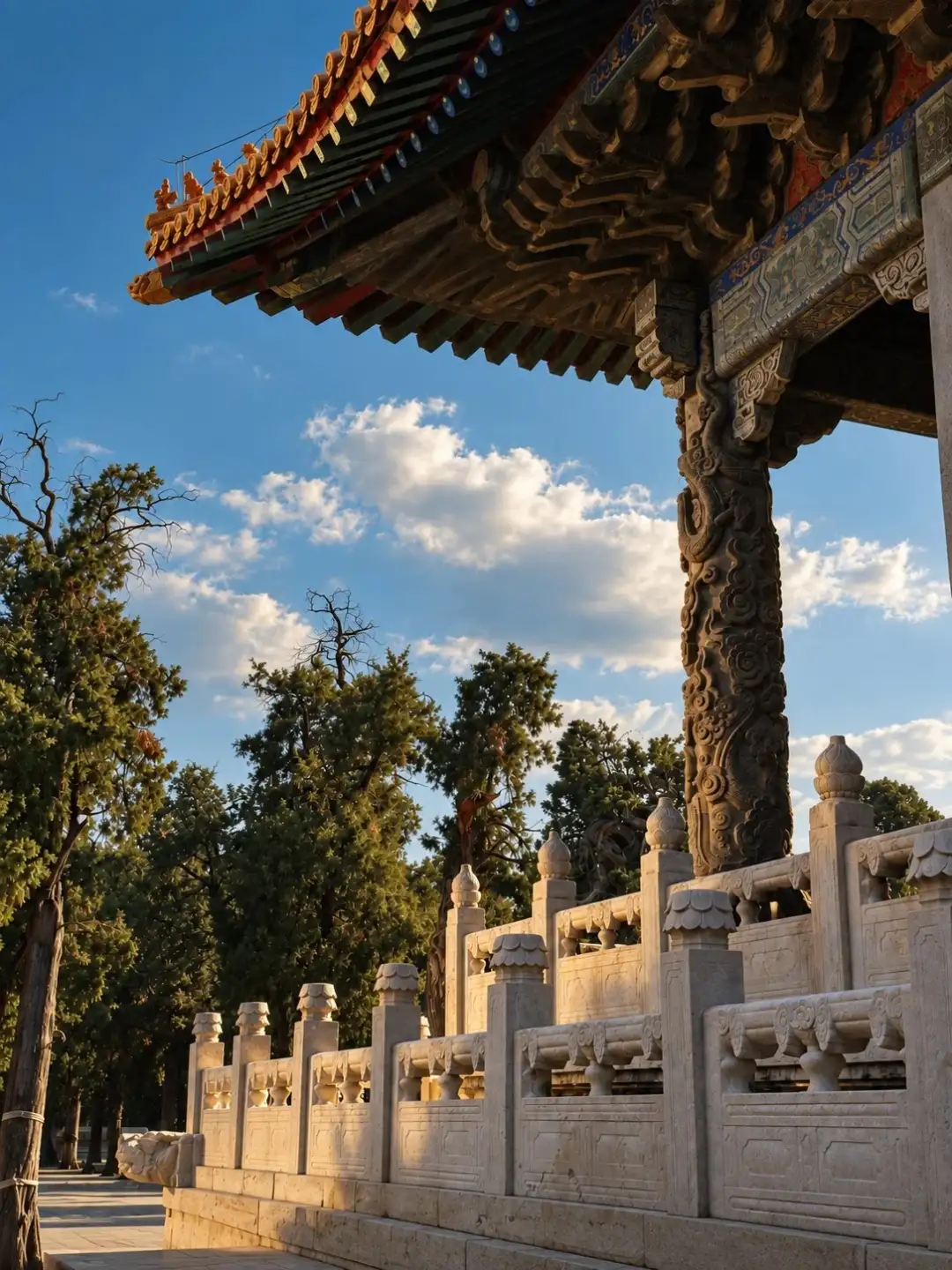
Carved dragon stone pillars, eaves, and stone balustrades at the Confucius Temple in Qufu. Photo:Silver Salt and Light · Original Post.
If the entire viewing experience were condensed into a single photograph of the Main Hall, the spatial build-up leading up to it would easily vanish. One can consciously recall the view through a particular archway, a relatively open courtyard, and the shift in perspective as one finally approaches the central structure. These elements can be woven into a continuous process, transforming “reverence” from an abstract term on an information plaque into a tangible experience. The significance of ceremonial architecture can also be gradually understood through how the body enters the space and discovers its center.
Roofs and painted details are best observed after taking in the overall layout. First, understand your location; then, look up at the beams, colors, and patterns—the details will then make sense within their context. The original post’s interest in the coffered ceilings can be transformed into an on-site question: From an open vantage point suitable for viewing, how do the decorations draw the eye? Specific craftsmanship and dates of restoration should be interpreted based on on-site evidence; one should not assume, based solely on a single ornate photograph, that all decorations date from the same historical period.
The Confucius Mansion: From Ritual to Family Life and Documentation
UNESCO’s description links the Confucius Mansion to the daily life and historical records of the Kong family. This information offers an alternative perspective for visitors: the architecture serves not only to express cultural status but also to accommodate daily activities and administrative functions. While viewing the site, pay attention to how different spaces are divided by function and how the scales of the formal and the everyday vary. Compared to the Confucius Temple, the focus here shifts from “how to express respect” to “how such a family organized its daily life and affairs.”
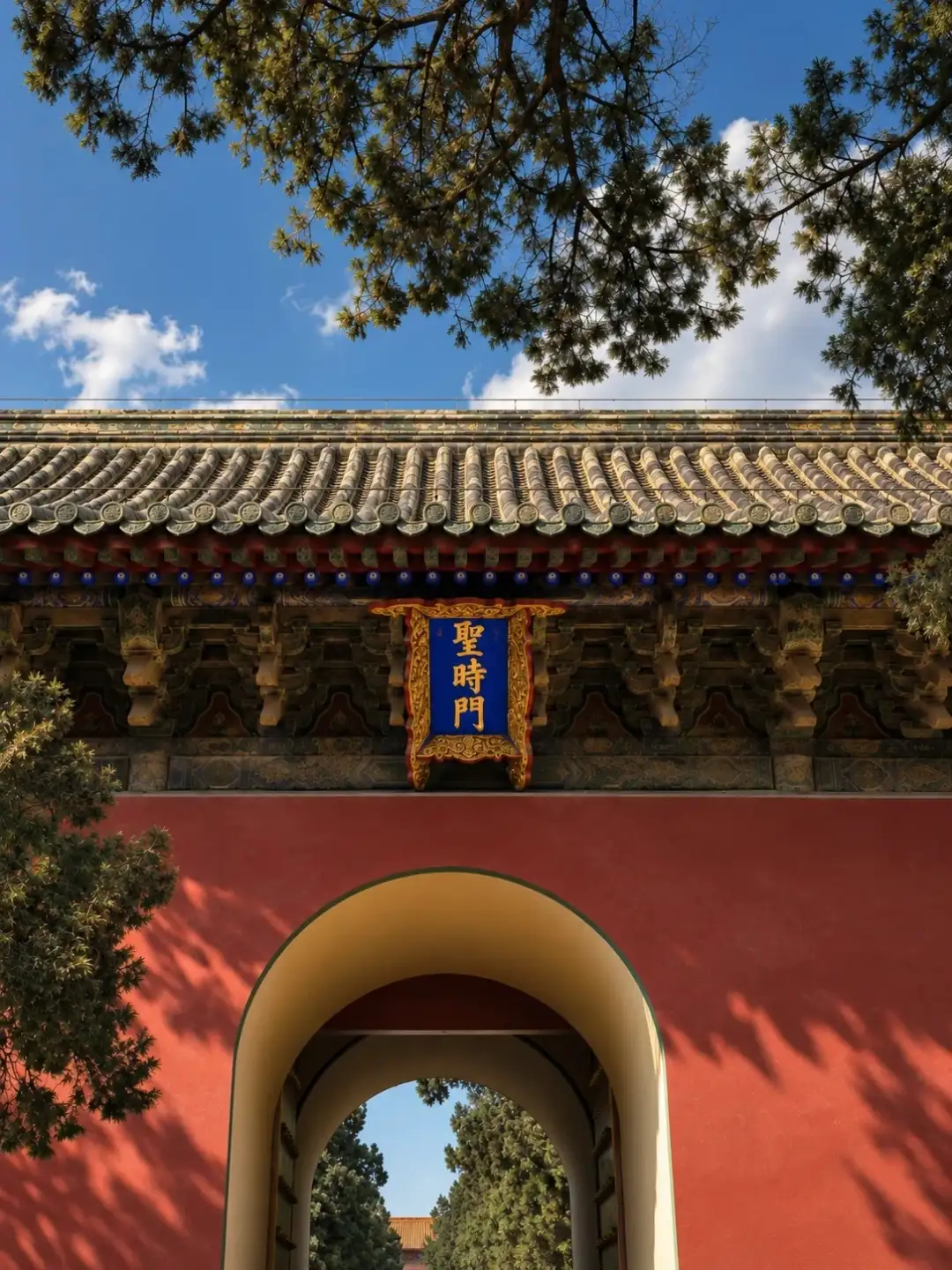
The plaque on the Shengshi Gate and the arched gateway of the Confucius Temple. Photo:Silver Salt and Light · Original Post.
If documents or archival materials appear in an exhibition, one might first consider what questions they address: Do they record a specific matter, confirm a particular relationship, or preserve family information? The value of a document lies not only in the age of the paper but also in how it brings us closer to specific administrative practices. When originals are not on display, explanatory texts, reproductions, and digital content can also aid understanding; distinguishing between different types of exhibits is more meaningful than treating all paper materials as precious originals.
This section is particularly well-suited for discussion with companions interested in social history. How does a family with significant cultural standing organize its daily life within its residence? Which spaces serve public functions, and which are more closely tied to daily life? You can select one area to explore based on the on-site explanations, rather than inventing imaginary stories for every room. Actual functions and visible layouts can support the discussion, while unconfirmed details of daily life can be left as open questions—there is no need to rush to answer on behalf of historical figures.
During family visits, children can also be encouraged to compare the impressions of the two spaces: What in the Confucius Temple evokes a sense of solemnity, and what in the Confucius Mansion makes daily life feel tangible? If they first notice the placement of gates, tables, chairs, or windows, start with those elements. Grounding cultural understanding in visible features helps avoid lengthy adult-led explanations. Once they raise new questions, return to the figures and institutions described on the exhibit labels; this will create a genuine back-and-forth in their observation.
Confucius Forest: Adjusting the Pace of Viewing in a Commemorative Space
The theme of the Confucius Forest differs from the previous two sites. UNESCO materials describe it as the burial ground of Confucius and his descendants. This implies that a visit should first acknowledge the site’s nature as a memorial space, followed by considerations of landscape and photography. The relationship formed by the trees, graves, and walking paths can prompt reflections on time and continuity; this setting is also more conducive to slowing down the pace of conversation and photography, leaving room for the act of remembrance itself.
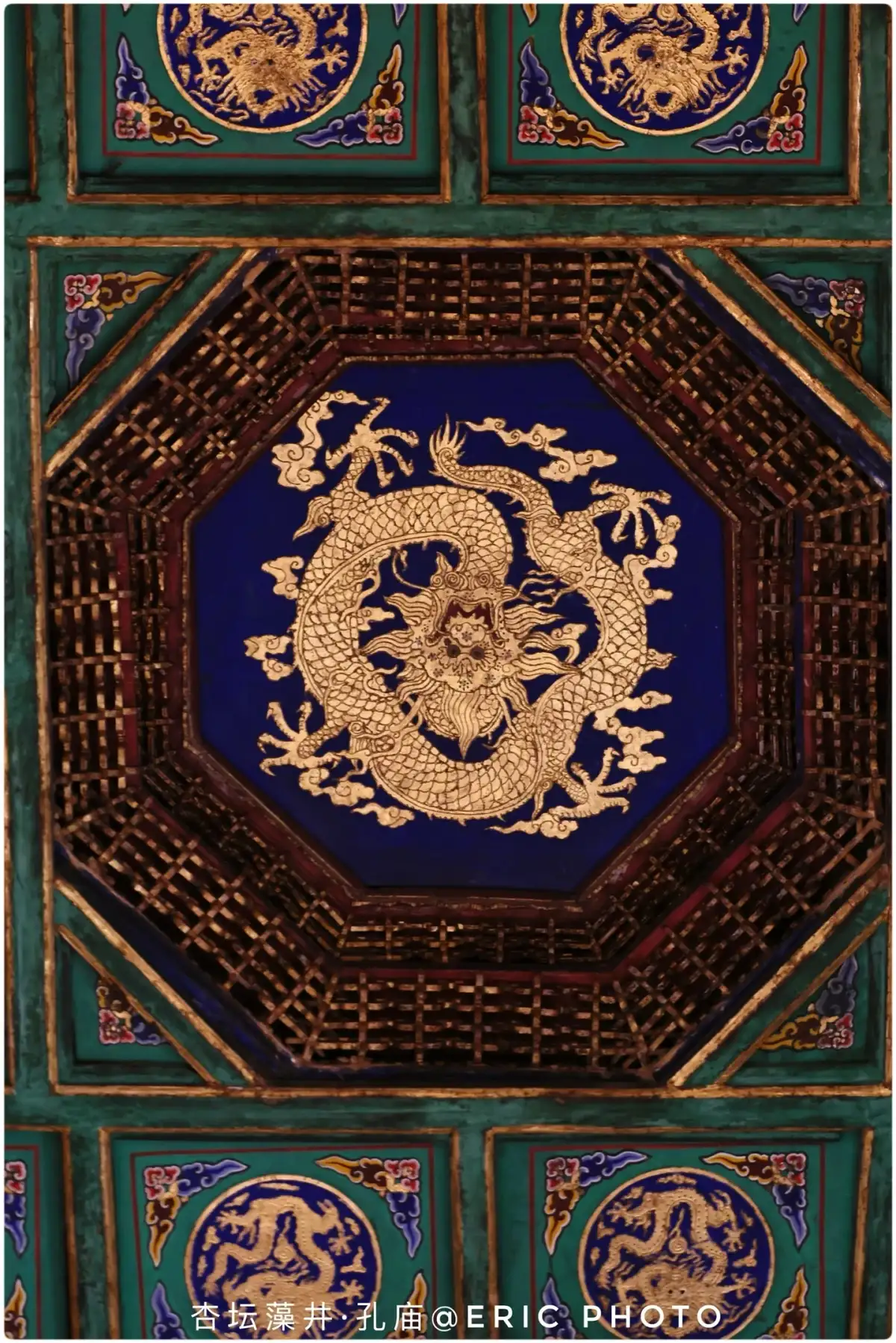
The golden dragon patterns and surrounding square grids in the octagonal coffered ceiling of the Xingtan Hall at the Confucius Temple. Photo:Orange Grass Hall · Original Post.
“Family Memory,” if treated merely as a concept, can easily seem distant. On-site, it can be narrowed down to concrete questions: How do markers help identify the objects of commemoration? How do trees and pathways alter the sense of lingering? At what points do viewers choose to pause? These questions bring the long continuity of history down to a human scale. There is no need to create a sense of awe by citing unverified generational counts, nor is it necessary to portray the cemetery as a mysterious tourist attraction; the continuity of remembrance is, in itself, worthy of close examination.
When photographing, you may focus on the relationship between trees and pathways, or document the surroundings of commemorative markers in permitted areas. If people are present in the frame, maintain a distance and avoid taking close-up shots of their faces. Different family members may have varying experiences of the cemetery space; some may wish to continue exploring, while others may prefer a brief stop. Explaining the nature of the site in advance helps your companions engage in their own way, rather than being forced to conform to a uniform mood once inside.
Linking the Three Sites Through a Common Question
To make the entire tour more coherent, one might choose “How Culture Is Preserved” as the theme. At the Confucius Temple, focus on architecture and ritual; at the Confucius Mansion, on daily life, administration, and documentation; and at the Confucius Forest, on commemoration and continuity. These three perspectives are interconnected but not interchangeable. This approach enables visitors to clearly articulate, upon completion of the tour, what each site uniquely offers—rather than merely recalling that the courtyards are vast, the trees are numerous, and the history is ancient.
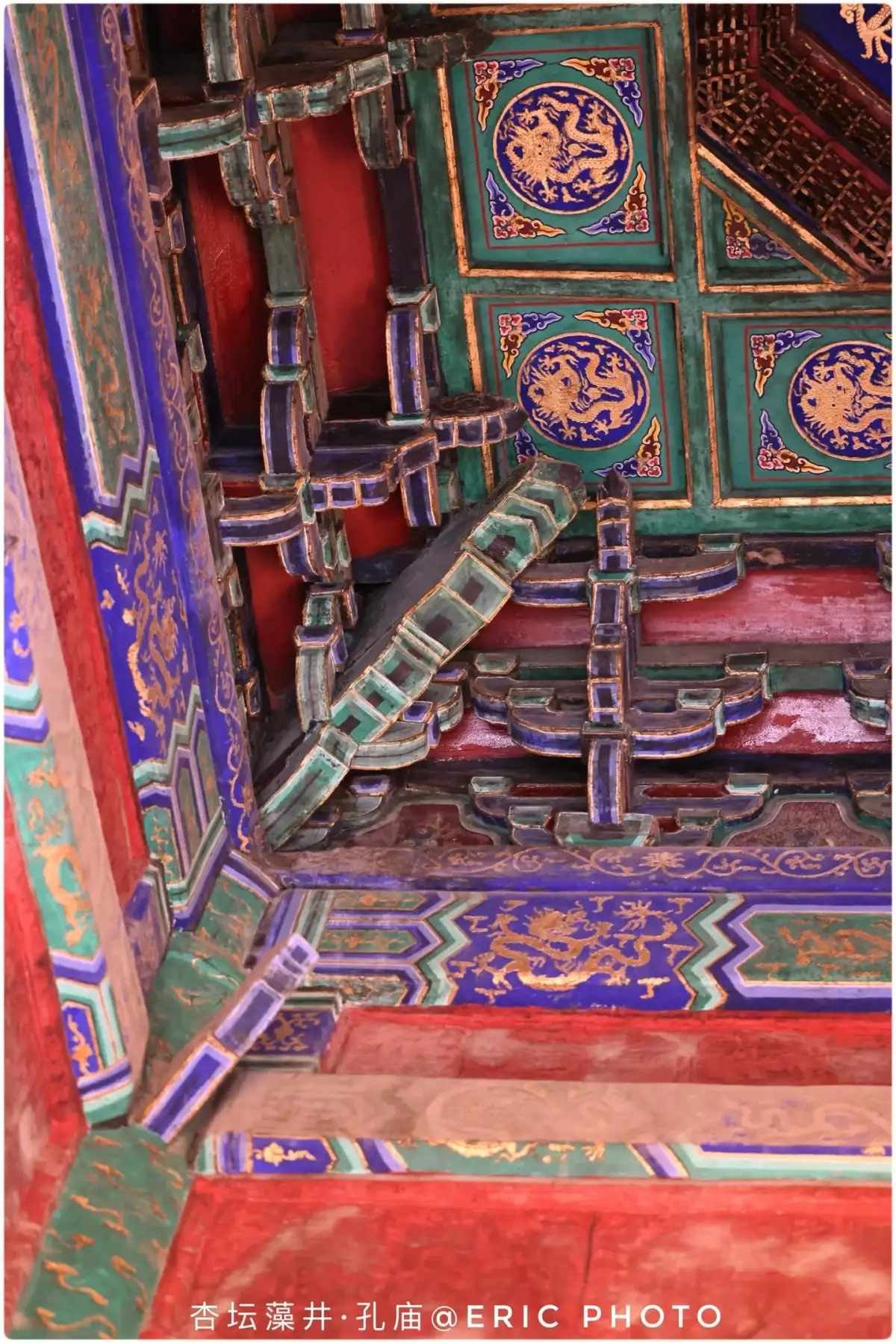
the painted beam framework, bracket sets, and the edge of the coffered ceiling above the Xingtan. Image:Orange Grass Hall · Original Post.
Architecture enthusiasts may focus on the spatial differences between the Confucius Temple and the Confucius Mansion; those interested in family history may pay closer attention to the documentary clues in the Confucius Mansion and the commemorative connections within the Confucius Forest; and families with children may select a few gates, courtyards, and landmarks for comparison. The order of the tour should still be adapted to actual opening hours and transportation arrangements; the theme itself does not need to be based on a fixed duration. Choosing to linger longer at a particular spot reflects personal interest more than evenly distributing time does.
Qufu can also be discussed alongside Mount Tai as part of the same cultural tour of Shandong. The former allows visitors to understand cultural continuity through rituals, daily life, and commemoration, while the latter situates architecture and written texts within a mountainous landscape. This siteIntroduction to Mount Tai DestinationsThis can serve as a reference point for regional planning; specific routes should be confirmed with consultants. A meaningful connection between these two sites lies in the evolution of the viewing experience, rather than merely being a convenient stop along a map-based route.
Upon leaving the “Three Confucian Sites,” try summarizing your experience in three sentences: What spatial order did the Confucius Temple draw my attention to? What aspects of daily life or historical documentation did the Confucius Mansion reveal to me? How did the Confucius Forest help me understand the concept of commemoration? Even if you remember only a few details, as long as each of these three sentences conveys distinct insights, your journey has already established its own narrative. The reason cultural heritage is worth revisiting is precisely because it can accommodate the questions of different people, without requiring every visitor to take away the same answer.
Sources and Editorial Notes
This article is an original travel analysis compiled by the Dongxing Travel editorial team based on listed heritage materials; it is not a firsthand account by the author. The full text of the original post has not been reproduced; accompanying images are used within the scope of authorization and are credited to the author and the source of the original post. They do not serve as proof of actual visits or services provided to Dongxing Travel clients.
Silver Salt and Light · Qufu Confucius Temple | A Thousand Years of Ritual and Music Return to Donglu; Ten Thousand Generations in Formal Attire Pay Homage to the “Sage King” · Travel Notes; Verified/Organized on: October 3, 2026.
Orange Grass Hall · Xingtan Hall at the Confucius Temple · Douba Ceiling · Travel Notes; Verified/Organized on: October 3, 2026.
UNESCO World Heritage Centre · Temple and Cemetery of Confucius and the Kong Family Mansion in Qufu · Official sources; Verified/Compiled on: October 3, 2026.