Even with the same three destinations—Shanghai, Suzhou, and Hangzhou—some people plan to visit all three cities in three days, while others prefer to stay at only two hotels over the course of a week. The differences often lie in the moments that matter most during a trip: solo travelers might want to find a breakfast spot on their own in an unfamiliar neighborhood; families hope to return to their rooms for an afternoon rest; and photographers are willing to wait an extra day for the perfect light over the same stretch of water. Once you establish a rhythm for your trip, Jiangnan’s transportation network will work in your favor.
小红书作者Vv.分享了从上海虹桥出发、经过杭州和苏州再回上海的铁路经历。这条真实路线提示了一个有用的问题:城市可以通过铁路相连,酒店和景点却仍有各自的位置。下文把个人笔记当作需求线索,铁路身份核验及入境服务依据官方资料,路线天数与人群比较则是编辑提出的规划建议。
Treat the first city as a well-prepared starting point
If Shanghai is your destination for an international flight, the value of your first stop goes beyond just a photo of the Bund. Here, you can first set up your phone connection, access your booking accounts, and make your first daily payment, while gauging how well you adapt to the city’s public transportation. Scheduling your preparations and a short walk on the same day makes it easier to spot potential issues—such as errors in your passport name, whether your travel companions can receive messages independently, or whether you need to contact your bank regarding your debit card—than if you were to immediately settle into an out-of-town accommodation upon arrival.
Pudong Airport, Hongqiao Airport, and Shanghai Hongqiao Railway Station are three distinct departure points. The airport code on your flight itinerary and the station name on your train ticket should be considered together. Even if both include the word “Hongqiao,” you’ll still need to travel from the terminal to the waiting area; arriving at Pudong also involves cross-city ground transportation. The date for your first rail segment depends on your flight arrival time, immigration processing, baggage claim, and your level of fatigue—it should not be determined solely by the distance on a map.
The introduction to Pudong’s arrival services, published by the Shanghai Municipal Government in 2026, lists services such as communication, payment, and transportation assistance, indicating that travelers can seek practical help at the airport. For first-time visitors to mainland China whose mobile service has not yet stabilized, the service counters serve as the first point of contact for resolving specific issues. Saving the hotel’s Chinese address, booking details, and contact information before deciding whether to arrange additional services will make your inquiries more targeted.
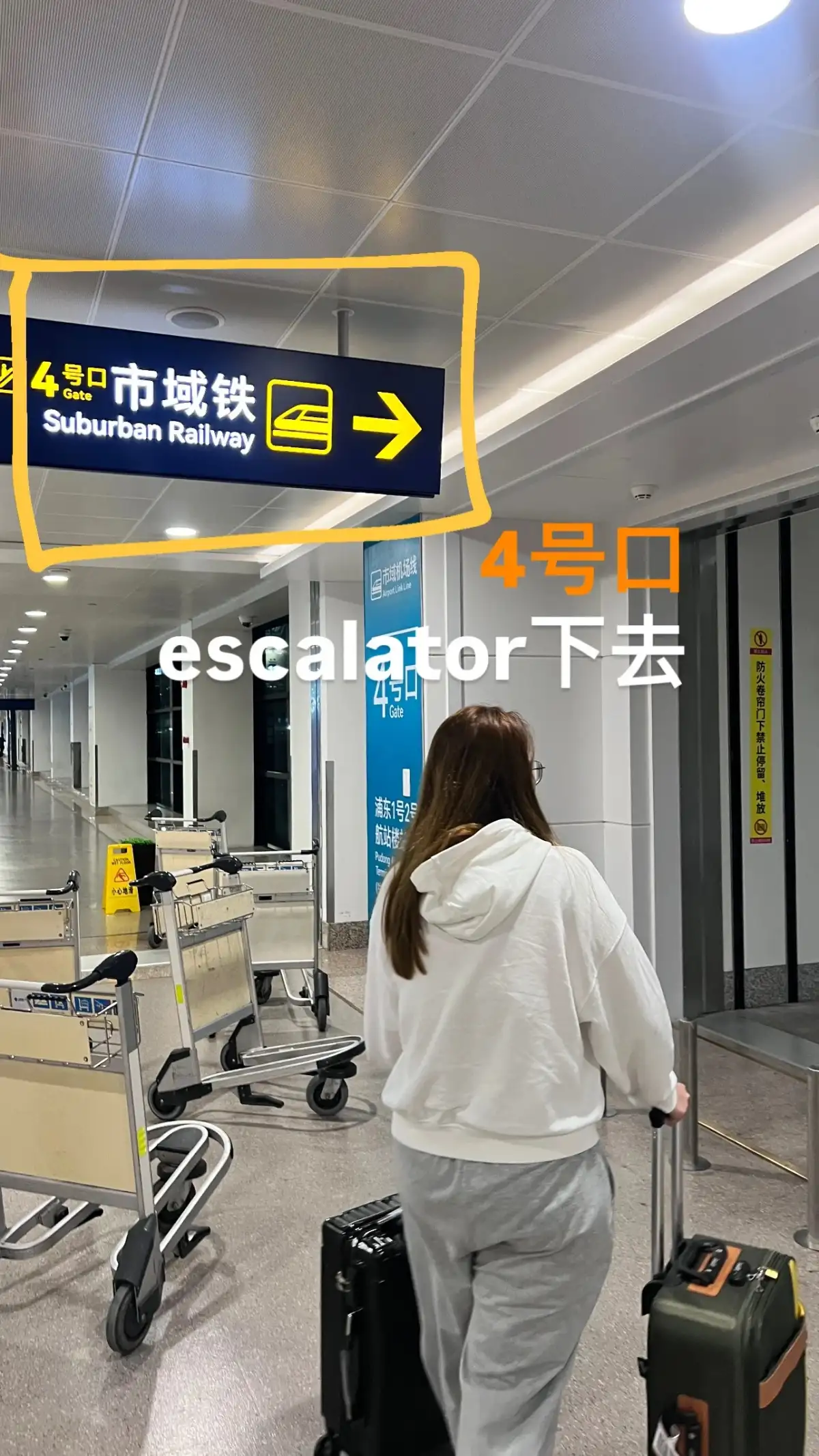
Passengers carrying luggage stand beneath the “Suburban Rail” direction sign, with luggage carts visible nearby. Photo:Vv. · Original Post.
When choosing accommodation in Shanghai, base your location on the most frequently repeated route of the day. If you’re primarily exploring downtown streets and museums, accessibility to these destinations from your lodging will often have a greater impact on your experience than the distance to the high-speed rail station. If you’re only staying one night before continuing your trip the next day, rail connections become more important. Planning your entire itinerary around your final departure from the city will result in constant back-and-forth travel during the first few days; choosing accommodations solely based on the view from the window in a photo may also increase the amount of luggage-hauling you’ll have to do.
Solo Travelers: Two Bases, Three City Perspectives
Travelers who are independent and willing to handle their own transportation can consider using Shanghai and Hangzhou as their main bases, dedicating a day to exploring Suzhou in depth or staying there for a single night based on personal interest. The key to this approach is to minimize the number of times you have to pack and unpack while still experiencing both the Jiangnan gardens and lakeside settings. To decide whether to spend a night in Suzhou, ask yourself this specific question: Do you want to experience the nighttime atmosphere of the streets and alleys beyond the gardens during the day, or would you rather focus on visiting just one garden and a stretch of canal-side streets?
If the latter is more important, round-trip arrangements may be more suitable; if the former is crucial, the value of staying overnight increases. Exploring gardens and neighborhoods isn’t just about checking off names one by one—especially for first-time visitors encountering lattice windows, winding corridors, and borrowed scenery. Setting aside time to stop and read an information plaque will be more helpful than rushing through several gardens in a row. Focusing on just one specific cultural topic per day can also make the physical effort of traveling between cities more worthwhile.
Solo travelers should also factor their communication independence into their itinerary. A smartphone that automatically connects to a data network may not necessarily provide a local mainland China phone number; similarly, a payment app linked to an overseas bank card may not support all money transfer functions. Common travel tasks can actually be handled separately: checking maps requires data, making phone calls requires the appropriate service, paying at merchants requires a valid payment method, and purchasing train tickets also involves verifying the passenger’s identity.
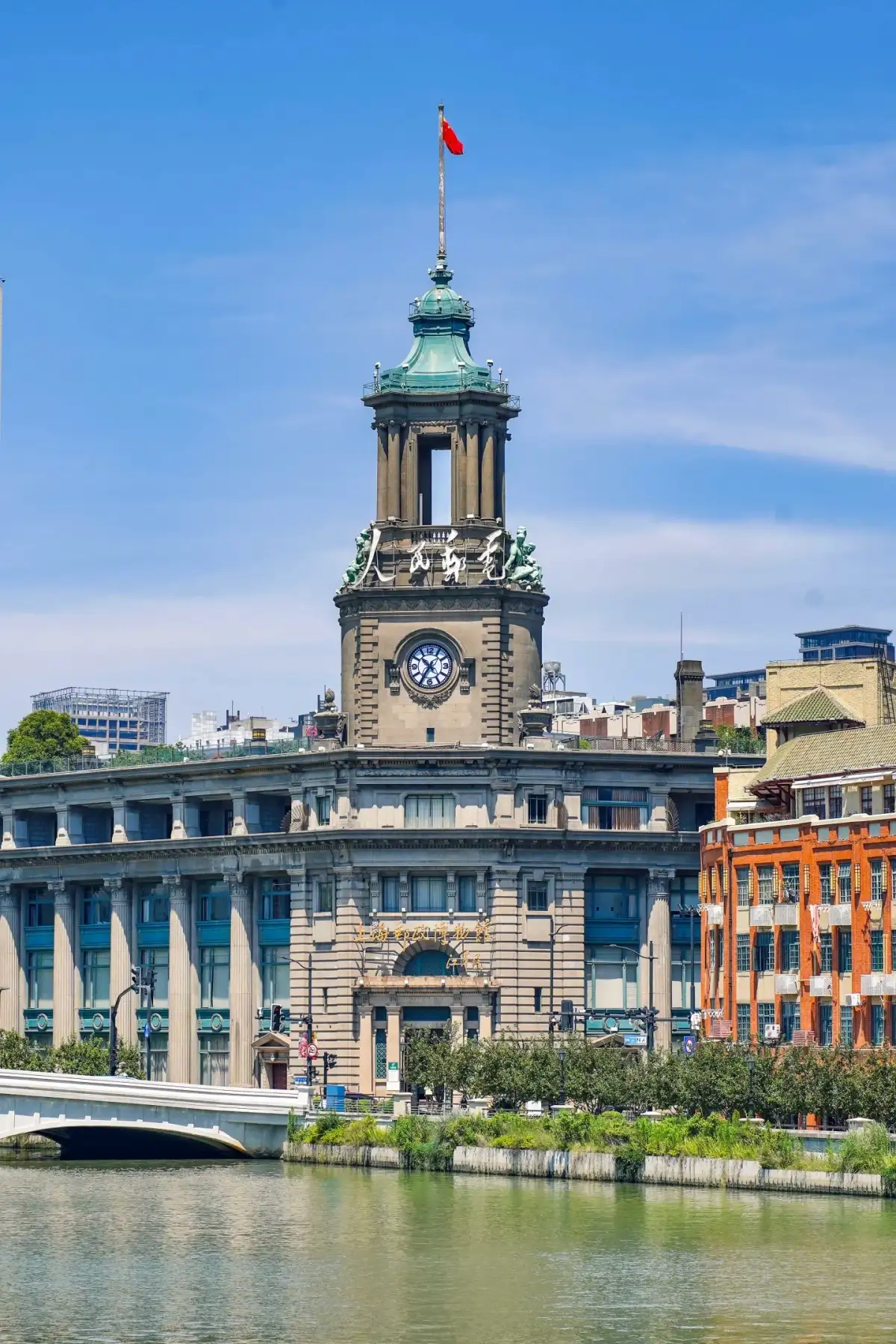
The Shanghai Post Office Building and Clock Tower across the Suzhou River. Photo:Muzi Li 📸 · Original Post.
Writing down all these details on a single page before departure makes it easier to check for omissions than installing numerous apps. Start by making small, everyday purchases to familiarize yourself with the checkout process, and keep a physical bank card and a reasonable amount of RMB cash on hand as a backup. Shanghai’s official payment guide covers bank cards, cash, and mobile payment channels. These should be viewed as options for different scenarios; a single successful scan does not mean you’ll only need one smartphone for the entire trip.
Family: Give your afternoon rest a place to call home
When traveling with children or elderly family members, the key adjustment to the itinerary is the location of rest stops along the way. A solo traveler can stop at a café for half an hour and continue on, but a family may need a quiet room, time for a nap, or a chance to reorganize their belongings. If staying in another city, returning to the room would involve a round-trip train journey. Therefore, the decision of whether a family should spend the night in Suzhou should be based more on the intensity of daily activities and rest needs, rather than on whether the travel time between cities is short.
One suitable six- to seven-day itinerary to consider is spending two to three nights in Shanghai first, followed by two to three nights in either Suzhou or Hangzhou, with the other city left as an option. The number of days listed here is merely a planning example and is not tied to specific train schedules or attraction reservations. If your children enjoy boats, waterfronts, and open spaces, the lakeside areas of Hangzhou may fit more easily into your family’s rhythm; if your elders are more interested in architecture and traditional gardens, you can extend your stay in Suzhou.
Would you miss out on much by choosing only two cities? That depends on whether what’s being left out is just a name or an irreplaceable interest. Shanghai already offers a modern metropolis, its streets, and large public cultural venues; Suzhou draws attention to gardens and courtyard-scale spaces; Hangzhou brings lakes, mountains, and the city together in a walkable environment. There’s no need to schedule half a day for every type of space. Letting your travel companions linger a little longer in the places they enjoy is also part of understanding a city.
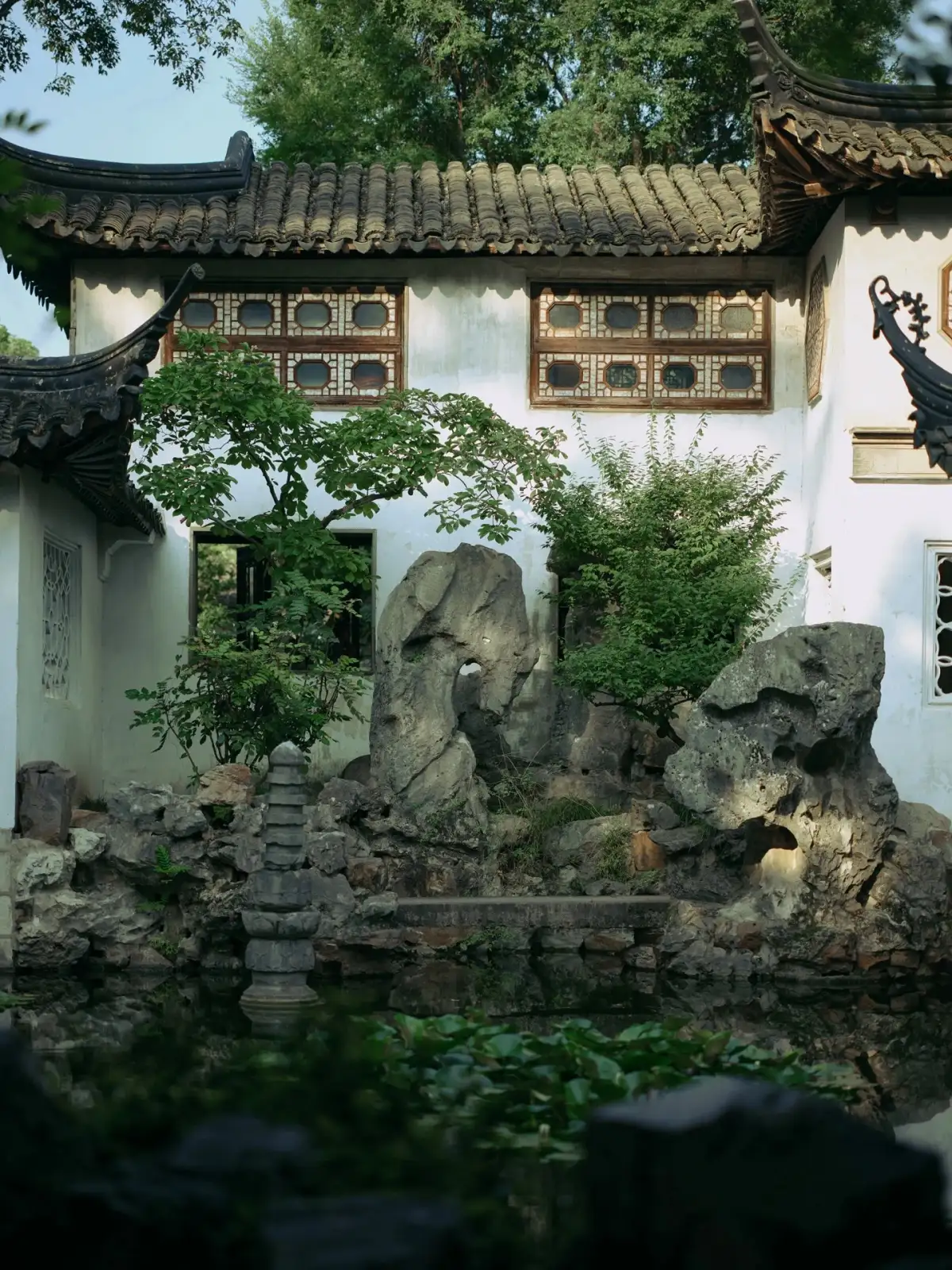
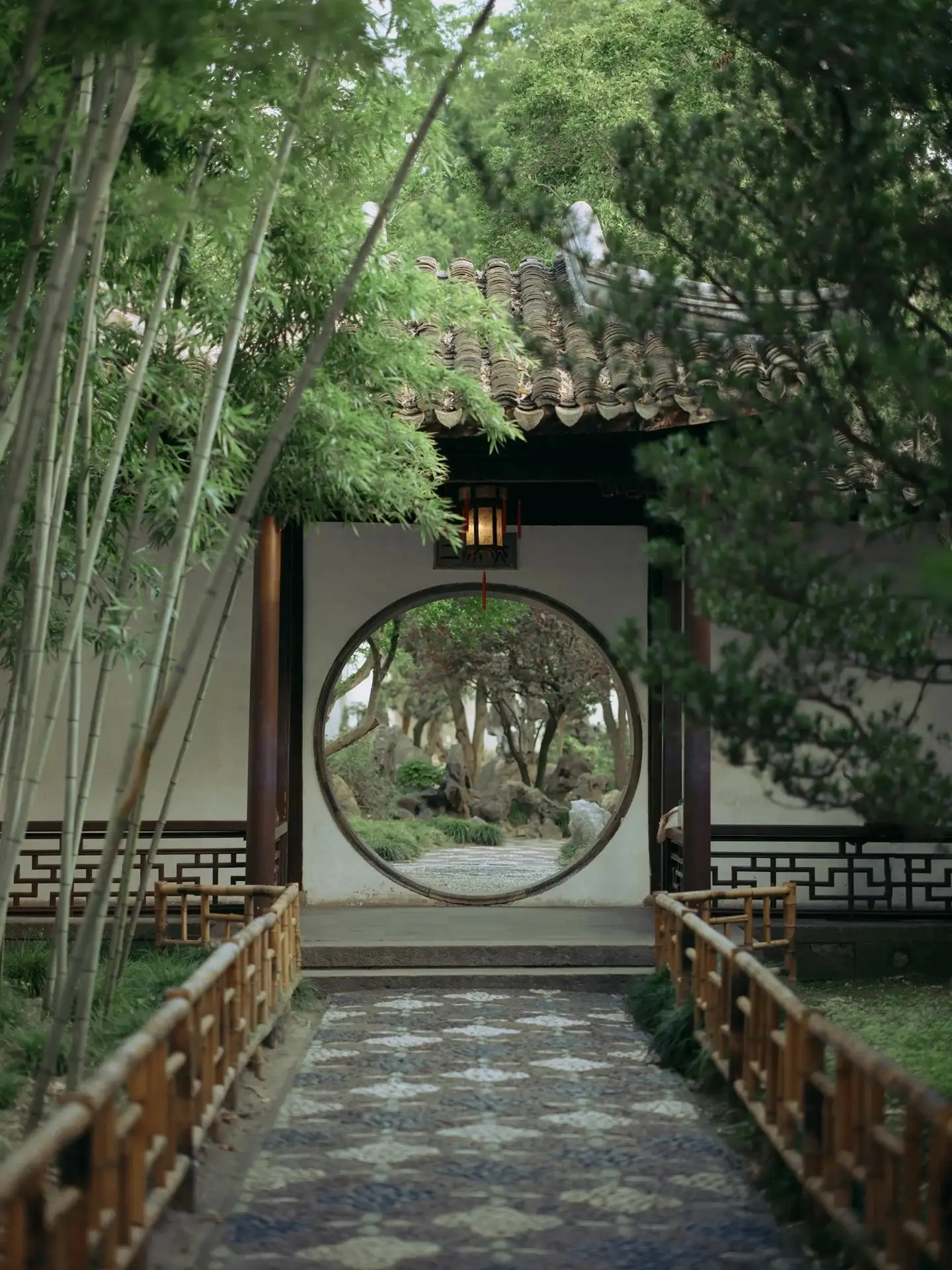
A rockery by a garden pond and a white-walled building with decorative windows. Photo:Gugu · Original Post.
A family travel day can be structured around a specific activity: pack in the morning, travel according to your confirmed train reservations, and take only a short walk around the new hotel upon arrival. This ensures that afternoon fatigue won’t conflict with activities requiring punctual attendance. It’s best for the adults caring for the children to each have a copy of the reservation and the Chinese address, so that while one handles inquiries, the other can still find the destination. The division of labor depends on family habits, while sharing information can reduce the need for last-minute explanations.
Culture and Photography: Giving a City a Second Look
For those who love photography, architecture, or local culture, it’s all too easy to turn a Jiangnan itinerary into a collection of picturesque spots. Suzhou’s gardens, Hangzhou’s lakes and mountains, the bridges of the water towns, and Shanghai’s streets certainly offer distinct scenes; however, switching cities each time consumes energy that would be better spent on packing, traveling, checking in, and reacquainting yourself with the surroundings. For a photography trip, it’s best to first select two themes you’re willing to explore repeatedly, and then decide whether the third city truly adds something new to your experience.
For example, take Shanghai’s streets and Suzhou’s gardens as the main themes: focus on the scale of street corners and building facades in the former, and observe the relationships between gateways, walls, and courtyards in the latter; or juxtapose Shanghai’s waterfront with Hangzhou’s lakeshore to compare how high-density urban skylines and lake-and-mountain backdrops influence human movement. These are the directions for photographic research. While light and weather will still vary, a second observation of the same location often shifts the focus of composition from simply finding a vantage point to understanding the space itself.
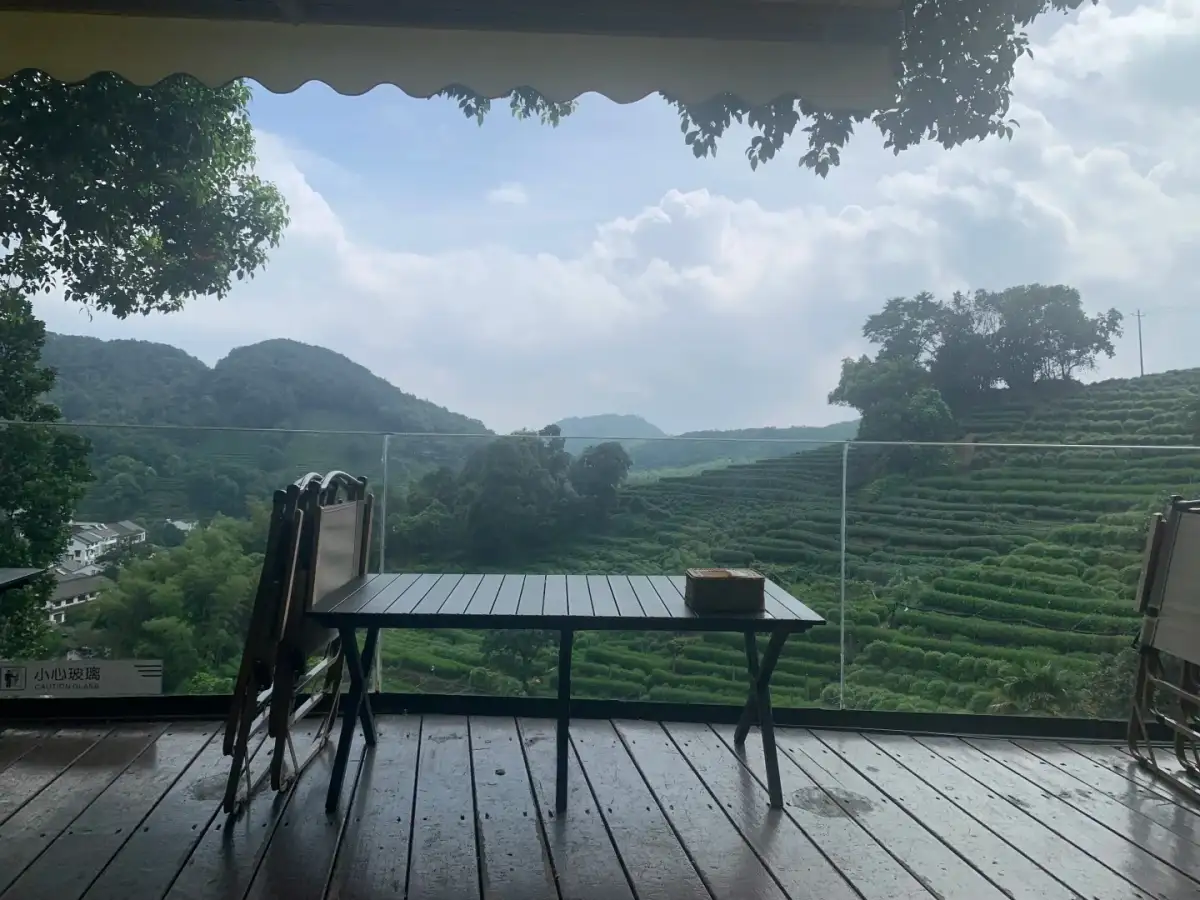
The tables and chairs under the canopy face terraced tea fields, with rolling hills in the distance... Photo:Yi Yun · Original Post.
When planning a visit to a water town, first consider its role in your itinerary. If your goal is to stroll along the riverbanks, admire the evening lights, and stay overnight, you’ll need to allow time for both arrival and departure; if you’re simply looking to snap a few photos of bridges and rooftops, the canal districts within the city itself are also worth considering. Water towns usually require ground transportation after the train ride; just because a place is shown on the map as being near a city doesn’t mean you’ll arrive right at your accommodation’s doorstep when you get off the high-speed train.
The most useful trade-offs during a trip may arise when it rains. The corridors and walls of gardens can alter how you experience the scenery on a rainy day, while lakeshores may require adjusting the walking distance. Planning an indoor or short-distance alternative in advance that can be completed within the same city allows you to stay on track with the day’s main cultural itinerary. The costs of making a last-minute trip to another city to capture a weather-dependent photo—including transportation tickets, luggage transfers, and the time your travel companions must wait—should all be weighed together.
There’s still a journey to be made between the train station and the hotel
Passengers with foreign passports using the rail ticketing service should pay close attention to the passenger’s name, ID number, and verification status. The official railway website provides instructions for verifying foreign passports; handling this online and, if necessary, consulting at a service counter are practical steps best completed before departure. When purchasing tickets for a group of travelers, each person is still considered a separate passenger; the payment method used by the purchaser and the identification information of the other passengers serve different purposes.
When checking routes, you can map out four points: the departure hotel, the train station, the arrival train station, and the new hotel. Even if the train segment between the two cities runs smoothly, the connections at either end may determine whether the morning goes smoothly. When choosing the arrival station, consider your final accommodation and transportation options; when choosing the departure station, consider your luggage and your travel companions’ ability to walk. It’s a good idea to keep a screenshot of your booking for reference, and you should keep the documents actually required for station entry in an easily accessible place.

A rowboat on the West Lake waterways with a boatman in the distance. Photo:"From Tonight Onward" · Original Post.
You should also record the full name and Chinese address of your accommodation, especially when a single brand has multiple locations in different neighborhoods. The descriptions of cities and business districts on booking pages are quite broad; finding your way upon arrival depends on specific entry points. Confirming the room configuration for multiple guests, breakfast arrangements, and luggage storage information before arrival can make your travel day much smoother. These details, along with whether foreign passports can be checked in according to standard procedures, are best clarified with the hotel during the booking stage.
to verify on a single sheet of paper whether the itinerary is appropriate.
Finally, summarize each day in one sentence: Where did you wake up today? Where are you heading with all your luggage? What do you most want to observe? Where will you rest tonight? If the sentences for several consecutive days start with “train station” and “hotel,” it means this itinerary needs fewer transfers. If many days list only attraction names without mentioning places to eat or rest, your family may struggle physically. If the photography theme changes daily but there’s no chance to revisit locations, in-depth exploration may be sacrificed for the sake of moving around.
The advantage of starting in Shanghai and connecting to Jiangnan is that you can fine-tune the pace of your trip based on how things go. Solo travelers gain autonomy once they’ve prepared their tools; families trade a stable residence for a space to rest; and culture and photography enthusiasts trade fewer bases for repeated observations. The final itineraries may vary greatly, but they all rely on the same criteria: what is worth stopping for along this stretch of the journey, whether it suits your travel companions, and whether there will still be time to experience the city upon arrival.
Source and Editorial Notes
This article is an original travel analysis compiled by the Dongxing Travel editorial team based on the cited materials; it is not a firsthand account by the author. The full text of the original post has not been reproduced; accompanying images are used within the scope of authorization and are credited to the author and source of the original post. This content does not serve as proof of actual travel experiences or services provided by Dongxing Travel.
Vv. · 🇲🇾🇨🇳 Beginner’s Guide to Riding China’s High-Speed Rail for the First Time · Travel Notes; Verified/Compiled on: October 3, 2026.
Crispy Salmon🍣 · 🇲🇾🇨🇳 Traveling in Shanghai, China [Useful Apps] Save This! · Travel Notes; Verified/Compiled on: October 3, 2026.
China Railway 12306 · Foreign Passport Verification Tips · Official Information; Verified/Compiled on: October 3, 2026.
Shanghai Municipal People’s Government · Pudong Airport Upgrades Services for International Travelers · Official Information; Verified/Compiled on: October 3, 2026.
Shanghai Municipal People’s Government · Payment Methods for Foreigners · Official Information; Verified/Compiled on: October 3, 2026.
Gu Gu · When Liu Yuan Garden Is Completely Empty · Image Source; This article does not cite this post as a basis for current policies.
Muzi Li 📸 · Along the Suzhou River | A Visit to the Centennial Shanghai Postal Museum · Image Source; This article does not cite this post as a basis for current policies.
Yi Yun · Longjing Village · Image Source; This article does not cite this post as a basis for current policies.
Dew Turns White Tonight · Should You Take a Hand-Paddled Boat or a Rowing Boat on West Lake? Let’s Settle This Once and for All · Image Source; This article does not cite this post as a basis for current policies.