—a café, a craft shop, and a row of old houses—can collectively form a bustling neighborhood in travel photos. But when these spaces originally belonged to a fishing port industry, the emergence of shops also signifies a shift in ways of working. When visiting Shapowei in Xiamen, it’s worth asking not only where to take photos of the Twin Towers, but also: What did people here do for a living in the past? Which spaces still retain clues to their original functions, and which have taken on new uses?
福建省政府二〇二六年的沙坡尾介绍,记录了原水产品加工厂部分厂区向艺术西区转化、海洋文化展示厅和活态展示馆建立的过程。小红书作者美式不加冰关注老街与高楼同框,三月暮雪则记录了从艺术西区经过避风坞再到海岸的个人路线。本文将它们串成产业记忆的阅读方法,现场开放与活动按实际信息安排。
First look at the workspace, then at what it sells today.
Official records indicate that in 2013, part of the former Xiamen Seafood Processing Plant began its transformation into the Art West District. This information can serve as the starting point for a site tour: what are the differences in scale between an industrial plant and residential streets and alleys; how are large interior spaces divided for new uses; and how do the entrances connect to the surrounding roads. Visible on-site structures should be observed on a building-by-building basis; there’s no need to interpret every shop as a specific type of industrial relic. If old walls, signage, or structural elements have been preserved in a particular spot, read the on-site description first, then compare it with how the space is used today. The original production spaces may have emphasized logistics, storage, and processing, whereas the new shops require space for display, lingering, and interaction. By understanding these shifts in use, travelers will more easily grasp why a single neighborhood features large spaces, narrow alleys, and waterfront storefronts all at once—rather than viewing them all as uniformly staged photo backdrops.
When visiting a craft shop that piques your interest, you can engage in conversation by bringing up questions about materials and the creative process. Was the piece made locally or designed elsewhere? Is there a public explanation of the production process? Which parts of the process can be observed on-site? After gathering the information the shop owner is willing to share, decide whether to make a purchase or participate in an experience. A cultural exploration doesn’t have to be defined by consumption, but sincerely asking how an object was made gives its new purpose concrete meaning.
What remains after the fishing port has outgrown its original function?
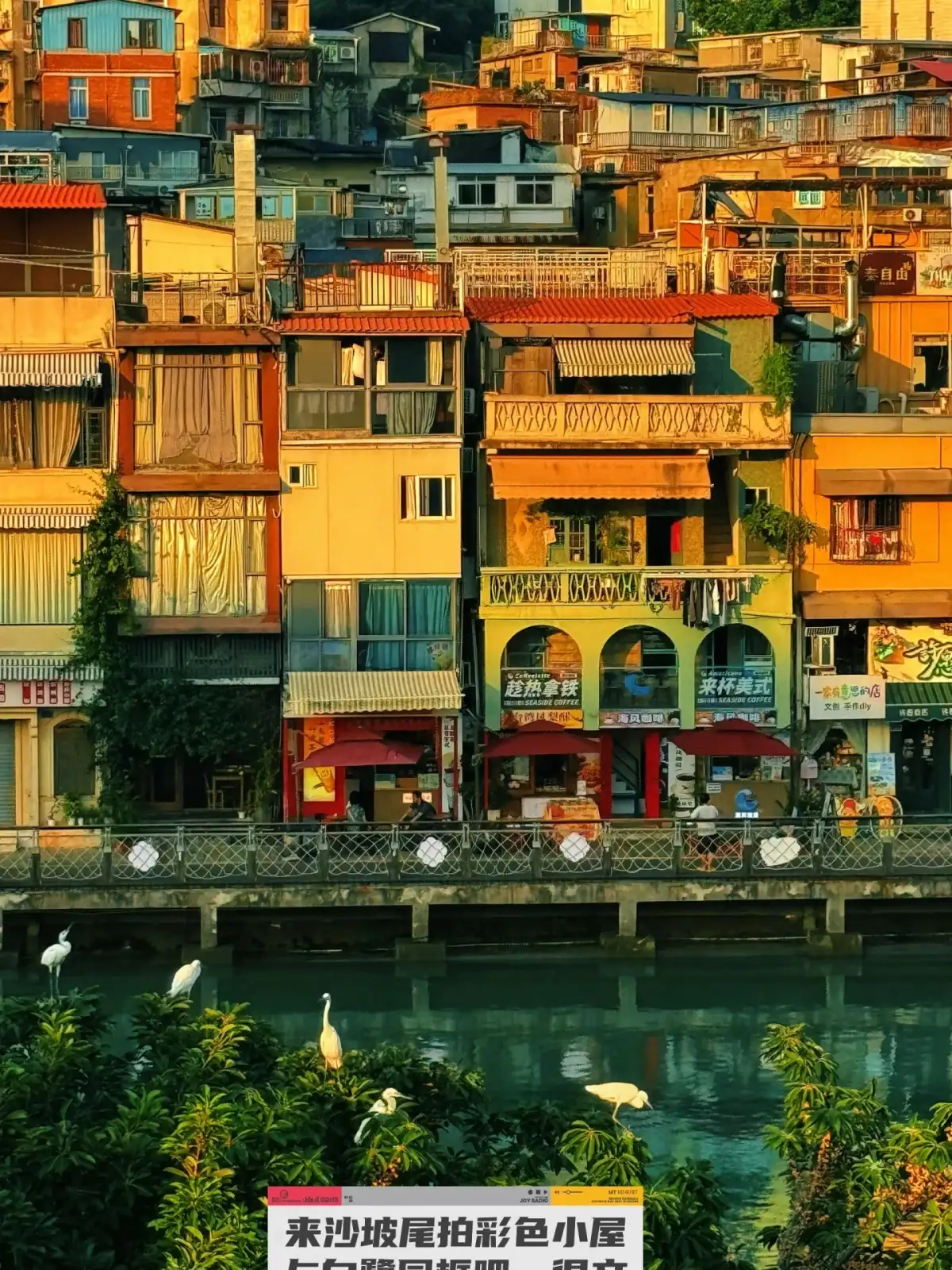
Old buildings along the waterfront in Shapowei, Xiamen. Photo:American-style, no ice · Original post.
Official reports indicate that Shapowei no longer serves as a fishing port as it once did, yet it retains memory cues such as dry docks, anchorages, the waterfront, and arcades. Consequently, a visit along the waterfront can be designed as a functional exploration: how the waterfront connects to the buildings, which way the building entrances face, and whether there are distinct operational boundaries between the waterfront and the street. Any boats or tools observed should be understood in their actual on-site context; one should not assume they are all still used for the same type of work.
A photograph of a fishing port from the past, viewed from the same vantage point as today, often provides an excellent comparison. If you find old photographs in public exhibitions, observe how the shoreline, building heights, and land uses have changed. The presence of an additional store or a high-rise building in the distance in a new photograph does not mean that the old way of life has completely disappeared; nor does the persistence of the old silhouette in the same location imply that economic activities have remained unchanged. By describing appearance and function separately, the process of urban renewal becomes clearer.
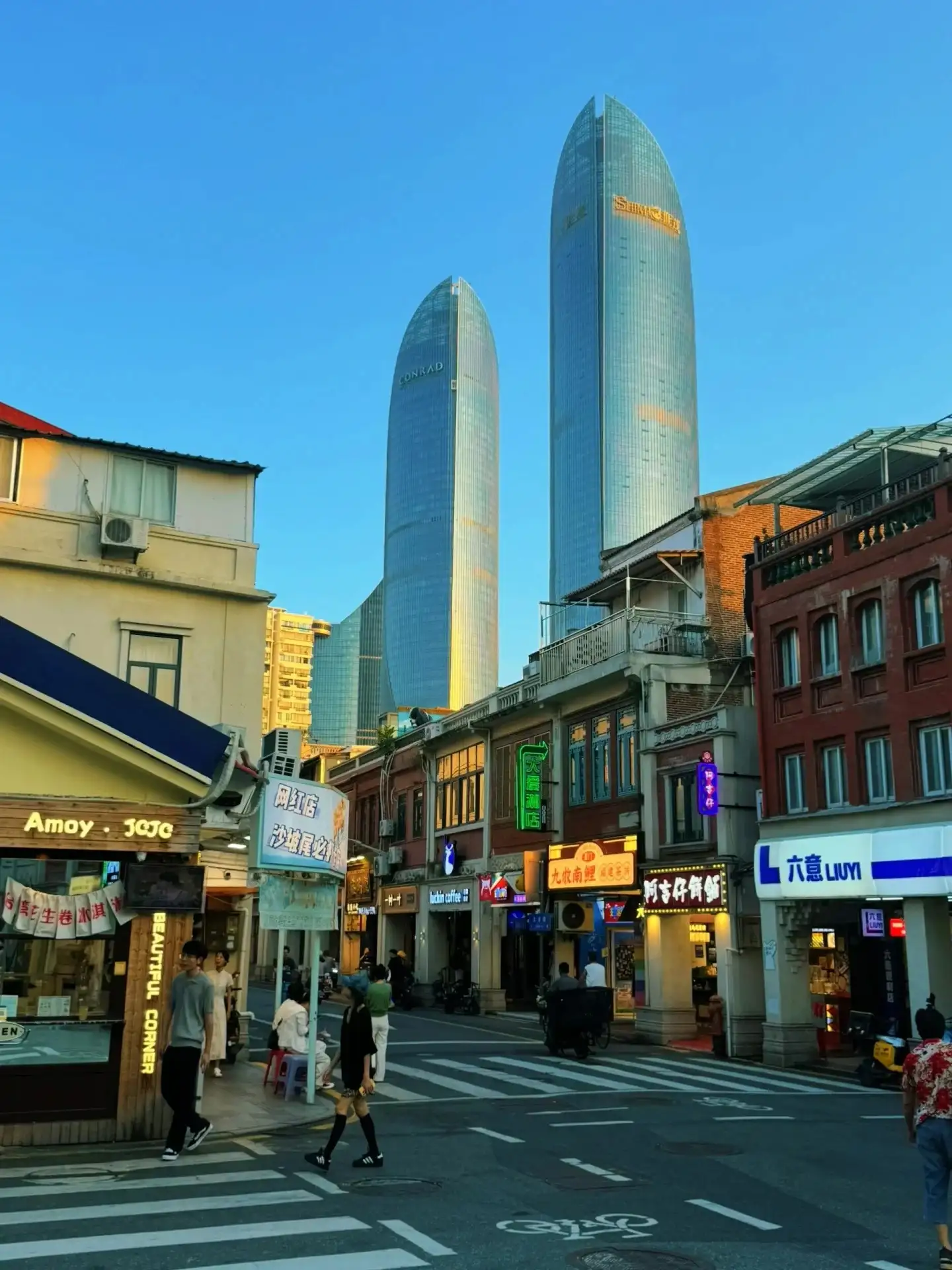
Scenes where old streets and high-rises appear side by side are particularly prone to sparking such comparisons. American-style “no-ice” notes capture buildings of different scales; travelers can further explore their relationship to the viewpoint: Are the high-rises immediately adjacent, or do they enter the background from a distance? How do the foreground buildings form the shoreline silhouette? By clarifying these spatial relationships, the changes conveyed by the photographs go beyond the two vague labels of “new” and “old.”
now serve as display spaces, creating a gateway to the history hidden from view on the street.
According to official Fujian records, Shapowei is home to the Xiagang Marine Culture Exhibition Hall and the Living Heritage Exhibition Hall, which serve as windows into marine culture and the neighborhood’s history, respectively. These are location cues for finding information; they do not guarantee that a site will be open on a given day or that a specific event will be taking place. When planning your visit, check for up-to-date information. Combining the exhibits with an outdoor walk can add another layer of context to your neighborhood tour.
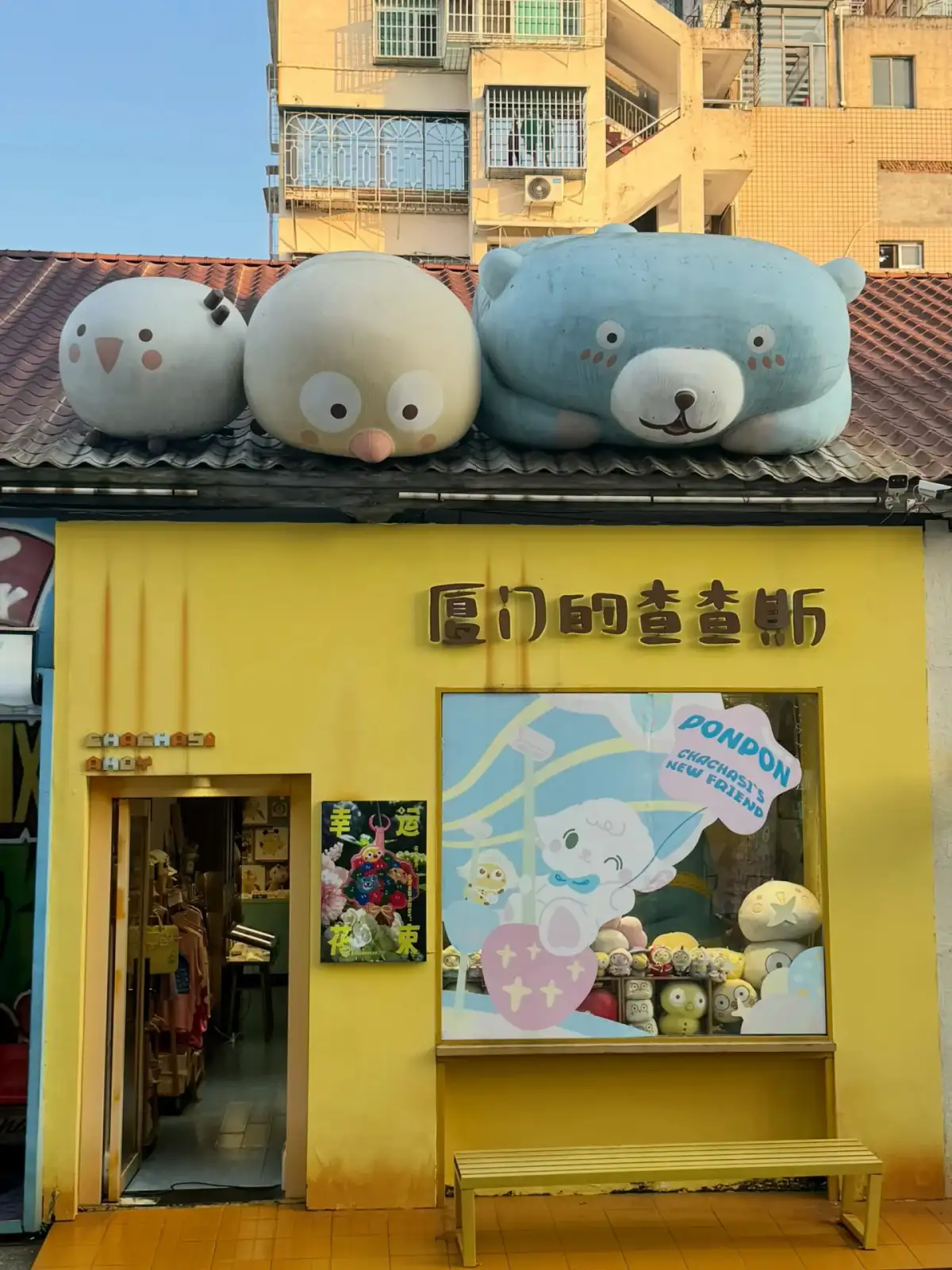
Street-side shops in Shapowei, Xiamen. Photo:American-style, no ice · Original post.
have been transformed into exhibition spaces; start by looking for maps, old photographs, and descriptions of artifacts. Maps show you the historical boundaries, photos capture the appearance during a specific period, and object descriptions connect work and daily life. If you can only remember one thing, choose a relevant clue you’ve already spotted on the street—such as the design of a boat, waterfront facilities, or the name of a trade. Approach the exhibition with a specific question in mind; this will help the information stick in your memory more easily.
For children, exploring changes in workspaces can begin with very specific questions: Where did the fish come from before, where were they transported to, and what are the people in the same building doing today? Any questions left unanswered by the exhibition can be left as open-ended inquiries rather than making up stories on the spot. Looking at an object first and then identifying a location on the street makes it easier for children to engage than having them listen to an entire account of the city’s history.
If you have half a day, you can start your exploration of the Art West District by following the public pedestrian paths to Bifengwu to observe the waterfront and architecture, then add a cultural exhibition or a nearby stop based on what’s actually open. This is a suggested itinerary; your actual walk should still take into account the map, entry points, and the stamina of your companions. There’s no need to retrace every shop and every wall from the “Late March Snow” notes in sequence.
If your visit is shorter, focusing on just one aspect is sufficient. If industrial renewal is your primary interest, concentrate on the factory spaces and the public information displays; if you’re drawn to maritime culture, connect your waterfront observations with the related exhibits; and if you simply want to sit down for a meal, you can use the surrounding changes as a casual topic of conversation. Any level of exploration is valid; your interests should guide your experience, not a checklist of must-see spots.
shops and cultural exhibitions also require different amounts of time. The former may involve waiting for a table, socializing, and making purchases, while the latter is better suited for reading and taking notes. If both are treated as quick “check-ins” lasting just a few minutes, actual dwell times will constantly exceed the plan. Set aside a segment of time to sit and rest; only then will the sounds of the neighborhood, the movement of passersby, and the ways the buildings are used have a chance to become subjects of observation.
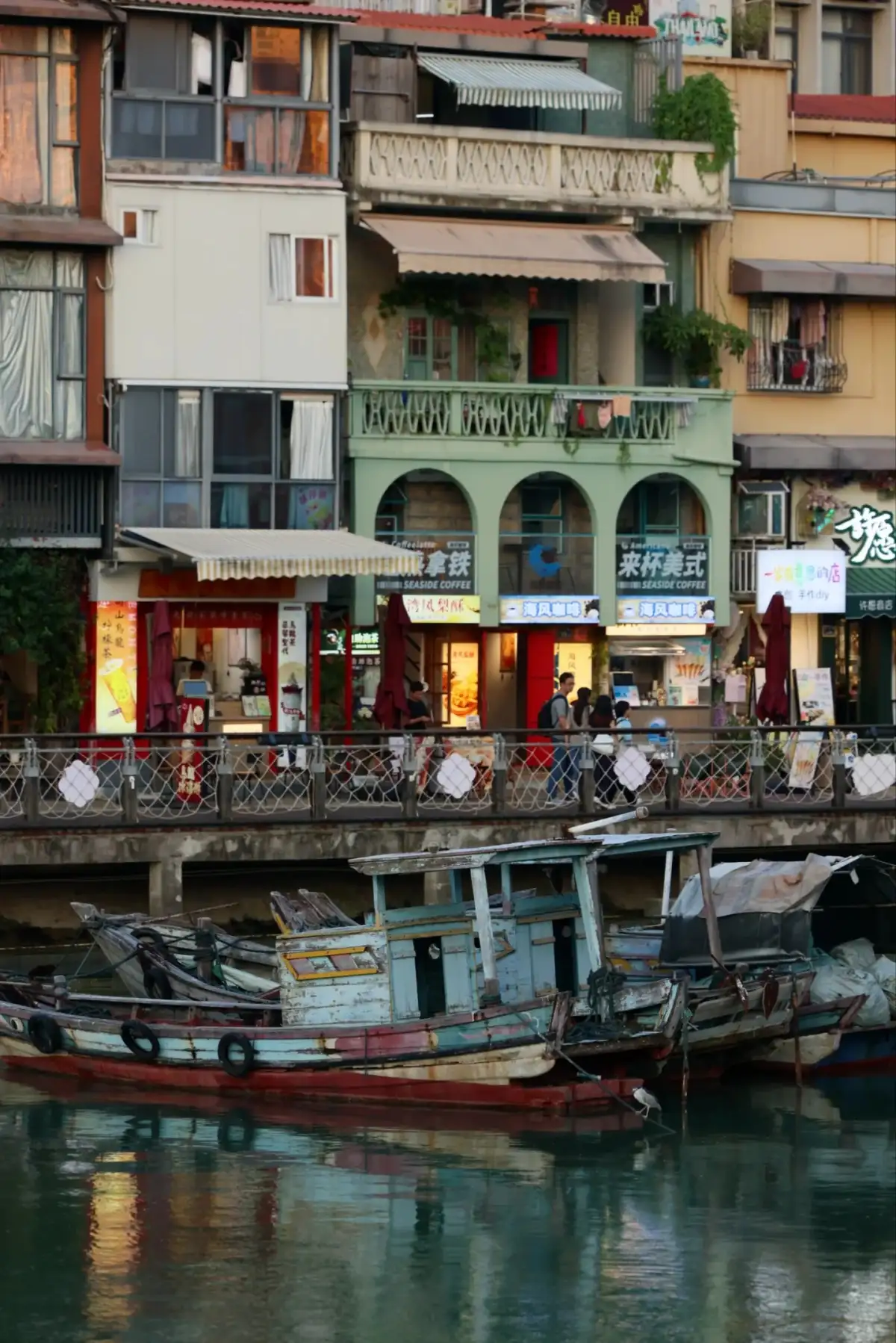
A wooden boat is moored in the foreground, with tiered houses, balconies, and shops in the background. Photo:Late March Snow · Original Post.
The everyday neighborhood continues to function as well
Shapowei features spaces shared by tourists, residents, and business owners. When stopping to take photos, keep the entrance clear for passage, and follow business and hospitality protocols before entering a shop; when capturing scenes of everyday life, do so without causing disturbance. The theme of urban renewal does not require every resident to become a spokesperson for history. The way a building’s entrance is used may provide vivid enough clues about the site itself.
Nighttime lighting alters the visual relationship between high-rise buildings and waterfront shops, but it cannot replace the daytime analysis of materials and structures. Those who enjoy nightscapes can plan for both separately: address the block’s history during the day, and later, view the lighting from physically accessible public spaces. Sunset, events, and lighting conditions all depend on the day’s circumstances; preparing short-distance itineraries for different weather conditions makes it easier to stay on theme than chasing a single, fixed photograph.
As you leave Shapowei, try organizing your photos into three categories: past work activities, current uses, and spaces still visible today. Selecting one photo from each category will help you recount this stroll. The former seafood processing plant alongside the new art spaces, the fishing port waterfront alongside cultural exhibits, and the residential alleys alongside tourist shops all remind us that urban memory is not only preserved within buildings but also continues to evolve as people use them.
Source and Editorial Notes
This article is an original travel interpretation compiled by the Dongxing Travel editorial team based on cited materials; it is not a firsthand account by the author. The full text of the original post has not been reproduced; accompanying images are used within the scope of authorization and are credited to the author and the source of the original post. They do not serve as proof of actual visits or services provided to Dongxing Travel clients.
American-Style No Ice · Xiamen Shapowei | Urban Wanderer, Capturing Urban Moments 📸 · Travel Notes; Verified/Organized on: October 3, 2026.
Late March Snow · The Sunset Over Shapowei Falls on Bifengwu 🌆|Four-Day Trip to Xiamen (2) · Travel Notes; Verified/Organized on: October 3, 2026.
People’s Government of Fujian Province · Xiamen Shapowei: Fishing Lights Illuminate Past and Present; Fishing Port Reborn · Official sources; Verified/compiled on: October 3, 2026.