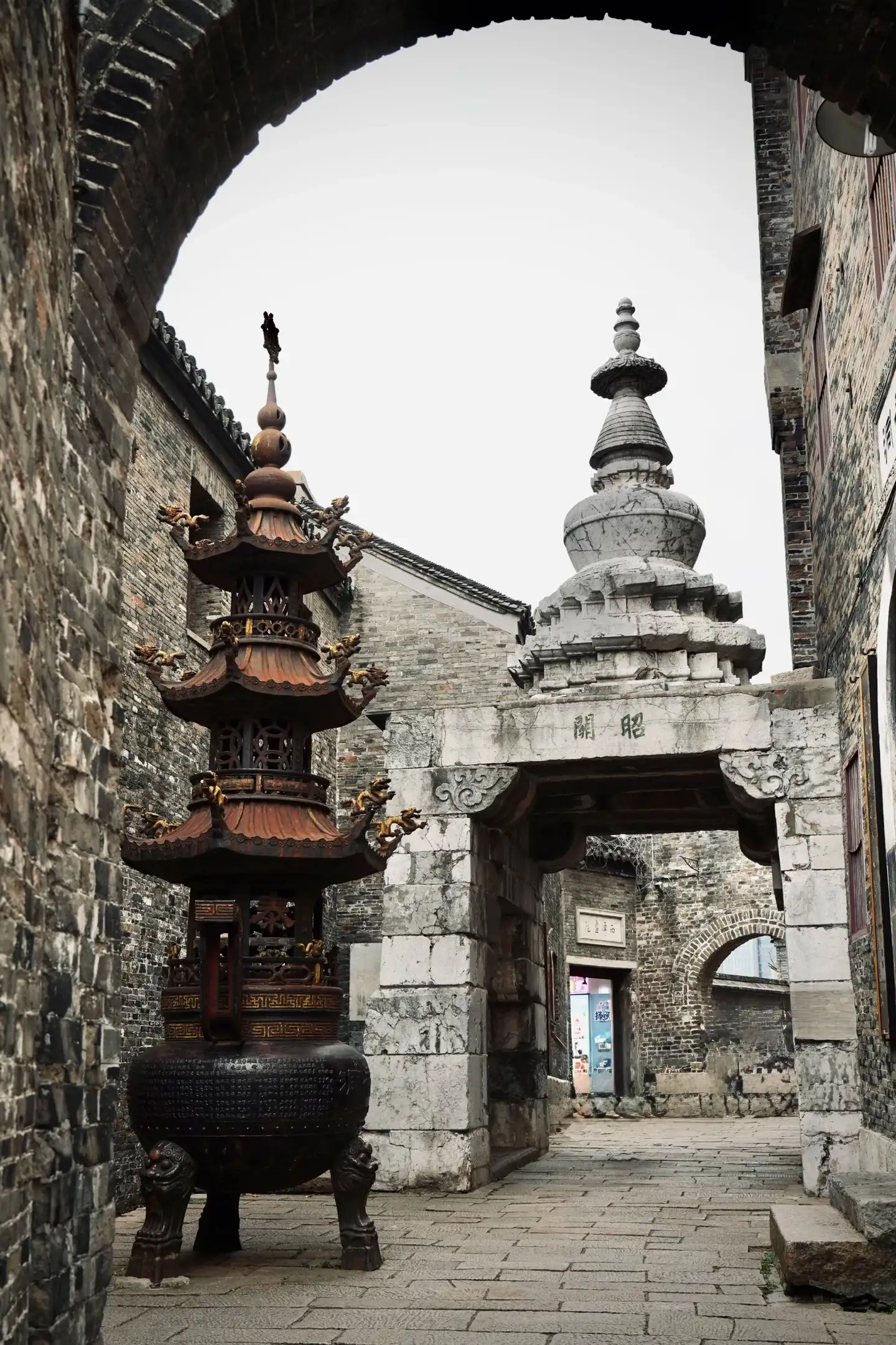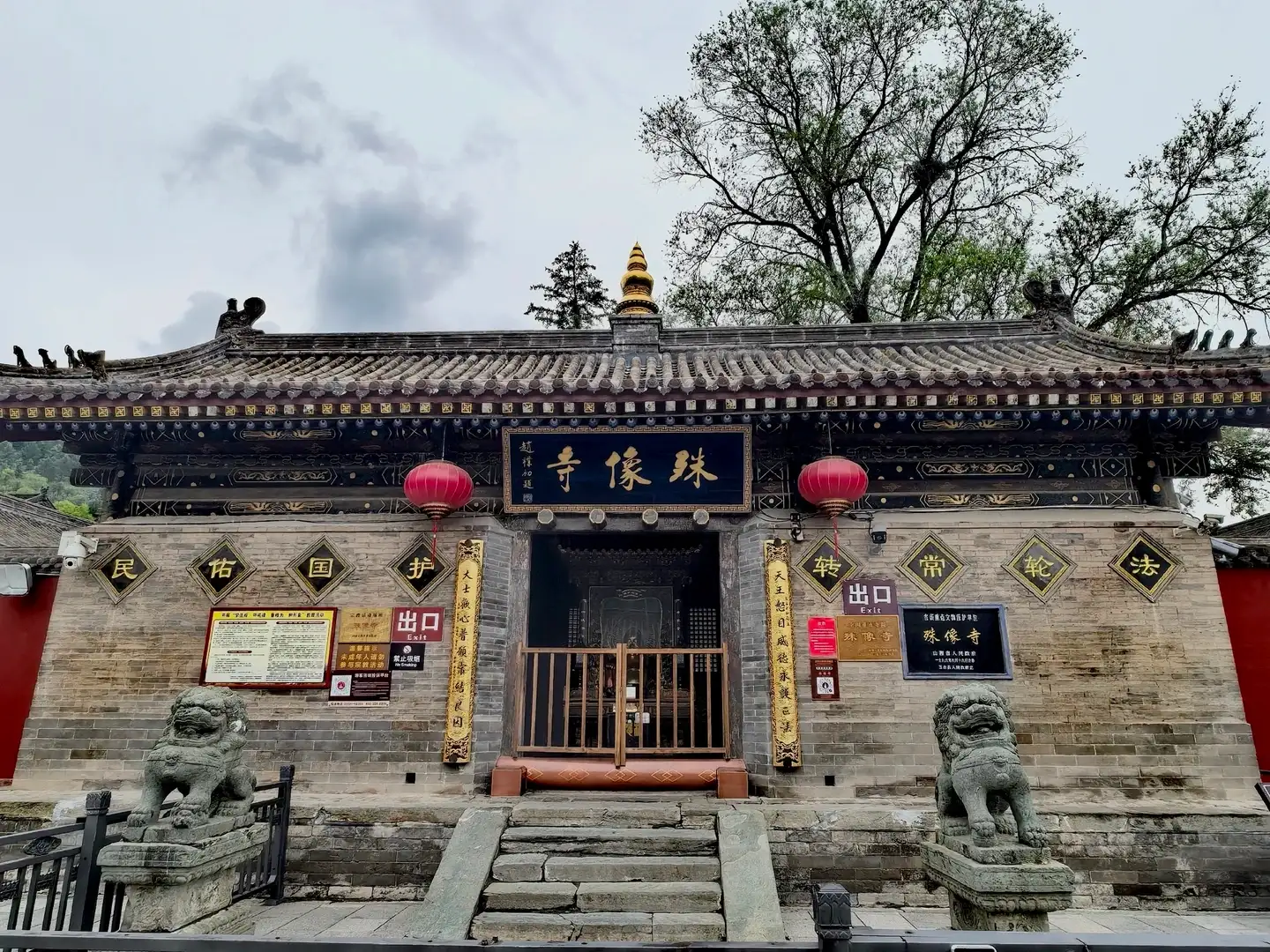
Trips to Xi’an often revolve around the city walls, museums, and night views, with lunch treated as a brief interlude between two attractions. Daxingshan Temple offers a different kind of stop: entering a space where religious life still thrives through its cuisine, and then stepping from the temple courtyard into the history of cultural exchange in Chang’an. A meal can serve as a gateway, but the temple need not be reduced to just one recommended restaurant.
小红书作者“小鱼特能吃🐟”记录在大兴善寺用餐,注意到菌菇面、以素食方式制作的菜肴和不同口味。本文采用这份具体观察作为旅行动机,不复制个人评分和推荐结论。当天有哪些菜、如何营业以及食材是否符合个人要求,需要根据实际菜单与经营方说明决定。
Finish your meal first, then gradually shift your attention
Visitors can first assess their true needs: do they simply want a meal, or are they willing to set aside time to experience the temple’s culture? Both options are acceptable; the important thing is not to assume—based on photos of the meal—that everyone will enjoy the subsequent tour. If family members are primarily looking to relax, ensure there is ample space for that; for those interested in history, the temple grounds and the context of scripture translation can be highlighted as a separate, distinct aspect of the visit.
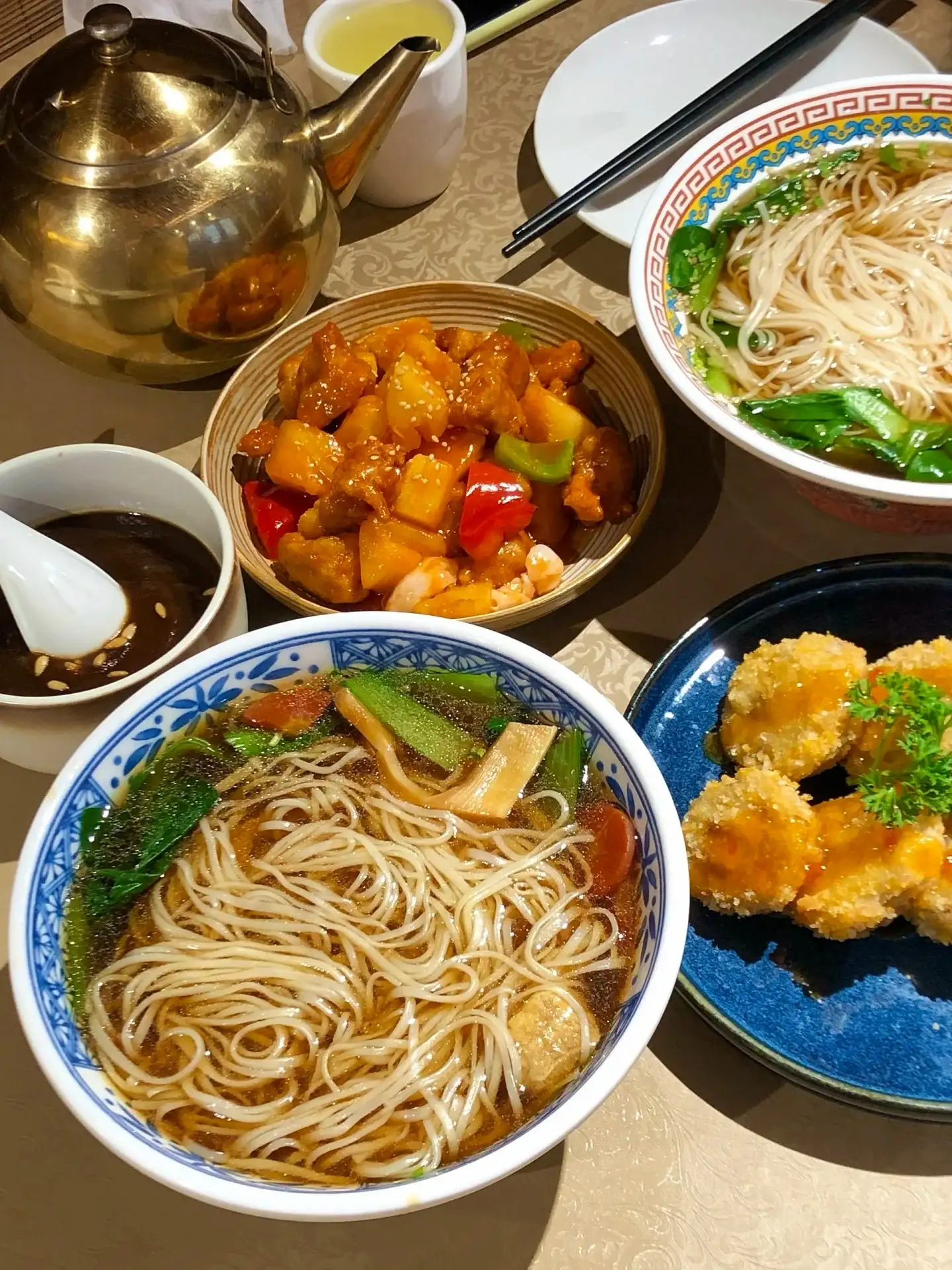
The mushroom soup noodles mentioned in the original post demonstrate to tourists that vegetarian dishes have specific flavors and preparation methods—they are not merely a vegetable platter. Observing how noodles, soup, and toppings come together to form a complete dish can help international visitors understand the diversity of Chinese cuisine. Even when vegetarian dishes use familiar names, they may recreate textures using different ingredients; while names help convey the style, they do not, on their own, specify the ingredients.
For tourists without strict dietary requirements, it is advisable to prepare a brief note in Chinese listing the ingredients they do not eat and the items they need to inquire about. You can specify whether you consume eggs or dairy, or whether you exclude certain ingredients, and then allow the server to respond based on the actual dishes available. Do not rely solely on a picture of vegetables to convey all your requirements, nor should you assume that the word “vegetarian” automatically means all your personal dietary standards are met.
For foreign-language visitors, ordering food and learning about the history of a temple are two distinct linguistic tasks. The former requires accurately specifying ingredients and quantities, while the latter requires explaining cultural context. If an advisor or interpreter is available, visitors can articulate their needs separately to avoid having to arrange a lengthy historical lecture on the spot during mealtime. Once visitors have settled in physically, they will find it easier to take an interest in cultural exploration.
Communication in Chang’an used to be a specific translation task.
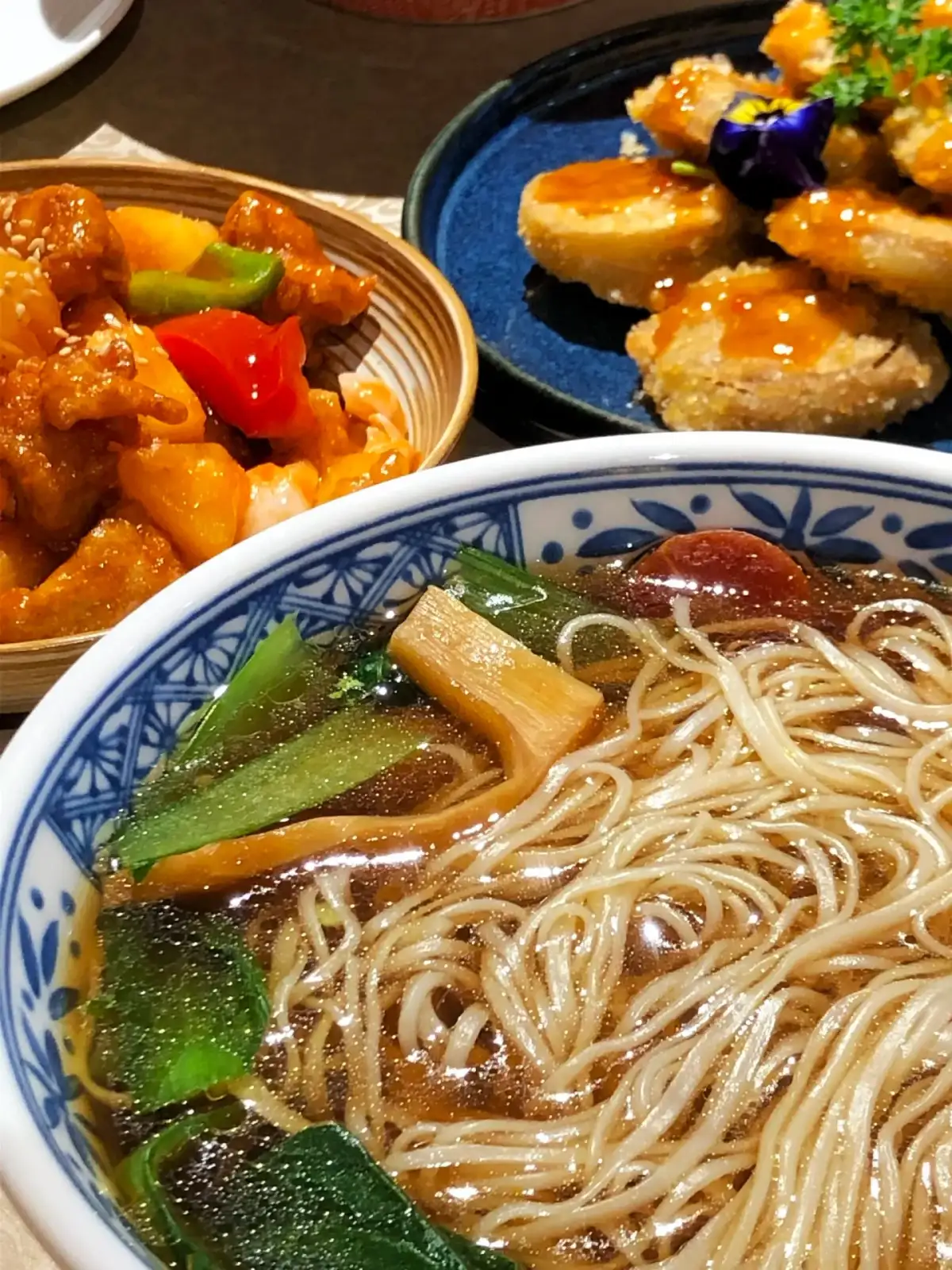
Close-up of noodle soup and other dishes. Photo:Little Fish Loves to Eat 🐟 · Original Post.
The Yanta District Annals document the connection between Daxingshan Temple and Buddhist scripture translation activities during the Sui and Tang dynasties. This context transforms the temple from a mere static ancient structure into a symbol of the flow of language, texts, and people. Translating scriptures into another language requires conceptual understanding, organizational collaboration, and the ability to disseminate the content. For international visitors who themselves come from different linguistic worlds, this thread is particularly resonant.
We cannot frame the question too narrowly: How is a text from afar understood by local readers? Translation is not merely a matter of replacing words; it also involves navigating cultural concepts and expressive conventions. Today’s travelers seek meaning in menus and exhibition labels—a challenge that is certainly different from that of ancient scripture translation—but the fundamental experience of needing interpretation across languages can still help us gain insight into the practical work involved in the history of Buddhist temples.
This kind of cultural exploration does not require memorizing the names of all the monks. First, recognize that this monastery was once involved in textual exchange; then, based on reliable sources, delve into the figures and the era—this sequence will provide greater clarity. If you have limited knowledge of Buddhist history, you can ask the guide to focus on explanations of scripture translation, cultural exchange, and the monastery’s functions, rather than immediately launching into a long list of sectarian terms. Specific themes make the explanation more accessible.
Temple architecture and history should also be interpreted in layers. The spaces we see today have undergone both continuity and change; while they connect us to tradition, this does not mean every building is an original structure from the era of Buddhist scripture translation. Observing the actual layout of the courtyards and then listening to formal historical explanations allows one to retain different clues about space and time. Cultural value does not depend on portraying everything as unchanged for a thousand years.
Starting with three actions in the courtyard
First, stand quietly in a designated area and observe how visitors, worshippers, and staff share the space; treat the space as it is being used as your starting point for observation.
Instead, choose one detail related to your interests—such as a plaque, an architectural axis, or a historical clue mentioned in the on-site introduction—and read it carefully. This is more likely to leave a lasting impression than simply skimming through many names.
Finally, organize your photos and questions in a location that does not interfere with traffic or religious activities before continuing on to the next section of your walk; do not bring your photography needs into every activity setting.
These three actions can help city travelers shift their pace. Movement through city blocks often prioritizes efficiency, whereas observing within a temple requires an understanding of what is taking place. When you see someone paying respects to the Buddha, do not treat them as mere material for your own purposes; when faced with management requirements, follow the rules. Only by respecting the actual purpose of the space can both aesthetic appreciation and cultural interpretation coexist.
Families with children can discuss why temples require quiet and why there are different rules for dining and sightseeing. These questions are more appropriate for the context than expecting children to immediately grasp the entirety of religious philosophy. When parents provide simple explanations and then demonstrate how to walk slowly, avoid blocking pathways, and ask questions, children can learn to participate in unfamiliar cultural spaces rather than being constantly reminded of what they cannot do.
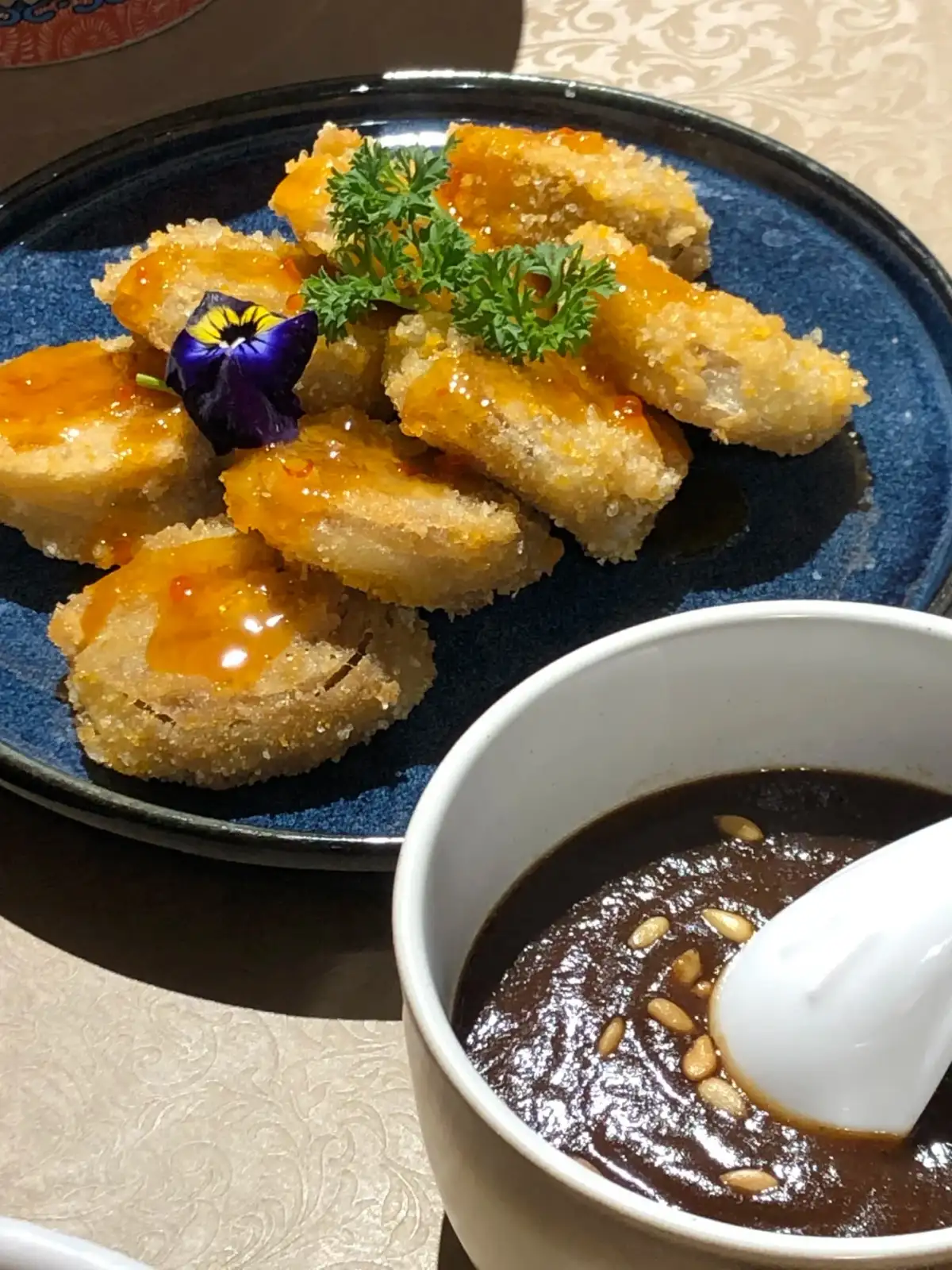
Light-colored dishes and dark-colored soup bowls. Photo:Little Fish Loves to Eat 🐟 · Original Post.
Dining and Cultural Stops: How to Rejoin the Xi’an Itinerary
If the day’s itinerary already includes a museum with a dense schedule, a temple visit can serve as a lighter segment: after a meal, choose a historical theme and explore a courtyard or two, then take some time to rest. If the day’s focus is cultural exchange, allow more time for the guided tour, followed by a discussion of connections to other relevant sites in Xi’an. Don’t assume you can explore all of them in depth in a single day just because the places are all located within the same city.
If you do not require a pickup or drop-off, send the exact Chinese name of the restaurant and the agreed-upon entrance, specifying whether the pickup is after the meal or after the cultural tour. If your group splits up, agree on a specific meeting point and a contact person. Even a seemingly brief stop in the city involves ordering food, waiting, walking, and sightseeing; allowing for reasonable leeway will ensure a smooth transition to the next destination.
Those without special dietary requirements can also compile this experience into a personal communication card for use on future trips. The card should outline your specific needs, rather than treating a single successful dining experience as a universal solution for every location. Dining options in Chinese cities are abundant, and each meal should still be discussed based on the actual dishes available. The more specific your preparation, the easier it will be to focus on the flavors and your dining companions once you’re there.
If you’d like to continue exploring cultural experiences in Xi’an, please read more on this site.Xi’an Destination Guide...reintegrate temples, museum artifacts, and urban neighborhoods into a holistic map. Daxingshan Temple is well-suited to serve as a cultural theme centered on cuisine, rather than a mandatory service offering included in every itinerary. Once the menu, language support, and hospitality arrangements are finalized, they can be incorporated into individual itineraries.
Upon departure, visitors can take away two distinct insights: one about how food is prepared and understood, and another about how text transcends language barriers. The former unfolds during today’s meal, while the latter connects to the history of Chang’an. These insights converge at the same location, enriching the experience beyond a simple bowl of noodles and bringing Xi’an—with its magnificent architecture—closer to real people and meaningful interactions.
Sources and Editorial Notes
This article is an original travel analysis compiled by the Dongxing Travel editorial department based on the listed materials; it is not a firsthand account by the author. The full text of the original post has not been reproduced; accompanying images are used within the scope of authorization and are credited to the author and the source of the original post. They do not serve as proof of actual travel experiences or services provided by Dongxing Travel.
Little Fish Loves to Eat 🐟 · A Solo Meal at Daxingshan Temple in Xi’an · Travel Notes; Verified/Organized on: October 3, 2026.
Xi’an City Yanta District Local Chronicles Compilation Committee · Yanta District Chronicles: Relevant Records on Daxingshan Temple · Official source; Verified/compiled on: October 3, 2026.
A meal and a cultural stop
Vegetarian noodles can be a starting point at Daxingshan Temple, while Chang'an translation history deserves its own reading time. Check actual meal availability. If visiting the temple too, make the courtyards, gateways and activity boundaries a separate part of the stop.
Explain your dietary needs
Ask specifically about eggs, dairy, seasonings and allergens rather than relying on the label vegetarian. Follow temple rules for photography and entry. Include transport and a rest after the meal, and do not assume the same food or experience is available at every hour.
Planning references