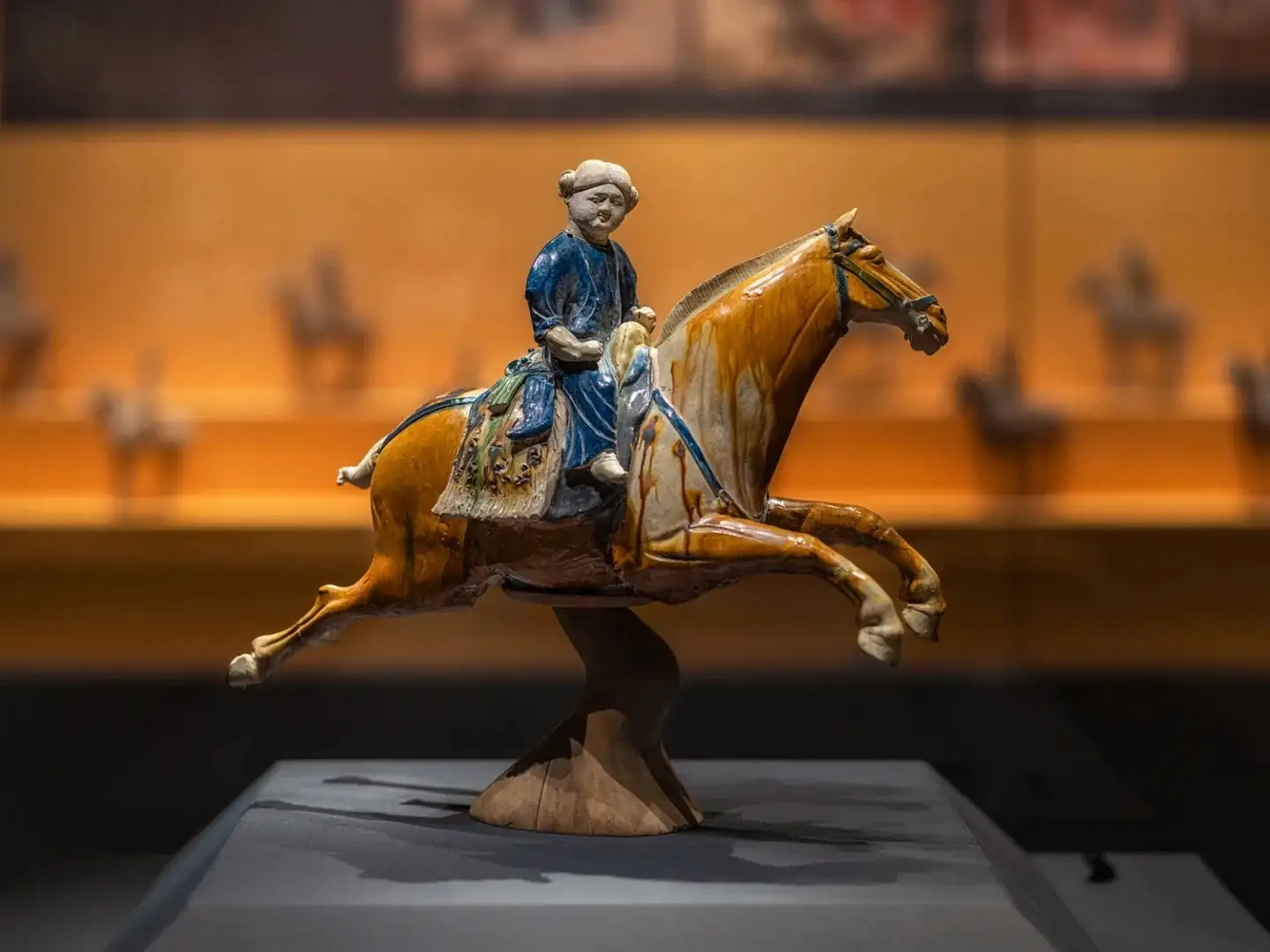
Where does the sense of speed in the display case come from?
A ceramic horse stands still in the display case; the material is quiet, yet the image evokes the sense of galloping. This contrast lends itself well as a small theme for a visit to the Xi’an Museum: How do three-dimensional works evoke a sense of movement in the viewer? By examining the horse’s limbs, the orientation of its body, and the rider’s posture, visitors can interpret a single object without first needing to be familiar with the entire history of Tang Dynasty art. Speed is not exclusive to moving images; it can also be incorporated into static forms.
The Xiaohongshu post “Must-See in Xi’an: Xi’an Museum, the Thousand-Year-Old Small Wild Goose Pagoda” lists the Sancai Soaring Horse as one of the author’s favorite pieces in the collection, noting its posture and color. This article uses the author’s interest in the object as its starting point. Basic information about the object is drawn from an original report on cultural relics by China National Radio, while the background on the three-color glazed pottery technique is referenced from materials provided by the National Museum of China. The latter describes another black-glazed horse, which is used to explain the craft category; the specific identities of the two artifacts are not conflated.
First look at the horse, then at the rider, and finally at the relationship between the two You can start by focusing on the horse’s overall silhouette. How do the direction of its head, the line of its body, and the stance of i
You can start by focusing on the horse’s overall silhouette. How do the direction of its head, the line of its torso, and the stance of its limbs all work together to give you the sense that it is moving forward? Next, turn your attention to the rider and observe the relationship between the rider’s body and the horse’s back. Finally, bring the two elements together: within the same artwork, do the animal and the figure convey the same intensity of movement, or do they create a different kind of rhythm? This method of viewing—breaking things down and then reassembling them—gives the sense of speed a describable source.
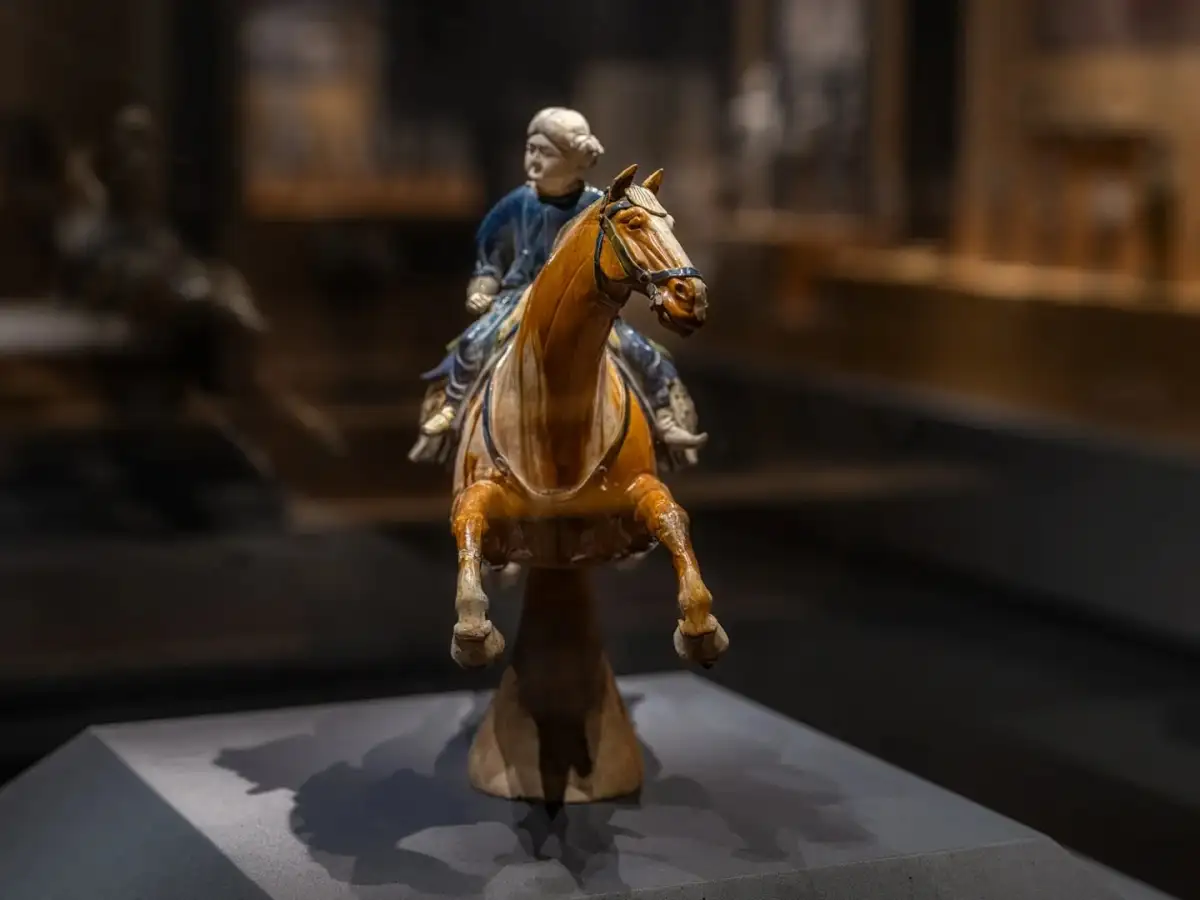
A front-view of the ceramic sculpture of the rider and horse. Image:Mark Shangshan · Original Post.
A report by China National Radio noted that this artifact, consisting of a rider and a galloping horse, was unearthed from a Tang Dynasty tomb in Xi’an. For visitors, the most accessible point of entry is not the date of discovery, but the relationship between the rider and the horse before their eyes. The horse’s movements are fully extended, while the rider draws the viewer’s gaze to the interplay between his body and riding posture. The emotional impact created by these two elements can be explored through direct observation. Specific details regarding the figures’ identities and related explanations are best left to the exhibition labels and reliable guided tours.
If your companions aren’t particularly interested in art, ask them to choose the part that appears most powerful and explain why. Some might notice the direction of the legs, others might choose the head and neck, and still others might prefer the contrast between the figure and the horse. Different answers can prompt everyone to take a fresh look at the whole. An object that offers multiple points of entry often fosters genuine communication within a group more effectively than constantly searching for the next “must-see artifact.”
When viewing a three-dimensional work, you need to let your gaze move slightly.
Two-dimensional photographs typically present the viewer with a predetermined angle, whereas on-site viewing offers the opportunity to adjust your position within permissible limits. Viewing from the front, the side, or a slightly different angle will alter the gaps between the limbs and the overlap between the figure and the horse’s body. You can start by observing the whole scene, then move slightly to see which details suddenly become clearer. Moving around in this context serves to deepen your understanding of the image; there’s no need to occupy someone else’s viewing spot for an extended period in pursuit of a “perfect” angle.
One visual challenge posed by the “leaping” motif is how the forms interact with the negative space. The outstretched limbs not only convey movement but also create varying spaces around the body; as your gaze moves between the solid forms and the empty spaces, the horse’s silhouette gains a sense of rhythm. Make a note of this observation—it will help you explain why you prefer a particular angle when you look back at the photos later. The charm of three-dimensional works lies precisely in the fact that a single object can offer different viewing perspectives.
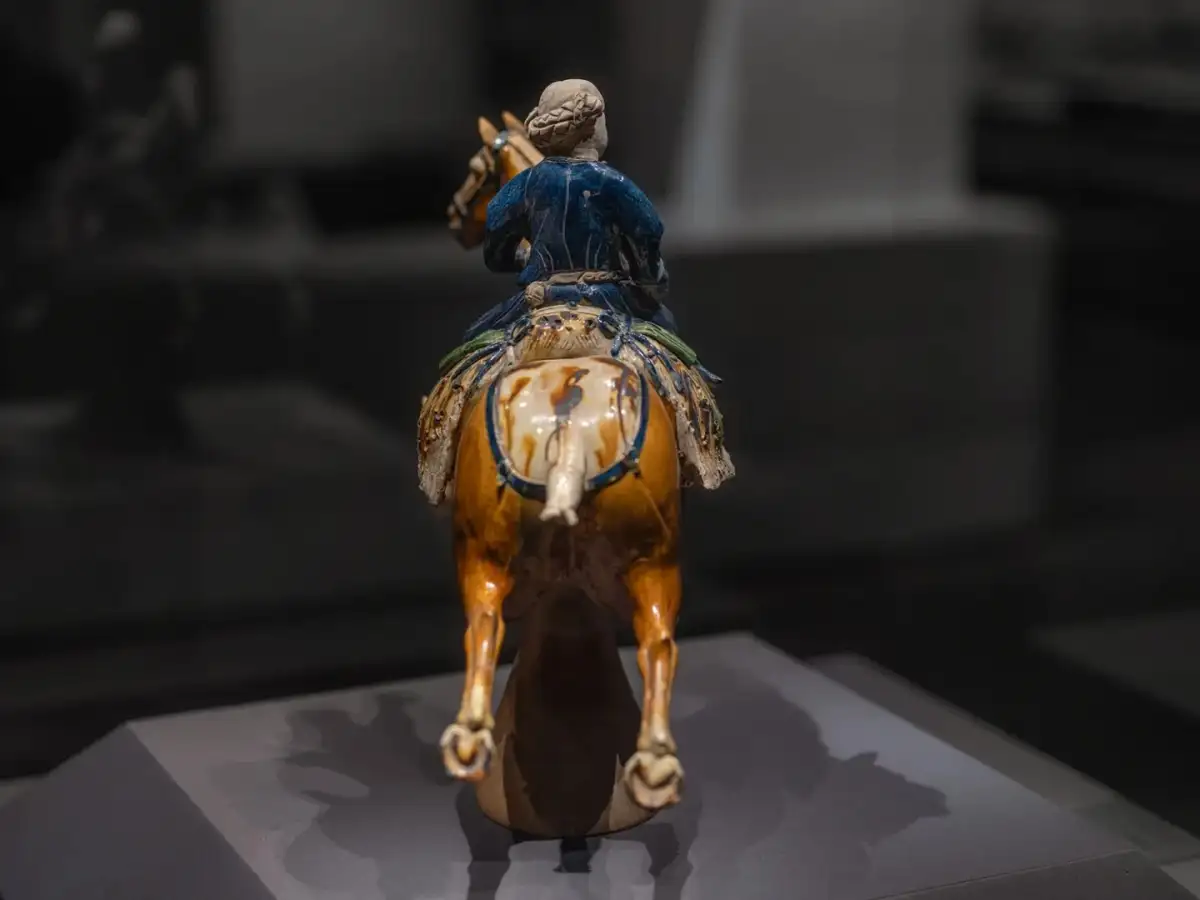
The back of the equestrian ceramic sculpture and the horse’s tail. Image:Mark Shangshan · Original Post.
For children, try tracing the general outline of the artwork in the air with your fingers, rather than immediately attempting to mimic complex movements. First, describe where the head, body, and legs are pointing, then connect these directions into a unified whole. This kind of observational exercise makes the composition easier to understand and helps shift the focus of art appreciation from “Does it look like a real horse?” to “How is the horse depicted?” Even if opinions differ in the end, everyone will have observed specific details.
The glaze transforms the surface into another layer of visual experience
According to materials from the National Museum of China, Tang Sancai is described as low-temperature lead-glazed pottery. This background information reminds visitors that the colors of the object before them are related to its materials and firing process—they should not be viewed merely as added decorations. When viewing the piece, start by distinguishing between form and surface: the posture organizes the movement, while the glaze colors visually emphasize different parts. By clearly discerning these two layers separately and then observing how they interact, you’ll gain a deeper understanding of the work’s complexity than you would from simply saying, “The colors are beautiful.”
Color also influences where you look first. If there is a distinct color contrast between the rider and the horse’s body, your gaze may first land on the rider before shifting to the horse’s movement; a more continuous surface, however, may lead you to perceive the whole as a single figure at first glance. You can ask your companions to describe what they noticed at first glance, then compare their reasons. Such a discussion doesn’t require inventing tales of distant trade to explain color; the visual effects of the surface itself are worth a closer look.
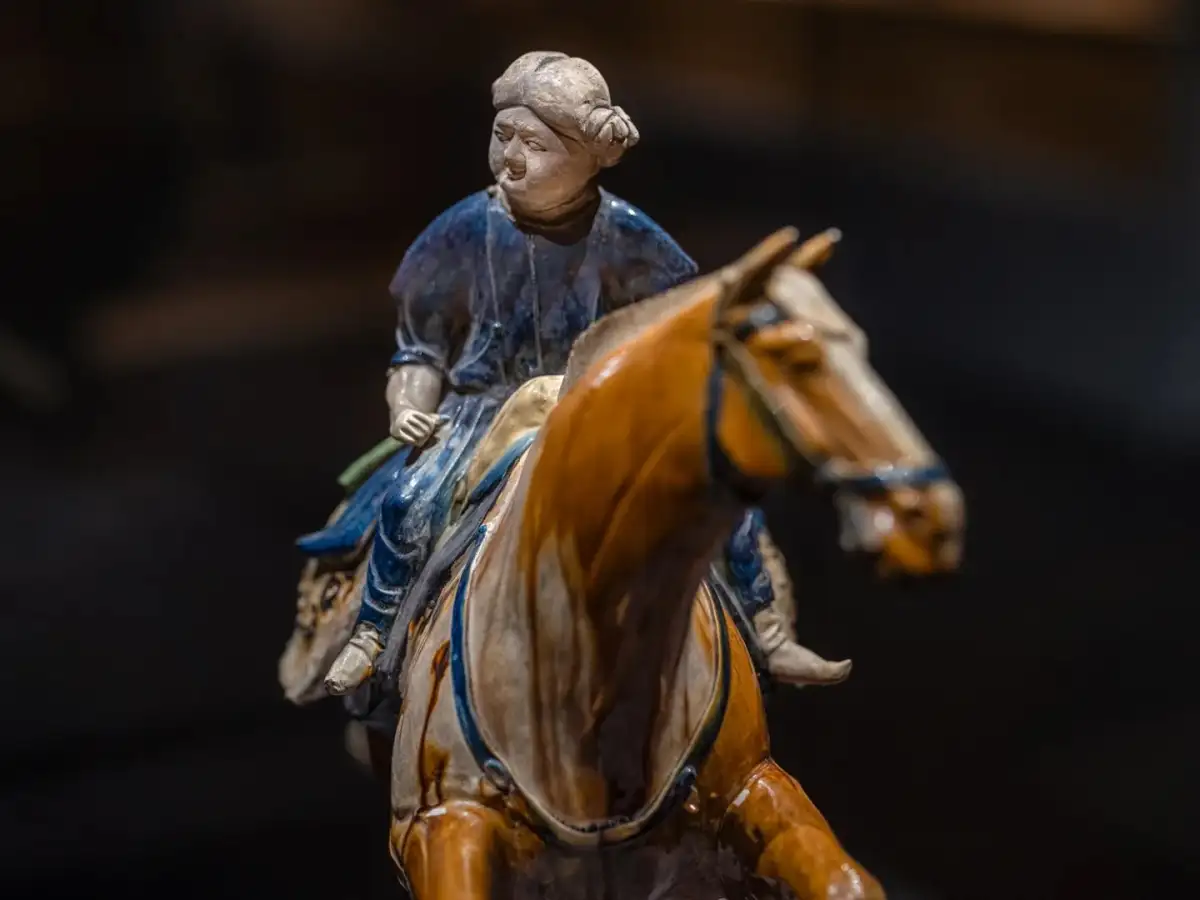
Close-up of the blue-clad ceramic rider’s head, the drapery of his robe, and the horse’s head. Image:Mark Shangshan · Original Post.
Lighting, glass, and viewing angles can affect color perception, so the actual exhibit may not look exactly like the photos taken with your phone. You can use the photos as memory cues while jotting down a brief note about the aspect that struck you most at the time. Photos don’t have to capture every detail of your observation, nor do written notes have to be lengthy explanations. Combining these two forms of documentation makes it easier to maintain a genuine interest in form and surface long after you’ve left the gallery.
From a Horse to Other Questions Regarding Tang Dynasty Ceramic Sculptures
Once you’ve interpreted one piece, you can continue examining other ceramic sculptures with the same questions in mind: How do the figures or animals stand? What spaces are left around their forms? How does color direct attention? Different objects will yield different answers. This process does not require that every work depict speed; some figures are better suited for discussions of stillness, bearing a load, or group arrangements. By clearly articulating these differences, a cultural perspective can gradually expand from a single standout piece to an entire category of craftsmanship.
For first-time visitors to China, materials and movement serve as an excellent common language. Explaining that the work is a three-dimensional ceramic figure and then providing the necessary historical context makes it easier to understand than simply reciting a list of dynasties. Those with a deeper interest can continue reading about the excavation details and scholarly interpretations; those who simply wish to enjoy a leisurely visit can still gain a complete viewing experience from the movement of a single object. Needs of varying depths can share the same starting point.
This type of object study is best scheduled for times when your attention span is at its peak. Rather than rushing from one “treasure” to the next on the museum’s list upon arrival, it’s better to choose a theme first and devote your time to a thorough observation of a small number of objects. If you’re planning a city walk that day, the movements in the exhibition hall can create an interesting contrast with your movements on the street. With both indoor and outdoor activities setting their own rhythms throughout the day, a close examination of a single ceramic horse can serve as a quiet, focused interlude in your day’s travels.
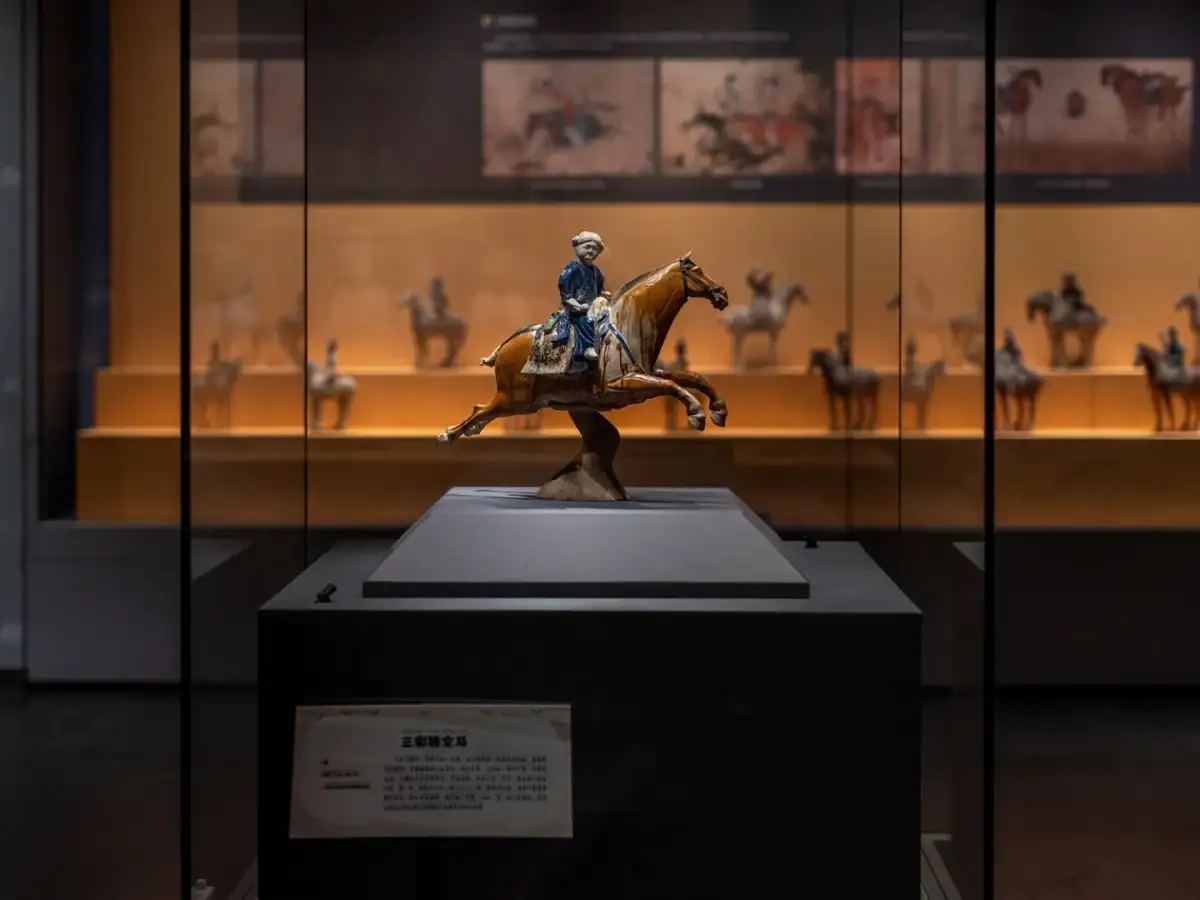
The ceramic horse sculpture in the glass display case and the explanatory plaque below it. Photo:Mark Shangshan · Original Post.
Summarize your observations in one sentence
Before leaving the display case, try formulating a descriptive sentence: “I feel it has speed because…” The answer can stem from the limbs, the body’s orientation, the contrast between the figure and the horse, or the negative space in the form—as long as it corresponds to visible details, it holds meaning. This sentence is easier to retain in your memory than simply noting a title, and it can also help your companions understand your interests. The artwork doesn’t move, but your gaze has already taken a journey along its contours.
This SiteIntroduction to Xi’anThis approach can serve as a reference for urban cultural exhibitions, though the specific arrangement of the museum’s collection on display is subject to the museum’s on-site presentation. The “Three-Color Glazed Soaring Horse” presented here offers a method of observation: when faced with an image that is both familiar and unfamiliar, first identify your own questions, then gradually incorporate background knowledge. In this way, a horse in the museum is not merely a recognizable artifact, but also a work of art that you are willing to pause and understand.
Source and Editorial Notes
This article is an original travel analysis compiled by the Dongxing Travel editorial team based on the cited materials; it is not a firsthand account by the author. The full text of the original post has not been reproduced; accompanying images are used within the scope of authorization and are credited to the author and the source of the original post. They do not serve as proof of actual travel experiences or services provided by Dongxing Travel.
Hang Feihong, the Great Hero · A Must-See in Xi’an: Xi’an Museum and the Thousand-Year-Old Small Wild Goose Pagoda · Travel Notes; Verified/Organized on: October 3, 2026.
National Museum of China · Sancai Black-Glazed Pottery Horse · Official materials; Verified/Compiled on: October 3, 2026.
Original Report by China National Radio · Remarkable Cultural Relics: The Sancai “Foreign Rider on a Soaring Horse” from the Xi’an Museum · Travel Notes; Verified/Organized on: October 3, 2026.
Mount Ma · Xi’an Museum: The Museum’s Crown Jewel—The Sancai “Soaring Horse” · Image source: This article does not cite this post as a basis for current policy.